wayground logo

Free Printable Worksheets

NEW

Font size

S
M
L
XL
Worksheets

Unit 1 Matter Test Review 2024

Total questions: 51

Worksheet time: 31mins

Name
Class
Date
1.
A pure substance containing only one kind of atom.
a)
element
b)
mixture
c)
compound
2.
Can only be separated by chemical means.
a)
element
b)
mixture
c)
compound
3.
This picture represents which of the following?
a)
element
b)
compound
c)
mixture
4.
This picture represents which of the following?
a)
element
b)
compound
c)
mixture
5.
The amount of mass in a specific volume
a)
density
b)
weight
c)
matter
d)
state
6.
Physical or Chemical?  Water is nonflammable
a)
Physical
b)
Chemical
c)
Neither
7.
Physical or Chemical Property? If copper comes in contact with water, it will turn green.
a)
Physical
b)
Chemical
c)
Neither
8.
Physical or Chemical Property?  The temperature of boiling water is 100 degrees Celsius.
a)
Physical
b)
Chemical
c)
Neither
9.
Physical or Chemical Property?  The solid form of water is ice.
a)
Physical
b)
Chemical
c)
Neither
10.
What is matter?
a)
Any subtance that doesn't take up space or have mass.
b)
Any substance that takes up space or have mass.
c)
Any substance that exists on Earth.
d)
Any substance that exists in space.
11.
Boiling point,melting point, and density are some of an element's
a)
pure properties
b)
physical properties
c)
chemical properties
12.
A mixture that appears to be evenly mixed throughout:
a)
an atom
b)
a compound
c)
a homogeneous mixture
d)
a heterogeneous mixture
13.
 mixture that does NOT appear to be evenly mixed throughout:
a)
an atom
b)
a compound
c)
a homogeneous mixture
d)
a heterogeneous mixture
14.
Which of these is an example of a chemical property?
a)
density
b)
melting point
c)
ductility
d)
flammability
15.
Can a mixture be separated? 
a)
No
b)
Yes
c)
Only sometimes
16.
If an object is considered heavy, then it has more _______
a)
density
b)
matter
c)
mass
d)
volume
17.
Two blocks that are the same size but made of different materials will _____.
a)
have the same density
b)
have the same mass
c)
have the same volume
d)
have the same matter
18.
In which phase are particles densely packed and very close together and vibrate in place?
a)
solids
b)
liquids
c)
gases
d)
plasma
19.
In which phase do particles spread out to fill the whole container?
a)
solids
b)
liquids
c)
gases
d)
liquids and gas
20.
Characteristics of materials not related to how they react, like color and texture, are _____ properties
a)
matter
b)
chemical
c)
physical
d)
measurement
21.
If an object floats in water, the object is ______.
a)
more dense than water
b)
less dense than water
c)
the same density as water
d)
has greater volume than water
22.
What is the density of a substance that has a mass of 84 g and a volume of 30 cm3?
a)
.36 g/cm3
b)
2.8 g/cm3
c)
54 g/cm3
d)
5 g/cm3
23.
The mass of a 10 cm3 sugar cube is 10g. What is the density of the sugar cube?
a)
20 g/cm3
b)
100 g/cm3
c)
.1 g/cm3
d)
1 g/cm3
24.
What is the smallest particle of matter that has the properties of that matter?
a)
atom
b)
matter
c)
molecule
d)
physical property
25.
What is a characteristic of matter that can be measured or observed without changing matter into something new?
a)
matter
b)
molecule
c)
physical property
d)
states of matter
26.

Type of matter that has only ONE type of particle

a)

heterogeneous

b)

homogeneous

c)

mixture

d)

pure substance

27.

What type of matter is a physical blend of two or more substances?

a)

Pure substance

b)

Mixture

c)

Element

d)

Compound

28.

What type of substance has only one type of ATOM?

a)

energy

b)

mixture

c)

element

d)

compound

29.

Which type of substance has two or more types of atoms chemically bound?

a)

element

b)

compound

c)

homogeneous mixture

d)

heterogeneous mixture

30.

A _______________ mixture is the same throughout or evenly distributed.

a)

homogeneous

b)

heterogeneous

31.

Identify the compound below.

a)

steel

b)

hydrogen

c)

carbon monoxide

d)

air

32.

Which is an example of a heterogeneous mixture?

a)

Gatorade

b)

steel

c)

chicken noodle soup

d)

salt water

33.

Which of the following substances is an element?

a)

Baking soda (NaHCO3)

b)

Salt (NaCl)

c)

Sugar (C6H12O6)

d)

Iron (Fe)

34.

A ___________ mixture is the same throughout.

a)

Extensive

b)

homogeneous

c)

heterogeneous

d)

physical

35.

Which of the following has only one type of ATOM?

a)

carbon dioxide (CO2)

b)

Lead (Pb)

c)

Water (H2O)

d)

Beach sand

36.

Identify a chemical property of sodium:

a)

soft

b)

reacts with water

c)

malleable

d)

low melting point

37.
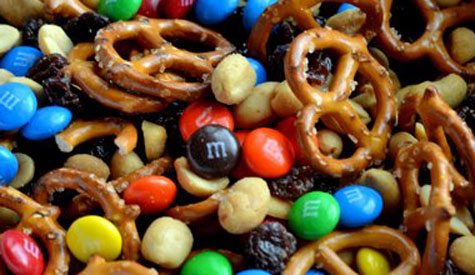
What type of mixture is this?
a)
homogenous mixture
b)
chemical
c)
heterogeneous mixture 
d)
solid mix
38.
A substance in which all the atoms are the same
a)
colloid
b)
homogeneous mixture
c)
solution
d)
element
39.
Which of the following is an element?
a)
Sugar
b)
Salt
c)
Water
d)
Oxygen
40.
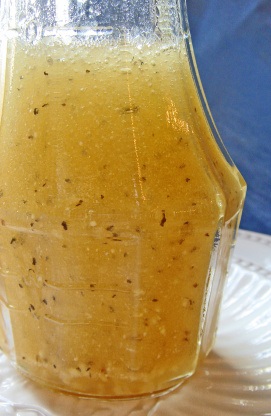
Italian Salad Dressing is a . . .
a)
heterogeneous mixture
b)
homogeneous mixture
c)
Pure Substance
d)
Compound
41.
If you change a substance into a new substance...
a)
Partial Change
b)
Physical Change
c)
Chemical Change
d)
Freezing
42.
Changing the phase, size or shape of something....
a)
Chemical change
b)
Physical Change
c)
Suspension
d)
Colloid
43.
A gold bar is an example of a.....
a)
pure element
b)
pure compound
c)
heterogeneous mixture
d)
homogeneous mixture
44.
Is burning wood a chemical or physical change?
a)
chemical
b)
physical
45.
Which is NOT a chemical change?
a)
Leaves changing colors in the fall
b)
Iron rusting
c)
Digesting Lunch
d)
Ice Melting
46.
Which form of matter does not take the shape of its container?
a)
liquid
b)
gas
c)
solid
d)
air
47.

Blue color

a)

Physical Property

b)

Chemical Property

48.

Ice melts

a)

Physical Change

b)

Chemical Change

49.

According to Kinetic Molecular Theory, what happens to the motion of particles as energy (temperature) increases?

a)

Particles move slower

b)

Particle motion remains unchanged

c)

Particles move faster

d)

None of these

50.

Which of the following images best represents the particle model of a liquid?

a)
b)
c)
51.

Phase changes in matter occur when _____________ is either released or absorbed.

a)

Plasma

b)

Liquid

c)

Mass

d)

Energy