
 Worksheets
PBS EOC Review
Total questions: 82
Worksheet time: 1hrs 26mins

What is the blood type?
O
AB
A
B
Which image represents Type B blood?


Which component of blood makes up the majority (over 50%) of total blood volume?
erythrocytes
platelets
plasma
lymphocytes
The purpose of plasma in blood is to
transports oxygen from the lungs to other parts of the body.
fight infections.
make blood red.
acts as the major medium that holds, carries and transports all the other components of blood, including nutrients, antibodies, food, waste and other cells.
clot cuts and damaged blood vessels.
Thrombocytes are also known as
plasma.
platelets.
red blood cells.
white blood cells.
What is the scientific term for a white blood cell?
Thrombocyte
Platelet
Erythrocyte
Leukocyte
These are found in blood and help fight infections...
white blood cells
platelets
plasma
red blood cells
Which blood component carries the respiratory gases that we need to breath? (oxygen & carbon dioxide)?
white blood cell
red blood cell
plasma
platelets
What is NOT an example of personal protective equipment (PPE?)
Gloves
Goggles
Long-sleeved shirt
Close-toed shoes

A DNA strand that reads ATGGC has a complimentary strand that reads
CGGTA
TACCG
GCCAT
ATGGC

Which lanes represent DNA from the same person?
1 and 2
2 and 3
1 and 4
3 and 4
A Crime Scene Investigator (CSI) is called to the scene of a mysterious death. Which of the following is NOT one of the initial steps used to process a crime scene?
Interview witnesses to establish a theory of the case.
Examine the crime scene and mark any evidence.
Perform DNA analysis on all biological samples.
Sketch a diagram of the crime scene.
Investigators collected the following evidence from a crime scene: Type A blood, Dyed brown hair, Whorl pattern fingerprint, and a Shoe print. Suspect #1 was found to have type A blood, dyed brown hair, low similarities in fingerprint match and hiking shoes. Which of the following could be used to potentially eliminate suspect #1 as a suspect?
Blood type A
Dyed brown hair
The fingerprint

The graph represents the diameter of the bloodstain (cm) versus the height from which it was dropped (cm). Using the graph, from what height was the blood most likely dropped that would result in a blood stain pattern with a diameter of 1.9 cm?
80cm
120cm
150cm
200cm

Identify what structure is outlined in the BLACK outline.
Base pair
deoxyribose sugar
phosphate group
hydrogen bonds
Nucleotide

Identify what structure is outlined in the BLACK outline.
Base pair
deoxyribose sugar
phosphate group
hydrogen bonds
Nucleotide

Identify what structure is outlined in the BLACK outline.
Base pair
deoxyribose sugar
phosphate group
hydrogen bonds
Nucleotide
The amount of breaths someone takes per min
Heart Rate
Skin Conductivity
Respiration Rate
Blood Pressure
The amount of times the heart beats per min
Heart Rate
Skin Conductivity
Blood Pressure
Respiration Rate

What is a polygraph test?
A test to see how well you can adapt and control your physiological responses in a high stress environment.
A test that determines your age.
A test that determines how much you weigh without stepping on a scale.
A test used to determine whether you are a truther or a liar.
When analyzing polygraph results, what is the investigator looking for?
The person's heart rate will increase when telling a lie.
The person's breathing rate will increase when telling a lie.
The person's breathing rate will decrease when telling a lie.
The results of the relevant question are different from the results of the control question.

Match the fingerprint
Loop
Whorl
Helix
Arch
Which of the following physiological responses are measured during a polygraph test? (check all that apply)
Respiration rate
Heart rate
Digestion rate
Blood pressure
In DNA, A pairs with ____ and C pairs with ____.
G, T
T, G
A, C
C, A
Time of death is determined by measuring
rigor mortis
pupil dilation
environmental temperature
core body temperature
The outermost layer of hair is called the...
cortex
medulla
cuticle
keratin
A physician who performs an autopsy when death may be accidental or violent. He or she may also serve in some jurisdictions as the coroner.
Medical Examiner
Epidemiologist
Entomologist
Forensic Anthropologist
If adenine makes up 20% of DNA, what percent is guanine?
20%
10%
30%
60%
Which of the following may indicate that a mole is skin cancer?
Moles has uniform border
Mole is a small diameter
Mole has more than one color
Mole is symmetrical in shape
The human body's ability to maintain constant internal conditions is referred to as
homeostasis
hematology
hepatic
differentiation

The pancreas produces _____ when your blood sugar level is high.
Thyroxin
Melatonin
Glucagon
Insulin
What type of antibodies does type B blood produce?
Anti-A antibodies
Anti-B antibodies
Anti-A and Anti-O antibodies
Anti-C antibodies
Describe hematocrit.
the nonliving fluid matrix that makes up 55% of blood
red bone marrow where blood cells are formed
the WBCs in blood, roughly 1% of blood
the erythrocytes (RBCs) in the blood, roughly 45% of blood
Known as "Bad Cholesterol" that clogs arteries and can cause heart disease and stroke.
LDL
Trans-fats
HDL
Triglycerides
During digestion, ________ are broken down into _________ which provides ________ for the cells.
Fats, amino acids, oxygen
Fibers, fatty acids, free radicals
Carbohydrates, glucose, energy
Proteins, sugar, fuel
A change in the sequence of nucleotides due to a substitution, addition or deletion
mutation
translation
transcription
anticodon
Process of a cell division that results in four daughter cells each having 23 chromosomes
mitosis
meiosis
both mitosis and meiosis
anaphase
Building block of proteins
sugars
amino acids
lipids
carbohydrates
A triplet of bases in tRNA that binds to a complementary codon in mRNA in a ribosome.
codon
anti-codon
amino acid
allele
A 3 nucleotide sequence of DNA that specifies an amino acid; the basic unit of genetic code
codon
anti-codon
amino acid
allele
The synthesis of mRNA from a DNA template
translation
synthesis
replication
transcription
The synthesis of a protein using the genetic information encoded in an mRNA molecule
translation
replication
synthesis
transcription
A condition in which the blood is deficient in red blood cells (by volume)
leukemia
hemophilia
tay sachs
anemia
Disease that destroys RBC's, blocks blood vessels with mis-shaped cells, and lessens the RBC's efficiency at transporting oxygen throughout the body
hemophilia
tay sachs
sickle cell disease
leukemia
Genotype BB is considered
homozygous recessive
heterozygous
homozygous dominant
autosomal
Genotype Bb is considered
homozygous recessive
heterozygous
homozygous dominant
autosomal
Genotype bb is considered
homozygous recessive
heterozygous
homozygous dominant
autosomal
Where does transcription take place?
nucleus
cytoplasm
ribosome
mitochondria
The phase of mitosis where chromosomes separate at the centromeres and move to opposite sides of cell.
prophase
metaphase
anaphase
telophase
People who study disease outbreaks are
epidemiologists.
medical examiners.
entymologists.
forensic anthropologists.
A _________infection is one that patients acquire at a hospital.
pandemic
outbreak
endemic
nosocomial
Organisms that cause infectious disease are called
pathogens.
hosts.
antibodies.
nosocomial.
________ produce antibodies.
T-cells
B-cells
Phagocytes
Antigens
Immunity gained from a vaccine is
nonspecific immunity.
innate immunity.
naturally acquired immunity.
artificially acquired immunity.
A portable electronic device used to "jump start" or regulate the heart
AED
CPR
Hands Only CPR
ESPN

The purple bacteria in this image are
cocci.
bacilli.
spirilla.

The bacteria in this image are
cocci.
bacilli.
spirilla.

The bacteria in this image are
Gram positive.
Gram negative.
About how long can you keep a tourniquet on before it can cause permanent tissue damage?
20 minutes
2 Hours
12 hours
2-3 days
Antibiotics can be used to treat what type of pathogens?
Bacteria
Viruses
Fungi
Helminths
What is the purpose of PCR?
Makes DNA fast
Makes DNA accurately
Makes large quantities of DNA
Reduces the amount of DNA
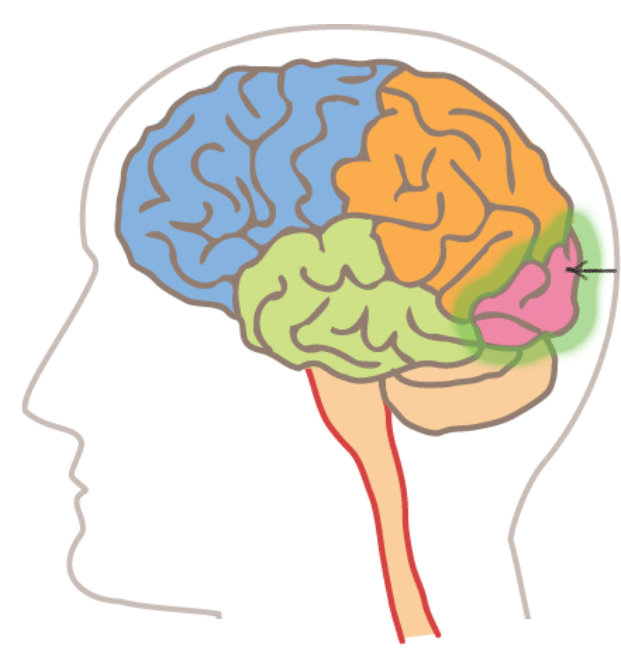
Identify the lobe of the brain highlighted.
Frontal lobe
Parietal lobe
Occipital lobe
Temporal lobe
Which part of our brain do we rely on for problem solving?
Parietal
Temporal
Occipital
Frontal
Toxicology is the study of what?
Disease
poisons
parasites
death
What is histology?
Study of poisons
Study of body tissues
Study of histamines
Study of blood

