
 Worksheets
Chemical Bonding
Total questions: 50
Worksheet time: 4hrs 44mins
Atoms bond because:
They want to achieve a full outer electron shell.
They are attracted to each other by magnetic forces.
They are trying to become larger molecules.
They want to change their atomic number.
What is a valence electron?
An electron in the outer shell of an atom
A proton in the nucleus of an atom
A neutron in the nucleus of an atom
An electron in the inner shell of an atom
Which of the following elements has a Lewis Dot Diagram with 7 valence electrons?
Br
Al
He
N
What does the Octet Rule state?
Atoms tend to gain, lose, or share electrons to have eight electrons in their outer shell.
Atoms always have eight protons in their nucleus.
Atoms are stable with eight neutrons in their nucleus.
Atoms form bonds to have eight total electrons.
Identify which of the following compounds are ionic: NaCl, MgO, HF, KI, H₂O, O₂.
NaCl, MgO, KI
HF, H₂O, O₂
NaCl, HF, O₂
MgO, H₂O, KI
An ionic bond is defined as:
A bond formed by the sharing of electrons between atoms.
A bond formed by the transfer of electrons from one atom to another.
A bond formed by the sharing of a pair of electrons between two atoms.
A bond formed by the attraction between a hydrogen atom and an electronegative atom.
What do ionic bonds form?
Covalent compounds
Metallic structures
Ionic compounds
Molecular bonds
An ion is defined as:
A neutral atom
An atom or molecule with a net electric charge
A molecule with no charge
A stable atom
Identify the correct chemical formula for an ionic bond.
NaCl
H2O
CO2
C6H12O6
O2
A covalent bond is defined as:
A bond formed between nonmetals by the transfer of electrons
A bond formed between nonmetals by the sharing of electrons
A bond formed between nonmetals by the donation of protons
A bond formed between nonmetals by the sharing of protons
Covalent bonds form between which kind of elements?
Metals
Non-metals
Metalloids
Noble gases
How do you show partial charges in a polar covalent bond?
By using delta symbols (δ+ and δ-)
By using full positive and negative charges
By using arrows to indicate electron movement
By using Lewis dot structures
What is the difference between a single, double, and triple covalent bond? List an example of each.
A single covalent bond involves one pair of shared electrons, a double bond involves two pairs, and a triple bond involves three pairs. Examples: H2 (single), O2 (double), N2 (triple).
A single covalent bond involves two pairs of shared electrons, a double bond involves three pairs, and a triple bond involves four pairs. Examples: H2 (single), O2 (double), N2 (triple).
A single covalent bond involves one pair of shared electrons, a double bond involves three pairs, and a triple bond involves two pairs. Examples: H2 (single), O2 (double), N2 (triple).
A single covalent bond involves three pairs of shared electrons, a double bond involves two pairs, and a triple bond involves one pair. Examples: H2 (single), O2 (double), N2 (triple).
What part of the atom is involved in bonding?
Protons
Neutrons
All electrons
Valence electrons
Which of the following is the correct Lewis Dot Diagram for Carbon?



C
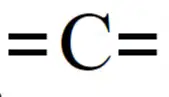
O


Is this the correct Lewis Dot Structure for phosphorus?
Yes
No

This is a correct dot diagram for neon (Ne)
true
false


What is the correct lewis dot diagram for krypton?
Left
Middle Left
Middle Right
Right
none of these



How many electrons are shared in a single bond?
2 pairs
4
2
1
Ionic bonding is between a
nonmetal and nonmetal
metal and nonmetal
metal and metal
Depends on the situation
How many different elements are in the C6H12O6
3
6
12
24

Hydrogen atoms come together to form a _________________
Dancing bear
Hydrogen molecule
Carina molecule
Artemis molecule
16. What is the number of valence electrons for Calcium (Group 2)?
1
2
3
4
17. What is the number of valence electrons for Carbon (Group 14)?
1
2
3
4
18. What is the number of valence electrons for Neon and the other Noble Gases?
5
6
7
8
Which of the following elements will form a cation?
Arsenic
Copper
Bromine
Fluorine
Which of the following elements will form an anion?
Calcium
Cobalt
Nickel
Iodine
What is a cation?
a positive ion
a negative ion
an electrically charged cat
What is an anion?
a positive ion
a negative ion
a dsylexic onion


Na ionizes to a charge of _______
+1
+2
-1
-2
P ionizes to a charge of _______.
+3
-3
+2
-2
O ionizes to a charge of ________.
+1
+2
-1
-2
Cl ionizes to a charge of _________.
-2
-1
+1
+2
The electrons in a nonpolar covalent molecule are shared...
Evenly
Unevenly
Electrons are not shared
None of the Above
What must the difference in electronegativity between two atoms be in order for the bond between them to be nonpolar covalent?
less than 0.5
greater than 1.7
between 0.4 and 1.7
exactly 0
Which of these is correct?


Electronegativity of the Elements of the Periodic Table increases from ___________ to ___________.
top left, bottom right
top, bottom
bottom right, top left
bottom left, top right

When you have Si-O, what is the polarity?
nonpolar
polar
ionic

