wayground logo

Free Printable Worksheets

Font size

S
M
L
XL
Worksheets

Comp. of matter and law of conservation of matter test review

Total questions: 60

Worksheet time: 39mins

Name
Class
Date
1.

All matter is made of tiny particles called ___________.

a)

atoms

b)

elements

c)

compounds

d)

mixtures

2.

This diagram represents a _____.

a)

compound

b)

mixture

c)

element

3.
This picture represents which of the following?
a)
Element
b)
Compound
c)
Mixture
4.
NaHCO3 is an example of —
a)
an abbreviation
b)
a compound
c)
a mixture
d)
an element
5.

How many atoms are in a molecule of caffeine?

a)

4

b)

24

c)

8

d)

16

6.

How many atoms are in a molecule of water?

a)

1

b)

2

c)

3

d)

4

7.

How many elements are in a molecule of water?

a)

1

b)

2

c)

3

d)

4

8.

Which is an Element

a)

NaCl

b)

H2O

c)

Sn

d)

NaOH

9.

Which is a compound?

a)

NaOH

b)

Fe

c)

N

d)

He

10.

A molecule is created when the same _________ is bonded together. For example: C10

a)

Element

b)

Compound

c)

Mixture

11.
a)

Element

b)

Compound

c)

Mixture

12.
a)

Element

b)

Compound

c)

Mixture

13.

a)

Element

b)

Compound

c)

Mixture

14.

a)

Elements

b)

Mixture

c)

Compound

15.

a)

element

b)

compound

c)

mixture

16.

a)

element

b)

compound

c)

mixture

17.

a)

element

b)

compound

c)

mixture

18.

a)

element

b)

compound

c)

mixture

19.
a)

element

b)

compound

c)

mixture

20.
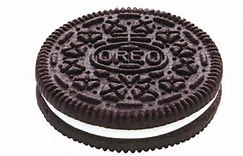
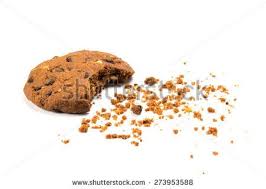
An oreo cookie weighs 20 grams.  It gets crushed into crumbs for a recipe.  How much do its crumbs weigh?
a)
15 grams
b)
25 grams
c)
20 grams
21.
The Law of Conservation of matter states that the total amount of matter ______________ after it undergoes change.
a)
disappears
b)
stays the same
c)
weighs less
d)
explodes
22.
What is the Law of Conservation of mass?
a)
Mass is created in a chemical reaction
b)
Mass is created in a physical change
c)
New chemicals formed from a chemical reaction have a larger overall mass than the original reactants
d)
Mass is never created or destroyed
23.

What will have more mass when a chemical change is complete: the reactants before the chemical reaction or the product after the reaction is complete?

a)

They both will have the same mass

b)

The product always has more mass than the reactant

c)

The reactant will have more mass than the product

d)

They both will lose mass after the reaction

24.

What do we call the chemicals that result from a chemical reaction?

a)

reactants

b)

products

c)

subscripts

d)

coefficients

25.

________ are the starting substances in a chemical equation.

a)

Reactants

b)

Producer

c)

Reaction

d)

Products

26.
What is the left part of a chemical equation called?
2H2 + O2 --> 2H2O
a)
Reactants
b)
Products 
c)
Yields 
d)
Chemical Equation 
27.
What is the right part of a chemical equation called...
2H2 + O2 --> 2H2O
a)
Reactants
b)
Products 
c)
Yields 
d)
Chemical Equation 
28.
How many atoms of carbon (C) are in C6H12O6?
a)
3
b)
6
c)
12
d)
24
29.
How many Aluminum are in Al2O3?
a)
3
b)
2
c)
5
30.
Is the following equation balanced?...
Al + O2 --> 2Al2O3
a)
Yes!
b)
No!
31.
Is the following equation balanced?
2C2H2 + 5O2 --> 4CO2 + 2H2O
a)
yes
b)
no
32.
Is the following equation balanced?
4Fe + 3O2 --> 2Fe2O3
a)
yes
b)
no
33.
Is the following reaction balanced?
2CH3OH + 3O2 --> 2CO2 + 4H2O
a)
yes
b)
no
34.
How many Sodium (Na) are in 6NaCl?
a)
1
b)
12
c)
6
35.
How many Aluminum are in Al2O3?
a)
3
b)
2
c)
5
36.
How many Hydrogen are in 4H2O?
a)
6
b)
8
c)
2
d)
4
37.
Which of the following reactions is balanced?
a)
2CH4 + O2 -> CO2 + H2O
b)
CH4 + 2O2 -> CO2 + H2O
c)
CH4 + 2O2 -> CO2 + 2H2O
d)
None of the chemical equations are balanced.
38.

What reaction has the following general formula:

AB --> A + B

a)

Synthesis

b)

Decomposition

c)

Single Replacement

d)

Double Replacement

39.

What type of reaction is the following:
2H2+O2>2H2O2H_2+O_2->2H_2O  

a)

Synthesis

b)

Decomposition

c)

Single Replacement

d)

Double Replacement

40.

Substances that are made up of ONLY one type of atom (element) or compound.

a)

Heterogeneous mixture

b)

Pure substance

c)

Suspension

d)

Homogeneous mixture

41.

Which of the following is classified as a pure substance?

a)

Lemonade

b)

Fruit punch

c)

ketchup

d)

Hydrogen

42.
Which of the following is a pure substance? 
a)
Water
b)
Sugar
c)

Gold

d)
ALL of them
43.

Which of the following is NOT a mixture?

a)

milk

b)

lemonade

c)

vegetable salad

d)

carbon

44.

Which of these is an element?

a)

Salt (NaCl)

b)

Water (H20)

c)

Oxygen (O)

d)

Carbon Dioxide (CO2)

45.

Which of these is a compound?

a)

Aluminium (Al)

b)

Carbon Dioxide (CO2)

c)

Nitrogen (N)

d)

Sand

46.

True or False: Elements and compounds are pure substances.

a)

True

b)

False

47.

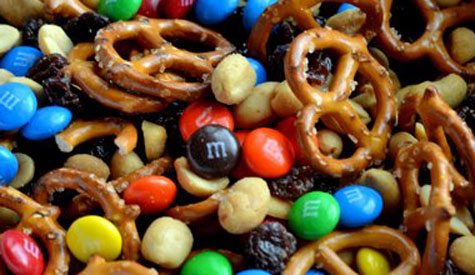
Identify which images are HETEROGENEOUS MIXTURES! (Check all that apply)

a)
b)
c)
d)
48.
Max is hungry and he prepares cereal with milk. This is an example of a: 
a)
Homogeneous mixture
b)
Heterogeneous mixture
49.
What are the two types of Mixtures
a)
Elements and Subatomic Particles
b)
Protons and Electrons
c)
Atoms and Compounds
d)
Homogenous and Heterogeneous
50.
Two substances physically combined and that appears the same throughout is classified as
a)
A homogeneous mixture
b)
A heterogeneous mixture
c)
An element
d)
  A compound
51.

What type of mixture does this diagram represent?

a)

Homogeneous

b)

Heterogeneous

52.
What type of mixture is this?
a)
homogenous mixture
b)
chemical
c)
heterogeneous mixture 
d)
solid mix
53.

A mixture that contains two or more substances uniformly combined

a)

heterogeneous mixture

b)

homogeneous mixture

c)

suspension

d)

colloid

54.
a)
heterogeneous mixture
b)
homogeneous mixture
55.

In which mixture can you not see all of the parts?

a)

homogeneous

b)

heterogeneous

56.

In which mixture can you see all of the parts?

a)

homogeneous

b)

heterogeneous

57.
a)

Pure Substance

b)

Mixture

58.

___________ are the smallest unit of an element that maintains the properties of that element.

a)

Atoms

b)

Elements

c)

Compounds

d)

Mixtures

59.
What is an example of a mixture?
a)
iron
b)
ice
c)
soil
d)
gold
60.

Which of these is a mixture?

a)

Laundry Detergent

b)

Salt (NaCl)

c)

Oxygen (O)

d)

Fluorine (Fl)