
 Worksheets
2.1-2.2 Test Review
Total questions: 50
Worksheet time: 29mins
What is the term for the attraction between molecules of the same substance?
Adhesion
Cohesion
Polarity
Mixture
Which term describes a substance that dissolves another substance?
Solute
Solvent
Suspension
Mixture
What is the term for the attraction between molecules of different substances?
Cohesion
Adhesion
Solution
Solute
What is the term for a mixture where particles are dispersed throughout but not dissolved?
Solution
Suspension
Solvent
Cohesion
Which term describes the uneven distribution of charges in a molecule?
Polarity
Mixture
Solute
Adhesion
What is the term for a substance that is dissolved in a solution?
Solvent
Solute
Suspension
Cohesion
Which type of bond involves the attraction between a hydrogen atom and an electronegative oxygen atom between adjacent water molecules?
Ionic Bond
Covalent Bond
Hydrogen Bond
Metallic Bond
What is water made of?
Hydrogen and nitrogen atoms
Hydrogen and oxygen atoms
Oxygen and carbon atoms
Carbon and nitrogen atoms
What is the chemical formula for water?
H2O
CO2
O2
H2
What kind of charge does oxygen have in a water molecule?
Positive charge
Neutral charge
Slight negative charge
Slight positive charge
Why is water considered polar?
Because of its high temperature
Due to its color
Because of an uneven distribution of charges
Due to its solid state
Diagram showing the partial charges in a water molecule with oxygen having a partial negative charge and hydrogen having a partial positive charge.
Oxygen has a partial positive charge and hydrogen has a partial negative charge.
Both oxygen and hydrogen have partial positive charges.
Both oxygen and hydrogen have partial negative charges.
Oxygen has a partial negative charge and hydrogen has a partial positive charge.
What are hydrogen bonds?
Strong covalent bonds between atoms
Weak attractive forces between molecules
Ionic bonds between charged particles
Metallic bonds in metals
What causes a hydrogen bond to form between water molecules?
A negatively charged hydrogen atom is attracted to a positively charged oxygen atom
A positively charged hydrogen atom is attracted to a negatively charged oxygen atom
A positively charged oxygen atom is attracted to a negatively charged hydrogen atom
A negatively charged oxygen atom is attracted to a positively charged hydrogen atom
Why are hydrogen bonds important for water?
They make water a good conductor of electricity
They give water its special properties
They cause water to evaporate quickly
They make water a solid at room temperature
Why does ice float on water?
A) Ice is denser than liquid water.
B) Ice is less dense than liquid water.
C) Ice has no hydrogen bonds.
D) Ice is heavier than liquid water.
What is cohesion?
Attraction between molecules of different substances
Attraction between molecules of the same substance
Repulsion between molecules of the same substance
Repulsion between molecules of different substances
What is an example of cohesion?
Water evaporating from a surface
Drops of water forming beads on smooth surfaces
Ice melting into water
Water boiling at high temperatures
What does cohesion cause that allows insects and spiders to walk on water?
Buoyancy
Surface tension
Viscosity
Capillary action
What is adhesion?
Attraction of molecules of the same substance
Repulsion of molecules of different substances
Attraction of molecules of different substances
Repulsion of molecules of the same substance
What causes the meniscus in a graduated cylinder?
Cohesion between water and air
Adhesion between water and glass
Gravity acting on the water
Evaporation of water
What is capillary action?
Water falling in a wide tube
Water rising in a narrow tube against gravity
Water evaporating from a surface
Water freezing in a narrow tube
How does water move from the roots to the leaves in plants?
Through evaporation
By adhesion and cohesion
By gravity
Through photosynthesis
What is heat capacity?
The amount of energy needed to raise the temperature
The amount of water in a body
The speed at which an object cools down
The volume of a liquid
Why do bodies of water like oceans and lakes absorb large amounts of heat with only small changes in temperature?
Because they have a small mass
Because they have a large mass
Because they are shallow
Because they are salty
What percentage of the human body is composed of water?
30-40%
50-60%
60-70%
80-90%
Which of the following is NOT a function of water in the human body?
Transport nutrients and oxygen
Lubricate and cushion joints
Produce energy
Regulate body temperature
Why are chemical reactions important in the water of living things?
They help in photosynthesis
They support metabolism, growth, and development
They create new cells
They provide energy directly
What is a solution?
A mixture where components are unevenly spread out
A mixture where components are evenly spread out
A pure substance
A compound of two elements
What is the role of a solvent in a solution?
It is the substance that is dissolved
It is the substance that causes the dissolving
It is the solid part of the solution
It is the gas part of the solution
Which of the following is an example of a solvent?
Sugar
Salt
H2O (Water)
Sand
What is a suspension?
A mixture of water and dissolved materials
A mixture of water and undissolved materials
A solution with only one component
A pure chemical compound
How does the structure of water contribute to its unique properties?
It allows water to be a good conductor of electricity.
It enables water to dissolve nonpolar substances.
It gives water a high surface tension and heat capacity.
It makes water a poor solvent for ionic compounds.
How does water’s polarity influence its properties as a solvent?
It makes water a nonpolar solvent.
It allows water to dissolve ionic and polar substances.
It prevents water from dissolving any substances.
It causes water to evaporate quickly.


What does the 1.00794 stand for?
number of electrons
atomic number
average atomic mass
number of protons
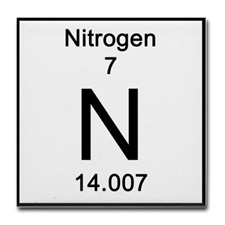
If an atom has 12 protons, which of the following must it also have to be considered a neutral atom?
12 neutrons
12 electrons
12 protons
24 protons and neutrons

If the mass number of this chlorine atom is 36, how many neutrons does it have?
17
18
19
can't be determined


The subatomic particles that make up an atom.
solid, liquid, gas
electrons, protons, nucleus
energy, protons, nucleus
electrons, protons, neutrons

Atoms are made up of ________________
energy
electrons
subatomic particles
gasses

__________ are negatively charged particles that are in the orbitals around the nucleus.
protons
nucleus
neutrons
electrons

A proton has a ___________ charge.
positive
negative
neutral
massive.
An electron has a _________ charge
positive
neutral
negative
massive
A neutron has _________ charge or is ________.
negative ... neutral
positive .... neutral
no .... negative
no ... neutral

The total number of protons and neutrons in an atom's nucleus
Atomic Mass Number
Element
Atomic Number
Atom

The number of protons found in the nucleus of an atom.
Atomic Mass Number
Atomic Number
Chemical Symbol
Element

