
Font size
 Worksheets
Y11 iG Chem U20-21 Rates and Equil
Total questions: 101
Worksheet time: 7hrs 38mins
Label these two energy diagrams correctly. Be aware you will have to DRAW these from memory on your GCSE Test

1 and 3
1 and 4
2 and 3
2 and 4

A
B
C
D
Why does a higher temperature increase the rate of a reaction?
it increases both the frequency and energy of particle collisions
it only increases the frequency of particle collisions
it only increases the energy of particle collisions
it reduces the activation energy of the reaction
Grinding a effervescent tablet into powder increases the rate of reaction due to increased
concentration
surface area
temperature
reactants
Adding a catalyst ___________ the activation energy.
Raises
Lowers
Doesn't affect
Inreases
The minimum amount of energy needed for colliding particles to react is called
Chemical Energy
Kinetic Energy
Activation Energy
Potential Energy
Why does a higher concentration increase the rate of reaction?
it increases the amount of reactants
it lowers the activation energy
it increases the energy of particle collisions
it increases the frequency of particle collisions
Why does a higher temperature increase the rate of a reaction?
it increases both the frequency and energy of particle collisions
it only increases the frequency of particle collisions
it only increases the energy of particle collisions
it reduces the activation energy of the reaction
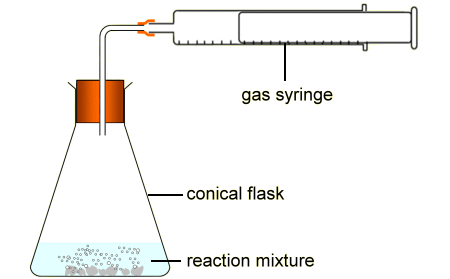
How is this equipment being used to measure the rate of reaction?
The gas syringe measures how much gas is produced in a certain time
The reaction mixture will increase in volume in a certain time

The rates of some chemical reactions can be measured by using the apparatus shown. For which reaction is this apparatus suitable?
MgCO3 + 2HCl -> MgCl2 + CO2 + H2O
Mg + ZnCl2 -> MgCl2 + Zn
MgCl2 + 2NaOH -> Mg(OH)2 + 2NaCl
MgO + 2HCl -> MgCl2 + H2O
When you react sodium thiosulfate and hydrochloric acid, the solution turns cloudy. This is because...
a sodium precipitate is produced
a sulfur precipitate is produced

Which solution show a higher concentration (left or right)?
left
right
both the same
The more concentrated the sodium thiosulfate solution, the less time is taken for the cross to become no longer visible. Give two reasons why.
Particles are more spread out
Particles collide more frequently
Particles have more energy
Particles move more quickly
There are more particles in a fixed volume
Which factors affect the rate of a reaction?
temperature
concentration
surface area
pressure
add a catalyst
Which of the following explains the meaning of effective collision?
The collision where its energy is less than the activation energy
The collision that has a low energy
The collision which takes place before a reaction
The collision that causes a reaction
Increase in temperature causes the particles to
slow down
move faster
stay apart from each other
move in the correct order
Why does using an acid with a
higher concentration increase the rate of reaction?
it increases the amount of reactants
it lowers the activation energy
it increases the energy of reactant particles
it increases the frequency of collision
A temperature increase causes the particles ......
to slow down
move faster
collide higher
in the right order
Why does a higher temperature increase the rate of a reaction?
It increases both the frequency collision and energy of reactant particles
It only increases the frequency of collision
It only increases the energy of reactant particles
It reduces the activation energy of the reaction
Grinding an effervescent tablet into powder increases the rate of reaction due to increase of
concentration
total surface area
temperature
size

Which factors increase the rate of a reaction?
increasing temperature
increasing concentration of solutions like acids
increasing total surface area of solids
All of these
Increasing pressure causes the reacting particles
to bond together
to repel from each other
gain more kinetic energy
to move closer together
Increasing the temperature gives particles more __________.
time
energy
space
frequency
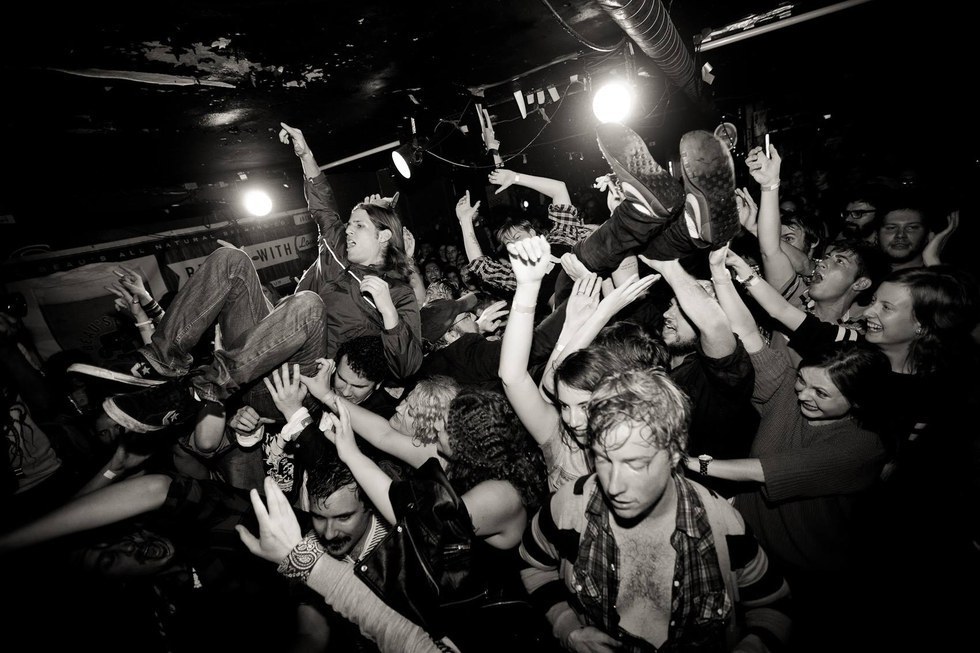
You add more bodies into a "mosh pit" to hope for more collisions. You have increased
temperature
concentration
pressure
catalyst
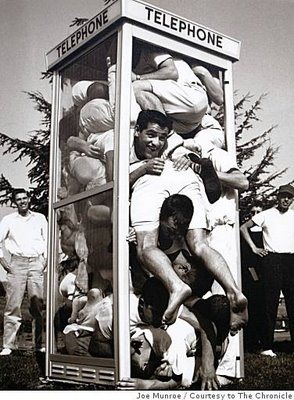
You make a space much smaller by increasing the ________________ hoping to increase the reaction rates.
temperature
concentration
catalyst
pressure
Why does breaking up a solid reactant increase the rate of reaction?
it creates more solid
it creates more energy
it increases the total surface area
it increases the concentration
Why does a higher concentration increase the rate of reaction?
it increases the amount of reactants
it lowers the activation energy
it increases the energy of particle collisions
it increases the frequency of collisions
The following equation shows the reaction between calcium carbonate, CaCO3 and hydrochloric acid, HCl:
CaCO3(aq) + 2HCl(aq) → CaCl2(aq) + CO2 (g) + H2O(l)
Which of the following is the suitable method to determine the rate of reaction?
Change in the temperature of the solution with time
Change in the volume of carbon dioxide gas with time
Change in the mass of water with time
Change in the concentration of hydrochloric acid with time

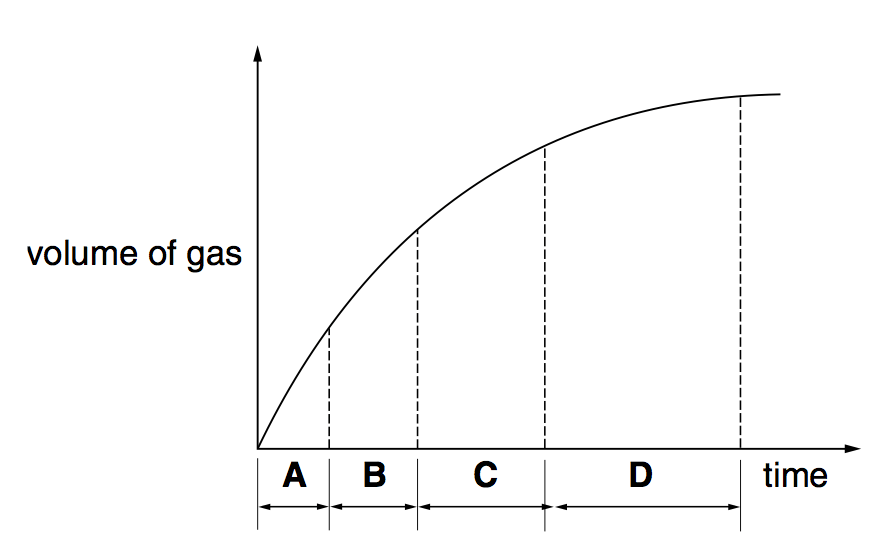
Diagram 4 shows the graph of volume of carbon dioxide gas against time when 5 g of marble chips is added to
50 cm3 of 0.2 mol dm-3 hydrochloric acid.
At what time the rate of reaction the highest?
t1
t2
t3
t4

Diagram 7 shows a graph of the volume of gas produced against time for the reaction between zinc granules and hydrochloric acid.
The gradient of the graph decreases with time because
catalyst is not used
volume of mixture decreases
temperature of reaction decreases
concentration of hydrochloric acid decreases
The equation represents the reaction between sodium carbonate and hydrochloric acid.
Na2CO3 + 2 HCl → 2 NaCl + H2O + CO2
The mass of the beaker and its contents is plotted against time.
Which graph represents what happens when sodium carbonate reacts with an excess of dilute hydrochloric acid?


Which of the following is the meaning of activation energy?
The maximum energy that the particles need to produce effective collision
The amount of energy used by the particles during a collision
The minimum amount of energy that particles must have in order to react
The amount of kinetic energy of molecules during a collision
Label the first column for A,B,C
Label the first column for A,B,C
Explain,what happens to the rate of a reaction when the temperature is reduced.
1. The rate or speed... (a)
2. In terms of collisions.. (b)
3. In terms of energy... (c) o
Correctly define a catalyst.
Corrctle predict equilibrium
Describe how the graph shows the rate of this rxn decreases as time increases.
Correctly answer the questions
Describe two features of an equilibrium
Explain what happens to equilibrium when temp and pressure are changed.

A chemical reaction where the reactants form products that, in turn, react together to give the reactants back.
reversible reaction
irreversible reaction
decomposition reaction
synthesis
SO2 + O2 <=> SO3
If the concentration of SO2 is increased, the equilibrium position of the reaction will shift ___________.
SO2 + O2 <=> SO3
If the equilibrium position shifts to the right, the concentration of O2 will ___________.
N2 + O2 <=> 2NO
If O2 is removed, the concentration of N2 will _______.
For the reaction...
N2 (g) + 3 H2(g) <=> 2 NH3 (g)
If the volume is decreased, which substance(s) will increase in concentration?
N2 (as 2 mol gas → 4 mol gas)
H2 (as 2 mol gas → 4 mol gas)
N2 and H2 (as 2 mol gas → 4 mol gas)
NH3 (as 4 mol gas → 2 mol gas)
For the reaction...
N2 + O2 <=> 2NO + 182kJ (the 182 kJ means heat)
If the temperature is increased the equilibrium position will shift _______.
to the left
to the right
to the left and right
neither left nor right
If a (dynamic) equilibrium is disturbed by changing the conditions, the position of equilibrium................
H2 (g) + Cl2 (g) <=> 2HCl (g) + heat
If the pressure in the system is increased, the equilibrium position will _______.
For the reaction...
N2 (g) + 3 H2(g) ⇌ 2 NH3 (g)
If the pressure in the system is increased, which substance(s) will increase in concentration?
N2
H2
N2 and H2
NH3
What is the effect of increasing the pressure on the following equilibrium: 2NO(g) + O2 (g) ⇌2NO2(g)?
The yield of NO2 increases
The yield of NO2 decreases
The reaction is slower
The concentration of O2 increases.
2SO2(g) + O2(g) ⇌ 2SO3(g)
Removing O2(g) will
shift equilibrium right
shift equilibrium left
increase pressure
have no change
2SO2(g) + O2(g) ⇌ 2SO3(g)
Adding SO3(g) will
shift equilibrium right
shift equilibrium left
increase K
have no change
H2(g) + Cl2(g) ⇌ 2HCl(g) + heat
What will happen to the equilibrium if the temperature is increased?
equilibrium shifts right
equilibrium shifts left
You cannot predict the effect
no change
What is Le Chatelier's principle?
A principle that explains the behavior of gases at high pressures
A cooking technique used to prepare French cuisine
A mathematical formula for calculating equilibrium constants
Principle that describes how a system at equilibrium responds to changes in its conditions
3H2 (g) + N2 (g) ⇌ 2NH3 + heat
When a system at equilibrium is subjected to a change, how does it respond according to Le Chatelier's principle?
It shifts the equilibrium position to counteract the change.
It reverses the change
It accelerates the change
It remains unchanged
3H2 (g) + N2 (g) ⇌ 2NH3 + heat
If the concentration of a reactant is increased, according to Le Chatelier's principle, what will happen to the equilibrium position?
The equilibrium position will remain unchanged.
The equilibrium position will shift to the left.
The equilibrium position will disappear.
The equilibrium position will shift to the right.
3H2 (g) + N2 (g) ⇌ 2NH3 + heat
If the temperature of a system at equilibrium is decreased, what will be the effect on the equilibrium position?

The equilibrium position will reverse
The equilibrium position will remain the same
The equilibrium position will shift to the right
The equilibrium position will shift to the left
What is the effect of adding a catalyst to a system at equilibrium, according to Le Chatelier's principle?
It shifts the equilibrium to the left
It slows down the attainment of equilibrium
It has no effect on the equilibrium position
It speeds up the attainment of equilibrium without affecting the equilibrium position.
In a reversible reaction, if the pressure is increased, what will be the effect on the equilibrium position?
The equilibrium position will not be affected by the pressure change.
The equilibrium position will shift towards the side with more solid reactants.
The equilibrium position will shift towards the side with fewer moles of gas.
The equilibrium position will shift towards the side with more moles of gas.
What is the effect of increasing the temperature on a system at equilibrium, according to Le Chatelier's principle?
The equilibrium position will shift to the direction of the endothermic rxn
The equilibrium position will remain unchanged
The equilibrium position will disappear
The equilibrium position will shift to the direction of the exothermic rxn
What happens to the equilibrium position in a reversible reaction when the concentration of products is increased?
The equilibrium position will shift to the left
The equilibrium position will remain unchanged
The equilibrium position will disappear
The equilibrium position will shift to the right
How does the addition of a catalyst affect the equilibrium position in a chemical reaction, according to Le Chatelier's principle?
It shifts the equilibrium to the left
It slows down the attainment of equilibrium
It has no effect on the equilibrium position
It speeds up the attainment of equilibrium without affecting the equilibrium position.
What is dynamic equilibrium?
The reaction goes forward
The reaction goes backward
The rate of forward and backward reaction is equal
The equilibrium is dynamite
Which of the following does not affect the position of equilibrium?
Temperature
Pressure
Particle Size
Concentration
How does a catalyst affect the position of the equilibrium?
It does not. It only increases the rate of reaction.
Position of equilibrium will shift to the right.
Position of equilibrium will shift to the left.
The reaction would be slower.
3H2 (g) + N2 (g) ⇌ 2NH3 + heat
What would be the effect of increasing the temperature to the equilibrium of an exothermic reaction?
equilibrium shifts to the left
equilibrium shifts to the right
no change in position of equilibrium
2NH3 + heat ⇌ 3H2 (g) + N2 (g)
What would be the effect of increasing the temperature to the equilibrium of an endothermic reaction?
equilibrium shifts to the left
equilibrium shifts to the right
no change in position of equilibrium
3H2 (g) + N2 (g) ⇌ 2NH3 + heat
What would be the effect of increasing the concentration of the product on the position of the equilibrium?
equilibrium shifts to the left
equilibrium shifts to the right
no change in position of equilibrium
3H2 (g) + N2 (g) ⇌ 2NH3 + heat
What would be the effect of decreasing the concentration of the reactant on the position of the equilibrium?
equilibrium shifts to the left
equilibrium shifts to the right
no change in position of equilibrium
3H2 (g) + N2 (g) ⇌ 2NH3 + heat
When pressure is increased, the position of the equilibrium will shift to the side that has...
less number of gaseous molecules
more number of gaseous molecules
3H2 (g) + N2 (g) ⇌ 2NH3 (g) ΔH = −197 kJ/mol
Which of the following factors would shift the equilibrium position to the right? (Choose 2)
increase concentration of nitrogen gas
increase temperature of the equilibrium
increase pressure of the equilibrium
Presence of a catalyst
H2 (g) + I2 (g) ⇌ 2HI (g)
What would be the effect of increasing the pressure on the position of equilibrium?
equilibrium shifts to the right
equilibrium shifts to the left
no change in position of equilibrium
Provide an example of a reversible reaction.
Formation of water from hydrogen and oxygen gas
Combustion of methane
Decomposition of water into hydrogen and oxygen gas
Photosynthesis

Heat + 1 N2O4 → 2 NO2
What will happen when the temperature is increased?
Position of equilibrium will shift to left and become lighter in color
Position of equilibrium will shift to right and become more brown
No change in position of equilibrium
Position of equilibrium will shift to right and become lighter in color


Answer part b.
Correctly predict the position of equilibrium.
Correctly predict the position of equilibrium. (Make sure you are able to explain it too!)
Explain why this reaction is not carried out at these temperatures.
Correctly predict the shift in equilibrium.
Explain what would most likely be a suitable catalyst.
Correctly answer the following questions with this reaction we've studied.
Correctly predict and explain the shift (if any) on the equilibrium given the change in conditions.
Correctly EXPLAIN the following:
Correctly predict what happens to this rxn when temperature changes.
Correctly explain what you would see and why.
Correctly show you have studied this reaction.

