
 Worksheets
Biology Review (1st Half)
Total questions: 55
Worksheet time: 34mins
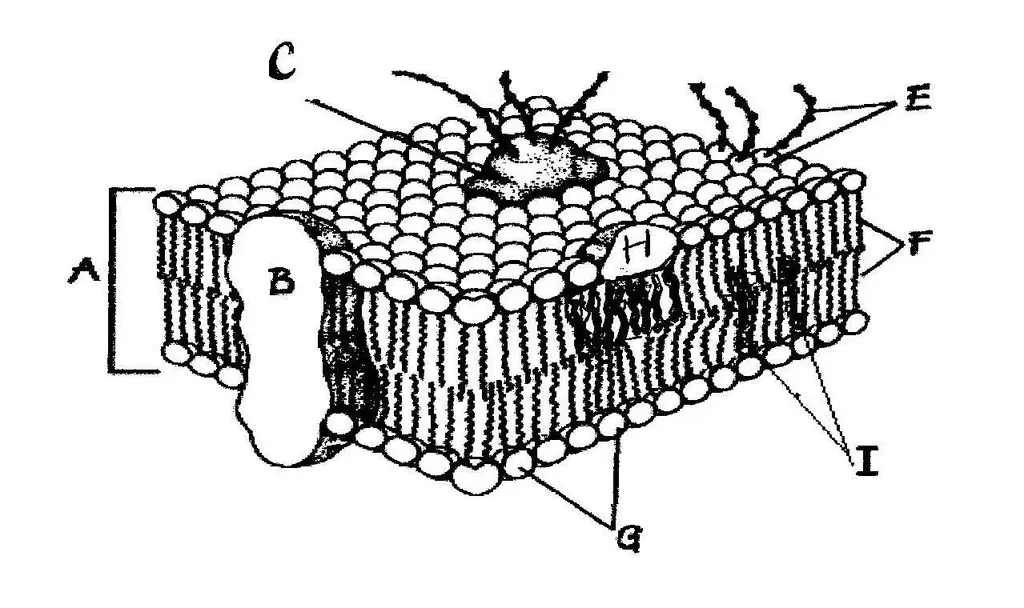
What structure in the cell membrane is E pointing to?
Phospholipid
Protein
Cholesterol
Carbohydrate

Which structure in the cell membrane is labeled by the letter B?
Phospholipid
Protein
Cholesterol
Carbohydrate
Which two environmental conditions can denature an enzyme?
Temperature & pH
Temperature ONLY
pH ONLY
Temperature & Concentration of Substrate

What is letter I pointing to?
Protein
Phospholipid
Carbohydrate
Cholesterol
Which of these is an example of a protein?
Starch
DNA
DNA polymerase
Phospholipid

Which of these is an example of a lipid?
Glucose
RNA
An enzyme
Oil
A monomer is to a polymer, as a _____ is to a _____.
Car is to a garage
A pole is to a flag
A bead is to a necklace
A name tag is to a person
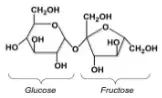
Which of these is an example of a carbohydrate?
Glucose / Starch
DNA
DNA polymerase
Phospholipid
Which of the following processes DOES NOT describe homeostasis?
Sweat to control body temperature
Insulin to control blood sugar
Hormones to balance water retention and excretion
Milk toning down spicy food
Which of the following structures does a plant cell have but not an animal cell?
Cell wall
Centriole
Lysosomes
Cell membrane
Cellular respiration takes place in which organelle?
Chloroplast
Mitochondria
Ribosome
Lysosome
An egg placed in a jar of honey would be in which kind of environment? (Honey is HIGH in solutes)
Hypotonic
Hypertonic
Isotonic
Which process occurs ONLY in plants and not animal cells?
Cellular respiration
Photosynthesis
Protein synthesis
Lipid synthesis
Which organelle is found only in animal cells?
Mitochondria
Chloroplast
Centrioles
Large vacuole
Which of the following is not a characteristic of living things?
Ability to reproduce
Ability to breathe oxygen
Ability to evolve
Ability to grow and develop
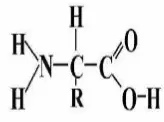
Which macromolecule does this picture describe?
Protein
Carbohydrate
Nucleic Acid
Lipid
A cell placed in pure water would be in which kind of environment?
Hypotonic
Hypertonic
Isotonic
What are the products of photosynthesis?
Glucose and water
Light & Oxygen
Glucose, carbon dioxide, and ATP
Glucose and oxygen
Which type of membrane transport USES ATP and goes AGAINST the concentration gradient?
Passive
Active
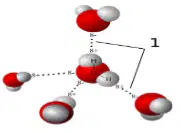
Which type of bond is labeled by "1"?
Covalent bond
Ionic bond
Hydrogen bond
Oxygen bond
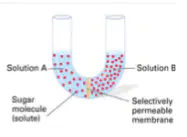
In which direction will the water move? (assume the membrane is IMPERMEABLE to the solutes)
To the left
To the right
There will be no change
Both sides will decrease

Which of the following correctly labels the diagram below?
A= substrate, E=product
A= product, E= substrate
A= enzyme, E= product
A= active site E= enzyme
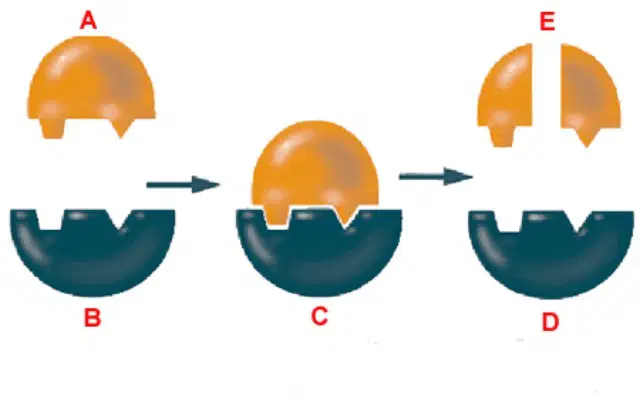
Which of the following is BEST characterized what letter B is pointing to?
Active site
Product
Substrate
Enzyme
Enzymes are which type of macromolecule?
Carbohydrate
Protein
Lipid
Nucleic Acid
Which cells have NO membrane bound organelles?
Animal cells
Prokaryotic cells
Eukaryotic cells
Plant cells
Which of the following is categorized as active transport?
Endocytosis
Facilitated Diffusion
Osmosis
Diffusion
Which of the following is a form of passive transport?
Phagocytosis
Endocytosis
Exocytosis
Osmosis
Which of the following types of transport requires a protein?
Facilitated diffusion
Diffusion
Osmosis
Exocytosis
Which organelle digests food particles, waste, cell parts, and foreign invaders?
Rough E.R.
Lysosomes
Smooth E.R.
Vacuole
Which organelle is included in all cells? Prokaryotic AND Eukaryotic
Nucleus
Vacuole
Rough E.R.
Ribosome
What are the products of cellular respiration?
Oxygen and water
Carbon dioxide and oxygen
Carbon dioxide, water, and ATP
Carbon dioxide and glucose
In an experiment, the one variable that is changed is called the
Constant variable
Controlled variable
Independent variable
Dependent variable
In an experiment, the factor that we measure is called the
Constant variable
Controlled variable
Independent variable
Dependent variable
Viruses are not living things; however, they do have and/or are able to - (SELECT ALL THAT APPLY)
DNA/ RNA
Reproduce
Evolve
Respond to stimulus
The attraction among molecules of different substances is called
Cohesion
Adhesion
High specific heat
Surface tension
The group in an experiment that does NOT receive the IV change. The "baseline" or "normal" group:
Experimental Group
Constants Group
Control group
Dependent Group
What do cohesion, surface tension, and adhesion all have in common in reference to water?
All increase when temperature increases
All are produced by ionic bonding
All are properties related to hydrogen bonding
All have to do with nonpolar covalent bonds
Which term refers to having a partial positive charged region and a partial negative charged region?
High specific heat
Cohesion
Adhesion
Polarity

A process which "corrects" an imbalance in the body to return to homeostasis.
Homeostasis
Negative Feedback Loop
Postive Feedback Loop
Stimulus
Which of the following is a characteristic of enzymes?
They lower the activation energy of reactions
They are made of nucleic acids
They are consumed in reactions
They are used up after one reaction
Which process is responsible for the movement of water across a semipermeable membrane?
Facilitated diffusion
Osmosis
Active transport
Endocytosis
Which of the following processes is an example of active transport?
Facilitated diffusion
Endocytosis
Osmosis
Diffusion
What is the primary function of ribosomes in a cell?
Lipid storage
DNA replication
Protein synthesis
Energy production
Which of the following is a characteristic of enzymes?
They are made of lipids
They lower the activation energy of reactions
They are only found in animal cells
They are consumed in reactions

Stores water, nutrients, and waste products
Pocket filled with digestive chemicals
Jelly-like substance within the plasma membrane
stack of membranes that packages chemicals

What is the function of the organelle depicted in the photo?
To dispose of waste in the cell.
To capture sunlight and convert it into glucose for the cell.
To release energy into the cell.
To control what leaves and enters the cell.

Which organelle contains DNA and controls the cell?
Cell membrane
nucleus
nucleolus
lysosme
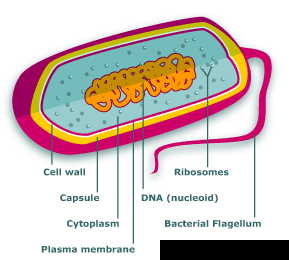

Plant Cell

Bacteria Cell

Animal Cell
* All cells have
* DNA, Cytoplasm, Ribosomes
* Smaller simple cells no nucleus
* Prokaryote

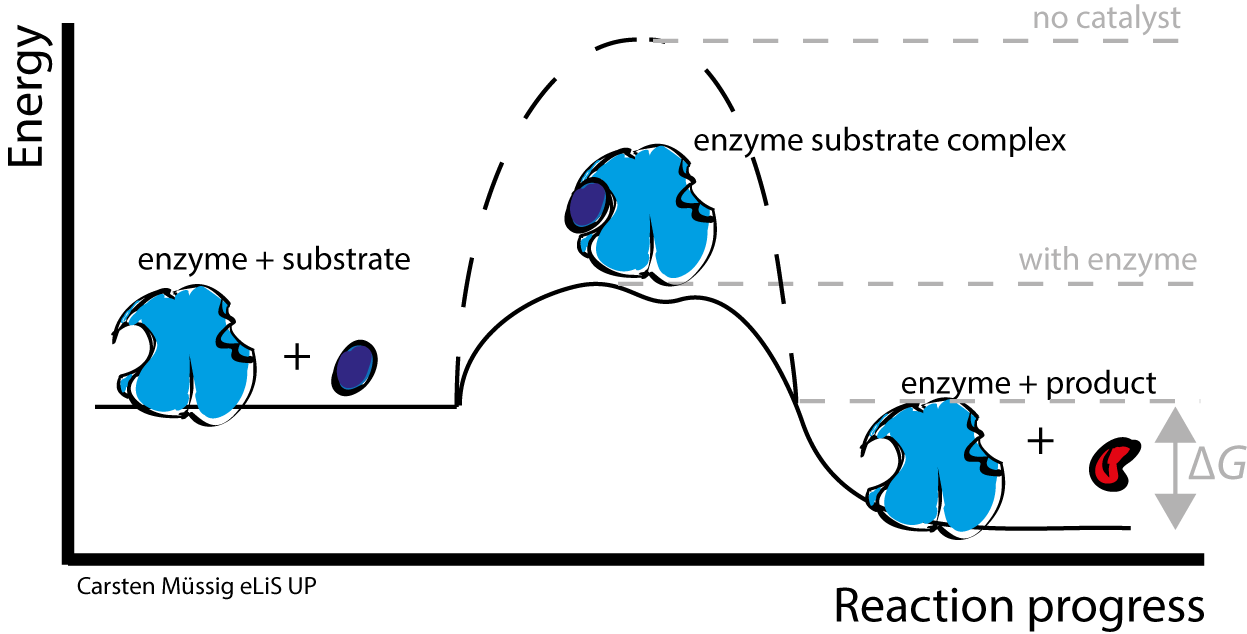

Why has this enzyme activity decreased so much?
The enzyme has become saturated
The temperature is too low
The enzyme has become denatured

