
NEW
Font size
 Worksheets
Atoms (counting), molecules, elements, compounds
Total questions: 41
Worksheet time: 3hrs 34mins
4CF2Cl2
C = 4, F = 4, Cl = 2
C = 1, F = 8, Cl = 8
C = 4, F = 8, Cl = 8
C = 1, F = 4, Cl = 8
C3H5(NO3)3
C = 3, H = 5, N = 3, O = 9
C = 3, H = 5, N = 1, O = 9
C = 9, H = 15, N = 3, O = 9
C = 9, H = 15, N = 1, O = 3
H2SO4
H = 2, S = 4, O = 4
H = 2, S = 1, O = 4
H = 8, S = 4, O = 4
H = 2, SO = 4
How many different elements are present in this molecule?
3 NH4C2H3O2
15
36
5
4
A ______ is a number written in front of a chemical formula.
Coefficient
Subscript
Exponent
Coordinator
How many Hydrogen atoms are in 4H2O?
6
8
2
4
A subscript is the small number below the element symbol that tells the number of _______ of that element.
atoms
valence electrons
protons
elements
How many atoms are present if there is no subscript following the element symbol?
0
2
only 1
1 million
H2O
A combination of symbols and numbers that represent the number and types of elements (atoms) present in a compound
chemical formula
coefficient
reactant
compound
What is the law of conservation of mass?
Mass can change form in a chemical reaction.
Mass cannot be created or destroyed in a chemical reaction.
Mass can be destroyed in a chemical reaction.
Mass can be created in a chemical reaction.
What is the difference between reactants and products in a chemical equation?
Reactants and products are the same thing in a chemical equation.
Reactants are the substances formed as a result of a chemical reaction, while products are the substances present at the beginning of the reaction.
Reactants are the substances present at the beginning of a chemical reaction, while products are the substances formed as a result of the reaction.
Reactants and products are both formed as a result of a chemical reaction.
What is a chemical reaction?
A chemical reaction is a process that leads to the transformation of one set of chemical substances to another.
A chemical reaction is a process that leads to the destruction of chemical substances.
A chemical reaction is a process that leads to the separation of chemical substances.
A chemical reaction is a process that leads to the formation of new elements.
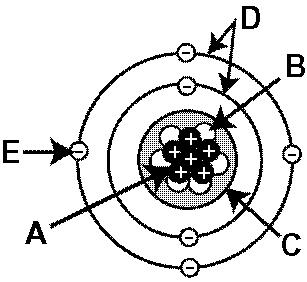
In the atom diagram shown, A is pointing to the darker particles, these are known as
electrons
protons
neutrons
the nucleus
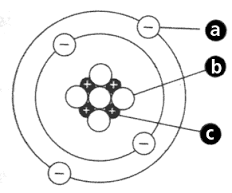
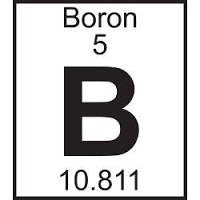
Using the information provided, determine how many electrons the a Boron atom contains.
2.5
5
6
10.81
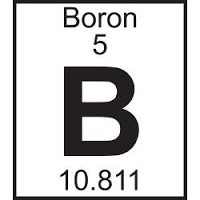
Which formula has 6 atoms of Carbon, 12 atoms of Hydrogen, and 6 atoms of Oxygen.


Determined whether the following equation is balanced or unbalanced. Ag + O2 ---> 2Ag2O
Balanced
Unbalanced
Determine whether the following equations is balanced or unbalanced. H4 + O2 ---> 2H2O
Balanced
Unbalanced
Determine whether the following equation is balanced or unbalanced. H2 + Br2 ---> 2HBr
Balanced
Unbalanced
Determine whether the following equation is balanced or unbalanced. 2Fe + 3Cl2 ---> FeCl3
Balanced
Unbalanced
Fe + S --> FeS
Atom and the Periodic Table:
Groups/Family/Column is ______________
Vertical
Horizontal
Atom and the Periodic Table:
Period /Row= ___________
Horizontal
Vertical
Atom and the Periodic Table:
Atomic mass and - Atomic number = ___________
# of neutrons
# of protons
# electrons
Atom and the Periodic Table:
Atomic Mass= # of ________ + ______________
#of protons + # neutrons
# neutrons + # protons
All of the above ( they will get the same answer)
Atom and the Periodic Table
Atomic #=
# Proton
# Neutron
# Electron
Subatomic particles:
Protons: Positive charge, mass: 1 amu , and location: _________
nucleus
electron cloud or rings
none of the above
Subatomic particles:
Neutron: Neutral charge, mass: ________ and location: nucleus
1 amu
.01
none of the above
Subatomic particles:
Electron: ____ charge, mass: .00001 , and location: nucleus
negative
positive
none of the above
In a neutral atom:
# of Protons
# of electron
None of the above
In chemical formulas, the number of atoms in a unit of the compound is shown by numbers called
superscripts.
subscripts.
coefficients.
elements.
A group of chemical symbols and numbers that represent the elements and the numbers of atoms of each element in a compound is
a chemical formula.
an ionic bond.
a heterogeneous mixture.
a homogeneous mixture.
A substance that cannot be broken down into simpler substances.
Element
Compound
Molecule
Mixture
A substance made up of atoms of two or more different elements joined by chemical bonds.
Element
Compound
Molecule
Mixture
A group of like atoms bonded together.
Element
Molecule
Compound
Mixture

