
 Worksheets
Biomolecules, Enzymes, Water, and Cell Membrane/Transport
Total questions: 66
Worksheet time: 1hrs 6mins
What is the purpose of an enzyme?
To provide energy for reactions
To speed up chemical reactions
To break down cell membranes
To transport molecules across the cell
What factors can affect how well an enzyme functions?
Temperature and pH
Light and sound
Pressure and volume
Color and texture
What is the difference between cohesion and adhesion?
Cohesion is the attraction between different substances, adhesion is between similar substances
Cohesion is the attraction between similar substances, adhesion is between different substances
Cohesion is the repulsion between different substances, adhesion is between similar substances
Cohesion is the repulsion between similar substances, adhesion is between different substances
What are some examples of active transport?
Diffusion and osmosis
Endocytosis and exocytosis
Cohesion and adhesion
Evaporation and condensation
What is the difference between osmosis and diffusion?
Osmosis involves the movement of solutes, diffusion involves the movement of water
Osmosis involves the movement of water, diffusion involves the movement of solutes
Osmosis requires energy, diffusion does not
Osmosis occurs in gases, diffusion occurs in liquids
What is the difference between diffusion and facilitated diffusion?
Diffusion requires energy, facilitated diffusion does not
Facilitated diffusion requires a membrane protein, diffusion does not
Diffusion occurs only in liquids, facilitated diffusion occurs in gases
Facilitated diffusion occurs only in solids, diffusion occurs in liquids
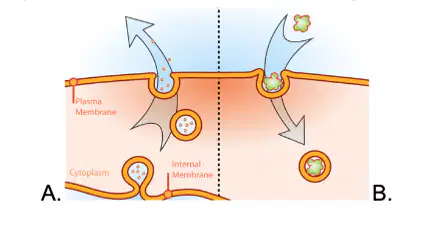
Which letter shows endocytosis and exocytosis in the diagram?
A shows endocytosis, B shows exocytosis
A shows exocytosis, B shows endocytosis
Both A and B show endocytosis
Both A and B show exocytosis
Which process involves the movement of water across a semipermeable membrane?
Diffusion
Facilitated Diffusion
Osmosis
Active Transport
What type of transport requires energy to move substances against their concentration gradient?
Diffusion
Facilitated Diffusion
Active Transport
Osmosis
Which process involves the engulfing of particles by the cell membrane to form a vesicle?
Exocytosis
Endocytosis
Osmosis
Facilitated Diffusion
In which type of solution is the concentration of solutes equal inside and outside the cell?
Hypertonic
Hypotonic
Isotonic
Supersonic
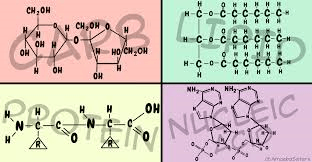
Which of the following is a primary function of carbohydrates?
Energy storage
Genetic information storage
Catalyzing reactions
Cell membrane structure
What is the monomer of proteins?
Amino acids
Nucleotides
Monosaccharides
Fatty acids
Which biomolecule is primarily responsible for storing genetic information?
Nucleic acids
Proteins
Lipids
Carbohydrates
Which of the following is a type of membrane protein?
Glycoprotein
Cellulose
Starch
Hemoglobin

What is being represented by the letter A in the image?
Substrate
Enzyme
Product
Complex
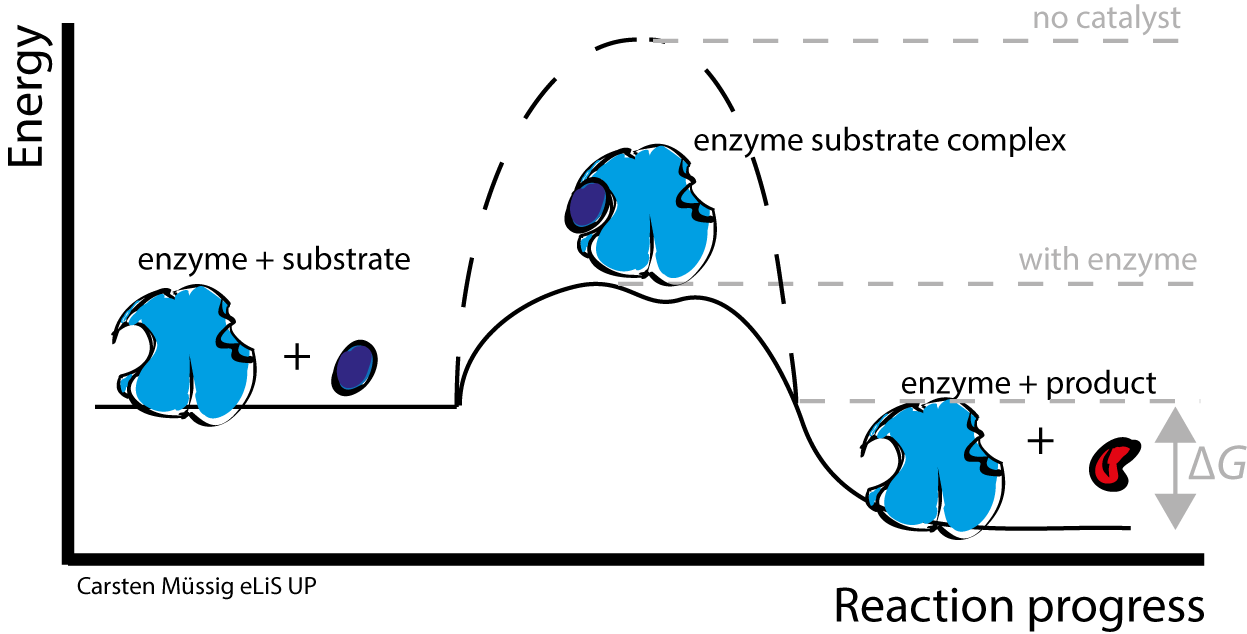
An enzyme speeds up a reaction by
lowering the activation energy.
raising the activation energy.
releasing energy.
absorbing energy.

Which of the following is the enzyme?
A, only
E, only
A and E
B,C,D
Most enzymes are composed of .....
Lipids
Carbohydrates
Proteins
Nucleic Acids
Cellulase is an enzyme some organisms use to digest cellulose, which is present in plant cell walls. Which statement best describes the role of cellulase in this reaction?
It increases the time it takes the reaction to occur.
It changes the pH of cells in which the reaction occurs.
It raises the temperature at which the reaction can occur.
It raises the temperature at which the reaction can occur.
It reduces the amount of energy needed to start the reaction.

Which illustration of transport across the membrane requires energy?
A
B
C
D

What type of solution is this cell in?
Isotonic
Hypertonic
Hypotonic
diffused

Study the image of a plant cell shown. Which direction will the particles travel to achieve homeostasis or equilibrium?
The particles will not travel in any direction.
The particles will travel from the inside of the cell to the outside of the cell.
The particles will travel from outside the cell to the inside of the cell

Where would you most likely find water molecules?
A only
B only
C only
A and C

Hydrophobic region of the cell membrane?
E
B
C
A

Where can PROTEINS be found when part of a plasma membrane?
On the outside of the membrane
On the inside of the membrane
Embedded part of the way into the membrane
Embedded the whole way through the membrane
All of the above

15. A type of cellular transport is shown. Which description best identifies this type of cellular transport?
A. Active transport, because energy is being used to move molecules against the concentration gradient
B. Facilitated diffusion, because energy is being used to move molecules with the concentration gradient
C. Osmosis, because energy is not being used to move molecules with the concentration gradient
D. Endocytosis, because energy is not being used to move molecules against the concentration gradient

The diagram below represents a white blood cell engulfing some bacteria. Which of the following statements is true in regards to this process?
This represents exocytosis (active transport) and requires energy.
This represents facilitated diffusion and no energy is required.
This represents endocytosis (active transport) and requires energy.
This represents diffusion and no energy is required.
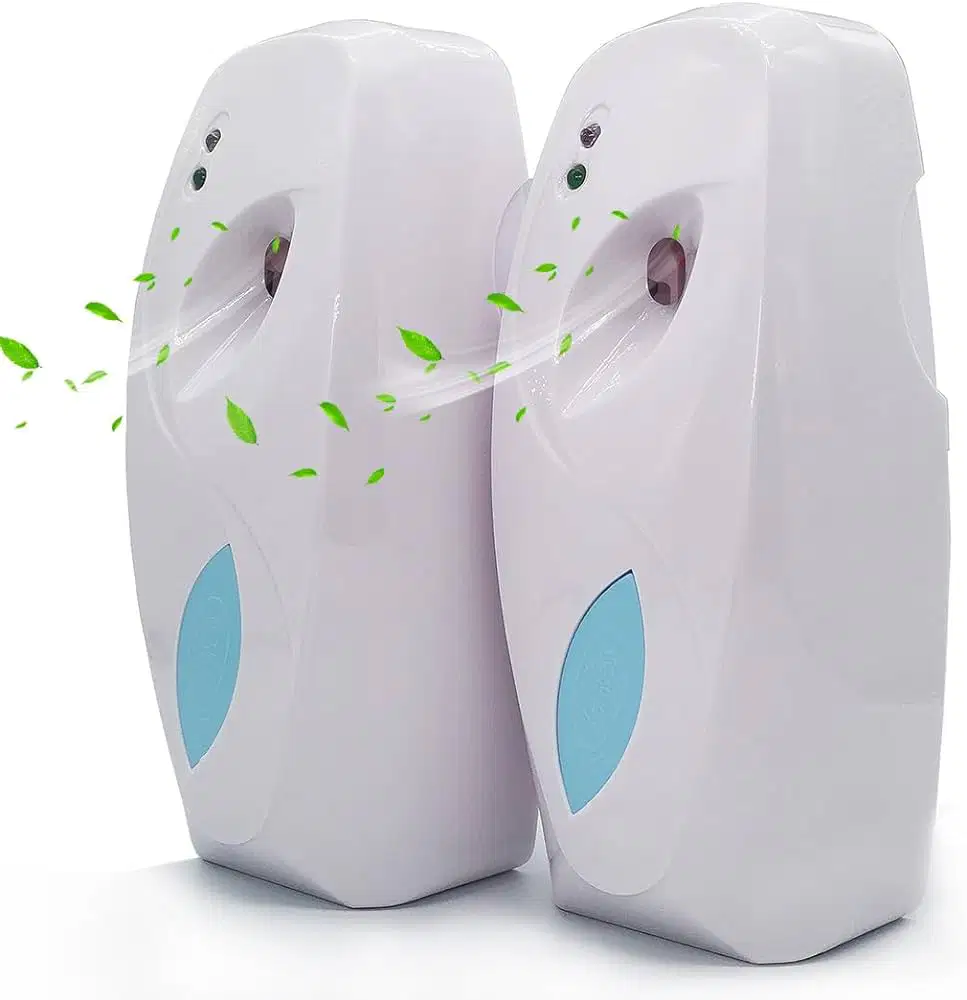
A can of air freshener is sprayed in the opposite side of the room. Ten minutes later you start to smell the scent. This is an example of
diffusion
active transport
endocytosis
osmosis

Cell membrane structures that are embedded in the phospholipid bilayer that identify and communicate with extracellular surroundings.
Cholesterol
Carbohydrate Chains
Proteins
Connects monomers to form a polymer
Dehydration synthesis
hydrolysis
Produces water as a by-product
Dehydration synthesis
Hydolysis
Water is used to break bonds between polymers
dehydration synthesis
Hydrolysis

The following figure is illustrating
Dehydration Synthesis
Hydrolysis

The following figure is illustrating
Dehydration Synthesis
Hydrolysis

What is the property of the surface of a liquid that allows it to resist an external force, due to the cohesive nature of its molecules?
Cohesion
Surface Tension
Adhesion
Polarity

What is Cohesion?
Water molecules ability to stick to each other
Water molecules ability to stick to other surfaces
Water molecules ability to conduct electricity
Water molecules ability to melt
What is Adhesion?
Water molecules ability to stick to each other
Water molecules ability to stick to other surfaces
Water molecules ability to conduct electricity
Water molecules ability to melt

How is this lizard able to run across water?
Capillary Action
The lizard is really light
The water is a little frozen
Surface Tension
Water is polar because...
The unequal sharing of electrons gives the water molecule a slight negative charge near its oxygen atom and a slight positive charge near its hydrogen atoms.
The molecule has two poles, at which the it is colder than other regions of the molecule.
The unequal sharing of electrons gives the water molecule a slight negative charge near its hydrogen atoms and a slight positive charge near its oxygen atom.
The water molecule is neutral.
Which types of compounds dissolve easily in water?
Polar and Nonpolar
Polar and Ionic
Nonpolar and Ionic
Covalent and Nonpolar
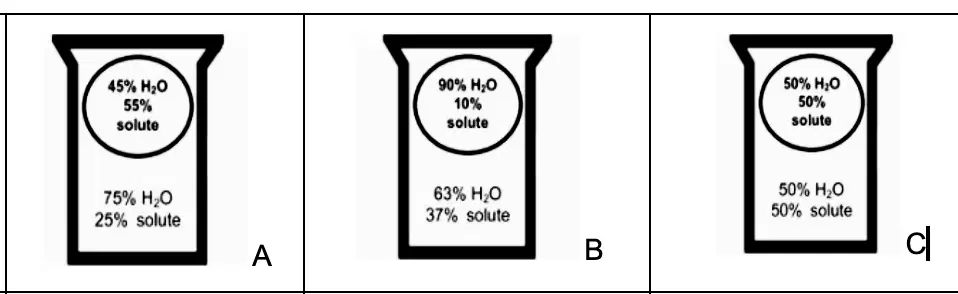
Which beaker has the highest osmotic potential?
Beaker A
Beaker B
Beaker C
They have the same osmotic potential

Which cell is in a hypertonic environment?
A
B
C
None of them are hypertonic
An animal cell lacking in carbohydrates on the external surface of its plasma membrane would likely be impaired in which function?
transporting ions against an electrochemical gradient
cell-cell recognition
attaching the plasma membrane to the cytoskeleton
establishing a diffusion barrier to charged molecules

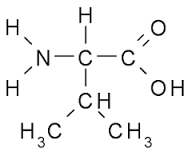
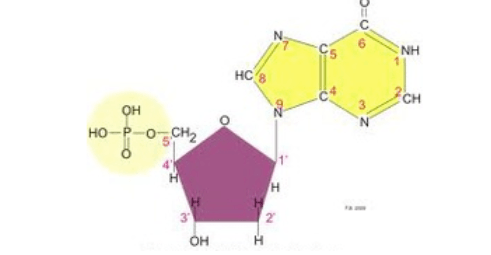
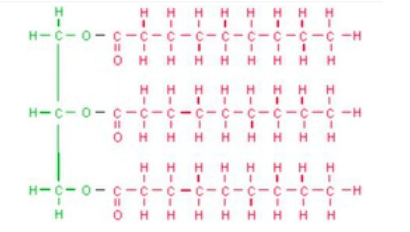
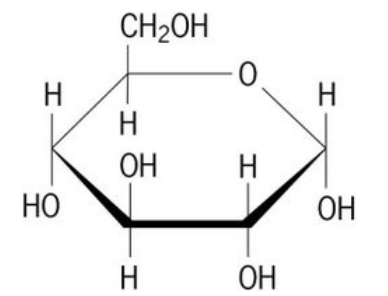
This is a what?
phospholipid
triglyceride
carbohydrate
protein

In Figure 6.2, why does the reaction rate plateau at higher reactant concentrations?
Feedback inhibition by product occurs at high reactant concentrations.
Most enzyme molecules are occupied by substrate at high reactant concentrations.
The reaction nears equilibrium at high reactant concentrations.
The activation energy for the reaction increases with reactant concentration.

9C Which model best represents the molecules at the end of the reaction?
A
B
C
D

Enzymes play a key role in many biochemical processes. One of these roles is to speed up a reaction.
An enzyme speeds up a reaction by.........
releasing energy
lowering the activation energy
absorbing energy
raising the activation energy

The graphs show the reaction rate for an enzyme across a range of temperatures and pH.
Based on these data, this enzyme functions best at what temperature and pH?
Temperature of 27°C and a pH of 4
Temperature of 37°C and a pH of 6
Temperature of 40°C and a pH of 8
Temperature of 50°C and a pH of 10


What is the correct description of the transport in the image?
small molecules crossing the lipid bilayer (diffusion)
large molecules crossing through a protein (facilitated diffusion)
many molecules coming into the cell using a membrane vesicle (endocytosis)
many molecules coming out of the cell using a vesicle to fuse with the membrane (exocytosis)
Which property of water allows it to dissolve many substances?
Low boiling point
High density
Polarity
Nonpolarity
What happens to a plant cell placed in a hypotonic solution?
It shrinks
It bursts
It becomes turgid
It remains unchanged
Which of the following best describes the function of membrane proteins?
Storing genetic information
Providing energy for the cell
Producing carbohydrates
Transporting substances across the membrane

