wayground logo

Free Printable Worksheets

Font size

S
M
L
XL
Worksheets

Unit 1: Introduction to Biology

Total questions: 70

Worksheet time: 54mins

Name
Class
Date
1.
A prediction or guess based on observations.
a)
data
b)
scientific process
c)
hypothesis
d)
question
2.

The information you collect while doing your experiment is called

a)

conclusions

b)

data

c)

hypotheses

d)

procedures

3.
The independent variable is the ONE thing you _____.
a)
change on purpose
b)
control or keep constant
c)
measure
4.

The variable that is being measured or observed is called the _______________. Hint: this is the variable that is the result or effect

a)

independent variable

b)

dependent variable

c)

control variable

5.

What is a constant/control in an experiment?

a)

Things that do not change in a experiment. It's the variable that stays the same. You can have many variables stay the same.

b)

It's the variables that the scientist changes in the experiment

c)

It's the variables that are being measured in an experiment

6.

How many independent variables should you have in an experiment?

a)

two

b)

as many as possible

c)

four

d)

one

7.

What is the dependent variable of the graph?
a)
Grade
b)
Number of Students
8.

A student wants to test the effects of different types of exercise on heart rate.  What would be the dependent variable of the experiment?

a)

the measurement of heart rate

b)
type of exercise
c)
amount of exercise
d)
time of day exercise occurs
9.
What would the INDEPENDENT variable be in an experiment testing which  paper airplane design goes furthest?
a)
the paper used
b)
the paper airplane design
c)
the distance of each plane's flight
d)
how hard the plane is thrown
10.
Josie was performing an experiment where she grew the same kind of tomatoes in the same soil and amount of water.  She sat one in the sun and one in a closet for 14 days.  What is the independent variable in Josie's experiment?
a)
tomatoes
b)
soil
c)
sunlight
d)
water
11.

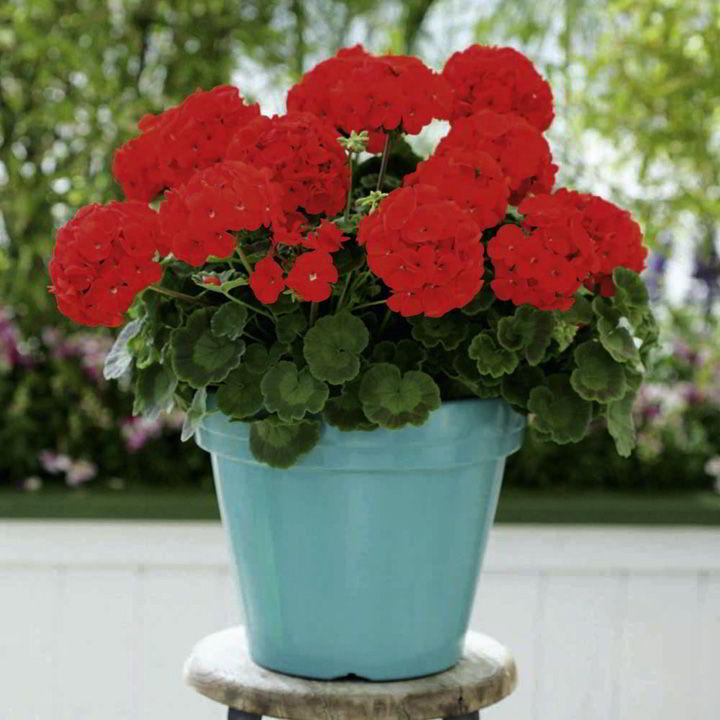
Susan said, “If I fertilize my geranium plants, then they will have more flowers.”

a)

recognize a problem

b)

test the hypothesis with an experiment

c)

form a hypothesis

d)

draw conclusions

12.
A series of steps used by scientists to solve a problem or answer a question. 
a)
scientific method
b)
recipe
c)
data collection
d)
metric system
13.
A testable explanation to a problem that has not yet been tested. 
a)
data
b)
theory
c)
hypothesis
d)
fact
14.
Testing a hypothesis often involves a(n):
a)
answer
b)
experiment
c)
problem
d)
safety check
15.
The name of the information that you get from your experiment (you organize it into charts and graphs).
a)
observations
conclusion
b)
data
c)
variables
d)
hypothesis
16.
This part of the experiment serves as a basis of comparison; the one variable being tested has been omitted. 
a)
experimental group
b)
control group
c)
data
d)
variables
17.
On what axis should the independent variable always be?
a)
X
b)
Y
18.

What is an observation?

a)

A scientific statement based on ideas

b)

Using your senses to notice what is going on around you

c)

To be unaware of your surroundings

d)

The question that you want an answer to.

19.
Should experiments be repeated over and over to see if the results are the same each time?
a)
yes
b)
no
20.

An observation that is measurable and made with tools (such as a ruler or scale) is what type

a)

quantitative

b)

qualitative

c)

koalatative

21.
During this step of the scientific method, a scientist would gather background information. 
a)
Hypothesis
b)
Research
c)
Observation
d)
Experiment 
22.
If plants are exposed to sunlight, then they will grow taller.
What part of the scientific method is this an example of?
a)
Procedure
b)
Hypothesis
c)
Question
d)
Results
23.

What order do scientists typically use the scientific method in?

a)

Observe something, Ask a question, Conduct background research, Hypothesis, Experiment, Collect Data and Observations, Draw a conclusion

b)

Ask a question, Hypothesis, Observe something, Experiment, Collect Data and Observations, Conduct Background Information, Draw a Conclusion

c)

Observe something, Hypothesis, Experiment, Background Research, Collect Data and Observations, Draw a Conclusion

24.

When you step out into the cold, your body shivers in order to keep its temperature at 98.6F. Which characteristic of life does this represent?

a)

All living things use energy

b)

All living things contain cells

c)

All living things maintain homeostasis

d)

All living things grow

25.

A camel has eyelashes that work to keep the dust and sand out of its eyes. Which characteristic of life does this represent?

a)

All living things adapt to their environment

b)

All living things grow

c)

All living things have cells

d)

All living things use energy

26.
Rocks are not living because
a)
they never move
b)
they aren't needed for humans
c)
they are not made of cells
d)
they don't break down
27.
The basic unit of structure and function in the human body is the....
a)
organ
b)
organ system
c)
cell
d)
tissue
28.

Which statement describes ALL living things?

a)

They are composed of one or more cells.

b)

They must reproduce sexually.

c)

They have organ systems to carry out the processes of life.

d)

They are capable of making their own food.

29.

A baby song bird hatches from its egg with both parent songbirds watching. Which characteristic of life does this represent?

a)

All living things reproduce

b)

All living things maintain homeostasis

c)

All living things use energy

d)

All living things grow

30.

The following are all characteristics of life EXCEPT:

a)

made of cell(s)

b)

eat food

c)

respond stimuli

d)

reproduce

31.

Which characteristic is shown: A plant switches position and follows the sunlight throughout the day.

a)

Grow and develop

b)

Respond to a stimulus

c)

Acquire and use energy

d)

Reproduce

32.

The following list represents characteristics of a living thing :

a)

made of cells, has lungs, can reproduce

b)

made of cells, grows and develops, uses energy

c)

has similar chemicals, makes noises, made of cells

33.

Which item listed is NOT a characteristic of life?

a)

adjusting to stimuli

b)

getting and using energy

c)

growing and developing

d)

breathing

34.
In order for something to be considered a living organism, it must display _____ of the eight characteristics of living things.
a)
one
b)
some
c)
all
d)
more than half
35.
The roots of a plant grow towards a source of ground water.
a)
All living things use energy
b)
All living things reproduce
c)
All living things respond to their environment
d)
All living things grow
36.
Over three years, Tim's height has increased from 5'4" to 5'11".
a)
All living things contain cells
b)
All living things maintain homeostasis
c)
All living things use energy
d)
All living things grow
37.

___________a molecule that is present in all living cells and that contains the information that determines the traits a living thing inherits and needs to live.

a)

Cell

b)

Stimulus

c)

Homeostasis

d)

DNA

38.

Which of the following is an abiotic factor in an ecosystem?

a)

plants

b)

bacteria

c)

animals

d)

water

39.
Look at the line graph.  Which statement is consistent with the line graph?
a)
The ability of air to hold moisture increases as temperature increases.
b)
The ability of air to hold moisture decreases as temperature increases.
c)
The ability of air to hold moisture decreases and then increases as temperature increases.
d)
The ability of air to hold moisture stays the same regardless of temperature. 
40.
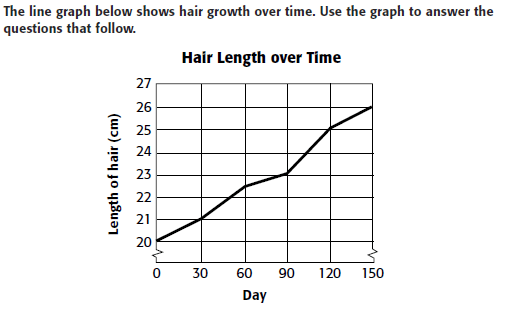
How long was the hair on day 60?
a)
20.0 cm
b)
21.0 cm
c)
22.5 cm
d)
23.0 cm
41.
A fever is a spike in temperature.  On which day does this person have a fever?
a)
Sunday
b)
Monday
c)
Wednesday
d)
Saturday
42.
What type of graph is this?
a)
Bar Graph
b)
Line Plot
c)
Pictograph
d)
Tally Chart
43.
What is the title of the graph?
a)
Metro Bicycle Shop Weekly Sales
b)
Bicycles Sold
c)
Types of Bicycles
44.

The data table below shows that as the pressure of a gas sample was changed, the volume of the gas changed. The pressure was measured in atmospheres (atm) and the volume was measured in milliliters (mL).


According to the data table, as the pressure of the gas increases, the volume of the gas:

a)

decreases

b)

increases

c)

remains the same

45.

Which variable should be on the x axis?

a)

dependent variable

b)

independent variable

c)

control variable

46.

Which variable should be on the y axis?

a)

the dependent variable

b)

the independent variable

c)

the control variable

47.
This variable in an experiment is the one being changed by the scientist. 
a)
dependent variable
b)
independent variable
c)
data
d)
control group
48.
Dependent variable means
a)
the scientist controls what to test
b)
educated guess
c)
ask a question
d)
what is being measured
49.
True or False: Long hair MUST be tied back during a laboratory investigation.
a)
True
b)
False
50.
True or False: The wearing of flip flops and other open toed shoes are acceptable during a laboratory investigation during the hot summer months.
a)
True
b)
False
51.
If you spill or break something during an experiment, what is the FIRST thing you should do?
a)
Tell the teacher.
b)
Clean it up. 
c)
Cover it with a paper towel.
d)
Leave it for someone else.
52.
Identify the piece of lab equipment seen in the image.
a)
Erlenmeyer Flask
b)
Graduated Cylinder
c)
Beaker
d)
Test Tube
53.

What is the name of this piece of equipment?

a)

Microscope

b)

Beaker

c)

Graduated Cylinder

d)

Dropper

54.

What is the name of this equipment?

a)

Beaker

b)

Graduated Cylinder

c)

Flask

d)

Pan Balance

55.

If you do not understand a direction or part of a lab procedure, you should

a)

figure it out as you do the lab

b)

try several methods until something works

c)

ask the instructor before proceeding

d)

skip it and go on to the next part

56.

Used to hold and/or mix solid and liquid materials

a)

beaker

b)

graduated cylinder

c)

test tube

d)

erlenmyer flask

57.

Used to measure specific volume of liquid

a)

beaker

b)

graduated cylinder

c)

test tube

d)

erlenmyer flask

58.

Used to transfer small amount of liquid

a)

graduated cylinder

b)

test tube

c)

scoopula

d)

pipette

59.

Used to hold the test tubes and keep from spilling

a)

test tube

b)

test tube rack

c)

pipette

d)

mortar

60.

When reading the volume in a graduated cylinder, look at the ___ of the meniscus.

a)

top

b)

bottom

c)

It doesn't matter.

d)

What is a meniscus?

61.

What is the volume?

a)

23 mL

b)

28 mL

c)

36 mL

d)

38 mL

62.

What is the volume?

a)

42 mL

b)

43 mL

c)

44 mL

d)

45 mL

63.

What is the scale?

a)

1 mL

b)

2 mL

c)

5 mL

d)

10 mL

64.

Used to find the mass of an object

a)

metric stick

b)

digital scale

c)

hot plate

d)

triple beam balance

65.
What is the base unit for temperature in in the metric system?
a)
meters
b)
degrees Celsius
c)
degrees Fahrenheit
d)
centimeters
66.

The Metric System is based on powers of:

a)

5's

b)

10's

c)

20's

d)

50's

67.

Which units are the BASE units in the metric system? Check all that apply.

a)

Meters

b)

Liters

c)

Grams

d)

Inches

e)

Miles

68.
The metric unit of measurement for length is ____________________. 
a)

Liter

b)

Meter

c)

gram

d)

inch

69.
The metric unit of measurement for weight or mass is ________________.
a)

Gram

b)

Liter

c)

Pound

d)

Meter

70.
The metric unit of measurement for capacity or volume is ________________.
a)

Gram

b)

Meter

c)

Liter

d)

Ounce