wayground logo

Free Printable Worksheets

Font size

S
M
L
XL
Worksheets

Unit 4 Review

Total questions: 66

Worksheet time: 48mins

Name
Class
Date
1.

During which portion of the cell cycle is the cell's DNA replicated?

a)

G1 Phase

b)

G2 Phase

c)

M Phase

d)

S Phase

2.

During which phase do the spindle fibers contract and pull the genetic material apart?

a)

anaphase

b)

metaphase

c)

prophase

d)

telophase

3.

During which phase of mitosis do the chromosomes line up in the middle of the cell?

a)

anaphase

b)

metaphase

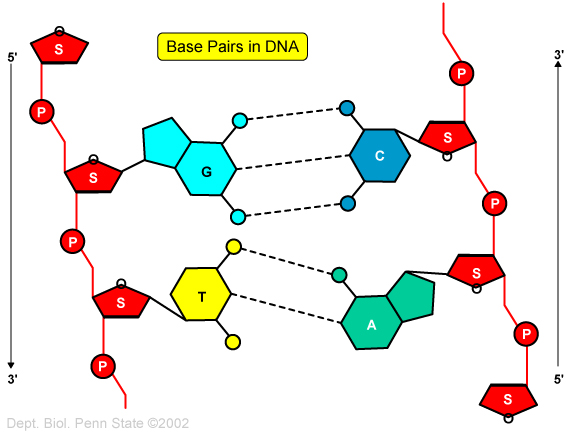
c)

prophase

d)

telophase

4.

How many cells does mitosis result in?

a)

one

b)

two

c)

three

d)

four

5.

What type of cells does mitosis result in?

a)

gametes

b)

haploid

c)

identical

d)

unique

6.

What is the splitting of the cytoplasm or cell called?

a)

cytokinesis

b)

interphase

c)

metaphase

d)

mitosis

7.

Which of the images is anaphase?

a)
b)
c)
d)
8.

What is the term for the structure labeled "A"?

a)

centriole

b)

centromere

c)

chromatid

d)

chromosome

9.

What term refers to a mistake in the cell cycle, possibly resulting in tumors?

a)

cancer

b)

cytokinesis

c)

mutation

d)

karyokinesis

10.

What term refers to a mistake in the cell cycle, possibly resulting in tumors?

a)

cancer

b)

cytokinesis

c)

mutation

d)

karyokinesis

11.
Which of the following is not a part of interphase?
a)
G2
b)
M
c)
G1
d)
S
12.
What is the longest stage of the cell cycle called?
a)
Cytokinesis
b)
M phase
c)
Interphase
d)
G1 Phase
13.
During which stage of the cell cycle does mitosis and cytokinesis occur?
a)
Interphase
b)
S phase
c)
M phase
d)
G1 phase
14.
Put the following actions in order: DNA replicates, cell grows, cell divides, cell prepares for mitosis. 
a)
DNA replicates, cell grows, cell prepares for mitosis, cell divides
b)
cell grows, cell prepares for mitosis, DNA replicates, cell divides
c)
cell grows, DNA replicates, cell prepares for mitosis, cell divides
d)
DNA replicates, cell prepares for mitosis, cell grows, cell divides
15.
In mitosis, the two resulting cells are
a)
different from the starting cell and identical to each other.
b)
different from the starting cell and different from each other.
c)
identical to the starting cell and different from each other.
d)
identical to the starting cell and identical to each other.
16.

Uncontrolled cell division which usually leads to tumors and disease is called:

a)

Metaphase

b)

Cytokinesis

c)

Cancer

d)

Diabetes

17.

Where does DNA synthesis happen in eukaryotic cells?

a)

cytoplasm

b)

mitochondria

c)

nucleus

d)

Golgi apparatus

18.

Some scientists name the stage where cells carry out their normal functions but are unlikely to divide. The name they give this stage is _________.

a)

G0

b)

G1

c)

G2

d)

G3

19.

A(n) _____ is a stage in the eukaryotic cell cycle at which the cell examines internal and external cues and "decides" whether or not to move forward with division.

a)

checkpoint

b)

chromosome

c)

interphase

d)

tumor

20.

programmed cell death = _____

a)

apoptosis

b)

cancer

c)

spindle

d)

cytokinesis

21.

uncontrolled cell growth = _____

a)

apoptosis

b)

cancer

c)

spindle

d)

cytokinesis

22.

Which phase is NOT considered part of interphase?

a)

G1

b)

Prophase

c)

G2

d)

S

23.

What is the overall goal of mitosis?

a)

to make sure that each daughter cell gets a perfect, full set of chromosomes (DNA)

b)

to make sure each daughter cell only gets the part of the DNA it needs

c)

to make sure each daughter cell is unique

d)

to make sure each daughter cell is unlike any other

24.

What is it in the structure of DNA that causes the minor differences in you and I?

a)

The sequence of the sugar and phosphates

b)

The sequence of the nitrogenous bases

c)

The number of sugars and phosphates

d)

The number of nitrogenous bases

25.

Which letter represents an organized package of DNA?

a)

A

b)

B

c)

C

d)

D

e)

E

26.

Define Cancer

a)

Uncontrolled cell division

b)

Cells not dividing at all

27.

If there is 35% Adenine bases in someone's DNA, how much Thymine is there?

a)

35%

b)

15%

28.

Put the steps of DNA replication in the correct order:

a)

A, B, C, D, E

b)

D, E, B, C, A

c)

C, B, E, D, A

d)

E, D, C, B, A

29.

What is this process called?

a)

Cell Division

b)

DNA Replication

c)

Photosynthesis

30.
A parent cell has 46 chromosomes, How many does each daughter cell have after mitosis? 
a)
12
b)
23
c)
46
d)
92
31.
What is cancer caused by? 
a)
cell membrane damage
b)
mitochondria malfunction
c)
mutations in DNA
d)
immune-system damage
32.
By the end of prophase, each of the following has occured except...
a)
tighter coiling of the chromosomes
b)
breaking down of the nuclear envelope
c)
disappearing of the nucleus
d)
lining up of the chromosomes at the equator
33.
A parent cell has 12 chromosomes. How many does each daughter cell have? 
a)
6
b)
12
c)
24
d)
none of these
34.
identical copies of a chromosome; full sets are created during the S phase of interphase
a)
Chromosome
b)
ccentromere
c)
interphase
d)
sister chromatid
35.
DNA replication occurs during 
a)
interphase
b)
anaphase
c)
metaphase
d)
telophase
36.
What is the purpose of the cell cycle? 
a)
Growth
b)
Repair
c)
make food for the cell
d)
growth AND repair
37.
A cell that undergoes repeated mitosis without cytokinesis would have
a)
many daughter cells
b)
fewer chromosomes
c)
many nuclei
d)
cancerous properties
38.
A parent cell has 98 chromosome. Following the cell cycle how many does each daughter cell have? 
a)
24
b)
49
c)
98
d)
196
39.
Which sequence of DNA bases would pair with this partial strand
ATG TGA CAG
a)
ATG TGA CAG
b)
TAC ACT GTC
c)
GTA AGT GAC
d)
CAT TCA CTG
40.
In a molecule of double-stranded DNA, the amount of Adenine present is always equal to the amount of
a)
cytosine
b)
guanine
c)
thymine
d)
uracil
41.
Adenine bonds with ______________.
a)
Guanine
b)
Thymine
c)
Cytosine
d)
Adenine
42.
Guanine bonds with ______________.
a)
Adenine
b)
Guanine
c)
Cytosine
d)
Thymine
43.
Why is DNA important?
a)
it is very small and very complicated
b)
it's in everything
c)
it serves as the blueprint for traits of all living things
d)
because we eat it every day for energy
44.
Which 2 molecules form the sides (backbone) of the DNA ladder?
a)
deoxyribose sugar and adenine
b)
deoxyribose sugar and a hydrogen bond
c)
deoxyribose sugar and the nucleus
d)
deoxyribose sugar and phosphate
45.
Which organelle is DNA usually found in?
a)
cell membrane
b)
vacuole
c)
chloroplast
d)
nucleus
46.
Nitrogenous bases are joined by which type of bond?
a)
polar bonds
b)
ionic bonds
c)
covalent bonds
d)
hydrogen bonds
47.
The enzyme that unzips the DNA to prepare for replication
a)
helicase
b)
replicase
c)
polymerase
d)
synthase
48.
DNA replication results in two DNA molecules,
a)
each one with two original strands
b)
each one with two new strands
c)
each one with one new strand and one original strand
d)
one with two new strands and the other with two original strands
49.
What is the correct complimentary strand for the following DNA?ATCGAG
a)
TACGAG
b)
ATCGAG
c)
TAGCTG
d)
TAGCTC
50.
Which enzyme is responsible for adding nucleotides ("The Builder")?
a)
Topoisomerase
b)
DNA Polymerase
c)
Ligase
d)
Primase
51.
Why is it crucial that living things are able to replicate their DNA?
a)
Each cell must have its own DNA
b)
Less copies of DNA are needed when a new cell is created
c)
A cell needs multiple copies of DNA
d)
Only muscle cells need DNA 
52.
The DNA is found in the nucleus of what type of organisms?
a)
Bacteria
b)
Eukaryotes
c)
Prokaryotes
d)
Viruses
53.
Which of the following units are repeatedly joined together to form a strand of DNA? (This is the MONOMER of DNA.) 
a)
amino acids
b)
nucleotides
c)
fatty acids
d)
polysaccharides
54.

Where does the DNA molecule unzip at during DNA replication?

a)

Between the sugar and phosphate

b)

Between the sugar and nitrogen bases

c)

Between the nitrogen bases

55.

Which part of a DNA molecule is responsible for the direct coding of specific traits in an organism?

a)

The number of hydrogen bonds that hold the strands of DNA together

b)

The number of carbons in the DNA molecule.

c)

The sequence of nucleotide bases in the DNA molecule

d)

The sequences of phosphates along each DNA strand

56.

What molecules are in nucleotides?

a)

Phosphate group

b)

Protein

c)

Sugar

d)

lipid

e)

Nitrogenous base

57.

DNA stands for

a)

Dioxyribo Nucleic Acid

b)

Dunder Nucleic Acid

c)

Dopamine Nucleic Acid

d)

Deciduous Nucleic Acid

58.

Which is in order from largest to smallest structure?

a)

chromosome, DNA strand, gene, nucleotide

b)

chromosome, gene, DNA strand, nucleotide

c)

gene, DNA strand, chromosome, nucleotide

d)

DNA strand, chromosome, gene, nucleotide

59.

What are the parts of a nucleotide?

a)

phosphate, sugar, base

b)

A, T, G, C

c)

Nucleic Acids

d)

two base pairs connected

60.

What is this a picture of?

a)

nucleotide

b)

DNA strand

c)

chromosome

d)

gene

61.

Label the picture in order:

a)

phosphate ; sugar ; base

b)

phosphate ; base ; sugar

c)

base ; sugar ; phosphate

d)

base ; phosphate ; sugar

62.

What is "A"?

a)

Nucleotide

b)

Deoxyribose Sugar

c)

Nitrogenous base

d)

Phosphate

63.

What is "B"?

a)

Nucleotide

b)

Deoxyribose Sugar

c)

Nitrogenous base

d)

Phosphate

64.

What is "C"?

a)

Nucleotide

b)

Deoxyribose Sugar

c)

Nitrogenous base

d)

Phosphate

65.

If a DNA molecule has 22% Cytosine, what is the percent of the rest of the nucleotides Guanine, Adenine, and Thymine?

a)

Adenine= 28%

Thymine= 28%

Guanine= 22%

b)

Adenine= 22%

Thymine= 28%

Guanine= 28%

c)

Adenine= 22%

Thymine= 22%

Guanine= 28%

d)

Adenine= 28%

Thymine= 22%

Guanine= 22%

66.

Animals and plants are 2 totally different organisms. What is the similarity between their genetic codes?

a)

they have the exact same genome sequence

b)

they both have DNA made up of the same 4 nucleotides

c)

there is no similarity

d)

they both have the same types of phosphates and sugars but they have different nitrogen bases