wayground logo

Free Printable Worksheets

NEW

Font size

S
M
L
XL
Worksheets

Semester 2 - Review

Total questions: 70

Worksheet time: 39mins

Name
Class
Date
1.
Which of the following is not a nitrogen base found in DNA?
a)
Thymine
b)
Uracil 
c)
Guanine
d)
Adenine
2.
Which of the following would be determined by the order of the Nitrogen Bases in your DNA?
a)
Your Gender.
b)
The Number of Chromosomes you have.
c)
Your hair color.
d)
The number of siblings you will have.
3.
The twisted ladder shape of DNA is known as a
a)
Double Helix
b)
Triple Helix
c)
Single Helix
d)
Triple Helix
4.
Which answer choice would by complementary (match up) with the DNA strand   
ATGCATTCGA
a)
ATGCATTCGA
b)
TACGTAAGCT
c)
TACCTAAGGA
d)
ATGCCATGAA
5.

When replication is complete, there are two _____________ DNA modules.

a)

identical

b)

different

c)

similar

6.

A _________________ is a cell organelle made of ribosomal RNA and protein.

a)

ribosome

b)

mitochondria

c)

nucleus

7.

______________ always pairs with thymine.

a)

Cytosine

b)

Guanine

c)

Adenine

8.

The two sides of the DNA ladder are made up of ____________________________________________.

a)

sugars and phosphates

b)

traits and characteristics

c)

DNA and RNA

9.

a photograph or picture of chromosomes grouped in ordered pairs is a ______________

a)

pedigree

b)

Punnett Square

c)

Venn Diagram

d)

Karyotype

10.
Which sex chromosomes would indicate a typical human male?
a)
XX
b)
X
c)
XY
d)
XXY
11.

A normal human zygote should have _____ chromosomes inside.

a)

46

b)

23

c)

92

d)

64

12.
What is the gender of the individual whose karyotype is seen in the image?
a)
Male
b)
Female
13.
Which process and type of resulting cells are represented?
a)
mitosis, gametes
b)
mitosis, body cells
c)
meiosis, gametes
d)
meiosis, body cells
14.
Which of the following produces identical nuclei in cells?
a)
pollination
b)
mitosis
c)
osmosis
d)
fertilization
15.
A mutation is?
a)
Any change in DNA
b)
Any change in RNA
c)
Any change in the genetic code
16.
Why are framshift mutations harmful?
a)
They cause chromosomes to break
b)
Every amino acid following the mutation will be different
c)
They cause the DNA to relocated
d)
They burn out your clutch
17.

The diagram shows the process of crossing over. Which claim about crossing over in chromosomes is best supported by the diagram?

a)

Crossing over increases genetic diversity through deletion.

b)

Crossing over decreases genetic diversity through mutation.

c)

Crossing over increases genetic diversity by creating new combinations of genes.

d)

Crossing over decreases genetic diversity by inserting nucleotides into gene sequences.

18.

What is an allele?

a)

A trait

b)

Different forms of a gene

c)

DNA

d)

Different types of parents

19.

What is a genotype?

a)

Pair of alleles that determine a specific trait

b)

Observable physical trait

c)

A trait that is observed with only one copy of an allele

20.

What is a phenotype?

a)

Pair of alleles that determine a trait

b)

Observable physical trait

c)

Different forms of a gene

21.

What is a dominant gene?

a)

A trait that is observed when there are one OR two copies of the allele

b)

A trait that is observed only when there are two copies of the allele

c)

A trait that can be hidden in a generation

22.

A person who is homozygous for a trait can have a genotype of....

a)

AA, Aa

b)

Aa, aa

c)

AA, aa

d)

aa

23.

If a person is heterozygous for a trait, their genotype can be...

a)

Aa

b)

AA, aa

c)

AA, Aa

d)

AA

24.

If "B" represents brown hair, and "b" represents blond hair, what will the genotype be for a homozygous brown haired person?

a)

BB

b)

Bb

c)

bb

25.

Natural or Artificial? Birds have a variety of beak sizes to help harvest different seeds

a)

Natural Selection

b)

Artificial Selection

26.

What is the missing pairing?

a)

AA

b)

Aa

c)

aa

27.

Using the Punnett Square, identify the correct Genotypic ratio

a)

2:2:1

b)

1:2:1

c)

2:1:1

d)

1:1:1

28.

A chart that displays family relationships indicating traits or disorders

a)

Punnett square

b)

Pedigree

c)

Karyotype chart

29.

In a pedigree chart, men are represented by

a)

Circles

b)

Diamonds

c)

Squares

30.

In a pedigree chart, women are represented by

a)

Circles

b)

Diamonds

c)

Squares

31.

In a pedigree, individuals that are carriers are represented as shapes that are

a)

Not shaded

b)

Fully shaded

c)

Half shaded

32.

In a pedigree, individuals that are unaffected are represented as shapes that are

a)

Not shaded

b)

Fully shaded

c)

Half shaded

33.

In a pedigree, individuals that are affected are represented as shapes that are

a)

Not shaded

b)

Fully shaded

c)

Half shaded

34.

When working to find genotypes of individuals in a pedigree, you may need to use a

a)

Punnett square

b)

Dihybrid cross

c)

Karyotype chart

35.

Each generation in a pedigree is marked with

a)

Arabic numerals

b)

Names of individuals

c)

Roman numerals

36.

In what process is mRNA synthesized?

a)

Transcription

b)

Translation

c)

DNA Replication

d)

Mitosis

37.

Where does TRANSCRIPTION occur?

a)

Nucleus

b)

Ribosome

c)

Cytoplasm

d)

Mitochondria

38.

Why must transcription occur where DNA can be found?

a)

because DNA can't leave

b)

because ribosomes are in the nucleus

c)

because DNA polymerase is found there

d)

because helicase unzips the DNA

39.

How many codons equals 1 amino acid?

a)

1

b)

2

c)

3

d)

4

40.

TRANSCRIBE this DNA sequence: TACGTTACT

a)

AUGCAAUGA

b)

ATGCAATGA

c)

AUGGATUGA

d)

TACGTTACT

41.

Which organelle is the location where protein is made?

a)

Ribosome

b)

Nucleus

c)

Cytoplasm

d)

Nucleotide

42.
The process to go from DNA to mRNA is _______
a)
translation
b)
transcription
c)
replication
43.
The process to go from mRNA to a protein is called ____
a)
transcription
b)
rRNA
c)
replication
d)
translation
44.
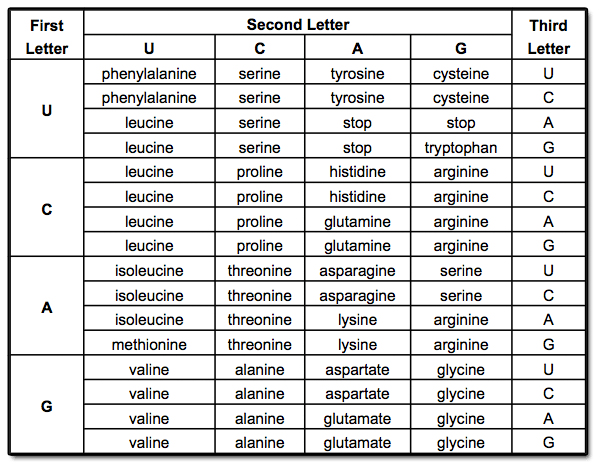
What amino acid is represented by the codon UUA?
a)
Phenylalanine
b)
Tyrosine
c)
Leucine
d)
Stop codon
45.
Does the order of amino acids in a protein matter?
a)
YES!
b)
NO!
46.

When finding reading a codon chart in the process of creating a protein chain, you read the?

a)

DNA

b)

mRNA

c)

tRNA

d)

Amino Acid

47.
Shifting pieces of the Earth's crust are called
a)
tectonic plates
b)
volcano
c)
magma
d)
island
48.

What is an area on Earth over a mantle plume or an area under the rocky outer layer of Earth where magma is hotter than surrounding magma?

a)

Hot spots

b)

Island Arc

c)

Volcano

49.

What are places where plates slide sideways past each other?

a)

Convergent Boundaries

b)

Divergent Boundaries

c)

Transform Boundaries

50.

What is oceanography?

a)

The study of dolphins.

b)

The study of the ocean.

c)

The study of jellyfish.

d)

The study of waves.

51.

VOCAB: the amount of time it takes for half of the atoms in a sample to decay

a)

fission

b)

fusion

c)

radioactive decay

d)

half life

52.

VOCAB: when the unstable nucleus of an atom decays and releases charged particles and energy

a)

fission

b)

fusion

c)

radioactive decay

d)

half life

53.
Which of the following is a term for a group of similar organisms that can reproduce fertile offspring?
a)
individual
b)
population
c)
species
d)
fossil
54.
Mutations are important because they bring about
a)
death of the organism in which they develop
b)
genetic variation needed for a population to evolve
c)
benefits for the individual, not for the population
d)
Hardey-Weinberg equilibrium within a population
55.
Extinction can occur because of which of the following?
a)
All can be causes of extinction.
b)
Increased competition with other species
c)
New predators within the environment
d)
Loss of habitat and/or catastrophes
56.
Finches on the Galapagos Islands had different beaks in order to help them do what?
a)
Build nests
b)
Fight off predators
c)
Collect food sources
d)
Compete with rivals
57.
This scientist came up with the idea of natural selection.
a)
Jean Baptiste Lamarck
b)
Gregor Mendel
c)
Charles Darwin
d)
Thomas Malthus
58.
A remnant or trace of an organism from the past is called a _______.
a)
Ancestor
b)
Skeleton
c)
Fossil
d)
Imprints
59.
Inherited trait that helps an organism survive is a(n) __________.
a)
Fossil
b)
Adaptation
c)
Ancestor
d)
Natural selection
60.
Survival of the fittest or when favorable adaptations reproduce faster is called what?
a)
Evolution
b)
Adaptation
c)
Natural selection
d)
Fossilization
61.
This occurs when no more of a species is living.
a)
Fossilization
b)
Adaptation
c)
Extinction
d)
Natural selection
62.
According to the diagram, which organism is older?
a)
ammonite
b)
coral
c)
gastropod
d)
trilobite
63.
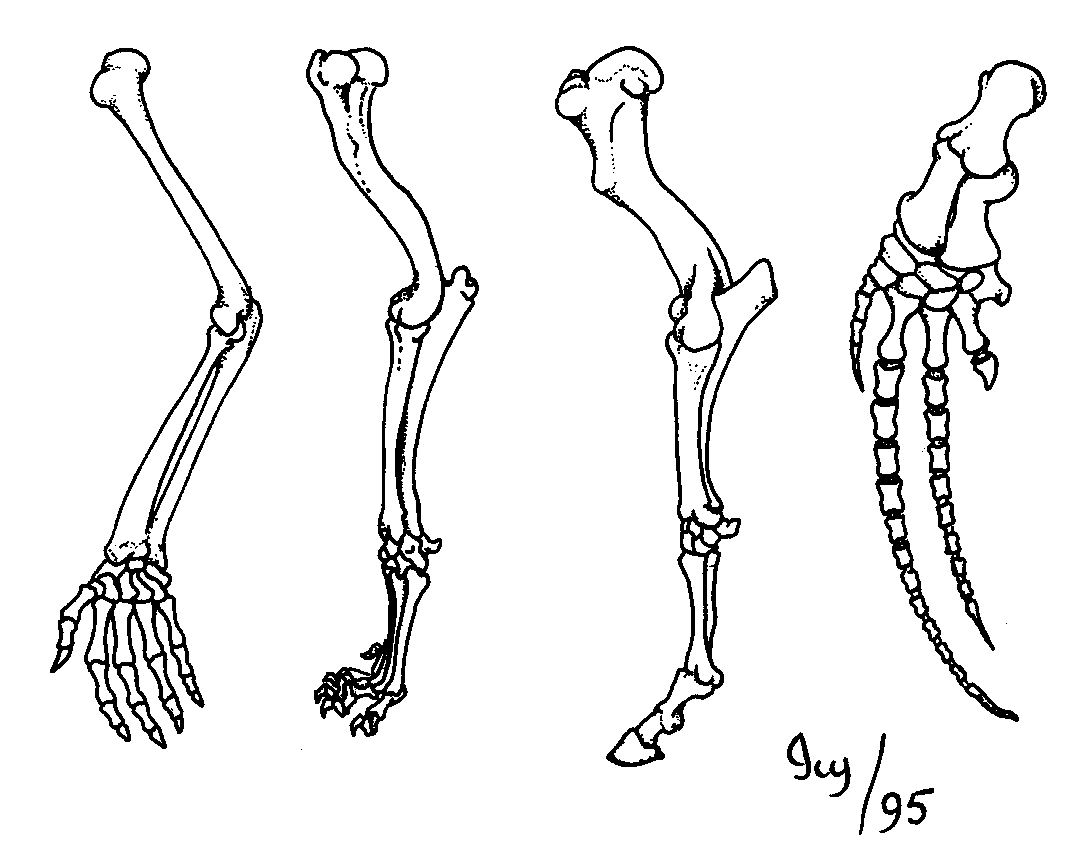
Structures with the same parts have different functions; suggests that organisms share a common ancestry
a)
vestigial structures
b)
homologous structures
c)
adaptive radiation
d)
fossil
64.
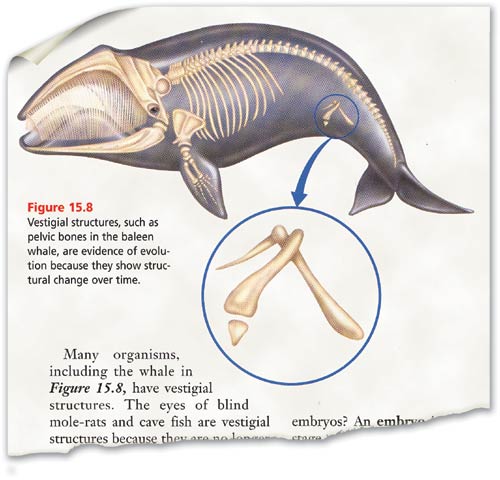
Which of the following is an example of a vestigial structure?
a)
the wings of a red-tailed hawk
b)
the hind limbs of a house cat
c)
the fins of sharks
d)
the tailbone of a human
65.
The diagram shows fossils in different rock layers. Which of these statements about the age of these fossils is most likely correct?
a)
Fossil A and C are the same age
b)
Fossil B is older than fossil C
c)
Fossils A is older than fossil B
d)
Fossil D is older than fossil C
66.
The ability of an organism to survive and reproduce in its specific environment 
a)
diversity.
b)
evolution
c)
adaptation
d)
 fitness
67.
Farmers breed cows to produce high amounts of milk. This is an example of...
a)
Natural Selection 
b)
Variations in a species 
c)
Selective Breeding 
d)
inbreeding
68.
Which of the following is a fossil?
a)
a plant that has recently died
b)
a group of organisms that can reproduce
c)
a structure or organ that no longer functions
d)
a trace of an organisms that existed in the past
69.
In natural selection, the selective agent is the
a)
humans
b)
mutations
c)
breeders
d)
environment
70.
what did Charles Darwin observe in finch populations of the Galapagos Islands off the coast of South America?
a)
different species on different islands
b)
all species on one of the islands
c)
identical species on all the islands
d)
the same species as North America