
 Worksheets
Quizziz Introduction to Atoms Reading/Questions
Total questions: 83
Worksheet time: 1hrs 16mins
What are elements made from?
Molecules
Atoms
Compounds
Protons
What does a pure sample of an element contain?
A combination of atoms from different elements
Atoms of the same type
Molecules from different elements
A mixture of elements
What is formed when elements react with each other?
A new element
A compound
A pure substance
A gas
What did ancient Greek philosophers believe made up everything in the world?
Atoms
Compounds
Fire, earth, air, and water
Metal and wood
Which of the following is an example of a man-made material?
Plastic
Water
Gold
Oxygen
How did Mendeleev organize the periodic table?
Alphabetically
By the date of discovery
By size of the element
By atomic mass
Which of these is NOT an early known element?
Gold
Silver
Neon
Copper
What is the smallest unit of an element that retains the properties of that element?
Atom
Compound
Molecule
Proton
Which property determines the differences between elements?
Number of atoms
Number of molecules
Type of atoms
Mass of molecules
When two elements combine, what do they form?
A compound
A solution
A pure substance
A mixture
What is an example of a naturally occurring element?
Rubber
Iron
Steel
Plastic
Why is it important to know the properties of elements?
To mix them together randomly
To make them heavier
To know how to destroy them
To understand how they can be used and combined
What is the purpose of the periodic table?
To organize elements based on their properties
To track the weight of elements
To list all possible compounds
To record the age of each element
What type of substance contains only one kind of atom?
Mixture
Compound
Solution
Element
What characteristic do the atoms in a pure sample of an element share?
They react with each other.
They are different.
They are identical.
They have different numbers of protons.
Why was Mendeleev's periodic table important to science?
It was the first way to classify living organisms.
.
It accurately predicted the existence of unknown elements.
It showed that all elements were the same.
It listed all known animals and plants.
Is water an element?
Yes
No
Sometimes
It depends
What is something a compound and a molecule have in common?
They are both made of the same element
They are both made from different elements
Compounds are two of the same elements while molecules are two different elements
They are both made from atoms/elements
Which of the following is NOT an element?
Water
Gold
Hydrogen
Oxygen
Which of the following is a characteristic of a gas at room temperature?
Atoms are packed tightly together
Atoms move quickly and spread out
Atoms are locked in place
Atoms only move when heated
Which of the following is a characteristic of solid at room temperature?
Atoms are packed tightly together and vibrate back and forth
Atoms move quickly and spread out
Atoms are locked in place
Atoms only move when heated
Which of the following is a characteristic of liquid at room temperature?
Atoms are packed tightly together and vibrate back and forth
Atoms move quickly and spread out
Atoms are locked in place
Atoms slide past each other, they fit the shape of their container
A state of matter that has a definite volume and shape, meaning it keeps it's own shape.
solid
liquid
gas
matter
To find the volume of an irregular shaped object you...
Divide length x width x height
length + width + height
Use the water displacement method


Anything that has mass and takes up space. What all substances, living and non-living are made of.
(a)
The matter that cannot be broken down into a simpler substance. These are pure substances.
(a)
These are the basic building blocks of matter.
(a)
These types of properties you can view without changing the substance. You can observe these without knowing if the material reacts.
(a)
Substances that are made up of more than one element are called?
(a)
This is how compact the matter is in a substance
(a)
Draw: A red block that is more dense than water
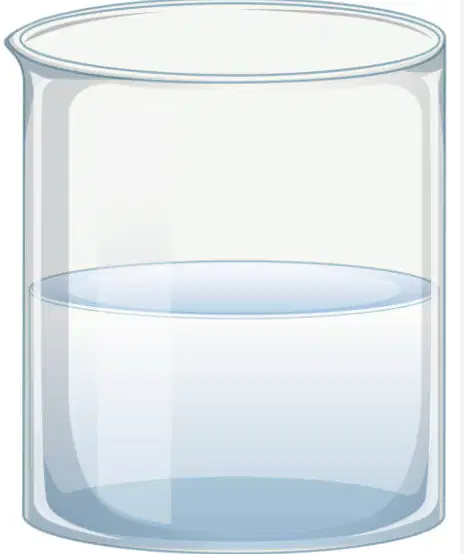
Draw: A blue block that is less dense than water
It refers to the space that matter occupies.
volume
mass
weight
density
It is the amount of matter in an object.
volume
mass
weight
density
Which of the following determines an object’s ability to float in water?
volume
mass
weight
density
Matter is
Anything that has volume
Anything that has mass
Anything that has mass and volume
What is a Solid?
Matter that has a fixed shape and size.
Matter that has a fixed size and no fixed shape
Matter that has no fixed shape or size
Matter that has no fixed shape and size
The state of matter that keeps its shape and volume when it is placed in a different container is called ______.
gas
liquid
solid
The state of matter that expands to fill its container is called ______.
gas
liquid
solid

The diagram shows arrangement of particles in a
Solid
Liquid
Gas
Define a liquid.
Matter that has fixed shape but no fixed volume
Matter that has fixed shape and fixed volume
Matter that has fixed volume, but no fixed shape
In which state of matter will there be the LARGEST space between molecules?
Solid
Liquid
Gas
The measure of how much space something takes up is ______.
matter
mass
volume
density
What is a gas?
Matter that has fixed shape but no fixed volume
Matter that has no fixed shape and no fixed volume
Matter that has no fixed shape but fixed volume
compounds

What state is represented in the gif?
Solid
Liquid
Gas

This diagram shows a substance in what state?
Gas
Liquid
Solid
Plasma
Draw and example of a liquid.

A thing's _______tells you how much matter it has.
color
size
mass

Matter is made up of tiny particles called ...
minerals
cells
vitamins
atoms
One similarity between solids, liquids and gases is
all three have atoms and/or molecules
all three have molecules that are close together
all three take the shape of their containers
In a liquid
Particles are spread apart, but still relatively close
Particles are very far apart and move past each other very quickly
Particles vibrate to and fro
Particles don't exist
Which best describes the behavior of particles in a liquid?
Particles are packed closely together, not moving
Particles are packed closely together, vibrating in a fixed position
Particles are close together, but can move across each other freely
Particles are not held closely together, they spread out to take the shape of the container they are in
The particles in a _____ move the fastest and spread out the most.
Matter
Solid
Liquid
Gas
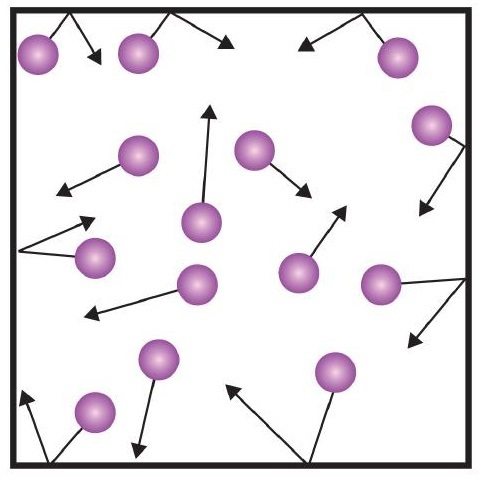
Which state of matter has particles that move the least/slowest?
solid
water
gas

The forces of attraction between particles of _________ are weakest.
solids
liquids
gases
none

The atomic number is the same as......
the number of protons
the number of electrons
the number of neutrons
the number of protons plus neutrons
The mass number is the same as......
the number of protons
the number of electrons
the number of neutrons
the number of protons plus neutrons

What property determines if an atom is identified as Chlorine?
it has 18 neutrons
it has an atomic mass of 35
it has 17 protons
Its element symbol is Cl

How many protons are in a Chlorine atom?
17
35
35.45
18
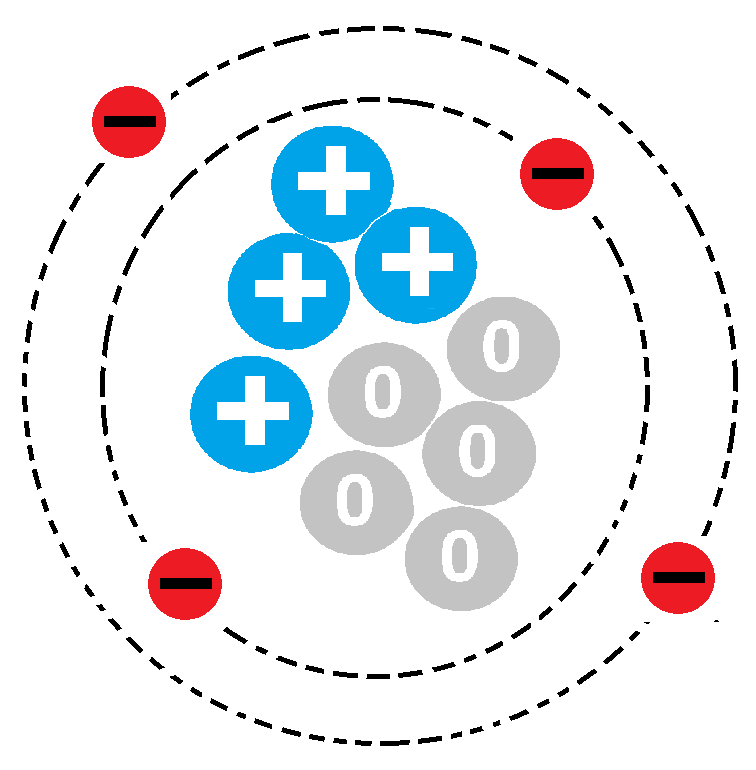
This subatomic particle determines the element's identity.

What is the number of protons in Magnesium atom ?
12
24
23
36

How many electrons are found in a neutral atom of chlorine ?
35
11
18
17
Sodium has an atomic number of 11. How many protons does each sodium atom have?
33
22
11
0

How many protons are in Sodium?
11
22
12
33

The identity of the atom is determined by the ______.
Protons
Electrons
Neutrons
The mass of the atom is determined by the ______ and ______.
Protons and Electrons
Protons and Neutrons
Electrons and Neutrons
What is an element?
An element is a substance that cannot be broken down into simpler substances .

