
Font size
 Worksheets
3.1 Unit Review Homeostasis
Total questions: 93
Worksheet time: 47mins
Students are observing particles moving against the concentration gradient in a lab investigation. Which type of transport are they observing?
osmosis
active Transport
facilitated diffusion
diffusion
Students are observing particles moving with the concentration gradient in a lab investigation. Which type of transport are they observing?
using pumps to move things quickly
passive transport
osmosis
endocytosis

This picture shows molecules of red dye that have moved. What is this type of movement called?
Osmosis; the water molecules are moving from high concentration to low
Diffusion; the dye molecules are moving from low to high concentration
Diffusion; the dye molecules are moving from high to low concentration.
Facilitated diffusion; because the molecules are moving through a protein channel.
The cell membrane is responsible for allowing molecules to diffuse into or out of the cell. What type of movement is diffusion?
Passive transport
Active transport
The cell membrane is responsible for allowing molecules to diffuse through a protein channel, from high concentration to low concentration. What type of transport is this?
Passive Transport
Active transport
The cell membrane needs to use energy to move molecules quickly out of the cell through a pump. What type of transport is this?
Passive transport
Active transport
Passive transport is when molecules move ________ the concentration gradient.
against
up
down
with
Active transport is when molecules move ________ the concentration gradient.
against
up
down
with

This picture is a representation of what type of transport?
Osmosis because it is diffusing through a protein from an area of high concentration to low concentration.
Facilitated diffusion because it is diffusing through a protein from an area of high concentration to low concentration.
Facilitated diffusion because it is diffusing through a protein from an area of low concentration to high concentration.
Simple diffusion because it is diffusing through a protein from an area of high concentration to low concentration.

This picture describes the movement of molecules across the cell membrane. Choose 2 answers that correctly describes the movement of the molecules.
Molecules are moving up the concentration gradient.
Molecules are moving from an area of low concentration to area of high concentration .
Molecules are moving down the concentration gradient.
Molecules are moving from an area of high concentration to area of low concentration.

What do you think will not allow the turgid plant cell to burst?
chloroplast
cell membrane
cell wall
central vacuole

Which cell do you think would be most ideal for maintaining homeostasis?
The smallest cell because it would be more efficient to remove and obtains molecules
The largest one because it would be able to obtain more food and store for longer periods of time.
The largest one because it has more room to grow
The medium cell because it would be more efficient to remove and obtains molecules
What is the monomer for a lipid?
monosaccharide
glycerol and fatty acid
amino acids
nucleic acid

What is the name of this macromolecule?
protein
carbohydrate
lipid
nucleic acid
What is the main function of this macromolecule?
Insolation, and components of the cell membrane
quick energy
structure muscles and growth.
storage of genetic information
Tap on all the pictures of ACTIVE transport.

The movement of materials that requires energy is called...
active transport
passive transport
massive transport
proactive transport

The movement of materials from an area of low concentration to an area of high concentration would require...
glucose
energy (ATP)
fish
chips
Choose the image(s) below that represent(s) passive transport
Tap on all the pictures of PASSIVE transport.
categorize each term in regards to transport
No energy needed
uses energy
needs ATP
No ATP needed
small molecules
large molecules
with the gradient
against the gradient
Which of the following happen naturally moving substances from high concentration to low concentration?
Diffusion
Osmosis
Facilitated diffusion
Active Transport
A & B
What is the term for maintaining equilibrium within your body(cell) despite the external forces outside you body (cell)?
Osmosis
Diffusion
Homeostasis
Transport
In an isotonic solution which way will the water flow
it will not flow at all
it will flow into the cell
it will flow both ways at equal rates
out of the cell
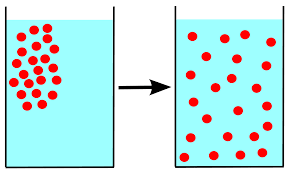


Movement of SOLUTE through the cell membrane from high to low concentration is called.....
diffusion
active transport
facilitated diffusion
osmosis

The molecules spread out until the _________________ of red molecules is the same throughout the container.
concentration
concentration gradient

What is positive feedback in homeostasis?
Positive feedback in homeostasis is a self-correcting mechanism that brings the body back to its normal range.
Positive feedback in homeostasis is a mechanism that decreases the change or deviation from the normal range.
Positive feedback in homeostasis is a mechanism that has no effect on the body's normal range.
Positive feedback in homeostasis is a self-reinforcing mechanism that amplifies or increases the change or deviation from the normal range.
Give an example of positive feedback in homeostasis.
Shivering.
Blood clotting.
Sweating.
Childbirth
How does positive feedback affect the body's response to a stimulus?
Inhibits
Decreases
Amplifies
Neutralizes
What is negative feedback in homeostasis?
Regulatory mechanism that counteracts changes from the normal set point
Process that has no effect on changes from the normal set point.
Regulatory mechanism that promotes changes from the normal set point.
Process that amplifies changes from the normal set point.
Provide an example of negative feedback in homeostasis.
Sweating
Constriction of blood vessels
Increased heart rate
Shivering
Explain how negative feedback helps maintain homeostasis.
Negative feedback only occurs in certain body systems and does not contribute to overall homeostasis.
Negative feedback counteracts changes and deviations from the desired set point to maintain homeostasis.
Negative feedback has no effect on maintaining homeostasis.
Negative feedback amplifies changes and deviations from the desired set point to maintain homeostasis.
Describe the role of negative feedback in temperature regulation.
Negative feedback in temperature regulation has no effect on body temperature.
Negative feedback in temperature regulation causes changes in body temperature.
Negative feedback in temperature regulation only occurs in extreme temperatures.
Negative feedback in temperature regulation helps maintain homeostasis by counteracting changes in body temperature.
How does positive feedback differ from negative feedback in homeostasis?
Positive feedback decreases, while negative feedback increases.
Positive feedback inhibits, while negative feedback promotes.
Positive feedback amplifies, while negative feedback counteracts.
Positive feedback stabilizes, while negative feedback disrupts.
Why is it important for the body to have both positive and negative feedback mechanisms?
To disrupt homeostasis and cause dysfunction in the body.
To only have positive feedback mechanisms and ignore negative feedback.
To rely solely on negative feedback mechanisms and ignore positive feedback.
To maintain homeostasis and ensure proper body function.
What is homeostasis?
the process of maintaining relatively stable internal conditions
All the physical and chemical changes occurring in an organism
the process of becoming bigger
Movement of substances throughout the body
Maintaining glucose levels in the body through the day is an example of this being used:
chloroplasts
organic materials
predation
feedback mechanisms
Guard cells changing the size of leaf openings, regulating the exchange of gas is an example of
excretion
carbon dioxide
diffusion
feedback mechanism
This is important in the body because it keeps the internal body environment in the normal range.
coordination
circulation
heterotrophic nutrition
Feedback interactions
What will happen if sugar levels are thrown off after a meal?
The body will produce more salt
the body will have an infection
the body will remove oxygen
The body make adjustment to restore homeostasis
Why is an increased pulse rate after exercise good a good thing?
The blood moves carbon dioxide into the muscle cells
The blood moves oxygen away from muscle cells
the blood moves salt into the muscle cells
an increased blood flow carries excess waste products away from muscle cells
maintain stable internal environment
receptor
type 2 diabetes
homeostasis
insulin
reverses the direction of change
positive feedback
effector
hypothalamus
negative feedback
increases or speeds up original change
negative feedback
positive feedback
endotherm
ectotherm
How does your body maintain homeostasis when you are exercising?
Your body starts to digest your food.
Your heart rate increases to pump more blood to your muscles and you sweat to cool down your temperature.
Your body decreases your heart rate and you start to breathe less.
Your body develops a fever to fight off an infection.
How do you maintain homeostasis when you are thirsty?
You go swimming
You exercise
You eat food
You drink water
A change that causes a response is a ...
behavior
instinct
stimulus
hibernation
Animals respond to changes to maintain ______________.
behavior
internal stimuli
external stimuli
homeostasis
What is the most likely response to a hot temperature environment?
Shivering
Goosebumps
Sweating
Fever
Which of these is an example of a plant responding to an internal stimulus?
a leaf wilting because of lack of water
the stem of a sunflower bending toward light
a leaf closing when a bee brushes against it
the roots of a tree growing downward, in the direction of gravity

A person would never have pure water put into their veins in a hospital because their cells would...
Shrink/Dehydrate
Expand
Stay the same
If there is 5 percent water inside a cell and 5 percent water outside a cell
more water will move inside the cell
more water will move outside the cell
There will be no net movement of water, it moves into and out of the cell at the same time.
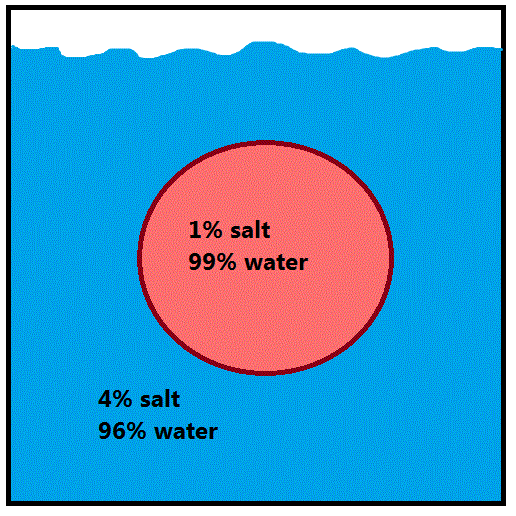
Where will the water go?
Into the cell
Out of the cell
Equally in & out - it's isotonic
There is no water
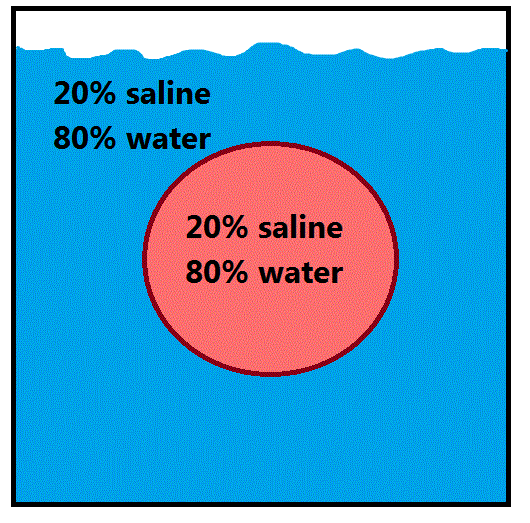
A blood cell is placed into the jar, as seen. Where will the water go?
Into the cell
Out of the cell
Equally in & out - it's isotonic
The water is a lie
Why can't you drink salt water?
It's hypertonic to your cells
It's hypotonic to your cells
It's isotonic to your cells
It's paratonic to your cells
When you are hot you....
sweat
shiver
get goosebumps
hairs stand up on arm
When you are cold you...
shiver to create heat
sweat
blood vessels dilate
increase heart rate
A freshwater snail is placed in a saltwater environment. What would most likely happen?
water would move out of the snail cells
water would move into the snail cells
salt would move into the snail cells
salt would move out of the snail cells
A saltwater plant is placed in a freshwater environment. What would most likely happen?
water would move out of the plant cells
water would move into the plant cells
salt would move into the plant cells
salt would move out of the plant cells
Why do plants close their stomata?
To capture more sunlight
To increase water loss
To reduce water loss
To attract more carbon dioxide
Which of the following is a way plants maintain homeostasis?
By moving to shaded areas
By opening and closing their stomata
By increasing their body temperature
By consuming nutrients from animals

