wayground logo

Free Printable Worksheets

Font size

S
M
L
XL
Worksheets

Ivy Tech Biology Final Exam Review

Total questions: 88

Worksheet time: 2hrs 18mins

Name
Class
Date
1.

Organisms that rely on other organisms for food are called

a)

producers

b)

autotrophs

c)

consumers

d)

saprophytes

2.

The amount of energy expected to be transferred from one trophic level to another is ___?

a)

1%

b)

10%

c)

90%

d)

100%

3.

Identify the gas that is an input (reactant) of photosynthesis:

a)

oxygen

b)

Water

c)

carbon dioxide

d)

nitrogen

4.

The process where the better adapted organisms survive to pass traits along to offspring.

a)

Evolution

b)

Natural Selection

c)

Extinction

d)

Artifical Selection

5.

Why are advantageous traits more likely to be passed onto offspring?

a)

Because they are more likely to survive and reproduce.

b)

Because they come from dominant genes.

c)

Because they come from recessive genes.

d)

Because the trait is an acquired trait.

6.
The differences among a species, like different bird beaks, are called
a)
genes.
b)
variations.
c)
traits.
d)
theories.
7.
If the number of births in a population is the same as the number of deaths in a population, what will happen to the growth of the population?
a)
It will increase.
b)
It will decrease.
c)
It will stay the same.
d)
It will fluctuate.
8.
What is the ultimate ORIGINAL source of energy for living things
a)
Sugar
b)
Sun
c)
Moon
d)
Carbon Dioxide
9.
All of the living and nonliving things in an area that interact with each other are called a/an ______.
a)
community
b)
habitat
c)
population
d)
ecosystem
10.
The living part of an ecosystem
a)
Biotic
b)
Abiotic
c)
Mother Earth
d)
Flowers
11.
Two or more members of a particular species living and interacting in the same area
a)
Community
b)
Population
c)
Organisms
d)
Biosphere
12.
Different populations living and interacting with each other in the same area
a)
Biome
b)
Ecosystem
c)
Community
d)
Niche
13.
Consumer that eats plants
a)
heterotroph
b)
herbivore
c)
producer
d)
community
14.
Series of steps in which organisms transfer energy by eating and being eaten
a)
foodweb
b)
consumer
c)
food chain
d)
omnivore
15.
Organisms that relies on other organisms for food; consumer
a)
herbivore
b)
decomposer
c)
heterotroph
d)
species
16.
Which of the following leads to a decrease in biodiversity?
a)
protection of ecosystems
b)
pollution control
c)
selective cutting
d)
introduction of exotic or invasive species
17.
Nitrogen fixation processes nitrogen from which of the following sources?
a)
lightning
b)
fertilizers
c)
dead plants
d)
atmosphere
18.
Which biome, because of its climate and amount of rainfall, has the largest number of species of plants and animals?
a)
Tundra
b)
Rainforest
c)
Desert
d)
Pineforest
19.
In natural selection, the selective agent is the
a)
humans
b)
mutations
c)
breeders
d)
environment
20.

What is the term for a feature that allows an organism to survive better in its environemtn?

a)

variation

b)

adaptation

c)

homologous structure

d)

vestigial structure

21.
What increases genetic variation when animals move from one population to another
a)
genetic drift
b)
sexual selection
c)
bottleneck effect
d)
gene flow
22.

What type of structures are shown?

a)

Homologous

b)

Analogous

c)

Vestigial

d)

Heterologous

23.

What type of structures are shown?

a)

Homologous

b)

Analogous

c)

Vestigial

d)

Heterologous

24.
Two organisms that are closely related would have
a)
very similar DNA sequence
b)
exactly the same DNA sequences
c)
no proteins in common
d)
completely different DNA sequence
25.
Which of the following is responsible for the exchange of gases between the plant and the atmosphere during photosynthesis?
a)
primary and secondary meristems 
b)
xylem and phloem 
c)
guard cells and stomata
d)
cambium and epidermis 
26.

These are small openings in plant leaves that exchange O2 and CO2.

a)

stomata

b)

lenticels

c)

pores

d)

guard cells

27.

This plant vascular tissue is nonliving and transports water and inorganic nutrients.

a)

phloem

b)

mesophyll

c)

xylem

d)

epidermis

28.

This plant vascular tissue transports food and some inorganic compounds.

a)

phloem

b)

xylem

c)

cambrium

d)

neural

29.

The plant in the picture is an example of a(n)

a)

non vascular plant

b)

gymnosperm

c)

platiosperm

d)

angiosperm

30.

After fertilization, the ovule will develop to:

a)

fruit

b)

seeds

c)

calyx

d)

mesocarp

31.

After fertilization, (true) fruits developed from:

a)

ovary

b)

ovule

c)

receptacle

d)

stigma

32.

These are the whorl or group of petals, which are usually thin, soft and colored to attract animals that help the process of pollination.

a)

calyx

b)

corolla

c)

androecium

d)

gynoecium

33.

These are the outer whorl of sepals; typically these are green, but are petal-like in some species.

a)

peduncle

b)

pedicel

c)

corolla

d)

calyx

34.
These structures are openings in the bottom of _______________.
a)
leaves
b)
roots
c)
stems
d)
flowers
35.
What enters the plant through the roots?
a)
water
b)
carbon dioxide
c)
glucose
d)
sunlight
36.

This picture shows a plant going toward the light called ___________.

a)

gravitropism

b)

geotropism

c)

phototropism

d)

turgor pressure

37.

These are examples of ruminants:

a)

pigs, horses, humans and chickens

b)

sheep, goats, cattle, deer, giraffes

c)

pigs, sheep, cattle, chickens

d)

pigs, hippos, llamas

38.

The ruminant structures are :

a)

espohgus , mouth, teeth and cecum

b)

rumen, reticulum, omasum and abomasum

c)

stomach, small intestine large intestine

39.
Which process helps ruminants to digest plant material? 
a)
mastication
b)
peristalsis
c)
fermentation
d)
cytolysis
40.
When ruminants "chew the cud", they are
a)
regurgitating food to chew it again
b)
belching to release gas from fermenting food
c)
passing gas! 
d)
regurgitating food they don't want
41.
An endothermic vertebrate that has skin covered by hair or fur, and a four-chambered heart...
a)
mammal
b)
fish
c)
marsupial
d)
bird
42.
arteries, veins, and capillaries are three types of __________
a)
heart valves
b)
blood vessels
c)
cells
d)
veins
43.

Perch have a ____ chambered heart.

a)

single chambered heart

b)

2 chambered heart

c)

3 chambered heart

d)

4 chambered heart

44.

Amphibians have a ____-chambered heart.

a)

1

b)

2

c)

3

d)

4

45.
How many chambers do most reptile hearts have?
a)
One
b)
Two
c)
Three
d)
Four
46.

How do frogs breathe when they are adults?

a)

with lungs

b)

with gills

c)

through their skin

47.
Name the two major parts of the central nervous system.
a)
The brain and the skull. 
b)
The brain and the body.
c)
The spinal cord and the brain.
d)
The spinal cord and the body. 
48.
The nervous system_________
a)
receives information about what is going on in your body as well as what is going on around you. 
b)
tells your body how to react to the information it receives. 
c)
helps your body maintain homeostasis. 
d)
all of the above.
49.
What are the two divisions of the nervous system?
a)
The brain and spinal cord. 
b)
The central nervous system and the skeletal system. 
c)
The central and peripheral nervous systems. 
50.
The "fight or flight" response during threatening situations in the role of the:
a)
sympathetic nervous system
b)
parasympathetic system
c)
somatic nervous system
d)
cerebellum
51.
The part of the nervous system that consists of nerves that branch out from the CNS (central nervous system) and connect to other body parts
a)
Sympathetic
b)
Parasympathetic
c)
Autonomic
d)
Peripheral
52.
What is NOT part of the peripheral nervous system (PNS)?
a)
axons
b)
sensory receptors
c)
spinal cord
d)
motor neurons
53.
Which of the following are parts of neurons?
a)
brain, spinal cord, and vertebral column
b)
dendrite, axon, and cell body
c)
sensory and motor dendrites
d)
dendrite, medulla and myelin sheath
54.
______ send signals away from neurons whereas ______ receive signals from other neurons.  
a)
Axons; Dendrites
b)
Synapses; dendrites
c)
Dendrites; axons
d)
Axons; synapses
55.

These animals use a tracheal system to breathe

a)

fish, beetle and shark

b)

fly, cockroach, grasshopper.

c)

earthworms and frogs

56.

These animals have lungs but when they're under the water, they use their skin to breathe

a)

crocodiles

b)

frogs

c)

turtles

57.

Grizzly Bear

a)

omnivore

b)

herbivore

c)

carnivore

58.

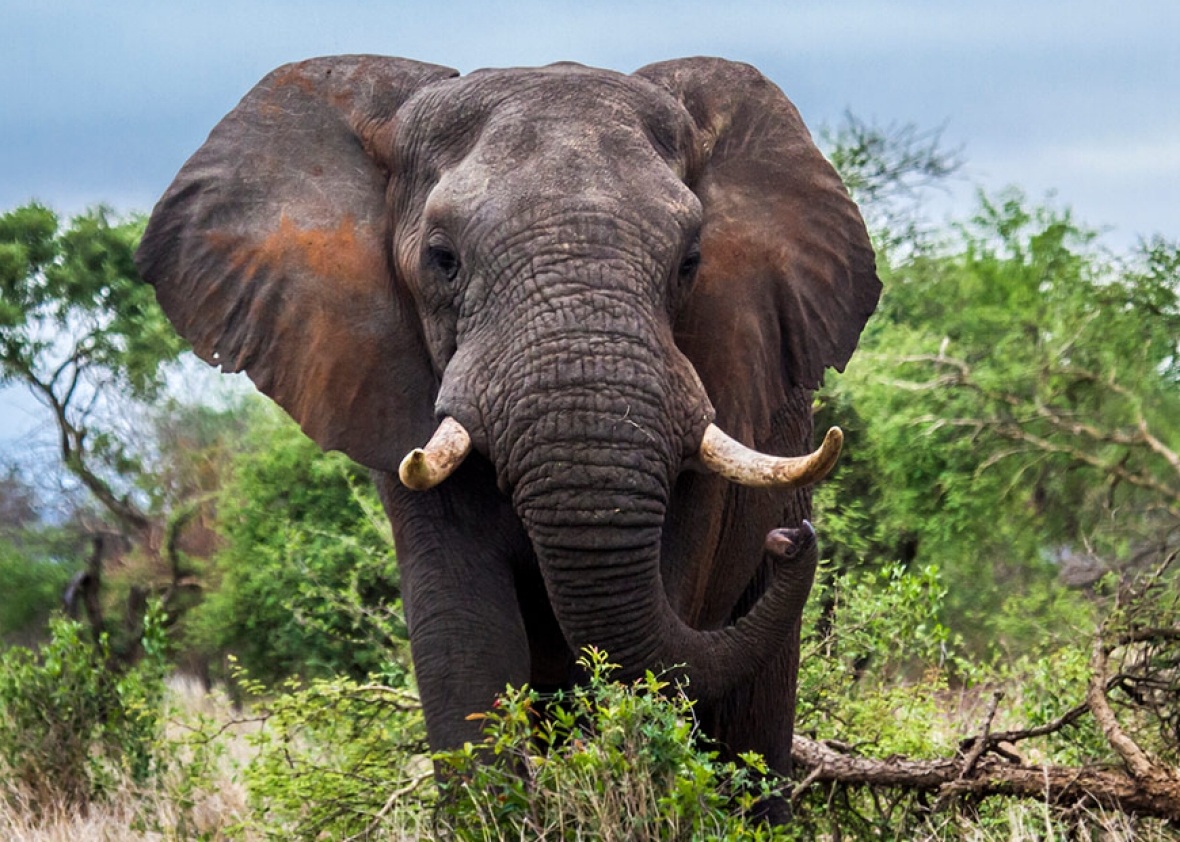
elephant

a)

omnivore

b)

herbivore

c)

carnivore

59.

lion

a)

omnivore

b)

herbivore

c)

carnivore

60.

giraffe

a)

omnivore

b)

herbivore

c)

carnivore

61.
Plants with seeds in cones are called?
a)
gymnosperms
b)
angiosperms
c)
flowers
d)
mosses
62.

Where do the seeds of a gymnosperm come from?

a)

fruit

b)

flowers

c)

spores

d)

cones

63.

The two types of vascular tissue in plants are _____________ and _________________?

a)

bark, wood

b)

ground, dermal

c)

roots, stem

d)

phloem, xylem

64.

The distinction between the Angiosperm plant and Gymnosperm plant are following:

a)

Gymnosperm plant have covered seed and Angiosperm plants have uncovered seed.

b)

Angiosperm plants are flowering plant and Gymnosperm plants are evergreen plants.

c)

Gymnosperm plant are coniferous trees and shrubs and Angiosperm plants are fruit bearing plants.

d)

Only Angiosperm plants can reproduce via spores.

65.

Select the abiotic components of the ecosystem.

a)

Human

b)

Rock

c)

Weather

d)

Kangaroo

66.

Which of the following includes all of the male reproductive structures of a flower?

a)

the pistil

b)

the stigma

c)

the stomata

d)

the stamen

67.

Which type of cell produces growth at the root and stem of a plant?

a)

Lateral meristems

b)

Apical meristems

c)

Vascular cambium

d)

Cork cambium

68.

__________________ occurs at the roots and stems of the plant while _____________________ occurs in the girth of the plant.

a)

Primary Growth, Secondary Growth

b)

Secondary growth, Indeterminate Growth

c)

Secondary growth, Primary Growth

d)

Indeterminate Growth, Primary Growth

69.
What type of growth model is this?
a)
exponential growth model
b)
logistic growth model
c)
Type I curve
d)
Type III curve
70.
relationship in which two species live closely together
a)
resource
b)
mutualism
c)
succession
d)
symbiosis
71.
diagram that shows the energy available to each trophic level in an ecosystem; 10% is passed on to upper levels, the rest is lost as heat
a)
succession 
b)
cellular respiration
c)
energy pyramid
d)
biochemical cycle
72.
symbiotic relationship in which one organism benefits and the other organism is harmed 
a)
commensalism
b)
mutualism
c)
symbiosis 
d)
parasitism
73.
largest number of individuals of a population that the environment can support  
a)
carrying capacity
b)
Limiting nutrient 
c)
denitrification
d)
mutualism
74.
the process by which a new community replaces another community that has been partially or totally destroyed 
a)
tertiary succession
b)
primary succession
c)
secondary succession 
d)
succession 
75.

symbiotic relationship in which both organisms benefit

a)

predation

b)

mutualism

c)

parasitism

d)

commensalism

76.
the process by which a new community forms where no community lived before 
a)
tertiary succession
b)
secondary succession
c)
primary succession
d)
pioneer species
77.
plants and animals that have migrated to areas where they did not originate; often displace native species by out-competing them for resources
a)
endemic species
b)
endangered species
c)
invasive species
d)
keystone species
78.
Step in the food chain, food web, or ecological pyramid
a)
trophic Level
b)
abiotic factors
c)
community 
d)
ecosystem
79.
Non-living factor that affects an ecosystem
a)
biotic factor
b)
abiotic factor
c)
food chain 
d)
biome
80.
The unique position that a species has in the physical use of its habitat and in its function (job) within an ecosystem  
a)
producer
b)
biotic factors
c)
ecosystem
d)
niche
81.
Organisms that makes its own food using sunlight or chemicals; producer
a)
decomposer
b)
autotroph
c)
heterotroph
d)
herbivore
82.
Anything that can decrease the size of a population including living (biotic) and non living (abiotic) features of an ecosystem such as predators and drought.
a)
limiting factor
b)
habitat
c)
ecosystem
d)
carrying capacity
83.
The form of nitrogen found in the air.
a)
Nitrous Oxide
b)
Ammonia
c)
Nitrogen Gas (N2)
d)
Nitrites
84.
The form of succession that occurs after a traumatic event such as a forest fire.
a)
Primary succession
b)
Secondary succession
c)
Climax succession
d)
All are correct answers
85.
When succession ends, the name for the final community of organisms living in an ecosystem.
a)
Pioneer species
b)
Detritivores
c)
Climax community
d)
Primary consumers
86.
As shown in this foodweb, which of these is NOT an omnivore?
a)
The grouse
b)
The grizzly bear
c)
They are all omnivores
d)
The marmot
87.
In the carbon cycle, what is the role of green plants?
a)
release carbon dioxide into the air
b)
decomposing matter
c)
absorbing carbon dioxide
d)
combustion
88.
What role do animals play in the carbon cycle?
a)
absorb carbon dioxide from the atmosphere
b)
give off carbon dioxide
c)
combustion
d)
decomposing matter