wayground logo

Free Printable Worksheets

NEW

Font size

S
M
L
XL
Worksheets

Atoms and Periodic Table Review

Total questions: 70

Worksheet time: 40mins
Name
Class
Date
1.
Which of the following can be easily beaten into thin sheets?
a)
Zinc (Zn)
b)
Phosphorus (P)
c)
Sulfur (S)
d)
Oxygen (O)
2.
Which of the following elements is a nonmetal?
a)
Magnesium (Mg)
b)
Silicon (Si)
c)
Bromine (Br)
d)
Mercury (Hg)
3.
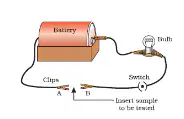
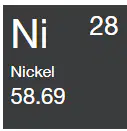
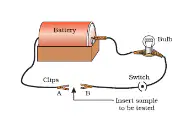
The image below displays a circuit to test the conductivity of samples. What would you expect to see happen to the light in a working circuit if the sample to be tested were Nickel(Ni)
a)
The light bulb will light up
b)
The light bulb will not light up
4.
Which of the following elements is a Metalloid?
a)
Magnesium (Mg)
b)
Silicon (Si)
c)
Bromine (Br)
d)
Phosphorus (P)
5.
The periodic table is arranged by increasing
a)
atomic mass
b)
atomic number
c)
number of atoms
6.
Which group # on the periodic table contains the Noble Gases?
a)
a. Group 1
b)
b. Group 17
c)
c. Group 18
d)
d. Group 14
7.
What is the most common state of matter for elements on the periodic table?
a)
a. Gas
b)
b. Liquid
c)
c. Solid
d)
d. Plasma
8.
Which element is a liquid at room temperature?
a)
a. Bromine
b)
b. Iron
c)
c. Lead
d)
d. Copper
9.
Which of the following elements is a Metalloid?
a)
a. Oxygen
b)
b. Antimony
c)
c. Neon
d)
d. Potassium
10.
Which type of elements are found on the left side of the staircase on the Periodic Table?
a)
Nonmetals
b)
Metals
c)
Metalloids
d)
Gas
11.
Which type of elements are found on the right side of the staircase on the Periodic Table?
a)
Nonmetals
b)
Metals
c)
Metalloids
d)
Gas
12.
Classify the following element as a metal, nonmetal or Metalloid. Calcium Ca
a)
Nonmetal
b)
Metal
c)
Metalloid
13.
How many Metalloids are typically recognized on the periodic table?
a)
2
b)
6
c)
8
d)
18
14.
Classify the following element as a metal, nonmetal or Metalloid. Arsenic As
a)
Nonmetal
b)
Metal
c)
Metalloid
15.
Classify the following element as a metal, nonmetal or Metalloid. Magnesium Mg
a)
Nonmetal
b)
Metal
c)
Metalloid
16.
Classify the following element as a metal, nonmetal or Metalloid. Platinum
a)
Nonmetal
b)
Metal
c)
Metalloid
17.
Which element is a Metalloid in period 2?
a)
Carbon C
b)
Boron B
c)
Germanium Ge
d)
Lithium Li
18.
The measure of how an object reflects light is called_______
a)
Density
b)
Malleability
c)
Luster
d)
Alloy
19.

which of the following elements does not show the property of malleability.
a)
Iron (Fe)
b)
Carbon (C)
c)
Aluminum (Al)
d)
Silver (Ag)
20.
Which of the following can be easily beaten into thin sheets?
a)
Zinc (Zn)
b)
Phosphorus (P)
c)
Sulfur (S)
d)
Oxygen (O)
21.
Which of the following elements is a nonmetal?
a)
Magnesium (Mg)
b)
Silicon (Si)
c)
Bromine (Br)
d)
Mercury (Hg)
22.
Which of the following elements is a metalloid?
a)
Magnesium (Mg)
b)
Silicon (Si)
c)
Bromine (Br)
d)
Phosphorus (P)
23.
Which of the following element is considered a non metal?
a)
Lithium (Li)
b)
Sulfur (S)
c)
Copper (Cu)
d)
Nickel (Ni)
24.
Potassium (K) is an alkali metal, which of the following characteristics would NOT be used to describe Potassium?
a)
Brittle
b)
Good conductor
c)
Ductile
d)
Malleable
25.
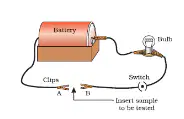
The image below displays a circuit to test the conductivity of samples. What would you expect to see happen to the light in a working circuit if the sample to be tested were Nickel(Ni)
a)
The light bulb will light up
b)
The light bulb will not light up
26.
The image below displays a circuit to test the conductivity of samples. What would you expect to see happen to the light in a working circuit if the sample to be tested were Sulfur (S)
a)
The light bulb will light up
b)
The light bulb will not light up
27.
If Helen has an element that is hard, shiny, and conducts heat, she most likely has a-
a)
metal
b)
nonmetal
c)
metalloid
d)
liquid
28.
Semi-conductors have properties of both metals and nonmetals. Which are two examples of metalloids?
a)
Ge and Si
b)
C and Si
c)
O and Ge
d)
Al and Si
29.
The periodic table is arranged into what 3 major groups:
a)
plants/animals/birds
b)
metals/metalloids/nonmetals
c)
earth/sea/air
d)
common/general/rare
30.
Which of the following will not conduct electricity easily?
a)
Copper (Cu)
b)
Nickel (Ni)
c)
Silver (Ag)
d)
Helium (He)
31.
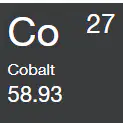
Which of the following atoms has an atomic number of 59?
a)
Cobalt
b)
Nickle
c)
Praseodymium
d)
Indium
32.
What is the number on the element block that tells the number of protons AND determines the identity of the element?
a)
Atomic Mass
b)
Atomic Weight
c)
Atomic Number
33.
Mass measures the amount of _______ in a substance or an object.
a)
gravity
b)
space
c)
vapour
d)
matter
34.
The atomic number represents:
a)
the number of neutrons in an atom of that element
b)
the number of protons in an atom of that element
c)
the mass of an atom of that element
35.
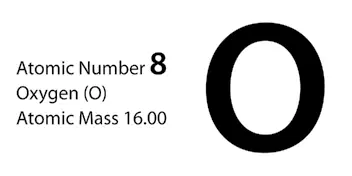
Which of the following atoms has 8 electrons surrounding its nucleus:
a)
beryllium
b)
oxygen
c)
magnesium
d)
sulfur
36.
Which group of elements has the most reactive METALS?
a)
metalloids
b)
halogens
c)
alkali metals
d)
noble gases
37.
What type of element is chlorine?
a)
a. Metal
b)
b. Metalloid
c)
c. Nonmetal
d)
d. Noble gas
38.
Which group of elements has the most stable, nonreactive elements (will not easily bond with others)?
a)
metalloids
b)
halogens
c)
alkali metals
d)
noble gases
39.
Which group is known as the halogens?
a)
a. Group 1
b)
b. Group 2
c)
c. Group 17
d)
d. Group 18
40.
What information does the periodic table provide about each element?
a)
a. Atomic number, symbol, and atomic mass
b)
b. Atomic number, symbol, and melting point
c)
c. Atomic number, melting point, and density
d)
d. Symbol, atomic mass, and reactivity
41.
Which of the following is a characteristic of a metal?
a)
Malleable
b)
Do not conduct heat/electricity
c)
Brittle
d)
All of the above
42.
Elements in the same group have similar properties because they have the same number of what?
a)
a. Protons
b)
b. Neutrons
c)
c. Electrons in the outermost energy level (valence electrons)
d)
d. Atomic mass
43.
Which elements have the most similar chemical properties?
a)
K and Na
b)
K and Ca
c)
K and Cl
d)
K and S
44.
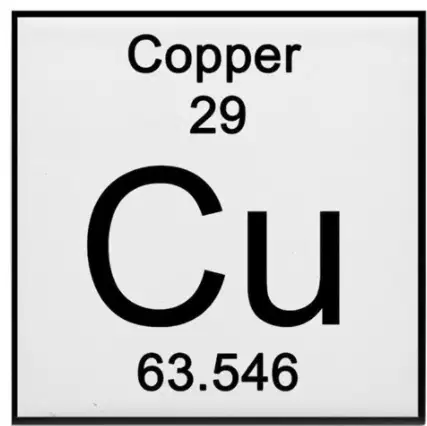
According to the periodic table block below, how many neutrons does an atom of Copper have?
a)
29
b)
63
c)
65
d)
35
45.
How would you determine the number of neutrons an atom of Copper has?
a)
atomic number equals number of neutrons
b)
atomic mass equals the number of neutrons
c)
atomic mass minus the atomic number equals the number of neutrons
d)
atomic mass plus the atomic number equals the number of neutrons
46.
If Bromine has an atomic number of 35 and has 45 neutrons, what is the atomic mass of Bromine?
a)
35
b)
45
c)
80
d)
10
47.
The atomic number of Boron is 5; its atomic mass number is 10.81. How many neutrons does an atom of Boron have in its nucleus?
a)
6
b)
15
c)
11
d)
16
48.
An element whose properties are similar to calcium is __________
a)
magnesium Mg
b)
potassium K
c)
bromine Br
d)
Iron Fe
49.
A brittle, non-conducting, solid might belong to which of the following groups?
a)
Alkali Metals
b)
Halogens
c)
Metalloids
d)
Transition Metals
50.
Which element is in the Alkali Metal family?
a)
N
b)
Na
c)
Xe
d)
Cl
51.
Which of the following elements is located in the group Alkaline Earth Metals?
a)
Lithium (Li)
b)
Neon (Ne)
c)
Mercury (Hg)
d)
Magnesium (Mg)
52.
These have properties of both metals and non metals
a)
Alkali Metals
b)
Halogens
c)
Metalloids
d)
Transitional Metals
53.
Potassium (K) is a member of which group/family of elements?
a)
Alkali Metals
b)
Halogens
c)
Metalloids
d)
Transitional Metals
54.
Which of the following is a characteristic of non metals?
a)
Luster
b)
Brittle
c)
Ductile
d)
Conduct heat/electricity
55.
Argon (Ar) a member of which group/family of elements?
a)
Alkali Metals
b)
Halogens
c)
Noble Gases
d)
Transitional Metals
56.
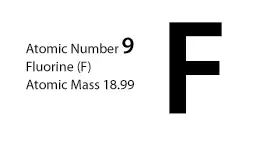
Which of the following atoms has 9 protons in its nucleus:
a)
carbon
b)
oxygen
c)
fluorine
d)
argon
57.
Which element has an atomic mass of 9?:
a)
beryllium
b)
fluorine
c)
Boron
d)
Potassium
58.

Which of the following elements is a noble gas?

a)

Helium (He)

b)

Oxygen (O)

c)

Nitrogen (N)

d)

Carbon (C)

59.

What is the primary characteristic of metalloids?

a)

They are good conductors of electricity.

b)

They have properties of both metals and nonmetals.

c)

They are highly reactive with water.

d)

They are gases at room temperature.

60.

Which of the following elements is a noble gas?

a)

Helium (He)

b)

Hydrogen (H)

c)

Nitrogen (N)

d)

Oxygen (O)

61.

What is the primary characteristic of elements in the same period on the periodic table?

a)

They have the same number of valence electrons

b)

They have the same atomic number

c)

They have the same number of electron shells

d)

They have similar chemical properties

62.

Which of the following elements is a transition metal?

a)

Calcium (Ca)

b)

Iron (Fe)

c)

Sulfur (S)

d)

Argon (Ar)

63.

An iron atom has an atomic mass of 56. Its atomic number is 26. This means an atom or iron has _______ protons and _____ neutrons.

a)

26, 56

b)

26, 26

c)

26,30

d)

30, 26

64.

A neutral sodium atom has 11 electrons. How many electrons will it contain in it's third energy level?

a)

2

b)

8

c)

1

d)

18

65.
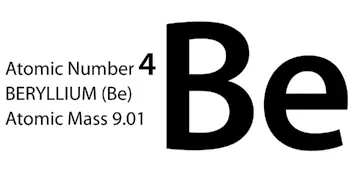
How many protons are in Beryllium?
a)
4
b)
9
c)
5
d)
2
66.

Which type of element is shiny, malleable, ductile and good conductor of heat and electricity?

a)

Metal

b)

Non-metal

c)

Metalloid

67.
How many neutrons are in a Gold atom?
a)
79
b)
196
c)
118
d)
275
68.

How many protons are in a Gold atom?

a)

79

b)

196

c)

118

d)

275

69.

How many electons are in a Gold atom?

a)

79

b)

196

c)

118

d)

275

70.

Which group/family is the most reactive on the periodic table?

a)

Noble Gases

b)

Alkali Metals

c)

Alkaline Metals

d)

Transition Metals