
 Worksheets
Cardiology Quiz
Total questions: 41
Worksheet time: 21mins
Which chamber of the heart has the thickest wall?
a) Left atrium
b) Right atrium
c) Left ventricle
d) Right ventricle
What is the function of the aortic valve?
a) Regulate blood flow into the pulmonary arteries
b) Prevent backflow from the aorta into the left ventricle
c) Maintain blood flow to the right atrium
d) Facilitate oxygen exchange in the lungs
What are the atrioventricular valves?
a) Pulmonary and aortic valves
b) Mitral and tricuspid valves
c) Semilunar valves
d) Pulmonary and mitral valves
Which structure initiates the electrical impulse that causes the heart to beat?
a) Purkinje fibers
b) AV node
c) SA node
d) Bundle of His
What occurs during systole?
a) Atria fill with blood
b) Ventricles relax
c) Ventricles contract and pump blood
d) Valves open to allow atrial filling
Which valve prevents backflow into the right ventricle?
a) Mitral valve
b) Pulmonary valve
c) Aortic valve
d) Tricuspid valve
What is the role of coronary arteries?
a) Transport oxygenated blood to the lungs
b) Supply oxygen and nutrients to the heart muscle
c) Drain blood from the myocardium to the lungs
d) Pump blood from the atria into ventricles
Which wave in the ECG represents atrial depolarization?
a) P wave
b) QRS complex
c) T wave
d) U wave
What is the function of the AV node?
a) Generate impulses faster than the SA node
b) Slow down the impulse to allow ventricular filling
c) Increase heart rate during exercise
d) Maintain blood pressure
Which vessel transports oxygen-poor blood to the lungs?
a) Pulmonary artery
b) Pulmonary vein
c) Aorta
d) Vena cava
Which coronary artery supplies blood to the SA node in most people?
a) Left coronary artery
b) Right coronary artery
c) Circumflex artery
d) Anterior descending artery
What is the function of the chordae tendineae?
a) Transmit electrical impulses
b) Close the semilunar valves
c) Prevent valve prolapse
d) Open the pulmonary valve
What does the T wave on an ECG represent?
a) Atrial depolarization
b) Ventricular repolarization
c) Atrial contraction
d) Ventricular depolarization
What does the P wave on an ECG indicate?
a) Atrial relaxation
b) Ventricular contraction
c) Atrial depolarization
d) Ventricular repolarization
Where does gas exchange occur in the circulatory system?
a) Arteries
b) Veins
c) Capillaries
d) Pulmonary trunk
What effect does vagal stimulation have on the heart?
a) Increases heart rate
b) Decreases heart rate
c) Increases blood pressure
d) Increases ventricular contraction
What causes the heart sounds heard through a stethoscope?
a) Blood moving through veins
b) Valves opening and closing
c) Electrical impulses in the heart
d) Ventricular contraction
What condition occurs when the heart cannot pump enough blood to meet the body’s needs?
a) Myocardial infarction
b) Heart failure
c) Cardiac arrest
d) Atrial fibrillation
What does stroke volume measure?
a) Blood pumped per minute
b) Blood pumped per beat
c) Blood pressure during systole
d) Blood volume in the veins
Which phase of the cardiac cycle occurs when the AV valves are closed?
a) Early diastole
b) Late diastole
c) Systole
What condition is characterised by uncoordinated electrical activity in the atria?
a) Atrial flutter
b) Atrial fibrillation
c) Ventricular tachycardia
d) AV block
What term describes the amount of blood ejected from the left ventricle per minute?
a) Stroke volume
b) Ejection fraction
c) Cardiac output
d) Heart rate
What happens to the coronary arteries during ventricular diastole?
a) They constrict
b) They dilate
c) They fill with blood
d) They collapse
What is the role of the papillary muscles?
a) Close the semilunar valves
b) Open the atrioventricular valves
c) Prevent prolapse of the AV valves during ventricular contraction
d) Control the speed of electrical conduction
What is afterload?
a) The amount of blood ejected during systole
b) The resistance the left ventricle must overcome to eject blood
c) The heart rate during exercise
d) The preload after ventricular contraction
What is ejection fraction?
a) Blood pumped per minute
b) Blood ejected from the atria
c) Percentage of blood pumped from the ventricle with each beat
d) Stroke volume divided by heart rate
What is the normal duration of the PR interval?
a) 0.12-0.20 seconds
b) 0.08-0.10 seconds
c) 0.30-0.40 seconds
d) 0.25-0.35 seconds
What is the role of the AV node in heart conduction?
a) Pump blood into the ventricles
b) Speed up the electrical signal
c) Slow the signal to allow ventricular filling
d) Close the heart valves
What does an elevated ST segment on an ECG indicate?
a) Atrial fibrillation
b) Myocardial infarction
c) Ventricular tachycardia
d) Sinus arrhythmia
Which compensatory system retains sodium and water to increase blood volume?
a) Sympathetic nervous system
b) Renin-angiotensin-aldosterone system (RAAS)
c) Parasympathetic nervous system
d) Natriuretic peptides
What causes pulmonary oedema in heart failure?
a) Right ventricular overload
b) Left-sided heart failure
c) Low blood pressure
d) Neurohormonal suppression
What is the primary action of spironolactone in heart failure?
a) Increases heart rate
b) Stimulates RAAS activation
c) Blocks aldosterone receptors
d) Promotes hyperkalemia
What triggers RAAS activation in heart failure?
a) Reduced renal perfusion
b) Increased blood volume
c) High potassium levels
d) Improved cardiac output
Which symptom is most associated with left-sided heart failure?
a) Peripheral edema
b) Dyspnea
c) Ascites
d) Jugular venous distension

Identify the rhythm
2nd degree type 1 AVBlock
2nd degree type 2 AVBlock
Junctional Bradycardia
Third degree AV Block
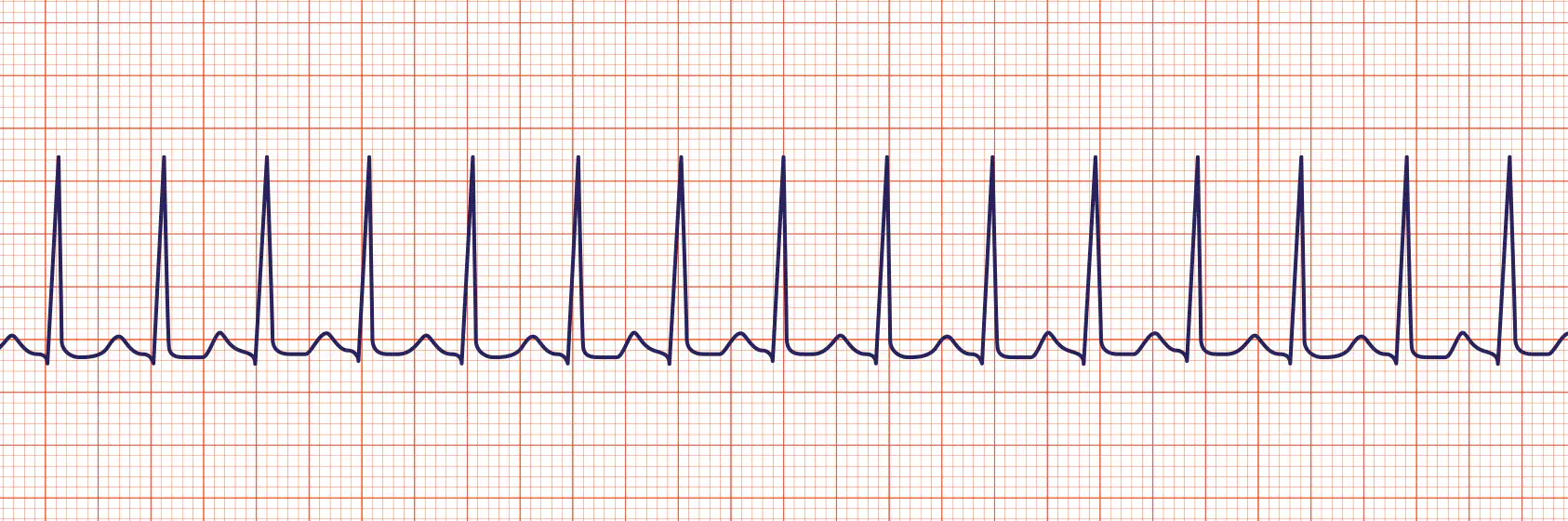
Identify the rhythm
Supraventricular Tachycardia
Junctional Tachycardia
Sinus Tachycardia
AF in RVR

Identify the rhythm
Atrial Flutter
Atrial Fibrillation
Ventricular Fibrillation
Junctional Tachycardia

Identify the rhythm
Sinus Bradycardia
Junctional arrhythmia
1st Degree AVBlock
Normal Sinus Rhythm

Identify the rhythm
2nd Degree AV Block Type I
Third degree AVBlock
2nd Degree AV Block Type II
Wandering atrial pacemaker

Identify the rhythm
2nd degree AVBlock Type I
Atrial Flutter with missed beat
3rd Degree AVBlock
2nd degree AVBlock Type II
Which of the following rhythms is less likely to produce a perfusing cardiac output?



