Wayground logo

Free Printable Worksheets

Font size

S
M
L
XL
Worksheets

Scientific Method Pretest

Total questions: 59

Worksheet time: 2hrs 24mins

Name
Class
Date
1.

The first and second step of the scientific method are:

a)

Question and Conclusion

b)

Question and Hypothesis

c)

Question and Experiment

d)

Hypothesis and Data

2.

An independent variable is the variable that is being:

a)

Analyzed

b)

Tested

c)

Controlled

d)

Measured

3.

A dependent variable is the variable that is being:

a)

experimented on

b)

measured

c)

tested

d)

controlled

4.

A control variable is the variable that is:

a)

controlled and measured and stays the same between experiments

b)

controlled and tested and stays the same between experiments

c)

controlled and stays the same between experiments

d)

controlled and analyzed and stays the same between experiments

5.

A _______ observation is one that describes something. Example: The grass is green.

a)

blind

b)

quantitative

c)

controlled

d)

qualitative

6.

A _____ observation uses numbers to explain. Example It is 67 degrees outside.

a)

quantitative

b)

qualitative

c)

blind

d)

experimental

7.

In everyday use, the word theory often refers to _______

a)

a guess

b)

an untested hypothesis or a guess without supporting evidence

c)

a well substantiated explanation of an aspect of the natural world

d)

an uneducated guess

8.
An experiment is performed on plants to see how different liquids affect plant growth. Each plant in the experiment is given a different liquid; water, apple juice, or milk. Each plant has the same amount of soil, sunlight, and listens to the same music. In this investigation, the independent variable is ...
a)
The type of plant
b)
The amount of sunlight
c)
The type of music
d)
The type of liquid
9.
If you increase the amount of spinach you eat, then you will increase the iron in your blood. 
What's the dependent variable?
a)
increase the amount of iron in your blood
b)
spinach you eat
10.
Will a construction paper air plane fly faster than an airplane made from notebook paper? Choose the best hypothesis.
a)
If I make a paper airplane from notebook paper, then it will fly faster than construction paper.
b)
Yes.
c)
No.
d)
I think the construction paper air plane will fly faster.
11.
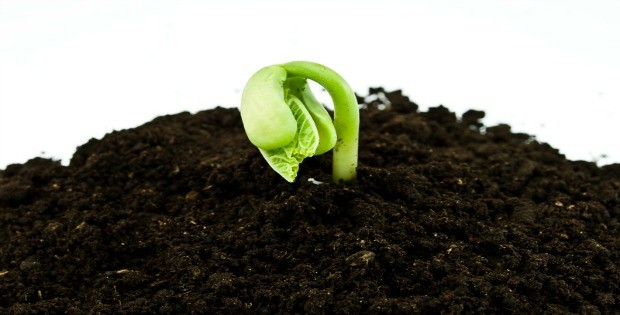
Stephen predicted that seeds would start to grow faster if an electric current traveled through the soil in which they were planted.
a)
recognize a problem
b)
test the hypothesis with an experiment
c)
form a hypothesis
d)
draw conclusions  
12.
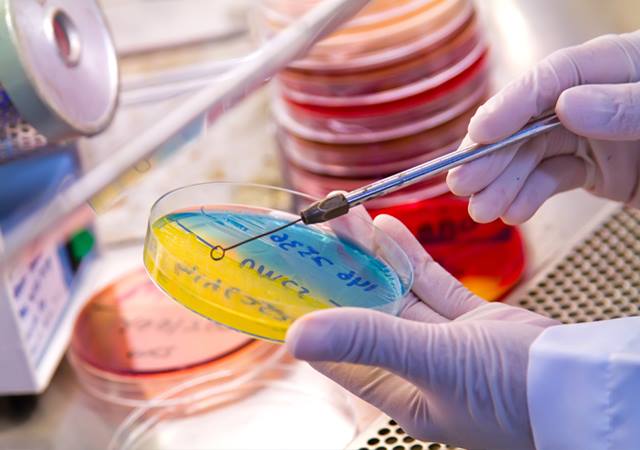
Rene grew bacteria from the mouth on special plates in the laboratory.  She placed drops of different mouthwashes on bacteria on each plate.
a)
recognize a problem
b)
test the hypothesis with an experiment
c)
form a hypothesis   
d)
draw conclusions
13.
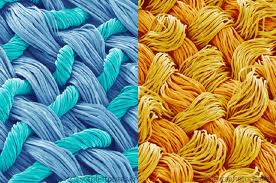
Dana want to know how different are synthetic fibers from natural fibers.
a)
recognize a problem
b)
test the hypothesis with an experiment
c)
form a hypothesis
d)
draw conclusions
14.
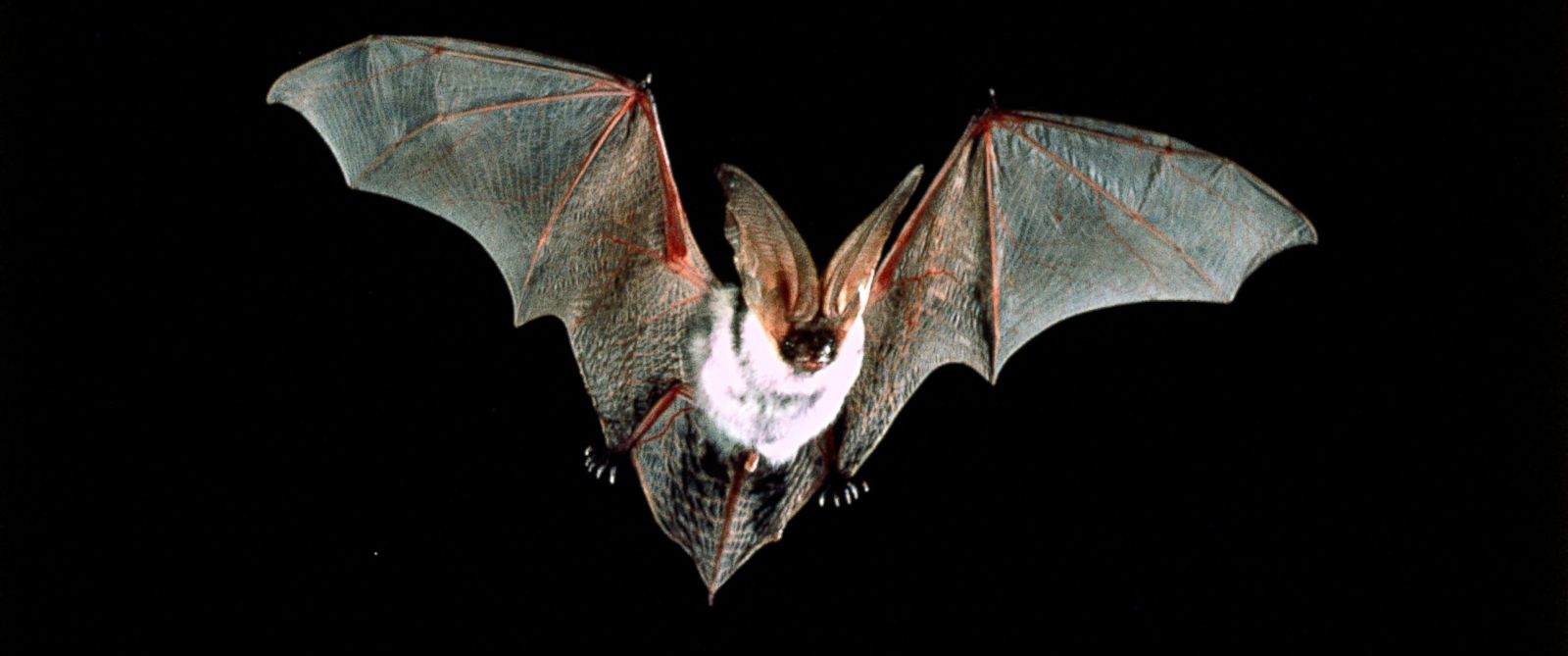
Jose saw bats catching insects after dark.  He asked, “How do bats find insects in the dark?”
a)
recognize a problem
b)
test the hypothesis with an experiment
c)
form a hypothesis
d)
draw conclusions
15.
Arjulia soaked six different kinds of seeds in water for 24 hours.  Then she planted the seeds in soil at a depth of 1 cm.  She used the same amount of water, light, and heat for each kind of seed.
a)
recognize a problem
b)
test the hypothesis with an experiment
c)
form a hypothesis
d)
draw conclusions
16.
Kim’s experiment showed that chicken egg shells were stronger when she gave the hen feed to which extra calcium had been added.
a)
recognize a problem
b)
test the hypothesis with an experiment
c)
form a hypothesis
d)
draw conclusions
17.
What do these steps describe?
1.  Ask a question
2.  Form a hypothesis
3.  Experiment to test hypothesis
4.  Analyze data
5.  Draw a conclusion
a)
Order of Operations
b)
Steps of CPR
c)
Scientific Method
d)
Essay writing
18.

Formatted in an "If...Then..." statement.

a)

Results

b)

Research

c)

Hypothesis

d)

Define the problem/Question

19.

__________: Determine the results and if it matches the hypothesis.

a)

Conclusion

b)

Ending

c)

Research

d)

Results

20.

Variable that is changed on purpose, also known as the "cause".

a)

Dependent Variable

b)

Independent Variable

c)

Hypothesis

d)

Research

21.

Descriptive data based on the 5 senses; Smell, touch, taste, hear, see

a)

Qualitative Data

b)

Quail Data

c)

Quantity Data

d)

Quick

22.

Group in the experiment that recieves the variable being tested.

a)

Control Group

b)

Controlling Group

c)

Independent Group

d)

Experimental Group

23.

Analyze the _________ from observations, data, and research.

a)

Research

b)

Results

c)

Reading

d)

Range

24.

Variable that changes because of the Independent Variable, also known as the "Effect".

a)

Qualatative Data

b)

Experimental Group

c)

Dependent Variable

d)

Define the Question

25.
This variable in an experiment is the one being deliberately changed by the scientist. 
a)
dependent variable
b)
independent variable
c)
data
d)
control group
26.
Should experiments be repeated over and over to see if the results are the same each time?
a)
yes
b)
no
27.
A series of steps used by scientists to solve a problem or answer a question. 
a)
scientific method
b)
recipe
c)
data collection
d)
metric system
28.
In a controlled experiment, how many variables can be worked with at a time? 
a)
one
b)
none
c)
two or more
d)
how ever many makes sense.
29.
A list of the steps anyone could follow to conduct an experiment. 
a)
obervations
b)
question/problem
c)
materials
d)
procedures
30.
A student is planning an experiment to find out how the height from which he drops a ball affects how high the ball bounces. The dependent variable is the _____.
a)
Diameter of the ball
b)
Force acting on the ball
c)
Height that the ball bounces
d)
Height from which the ball is dropped
31.
Mr. S. sets up an experiment to see how the mass of a ball affects the distance it rolls off a ramp.  Identify the dependent variable.
a)
height of the ramp
b)
 distance traveled by the ball
c)
mass of the ball
d)
weight of the ball
32.
Josie was performing an experiment where she grew the same kind of tomatoes in the same soil and amount of water.  She sat one in the sun and one in a closet for 14 days.  What is the independent variable in Josie's experiment?
a)
tomatoes
b)
soil
c)
sunlight
d)
water
33.
an act or operation for the purpose of discovering something unknown
a)
experiment
b)
analysis
c)
conclusion
d)
scientific process
34.
an act or instance of viewing or noting a fact or occurrence for some scientific or other special purpose
a)
observation
b)
hypothesis
c)
variable
d)
experiment
35.

The variable that is being measured or observed is called the _______________.

a)

independent variable

b)

dependent variable

c)

control variable

36.
The independent variable is the ONE thing you _____.
a)
change on purpose
b)
control or keep constant
c)
measure
37.
Why do we want to test one variable at a time?
a)
Because it is hard to setup a data table with more
b)

To know what is causing the changes.

c)
It is what has always been done
38.

Ben makes five paper airplanes with different wing shapes. He throws them the same way from a starting point for three trials each. He records the distance each airplane flies.

What is the independent variable?

a)

Throwing the same way

b)

Wing shape

c)

The distance the airplane flies.

d)

Throwing from the same starting point.

39.

My brothers watned to see if a sled would go different speeds with different people on it. We alll rode in the sled separately. We meseaured how fast the sled went from the top of the hill to the fence at the bottom.

What are two CONSTANTS? (Select 2)

a)

Distance the sled travels.

b)

Using the same sled.

c)

The same people in the sled

d)

The speed of the sled.

40.

What was the research question in the Oreo Cookie Investigation?

a)

Are Double Stuf Oreos bigger than regular Oreos?

b)

Do Double Stuf Oreos taste better than regular Oreos?

c)

Do Double Stuf Oreos contain more sugar and calories than the regualr Oreos?

d)

Do Double Stuf Oreos contain two times the cream filling as regular Oreos?

41.

What was the dependent variable in the Oreo Cookie Investigation?

a)

The type of Oreo cookie.

b)

The mass of the cream filling in grams.

c)

The flavor of the Oreo cookie.

d)

The height of the cream filling in millimeters.

42.
It feels smooth.
a)
Qualitative 
b)
Quantitative
43.
It tastes sweet.
a)
Qualitative
b)
Quantitative
44.
The leaf is 5mm wide.
a)
Qualitative
b)
Quantitative
45.
It makes a loud crackling sound.
a)
Qualitative
b)
Quantitative
46.
The temperature of the room is decreasing by 4 degrees Celsius.
a)
Qualitative
b)
Quantitative
47.
The mass of the chocolate cake is 250 g.
a)
Qualitative
b)
Quantitative
48.
The flower has 6 petals.
a)
Qualitative
b)
Quantitative
49.
The liquid is a pink color.
a)
Qualitative
b)
Quantitative
50.

There were four dogs in the group.

a)

Qualitative

b)

Quantitative

51.

The dogs were small.

a)

Qualitative

b)

Quantitative

52.

The sample contained 3 different types of bacteria.

a)

Qualitative

b)

Quantitative

53.

The patient had a temperature of 102 °F .

a)

Qualitative

b)

Quantitative

54.

The parrots range from bright green to dark red.

a)

Qualitative

b)

Quantitative

55.

The birds were young.

a)

Qualitative

b)

Quantitative

56.

The rock sample consisted of 25 grams of quartz.

a)

Qualitative

b)

Quantitative

57.

Water has a density of 1g/cm3

a)

quantitative data

b)

qualitative data

58.

The girl is 6 years old

a)

quantitative data

b)

qualitative data

59.

The chicken laid 15 eggs

a)

quantitative data

b)

qualitative data