
 Worksheets
Chemistry Part 1 Review
Total questions: 54
Worksheet time: 42mins

Which part of the table tile represents the number of protons an element has?
A
B
C
D
Which part of the table tile is the atomic mass of the element?
A
B
C
D
Which part of the table tile is the atomic number of the element?
A
B
C
D

How many protons does this element have? (Hint: APE MAN)
35
79
80
45
How many electrons does this element have? (Hint: APE MAN)
35
79
80
45
How many neutrons does this element have? (Hint: APE MAN)
35
79
80
45

What is the TOTAL number of subatomic particles in an atom of Potassium? (Hint: APE MAN)
58
39
19
20

What is the TOTAL number of subatomic particles in an atom of Gallium? (Hint: APE MAN)
101
31
70
39
What is the total number of subatomic particles in the nucleus of Gallium?
101
31
70
39

Which of these correctly describes a proton?
A proton is the largest subatomic particle of all, has the largest mass, is positive, and is located in the nucleus.
A proton has a mass and size similar to that of a electron, is negative, and is located in the nucleus.
A proton has a mass and size similar to that of a neutron, is negative, and is located in the electron cloud.
A proton has a mass and size similar to that of a neutron, is positive, and is located in the nucleus.
Describe the mass, size, charge, and location of a neutron.
A neutron is positive, has 1 AMU, is large, and located in the nucleus.
A neutron is negative, has 1 AMU, is small, and located in the electron cloud.
A neutron is neutral, has 0 AMU, is large, and located in the nucleus.
A neutron is neutral, has 1 AMU, is large, and located in the nucleus.
Which of these correctly describes one of the subatomic particles that makes up an atom?
An electron is a tiny negatively charged particle that orbits the nucleus in the electron cloud.
A proton is a large positively charged particle that orbits the nucleus in the electron cloud.
A neutron is a large negatively charged particle that is inside the nucleus.
A proton is a small positively charged particle that is inside the nucleus.

A substance that cannot be broken down into other substances by chemical or physical means.
Covalent bond
Atom
Element

What is one way Neutrons are different from electrons?
they both are negative
neutrons have no charge, while electrons have a negative charge
Both are in the nucleus( center of atom)
Electrons are inside nucleus and neutrons are outside the nucleus.

How are electrons similar to neutrons?
Both have negative charge
Both are part of a molecule
Both make up parts of an atom
Both are in nucleus

What is the atomic number?
35
18
17
52

How many protons and electrons does this element have?
35
18
17
52

How many neutrons does Chlorine have?
18
17
35
52
These will determine the elements identity.
number of neutrons
number of electrons
number of atoms
number of protons
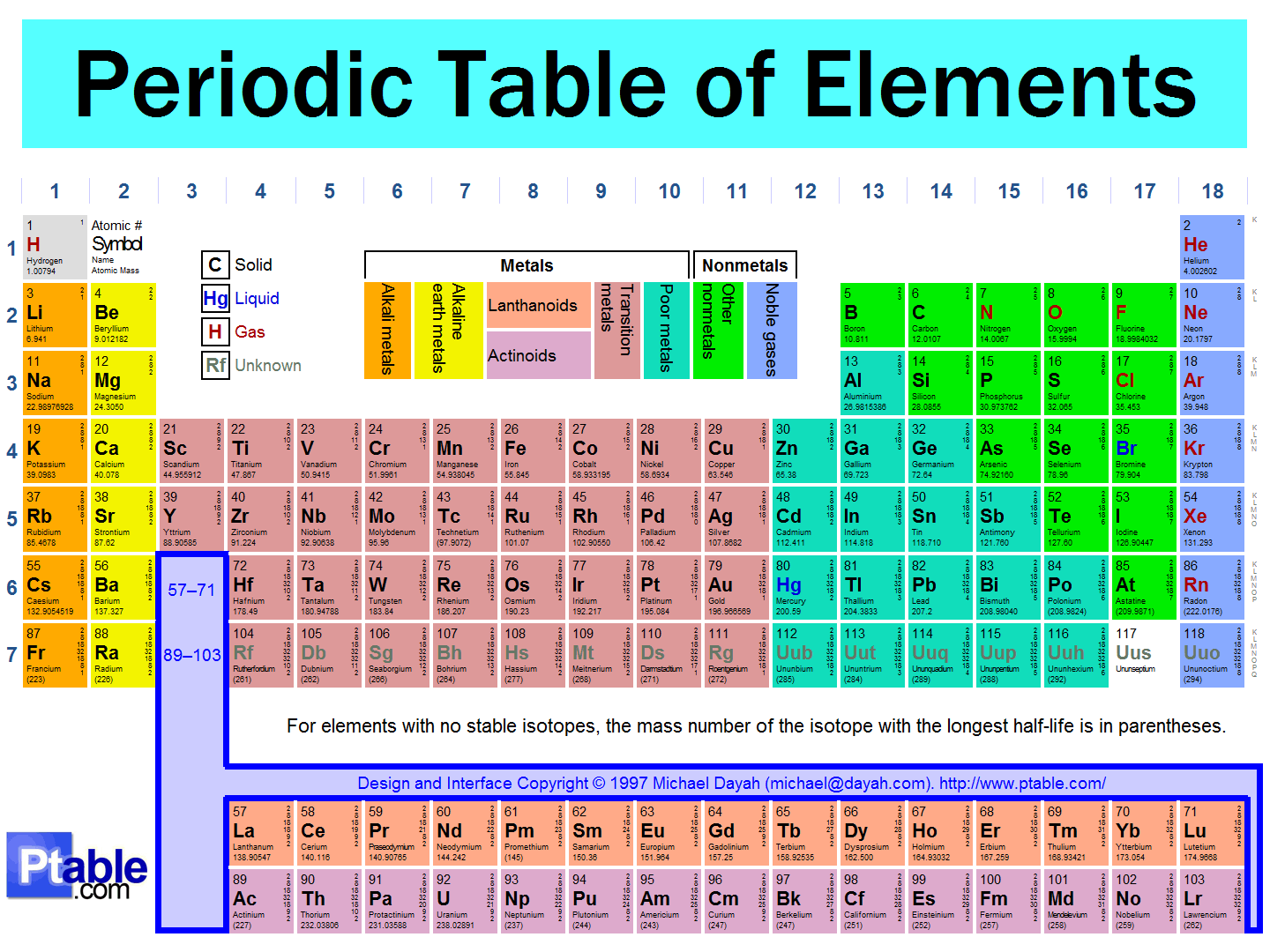
The vertical (up and down) columns in the Periodic Table are called
groups
towers
periods
atomic numbers
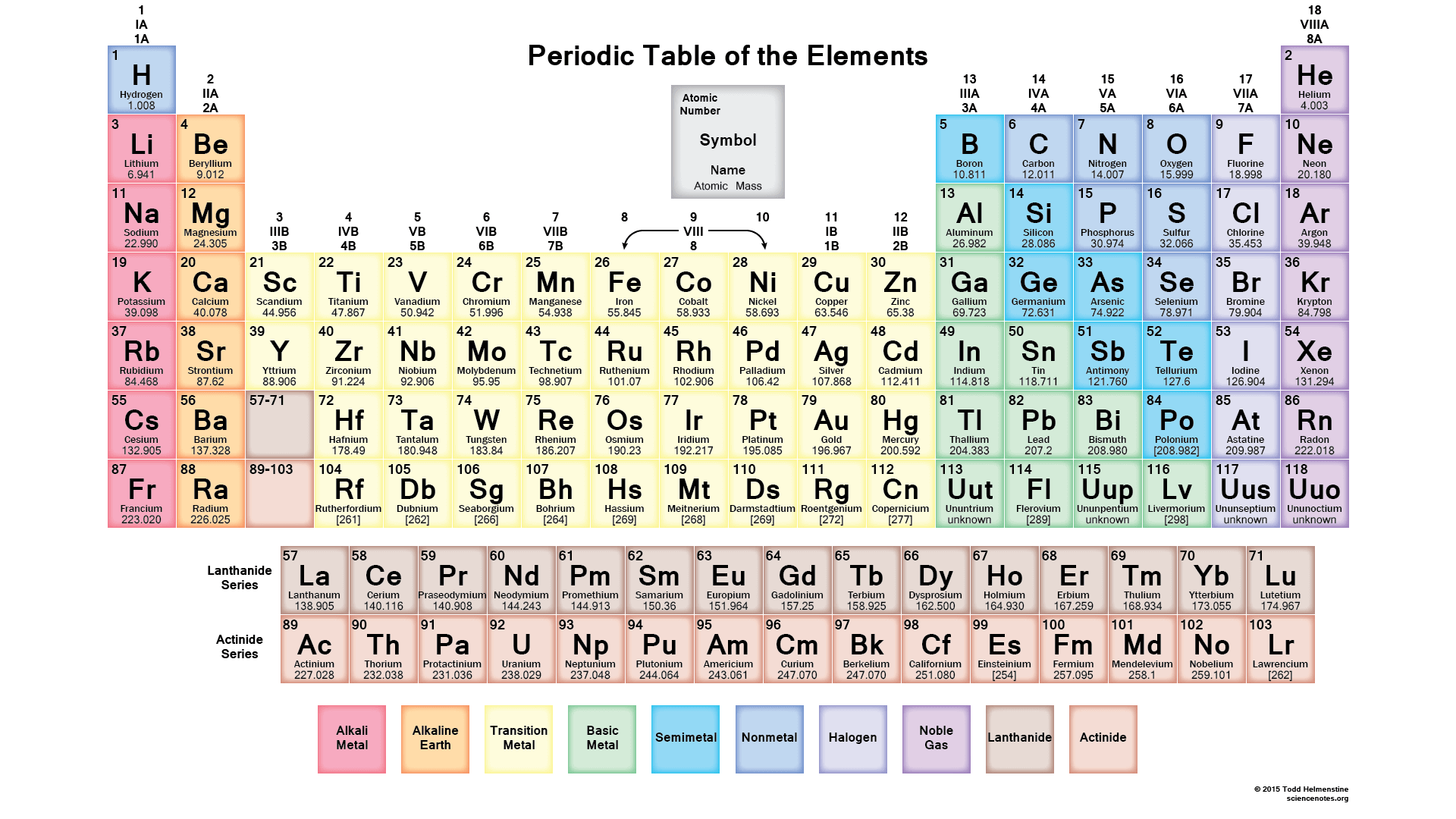

Based on the data, which number shows the correct location of the element with 2 valence electrons and 3 energy levels.
1
2
3
4

Based on the data, which number shows the correct location of the element with 2 valence electrons and 1 energy levels.
1
2
3
4
Which pair of properties describe the elements in group 18
They have 8 valence electrons and are very reactive
They have 8 energy levels and are stable
They are gases at room temperature and are stable
They are gases at room temperature and very reactive.

Which statement best describes the position of the two elements in the periodic table.
The two elements are in the same period, with Mg the first element in the period table and Ca the last element
The two elements are in the same group, with Mg just above Ca
The two elements are side by side in the same period, with Ca to the left of Mg
The two elements are in the same period, with Ca just below Mg
Which two elements on the periodic table are in the same group?
Na and He
O and C
Li and Ne
He and Ar
Which pair of properties describes the elements in Group 1?
They are chemically stable
They have 8 valence electrons
They are the most reactive metals
They are the most reactive non metals
How many valence electrons are in an element in group 15 in the periodic table?
5
15
7
8
Based on the data, which number shows the correct location of the element that is brittle and dull.
1
2
3
4
Based on the data, which number shows the correct location of the element that is malleable and a good conductor.
1
2
3
4
A piece of copper has a mass of 89g and a volume of 10 cm3. What would be the density of the copper?
0.89 g/cm3
89 g/cm3
8.9 g/cm3
890 g/cm3

An object has a density of 2g/mL and a mass of 15g. What is its volume?
30 mL
7.5 mL
.1333 mL
17 mL
An object has a density of 3 g/mL and a volume of 32 mL. What is its mass?
35 g
10.67 g
96 g
29 g

