
 Worksheets
Atomic Theory
Total questions: 40
Worksheet time: 20mins
Which scientist was responsible for the plum pudding model?
Dalton
Thomson
Rutherford
Schrodinger
Which scientist was responsible for the solid sphere model?
Dalton
Thomson
Rutherford
Bohr
Which scientist was responsible for the nuclear model?
Dalton
Thomson
Rutherford
Schrodinger
Which scientist was responsible for the planetary model?
Bohr
Thomson
Rutherford
Schrodinger
Which scientist was responsible for the quantum model?
Bohr
Thomson
Rutherford
Schrodinger
Who discovered the nucleus?
Bohr
Thomson
Rutherford
Schrodinger
Who said that we can only determine the probability of where electrons most likely will be?
Bohr
Thomson
Rutherford
Schrodinger
Who is credited with the discovery of the electron?
Bohr
Thomson
Rutherford
Dalton
Who determined the atom is mostly empty space?
Bohr
Thomson
Rutherford
Dalton
Who did the cathode ray tube experiment?
Bohr
Thomson
Rutherford
Dalton
This scientist determined the charge and mass of an electron.
Dalton
Schrodinger
Rutherford
Millikan
Who conducted the gold foil experiment?
Dalton
Schrodinger
Rutherford
Thomson
Who said that electrons behave as waves?
Dalton
Schrodinger
Rutherford
Thomson
Who said that electrons orbit around the nucleus, based on energy?
Bohr
Schrodinger
Rutherford
Thomson
The charge of a proton is...
-1
0
+1
different based on the element
What is the charge on an electron?
-1
0
+1
different based on the element
Which subatomic particle does not contribute significantly to the mass of an atom?
proton
neutron
electron
nucleus
Which subatomic particle is NOT found in the nucleus?
proton
neutron
electron
They are all in the nucleus
Charge of an alpha particle (used in the gold foil experiment)
Positive
Negative
Neutral/nocharge
What makes up the nucleus of an Atom?
protons and neutrons
just protons
just neutrons
electrons
The cathode ray tube experiment led to the discovery of the...
proton
neutron
electron
nucleus
Which answer lists the five atomic models in correct chronological order by scientist?
Thomson - Rutherford - Dalton - Bohr - Schrodinger
Dalton - Thomson - Rutherford - Bohr - Schrodinger
Dalton - Rutherford - Thomson - Bohr - Schrodinger
Dalton - Thomson - Bohr - Rutherford - Schrodinger
Most of the volume of an atom is ________________
empty space
protons
the nucleus
electrons

Whose atomic theory model is this?
Dalton
Thomson
Rutherford
Bohr
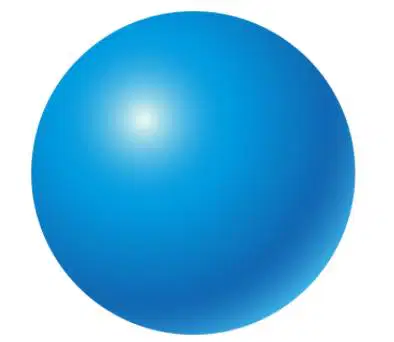
Whose atomic theory model is this?
Dalton
Thomson
Rutherford
Bohr
Valid conclusion of the gold foil experiment is...
atoms contain negatively charged electrons
atoms have an overall negative charge
atoms are mostly empty space
the nucleus is nearly half the size of an atom
The gold foil experiment led to the discovery of the...
atom
neutron
electron
nucleus

Which scientist proposed this model?
Bohr
Rutherford
Dalton
Thomson
O can combine with C to form CO and CO2. The ratio of the masses of oxygen that combine with carbon is 1:2. This is the:
law of conservation of mass
law of definite composition
law of multiple proportions
In N2O, NO, NO2, and N2O3, atoms combine in small whole-number ratios. This evidence supports the:
law of conservation of mass
law of definite composition
law of multiple proportions
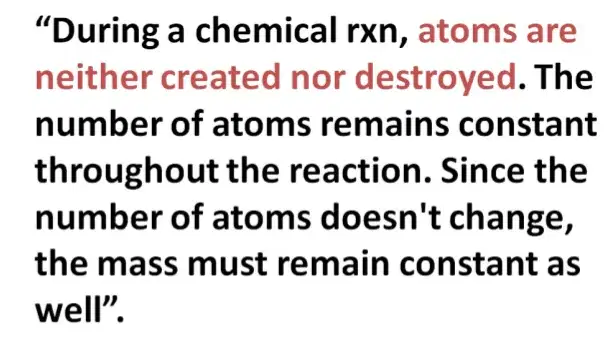
This is the:
law of conservation of mass
law of definite composition
law of multiple proportions

This is the:
law of conservation of mass
law of definite composition
law of multiple proportions

This is the:
law of conservation of mass
law of definite composition
law of multiple proportions
Which of the below points of Dalton's Atomic Theory was NOT true?
Atoms of different elements are different
Atoms are combined, separated, or rearranged (chem reaction)
Atoms combine in whole-number ratios to form compounds
Atoms of given element are identical
Which scientist's model of the atom included electrons embedded in a positively charged sphere?
Bohr
Dalton
Thomson
Rutherford
Which subatomic particle has no electrical charge?
positron
proton
neutron
electron
Which law states that a chemical compound always contains the same elements in the same proportion by mass?
law of constant energy
law of multiple proportions
law of definite composition
law of conservation of mass
Which scientist's experiment provided evidence for the existence of the nucleus?
Dalton
Bohr
Rutherford
Thomson
What is the relative charge of an electron?
+1
-1
0
+2
Which model of the atom describes electrons moving in fixed orbits around the nucleus?
Quantum model
Plum pudding model
Planetary model
Solid sphere model

