wayground logo

Free Printable Worksheets

NEW

Font size

S
M
L
XL
Worksheets

Y9 revision chem 2

Total questions: 60

Worksheet time: 1hrs 5mins

Name
Class
Date
1.
A charged particle that has gained or lost electrons is called a _____.
a)
molecule
b)
ion
c)
isotope
d)
element
2.
A cation is a ____ ion.
a)
negative
b)
positive
c)
neutral
d)
ficticious
3.
A anion will be a ____ ion.
a)
negative
b)
positive
c)
neutral
d)
ficticious
4.
Write the correct chemical formula for Ag  and  Br -
a)
AgBr
b)
silver bromide
c)
Ag2Br2
d)
gold bromide
5.
Which is the correct name for CaBr2?
a)
Calcium Bromine
b)
Bromine Calcium
c)
Calcium Bromide
6.
What is the name of Mg(OH)2?
a)
Magnesium Hydride
b)
Magnesium Dihydride
c)
Magnesium Dihydroxide
d)
Magnesium Hydroxide
7.

Which of the following is NOT a property of ionic compounds?

a)

They conduct electricity when molten

b)

They conduct electricity when in solution

c)

They have high boiling points

d)

They are insoluble in water

8.
Which of the following is a characteristic property of ionic compounds?
a)
They form hard, brittle crystals with characteristic shapes
b)
They have low melting points
c)
They have low boiling points
d)
They contain no charged particles
9.
In what form can an ionic compound conduct electricity?
a)
when dissolved in water
b)
as a solid
c)
as a crystal
d)
when warmed slightly
10.

Ionic bonds typically form between

a)

A metal and a nonmetal

b)

Two nonmetals

c)

Two metals

d)

A metalloid and a metal

11.

Name this ionic compound: Al2O3

a)

Dialuminum oxide

b)

Aluminum oxygen

c)

Oxygen Aluminide

d)

Aluminum oxide

12.

Cations _______ electrons, becoming _______ charged.

a)

Gain; positively (+)

b)

Gain; negatively (-)

c)

Lose; positively (+)

d)

Lose; negatively (-)

13.
What determines how ionic bonds will form?
a)
Number of protons
b)
Mass of the atom
c)
Number of total electrons
d)
Number of valence electrons
14.
What is the formula of Sodium oxide?
a)
Na2O
b)
NaO2
c)
Na2O2
d)
Na2O
15.
Covalent compounds
a)
Share electrons
b)
transfer electrons
c)
contain a sea of electrons
d)
conduct electricity
16.
What two types of atoms make a covalent bond?
a)
2 Nonmetals
b)
1 Nonmetal and 1 Metal
c)
2 Metals
d)
2 Noble Gases
17.
What is the correct name for NO?
a)
Mononitrogen Monoxide
b)
Nitrogen Monoxide
c)
Mononitrogen Dioxide
d)
Nitrogen Oxide
18.
What is Sulfur Trichloride?
a)
SCl3
b)
SiCl3
c)
SCl4
d)
Si3Cl
19.
A covalent compound made of one sulfur and two oxygen atoms would be named
a)
sulfur dioxide.
b)
sulfur oxide.
c)
disulfur oxide.
d)
sulfide oxygen.
20.
The covalent compound N2O5 would be named
a)
nitrogen oxide.
b)
dinitrogen oxide.
c)
nitrogen pentoxide.
d)
dinitrogen pentoxide.
21.

What is the formula for calcium nitrate?

a)

CaNO2

b)

Ca2NO3

c)

Ca(NO3)2

d)

Ca(NO4)2

22.

Which compound naming uses prefixes?

a)

Ionic

b)

Covalent

c)

Ionic and covalent both do

d)

Neither Ionic or covalent do

23.

Which structure has a sea of free electrons?

a)

Ionic

b)

Covalent

c)

Metallic

d)

All of the above

24.

Which structures conduct electricity as a liquid but not as a solid?

a)

Metallic

b)

Covalent

c)

Ionic

d)

All of the above

25.

Simple molecular molecules generally have

a)

low melting and boiling points

b)

high melting and boiling points

c)

ionic bonds

d)

metallic bonds

26.
Which of the following is NOT formed by a covalent bond?
a)
K2S
b)
H2O
c)
I2
d)
CO2
27.
Calcium (Ca) and 2 chlorine (Cl) atoms make a covalent compound.
a)
True
b)
False
28.
Magnesium (Mg) and Oxygen (O) form an ________ bond.
a)
Ionic
b)
Covalent
c)
Metallic
d)
Nothing
29.
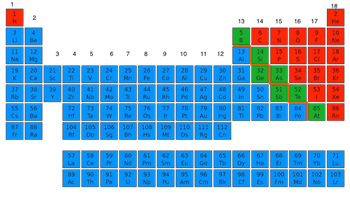
Where are the nonmetals located on the periodic table? 
a)
Blue
b)
Red
c)
Green
30.

Why do atoms bond?

a)

They typically don't bond

b)

To add or take away energy levels

c)

To have a full valance shell.

d)

To have a full inner shell

31.
In a covalent bond, one or more electrons are? 
a)
shared 
b)
lost 
c)
gained 
d)
transferred 
32.
What does malleable mean?
a)
able to be shaped
b)
will break easily
c)
can be used for wire
d)
is shiny
33.
I can hit a metal with a hammer without the metal shattering because of its __________.
a)
Ductility
b)
Malleability
c)
Conductivity
d)
Lustrousness
34.
Why are alloys generally used to make everyday objects?
a)
Alloys are often stronger and less active than pure metals.
b)
Alloys have higher melting point than pure metals.
c)
Alloys are less expensive to produce than pure metals.
d)
Alloys have ionic bonds instead of metallic bonds.
35.

Acids are neutralised by...

a)

Bases

b)

Metals

c)

Water

d)

Hydrogen gas

36.

Bases are neutralised by...

a)

Acids

b)

Metals

c)

Water

d)

Hydrogen gas

37.

Acids have a pH

a)

greater than 7

b)

lower than 7

c)

equal to 7

38.

Bases have a pH...

a)

greater than 7

b)

lower than 7

c)

equal to 7

39.

Water has a pH...

a)

greater than 7

b)

lower than 7

c)

equal to 7

40.

Acids release...

a)

Hydrogen ions

b)

Hydroxide ions

c)

Sodium ions

d)

Hydrogen gas

41.

Bases release...

a)

H+

b)

OH-

c)

H2

42.

The formula for hydrochloric acid is...

a)

HCl

b)

H2Cl

c)

H2SO4

d)

HSO4

43.

Bases turn blue litmus paper red.

a)

True

b)

False

44.
Which of the following statements is correct?
a)
Blue litmus paper turns red when placed in a base.
b)
Red litmus paper turns blue when placed in a base.
c)
Blue litmus paper stays blue when placed in an acid.
d)
Red litmus paper stays red when placed in a base.
45.

What would happen to blue litmus paper if it came into contact with an acid?

a)

It would turn red

b)

It would turn green

c)

It would stay blue

d)

It would turn pink

46.

NaOH may be found in drain cleaners and as a component of soaps. Is NaOH an acid or a base?

a)

Acid

b)

Base

c)

Neither (Neutral)

47.

Vinegar, fruit juice, and cola are examples of:

a)

strong acids

b)

strong bases

c)

strong bases

d)

weak acids

48.

A substance is found to have the following characteristics:


Very bitter taste

Feels slippery to the touch

Produces OH- ions when dissolved in water


In what category would the substance be classified?

a)

acid

b)

base

c)

enzyme

d)

fatty acid

49.
What are properties of acids?
a)
Bitter, slippery, ph above 7
b)
Sour, reacts with metals, ph below 7
c)
Sour, reacts with metals, ph above 7
d)
Bitter, ph of 7, does not react with metals
50.
What does corrosive mean?
a)
That a substance is a strong base.
b)
That a substance is neutral.
c)
That a substance can easily wear away
d)
The substance is the strongest acid
51.
In chemical reactions, what does the principle of conservation of mass mean?
a)
Matter is not created or destroyed.
b)
The total mass of the reactants is greater than the total mass of the products.
c)
The total mass of the reactants is less than the total mass of the products.
d)
Matter is not changed.
52.

What is the right part of a chemical equation called...

H2 + O2 --> H2O

a)

Reactants

b)

Products

c)

Yields

d)

Chemical Equation

53.
Is the following equation balanced or unbalanced ? 
Al + O2 --> Al2O3
a)
Balanced
b)
Unbalanced
54.
Which number should go in the blank?
_ H2 + O2 -> 2 H2O
a)
1
b)
2
c)
3
d)
0
55.
Balance this equation:
 2Li + Cl2 -> LiCl
a)
2Li + Cl2 -> 4LiCl2
b)
2Li + Cl2 -> LiCl2
c)
2Li + Cl2 -> 2LiCl
56.
What is the Law of Conservation of Mass?
a)
It states that no matter can be created or destroyed.
b)
It states that no energy can be created or destroyed.
c)
It states that matter can be created or destroyed.
d)
It states that no sound can be created or destroyed.
57.
What is the part of the chemical equation in green called? 
Fe + S --> FeS
a)
products
b)
reactants
c)
yield
d)
chemical formula
58.
What is the little number after an element in a chemical equation called.
Example: H2
a)
Coefficient 
b)
Subscript
c)
Atom
d)
Equation
59.
Which problem is balanced?
(Check ALL answers)
a)
PbO2 + 2H2
b)
SO2 + H20 --> H2SO4
c)
2Na + 2H2O --> 2NaOH + H2
60.
Element or compound?
H2O
a)
element
b)
compound