
 Worksheets
Cell Organelles Quiz
Total questions: 38
Worksheet time: 19mins
Which organelle in eukaryotic cells uses energy stored in glucose to make ATP, which cells can use for energy?
Nucleus
Vacuole
Mitochondria
Chloroplast
Which organelle inside eukaryotic cells contains most of the cell's DNA and acts as the control center?
Nucleus
Vacuole
Mitochondria
Chloroplast
Endoplasmic reticulum with ribosomes embedded on its surface.
Cell Wall
Ribosomes
Rough Endoplasmic Reticulum
Smooth Endoplasmic Reticulum
Rigid layer that surrounds the cell membrane in plants, fungi, and bacteria that helps support and protect the cell.
Cell Wall
Ribosomes
Rough Endoplasmic Reticulum
Smooth Endoplasmic Reticulum
The movement of molecular substances across a cell membrane without the use of energy.
Cell membrane
Diffusion
Golgi apparatus
Exocytosis
Passive transport
Diffusion of water molecules through a membrane
Endocytosis
Osmosis
Organelles
Active transport
Movement of substances through a cell membrane using the cell's energy
Endocytosis
Osmosis
Organelles
Active transport
Plant cells have both a cell membrane and a cell wall.
True
False
The nucleus of the cell is most like what organ of the body?
Brain
Lungs
Eyes
Liver
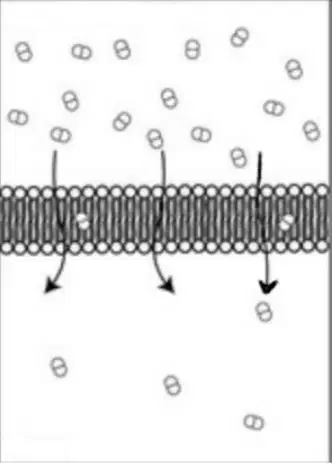
What is occurring in this diagram?
Osmosis
Active transport
Diffusion
Endocytosis

What does this GIF show?
endocytosis
cellular evaporation
plasma membranes
cellular vomiting
Which of the following does a plant cell have? I. cell membrane II. cell wall III. cytoplasm
II only
III only
II and III only
I, II, and III
When particles move from an area where there are many other particles (high concentration) to an area where there are fewer particles (low concentration), we call this
active transport
semi-permeable membrane
diffusion
magic
Check all the organelles that are located in an animal cell.
Cytoplasm
Nucleus
Mitochondria
Cell Wall
Vacuole
Check all the organelles that are located in a plant cell.
Cytoplasm
Nucleus
Mitochondria
Chloroplast
Cell wall
Molecules (particles) move in and out of the cell by passing through the nucleus.
True
False
Passive transport needs energy to move the particles. Active transport does not.
True
False
Animal cells make their own food.
True
False
Plant cells have both a cell membrane and a cell wall.
True
False
What is the smallest unit of life?
atom
quark
cell
molecule
Animal cells have all of the following EXCEPT
chloroplast
cytoplasm
nucleus
mitochondria
Which of the following organelles is matched with the correct function?
Mitochondria: provides energy for the cell
Nucleus: allows passage in and out of cell
Chloroplast: gives structure to the cell
Cell Membrane: control center of the cell
Osmosis is possible in a cell because the cell membrane has what quality?
the cell membrane is impenetrable
the cell membrane is semi-permeable
the cell membrane is thick
the cell membrane is solid
The fluid (jelly-like) substance that holds the organelles of the cell is called the
cytoplasm
cell wall
nucleus
ribosome
In which organelle can a cell's DNA be found?
cell membrane
cytoplasm
mitochondria
nucleus
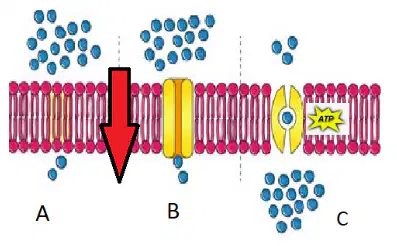
The red arrow shows the direction the substances are moving. What type of passive transport is B showing?
active transport
passive flowing
active diffusion
facilitated diffusion
Select the statement that best describes the function of the cell wall.
It protects and gives shape to plant cells.
it produces food from sunlight.
Its jelly-like fluid surrounds the nucleus and most of the cell's internal parts.
it contains the cell's nuclear material.

The red arrow shows the direction the substances are moving. What is C showing?
facilitated diffusion
active transport
concentration gradient
active diffusion

What is this GIF showing?
cellular evaporation
exocytosis
plasma membranes
cellular vomitting
Which organelle is responsible for making food for a plant cell?
cytoplasm
chloroplast
nucleus
vacuole
The mitochondria is often remembered as the powerhouse of the cell. That is because it-
creates (food)sugar for the cell
takes (food)sugar and converts it into ATP(energy)
heats up the cell to regulate homeostasis
moves the cell
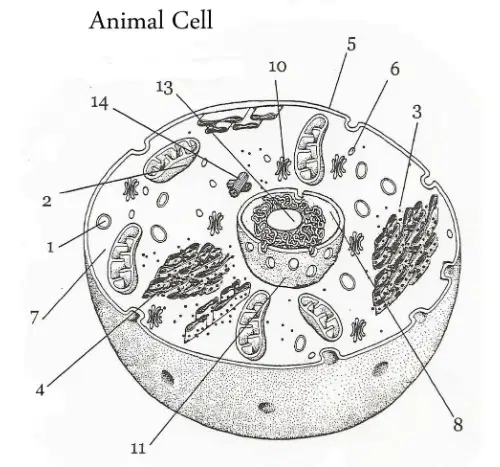
What organelle is #5 pointing to
nucleus
mitochondria
cytoplasm
cell membrane
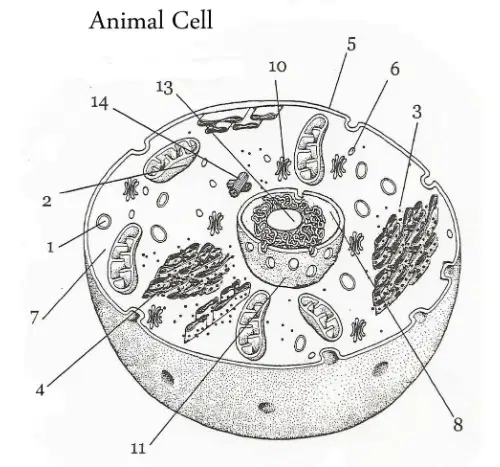
What organelle is #2 pointing at?
nucleus
mitochondria
cytoplasm
cell membrane
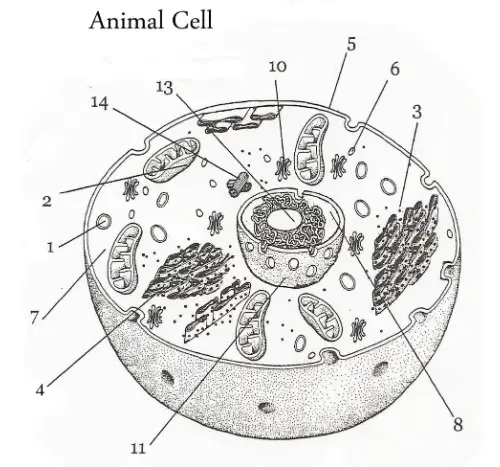
What organelle is #8 pointing at?
nucleus
mitochondria
cytoplasm
cell membrane

What organelle is #7 pointing to?
nucleus
mitochondria
cytoplasm
cell membrane

What is #1 pointing to?
cell membrane
cytoplasm
cell wall
centriole
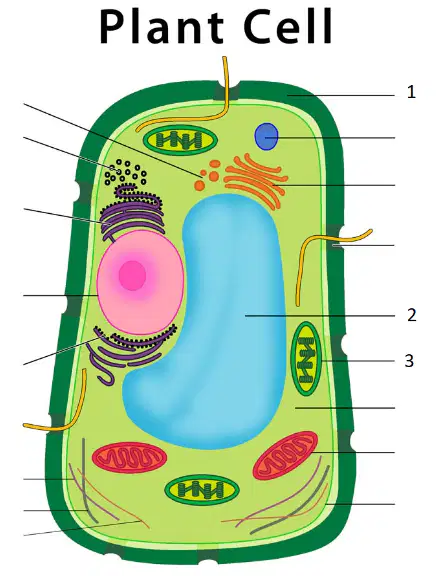
What is line 2 pointing at?
mitochondrion
nucleus
lysosome
central vacuole
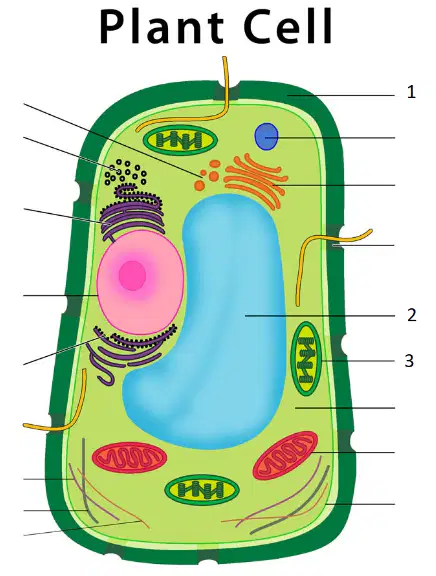
Which organelle is #3 pointing to?
nucleus
central vacuole
Golgi body
chloroplast

