Wayground logo

Free Printable Worksheets

Font size

S
M
L
XL
Worksheets

Molecules of Life

Total questions: 50

Worksheet time: 36mins

Name
Class
Date
1.
The type of polysaccharide which serves as a strengthening tissue in the cell wall of plants is 
a)
cellulose
b)
glucose
c)
lactose
d)
fructose
2.
Carbohydrates are made of... 
a)
C H O
b)
C H O N
c)
C H O N P
d)
C H O N S
3.
Glucose is a _____.
a)
carbohydrate
b)
lipid
c)
protein 
d)
nucleic acid
4.
Proteins are composed of what smaller building blocks?
a)
amino acids
b)
nucleic acids
c)
fatty acids
d)
nucleotides
5.
Also known as simple sugars, these are the monomers of carbohydrates.
a)
lipids
b)
nucleotide
c)
monosaccharide
d)
monomer
6.
Building blocks of polymers.
a)
monomer
b)
polypeptide
c)
monosaccharide
d)
glycerol
7.
Water is classified as an inorganic compound because it
a)
does not contain carbon
b)
does not contain nitrogen
c)
contains hydrogen
d)
contains oxygen
8.
Which statement describes all enzymes?
a)
They control the transport of materials.
b)
They provide energy for chemical reactions.
c)
They affect the rate of chemical reactions.
d)
They absorb oxygen from the environment.
9.
In the reaction illustrated in the diagram below, which structure represents the enzyme?
a)
A
b)
B
c)
C
d)
D
10.
In which type of molecule is the ratio of hydrogen to oxygen usually 2 to 1?
a)
lipid
b)
protein
c)
carbohydrate
d)
glycerol
11.
Vegetable oils, such as corn oil, belong to which general class of organic substances?
a)
lipids
b)
proteins
c)
carbohydrates
d)
salts
12.
Which of the following binds to the active site of an enzyme? 
a)
substrate
b)
product
c)
codon
d)
none of the above
13.
What happens when enzymes are heated to a high temperature?
a)
The enzymes die.
b)
The shapes of the enzyme are altered or denatured
c)
The enzymes' amino acid sequence changes.
d)
The enzymes remain the same
14.
Which of the following is NOT a biomolecule?
a)
Water
b)
Nucleic Acid
c)
Protein
d)
Lipid
15.
Identify the biomolecule
a)
Lipid
b)
Protein
c)
Carbohydrate
d)
Nucleic Acid
16.
What is the function of nucleic acids?
a)
store genetic information
b)
store energy (long-term)
c)
store energy (short-term)
d)
build skin, hair, nails, muscles
17.
Which of the following is an organic compound?
a)
H2O
b)
C6H12O6
c)
NH2
d)
OH
18.

Which pair is incorrect?

a)

carbohydrates - provide energy

b)

lipids - provide insulation

c)

nucleic acids - store hereditary information

d)

proteins - provide energy

19.
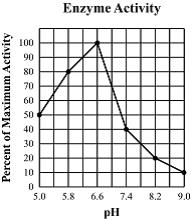
Which of the following conclusions can be drawn from this graph?
a)
The optimum pH of the enzyme is 6.6.
b)
The optimum pH of the enzyme is 5.8
c)
The enzyme’s activity increases as pH increases 5.0 to 9.0
d)
The enzyme’s activity is greater around pH of 8.0 .
20.
For the quickest source of energy if going for a run, you should eat a food that contains a high percentage of 
a)
sodium
b)
protein
c)
fats
d)
carbohydrates
21.
Both animal fats and plant oils are made up of glycerol and
a)
polar molecules
b)
phospholipids
c)
saturated fats
d)
fatty acids
22.
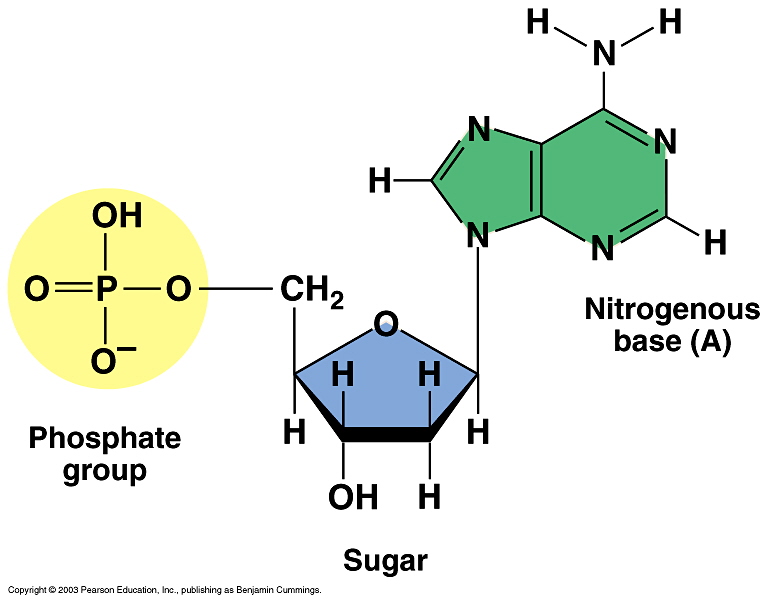
Which macromolecule is shown?
a)
lipid
b)
protein
c)
nucleic acid
d)
carbohydrate
23.

Name the 5-carbon sugar found in DNA.

(a)  

24.
Which organic molecule is primarily used by cells as a source of energy?
a)
Amino Acid
b)
Fatty Acid
c)
Glucose
d)
Protein
25.
Which is true about the structure of starch molecules and protein
molecules?
a)
Starches and proteins are both polymers.
b)
Starches and proteins are both amino acids.
c)
Starches and proteins are both built from simple sugars.
d)
Starches and proteins are both built from nucleic acids.
26.
Which organic compounds necessary for life are formed by a sugar bonded
to a phosphate group and a nitrogenous base?
a)
lipids
b)
proteins
c)
nucleic acids
d)
carbohydrates
27.
Which is a function of lipids?
a)
to supply cells with quick–release energy
b)
to provide the body with insulation
c)
to store genetic information
d)
to regulate cell processes
28.
Which is a least likely primary function of proteins?
a)
to act as an organic catalyst
b)
to supply short-term energy
c)
to build and repair damaged cells
d)
to defend against foreign invaders
29.
Which organic molecule serves as a catalyst?
a)
lipids
b)
proteins
c)
nucleic acid
d)
carbohydrates
30.
Which of these statements describes how monomers combine and create macromolecules?
a)
Amino acids combine to make proteins.
b)
Glucose molecules combine to make nucleic acids.
c)
Nucleic acids combine to make starch.
d)
Proteins combine to make glucose.
31.
What is most likely being shown?
a)
amino acids
b)
chromosomes
c)
DNA
d)
RNA
32.

This sub-atomic particle has a negative charge:

a)

Proton

b)

Neutron

c)

Electron

d)

Atom

33.

Which of the following is an example of an element?

a)

Water

b)

Hydrogen

c)

Cardon Dioxide

d)

Salt

34.

All organic molecules contain _______________.

a)

Water

b)

Carbon

c)

Nitrogen

d)

Oxygen

35.

This sub-atomic particle has a positive charge:

a)

Proton

b)

Neutron

c)

Electron

d)

Atom

36.
A(n) _______ is a substance with a pH greater than 7.
a)
Base
b)
Acid
c)
Buffer
d)
Water
37.
A(n) ______ is a substance with a pH less than 7
a)
Acid
b)
Alkaline
c)
Base
d)
Buffer
38.

Look at the picture. Which part of the phospholipid molecules if hydrophilic?

a)

phosphate group

b)

tail (fatty acid chain)

c)

Head (glycerol+phosphate group)

39.

How many different amino acids do organisms use to build proteins?

a)

10

b)

12

c)

20

d)

22

40.

What can amino acids form through peptide bonds?

a)

A lipid

b)

A polypeptide or a protein

c)

A carbohydrate

d)

A nucleic acid

41.

Which factors can cause denaturation of proteins?

a)

Freezing or sugar concentration

b)

Temperature or pH

c)

Pressure or salinity

d)

Humidity or altitude

42.

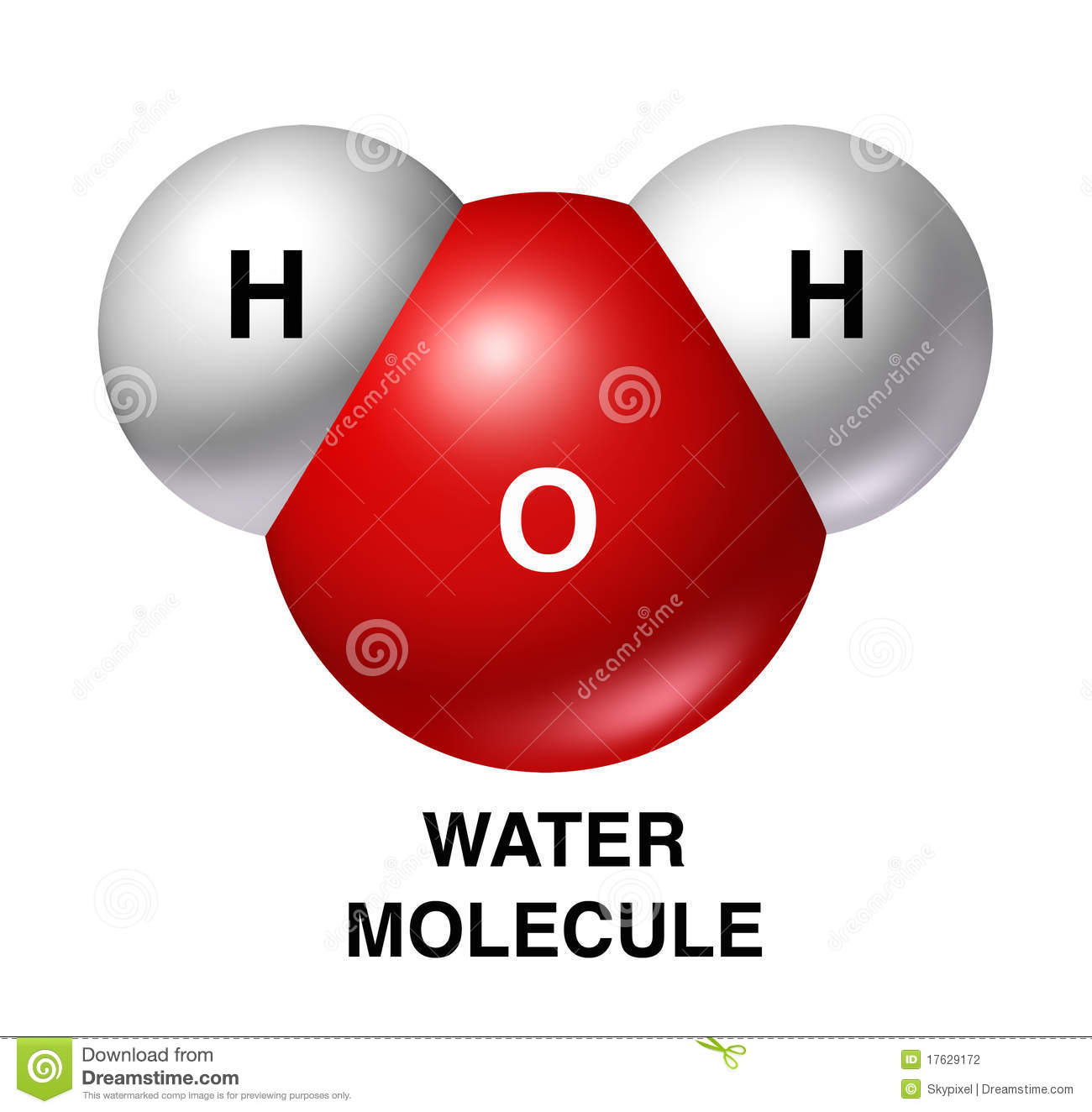
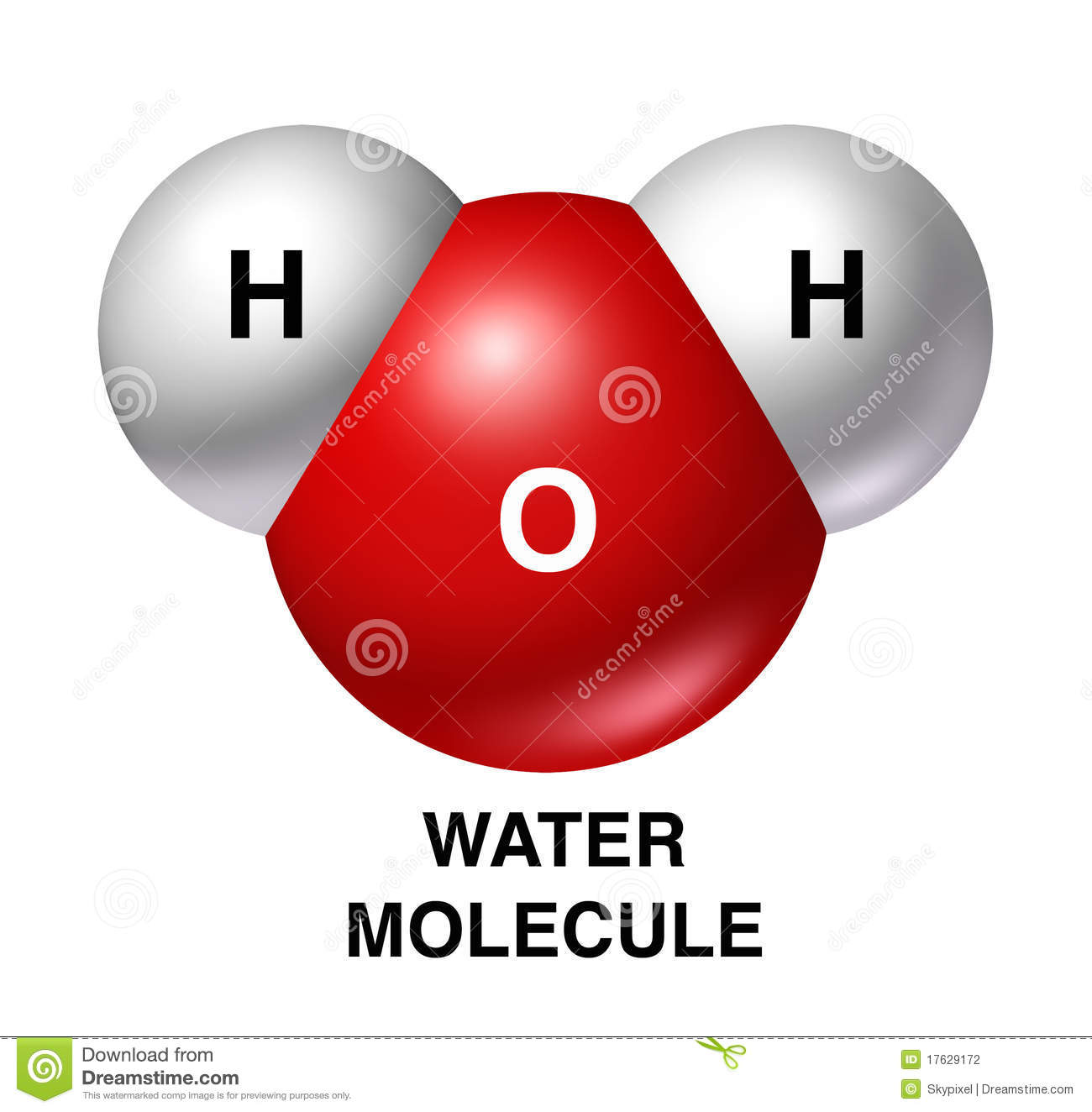
how many atoms are in a typical water molecule?

a)

3

b)

6

c)

2

d)

there are none

43.

Which part of a water molecule has a Negative Charge?

a)

The Hydrogen

b)

The Oxygen

c)

The Left

d)

The Right

44.

Which of the following is an example of COHESION?

a)

water sticking to water

b)

water sticking to glass

c)

oil sticking to plastic

d)

hydrogen sticking to oxygen

45.
Unsatured fats are healthier for you. Which is an example of an unsaturated fat?
a)
butter
b)
bacon
c)
olive oil
d)
eggs
46.

Which type of fat is considered healthier than others?

a)

Saturated Fat

b)

Unsaturated Fat

c)

Monounsaturated Fats

d)

Trans Fat

47.

Which picture is a monomer?

a)
b)
48.

Which of these molecules is a monomer?

a)
b)
49.

What type of reaction will break down a polymer into individual monomers?

a)

dehydration synthesis

b)

hydrolysis

50.
Which of the following stores more energy
a)
Carbohydrates
b)
Lipids
c)
Proteins
d)
Nucleic Acids