
Font size
 Worksheets
Water Cycle-JONES
Total questions: 70
Worksheet time: 1hrs 6mins
Which example is a form of precipitation?
Dew
Fog
Frost
Hail
As a part of the water cycle, water from Earth's surface enters the clouds and finally falls back to the ground in the form of rain. What is the correct sequence of processes water undergoes?
Evaporation, Condensation, Precipitation
Precipitation, Condensation, Evaporation
Condensation, Evaporation, Precipitation
Evaporation, Precipitation, Condensation
What would happen if the Sun is removed from the water cycle?
The water cycle would not include precipitation but would continue with groundwater flow.
The water cycle would no longer occur because the Sun provides the energy for evaporation and transpiration.
The water cycle would no longer occur because the Sun provides energy for the formation of clouds.
The water cycle would not include evaporation and transpiration but would continue with condensation.

The image shows various stages in the water cycle. During which stage does water flow back towards the sea as runoff?
W
X
Y
Z
Rain and snow are two different forms of precipitation that fall on Earth's surface. Which factor is responsible for there being different forms of precipitation?
Evaporation
Run-off
Temperature
Transpiration
What is precipitation?
Sweat from our bodies on hot days
Warm rain but not cold snow or sleet
Gas that we use in furnaces or ovens
Any form of water that falls from the sky

What are formed when water vapor condenses?
Clouds
Mountains
Transpiration
Valleys

Water in its gas form is called ____________________,
water vapor
precipitation
ice
air

Which part of the water cycle does this picture show?
condensation
precipitation
evaporation
What are clouds made of?
dry air
water
If groundwater reaches Earth's surface, how does it re-enter the water cycle?
by transpiration
by evaporation
by accumulation
it can't

What is "A"?
Evaporation
Condensation
Precipitation
Runoff
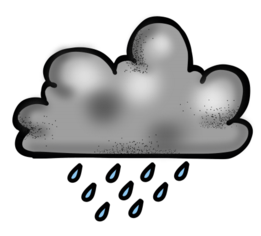
Which part of the water cycle does this picture show?
condensation
precipitation
evaporation
What are the main components of the water cycle?
Runoff
Transpiration
Evaporation
Condensation
Precipitation

What is the role of the Sun in the water cycle?
provide heat energy for evaporation
provide heat energy for condensation
dry out the soil for runoff to occur
provide thermal energy for accumulation
During evaporation, water changes from a _________ to a __________.
solid, liquid
gas, liquid
liquid, gas
liquid, solid
The water cycle starts at...
evaporation
condensation
precipitation
It has no beginning or end
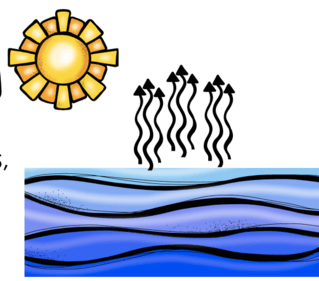
Which part of the water cycle is shown in this picture?
condensation
precipitation
evaporation
How much of our planet is estimated to be covered by water?
68%
50%
97%
75%
How much of our planet's water is salt water?
75%
1%
99%
97%

What is the energy source that drives the water cycle?
The moon
The heat from our homes in the winter all around the world
The sun
The heat generated solely from the core of the earth

The mixture of gases that surrounds the Earth. ____________________
Landforms
Sun
Atmosphere
Weathering

Where does all the water go or end up? Look at the chart.
Evaporation
Runoff
Collection/accumulation
Transpiration

Where is most of the freshwater kept?
Ocean
Rivers
Glaciers
Ponds
What is gravity's role in the water cycle?
infiltration
evaporation
condensation
transpiration
What is gravity's role in the water cycle?
precipitation
evaporation
evapotranspiration
condensation
What role does gravity play in the water cycle?
runoff
condensation
evaporation
distillation
How does water flow and change within the Earth system?
Water Cycle
Carbon Cycle
Rock Cycle
Atmospheric Cycle
If a geologic process is a change in the geosphere (land), then a hydrologic process is a change in the __________.
Geosphere
Hydrosphere
Atmosphere
Biosphere
What force causes water to fall from the sky to Earth's surface and flow downhill from the mountains to sea level?
Solar energy
Gravity
Magnetism
Water tension
Water stored or flowing underground is called:
Groundwater
Surface water
Dirty water
Rock water
What are clouds made of?
Water vapor
Liquid water drops
A mixture of gases
Cotton candy
Plants take up water through their ROOTS.
Transpiration
Absorption
Excretion
Evaporation
What percentage of the Earth's water is fresh?
97%
2.3%
<1%
3%
What is the hydrosphere?
The water I drink at home
The sum of the seas and oceans
All the water on the Earth's surface, groundwater and vapour water
Groundwater is...
The water under the Earth's surface
The water that forms the clouds
The water of the swimming pool

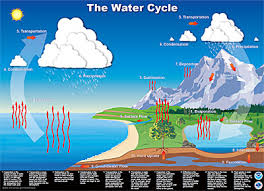
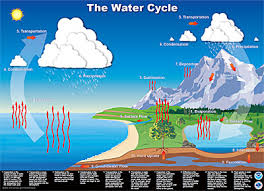
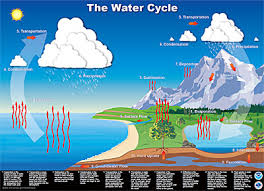
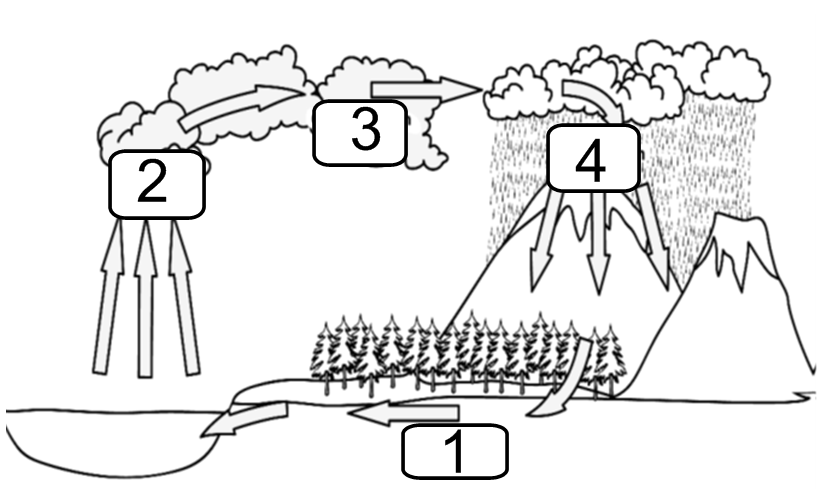


What process occurs when tiny water droplets cling together in the atmosphere?
clouds
evaporation
condensation
accumulation
Which of the following is an example of precipitation?
sleet
hail
snow
all of the above

What is it called when plants release water vapor through their leaves?
sublimation
respiration
transpiration
precipitation
What do we call water in its gas state?
rain
snow
ice
water vapor
If groundwater reaches earth's surface, how does it reenter the water cycle?
by transpiration
by evaporation
by accumulation
it can't
Water falls to Earth as rain after water vapor ________ into clouds.
evaporates
accumulates
condenses
freezes
During evaporation, water changes from a _________ to a __________.
solid, liquid
gas, liquid
liquid, gas
liquid, solid
The water cycle starts at....
evaporation
condensation
precipitation
it has not beginning or ending

What process is show by letter A in the diagram?
condensation
evaporation
accumulation
precipitation

What is shown by letter D in the diagram?
runoff
groundwater
melting
vapor

What process is shown by letter B in the diagram?
condensation
transpiration
evaporation
precipitation

What would most likely happen if letter B stopped.
the water cycle would end
there would be more clouds
water would freeze
animals in the ocean would die

