
 Worksheets
Respiratory Anatomy & Physiology
Total questions: 73
Worksheet time: 1hrs 2mins
Which of the following is NOT a function of the respiratory system?
Delivering oxygen to the body
Removing carbon dioxide from the body
Regulating blood pH
Producing digestive enzymes
What is the primary function of the nasal cavity in the respiratory system?
Transporting oxygen to the lungs
Producing sound for speech
Filtering, warming, and moistening incoming air
Exchanging gases in the alveoli
Which part of the respiratory system is primarily responsible for voice production?
Trachea
Larynx
Pharynx
Alveoli
What is NOT a function of the pleurae?
oxygen exchange
protection
anchors lungs in thoracic cavity
What is the name of the compound on red blood cells that carries oxygen?
plasma
platelets
hemoglobin
white blood cells
What structure contains the vocal cords?
pharynx
larynx
nasal cavity
sinuses
What is the name of the piece of cartilage that blocks the larynx when we swallow food?
epiglottis
trachea
bronchiole
pharynx
Which of the following is NOT a key structure in the respiratory system?
pharynx
larynx
diaphragm
esophagus
Given the following structures:
1. larynx
2. nasal cavity
3. pharynx
4. trachea
Which of the following is the correct order that air would flow during inhalation.
1,2,3,4
2,3,1,4
2,1,3,4
4,2,3,1

What keeps your bronchi and bronchiole tubes open?
cartilage rings
ligament squares
ciliated cells
muscle
The trachea...
extends from the nasal cavity to the bronchi
is lined with cilia
lies posterior to the esophagus
is the passageway for food into the stomach
Gaseous exchange happens because of...
Osmosis
Respiration
Diffusion
Semi-permeable membranes
the accumulation of gas (or air) in the pleural space causing the lung to collapse from the outside.
atelectasis
acute pulmonary distress syndrome
pulmonary edema
pneumothorax
blood in the chest
hemothorax
thorcotomy
hemocartilage
pneumothorax
The use of oxygen by the cells to release enery from food is called...
photosynthesis
cellular respiration
diffusion
osmosis
Which of the following statements is not true of sinuses?
Sinuses warm and moisten air.
Sinuses provide resonance for the voice.
Sinuses are lined with a mucous membrane.
Sinuses provide the sense of smell.
The membrane or sac that encloses each lung is a ____.
pleura
perithoracic membrane
visceral membrane
pneumocardial sac
A noninfectious, chronic respiratory condition that occurs when the walls of the alveoli deteriorate and lose their elasticity is ____.
asthma
emphysema
chronic obstructive pulmonary disease
pleurisy
A respiratory disorder caused by a sensitivity to an allergen is ____.
asthma
bronchitis
chronic obstructive pulmonary disease
emphysema
Divides the nose into two hollow spaces called nasal cavities.
nasal cavities
sinuses
bronchioles
nasal septum
An inflammation or infection of the lungs characterized by exudate in the alveoli.
pneumonia
tuberculosis
asthma
emphysema
Most upper respiratory infections are caused by ________________ and are highly contagious.
bacteria
viruses
fungi
protozoa
The lipid substance covering the inner surfaces of the aveoli that help prevent them from collapsing.
pleural fluid
surface lipids
epithelial tissue
surfactant
Given the following structures:
1. larynx
2. nasal cavity
3. pharynx
4. trachea
Which of the following is the correct order that air would flow during inhalation.
1,2,3,4
2,3,1,4
2,1,3,4
4,2,3,1
Which body function is made possible by the fibrous bands stretched across the larynx?
swallowing
breathing
diffusion
speech
The process of diffusing oxygen from the blood, into the interstitial fluid and into the cells.
inspiration
expiration
internal respiration
external respiration
The inspiratory and expiratory breathing centers are located in the ____________ and pons.
medulla oblongata
thalamus
hypothalamus
midbrain
Why does diffusion of oxygen take place in the alveoli?
The oxygen level in the capillaries is higher than in the alveoli.
The oxygen level in the alveoli is higher than in the capillaries.
The oxygen level in the cells surrounding the alveoli is high.
The brain tells the lungs to release oxygen into the blood.
Thin-walled vessels that allow for the exchange of O2 , CO2, nutrients and wastes between blood cells or air sacs in the lungs
Arteries
Veins
Capillaries
During exercise you blood will contain.... and that is why you breath more rapidly.
decreased number red blood cells
increased level of oxygen
increased level of carbon dioxide
decreased level of iron iron
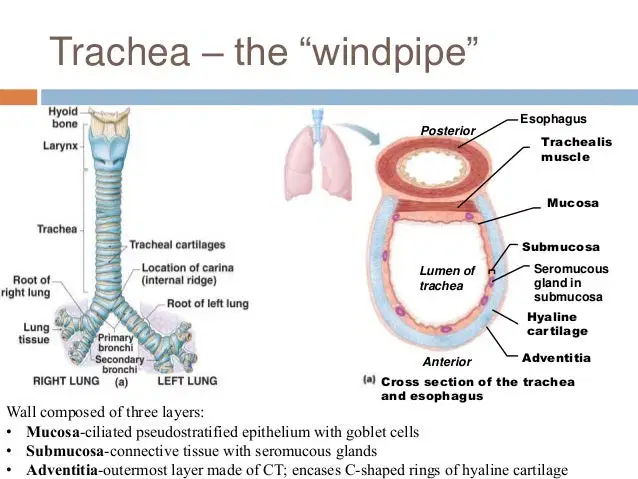
What is the purpose of the rings in the trachea?
To keep the trachea flexible
To warm and moisten incoming air
To support the trachea during breathing
To prevent the trachea from collapsing
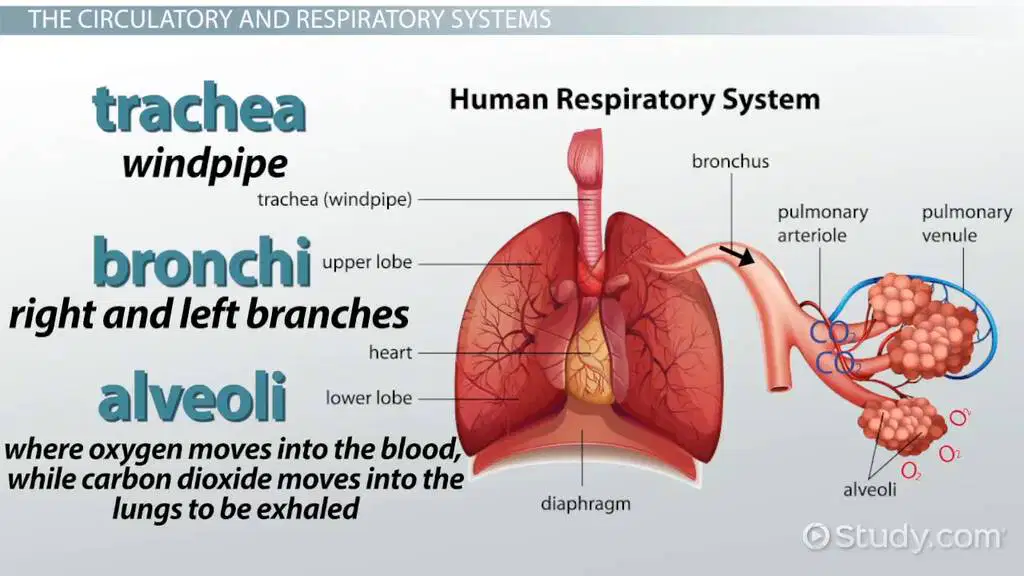
What are the two main principles that make respiration possible?
Endocytosis and exocytosis
Active transport and passive transport
Osmosis and filtration
Bulk flow and diffusion
thin, double walled serous membrane that surrounds the lungs,
alveoli
pleural sac
tonsils
thalamus
a combination of vital capacity plus the residual volume
total lung capacity
ERV
functional residual capacity
IRV
Which of the following lung capacities is the volume of air that can be maximally exhaled after a maximum inhalation?
inspiratory capacity
functional residual capacity
vital capacity
total lung capacity
What cells are the housekeepers of the alveoli and would help defend against dust particles?
simple squamous epithelium
surfactant secreting cells
alveolar macrophage
none of these

The amount of air you can force out after a normal breath out
Expiratory Reserve Volume
Functional Residual Capacity
Vital Capacity
Inspiratory Capacity
What equipment is used to measure the volume of air being inspired and expired?
ventilator
spirometer
stethoscope
pulse oximeter
According to Boyle’s law, if the volume of a sealed container of gases __________, then the pressure in that container __________.
decreases; increases
decreases; decreases
increases; increases
decreases; stays the same
What cells help reduce surface tension within the alveoli so they don't collapse during exhalation?
simple squamous epithelium
surfactant secreting cells
alveolar macrophage
none of these
The bronchioles have walls dominated by __________.
fibrous connective tissue
hyaline cartilage
elastic cartilage
smooth muscle
Even if you forcibly exhale, there is volume that always remains in lungs.....what is this volume?
ERV
IRV
total volume
residual volume
During a lively classroom discussion, Isla asked, "What is the purpose of humidification when providing oxygen therapy?"
To cool the oxygen
To increase oxygen concentration
To prevent mucous membrane dryness
Air moving in and out of the lungs is called
pulmonary ventilation
expiration
inspiration
internal respiration
Three shelf-like structures in the nasal cavity; direct air into
sinuses
(a)
The amount of air that can be forcibly inspired over and above a normal inspiration
(a)
The largest amount of air we can breathe in and out in a single breath.
(a)
Normal inspiration and expiration amounts/values. How much air you take in and breathe out in a normal breath.
(a)
A device used to measure the amount of air exchanged between your lungs and the air outside. (How much volume in a breath)
(a)
The air that remains in the lungs after the most forceful
expiration.
(a)
Four sinuses that open into the nose
(a)
The amount of air that can be forcibly exhaled beyond a normal exhalation.
(a)
12. If a person could not produce surfactant, his/her:
Alveoli would collapse.
Bronchi would collapse.
Vocal cords would not vibrate.
Epiglottis would close.
Which of the following structures is the portion of throat opening into the mouth?
nasopharynx
larynx
oropharynx
laryngopharynx
Which of the following structures is the portion of throat just above larynx?
nasopharynx
larynx
oropharynx
laryngopharynx
Which of the following describes the path of carbon dioxide as it leaves your capillaries and exits through the respiratory system?
bronchioles, bronchi, alveoli, trachea, larynx, pharynx, mouth/nose
mouth/nose, pharynx, larynx, trachea, bronchi, bronchioles, alveoli
alveoli, bronchioles, bronchi, trachea, pharynx, larynx,, mouth/nose
alveoli, bronchioles, bronchi, trachea, larynx, pharynx, mouth/nose

Identify Structure #1. (all lowercase)
(a)

Identify structure #3. (all lowercase)
(a)

Identify structure #7. (all lowercase)
(a)

Identify structure #8. (all lowercase)
(a)

Identify #5. (all lowercase)
(a)

Identify #6. (all lowercase)
(a)

Identify #4. (all lowercase)
(a)

Identify #3. (all lowercase)
(a)

Identify #1. (all lowercase)
(a)

Identify #10. (all lowercase)
(a)

Identify #8. (all lowercase)
(a)

Identify #11. (all lowercase)
(a)
What are the TWO most important muscles used for respiration?
Pectoralis major
Diaphragm
Transverse Abdominus
Intercostals
Dead Space
Amount of air that moves into the lungs with each inspiration
Damaged portion of the lungs
Remaining air in the lungs after the expiratory reserve volume
Part of the lungs that do not participate in gas exchange
Which type of cells would allow for the easiest transport through a membrane? (Which would be the most permeable?)


External Respiration
Gas exchange that takes place between body cells and blood
Gas exchange that takes place in the lungs between the alveoli and blood
The term for breathing in fresh air outdoors
Respiration that occurs when you breathe through your mouth
Within the lungs, gases always flow
from low to high pressure.
from high to low pressure.

