
 Worksheets
Gravity and the Solar System Review
Total questions: 35
Worksheet time: 18mins
What happens to the gravitational force between two planets when the distance between them increases?
It increases.
It decreases.
It stays the same.
It reverses.
How does the mass of an object affect its gravitational pull?
More mass means less gravitational pull.
Mass does not affect gravitational pull.
More mass means more gravitational pull.
Only distance affects gravitational pull.
What effect does the Sun’s gravity have on the orbits of the planets?
It pushes the planets away from the Sun.
It pulls the planets into circular orbits.
It pulls the planets, keeping them in elliptical orbits.
It has no effect on the planets.
Which planet would have a stronger gravitational pull on a nearby spacecraft?
a planet with larger mass and closer distance
a planet with smaller mass and closer distance
a planet with smaller mass and greater distance
a planet with larger mass and greater distance
What would be likely to happen if Earth was no longer in the Sun’s orbit, being held by the Sun’s gravitational pull?
Earth would continue moving in its orbit.
Earth would continue moving in a straight line in space.
Earth would move closer to the Sun.
Earth would stop moving altogether.
How do gravity and inertia interact to keep planets in orbit around the Sun?
Gravity pulls the planets towards the Sun, while inertia keeps them moving in a straight line.
Gravity pushes the planets away from the Sun, while inertia pulls them towards it.
Both gravity and inertia push the planets away from the Sun.
Both gravity and inertia pull the planets towards the Sun.
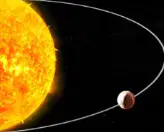
In a science class, students are learning about how gravity influences the motion of celestial bodies within our solar system. To illustrate this, a diagram showing the interactions between various planets and the Sun is displayed. Which statements accurately describe the effects of gravity on the motion of celestial bodies in our solar system? Select ALL that apply.
Increasing the mass of the Sun would decrease the orbital speed of the planets around it.
The greater the mass of a planet, the stronger its gravitational pull is on neighboring celestial bodies.
The farther a planet is from the Sun, the weaker the Sun’s gravitational pull is on that planet.
If the distance between two planets doubles, the gravitational pull they exert on each other will double.
Planets in closer proximity to the Sun will have shorter orbital periods compared to those farther away.
Use the information below to answer the question: Which student’s interpretation is more accurate?
Elsie
Carlos
Both students are correct.
Neither student is correct.
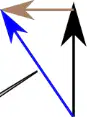
Use the information below to answer the question: Which explanation best supports your choice?
The gravitational pull from the planet acts as a brake on the spacecraft, decreasing its speed as it approaches.
The gravitational pull of the planet is used to change the spacecraft's path without affecting its speed.
As the spacecraft gets closer to the planet, the planet’s gravitational pull increases its velocity.
Gravity assists are used to decrease the spacecraft's speed so it can maneuver towards the new target more effectively.
If a new planet were discovered with three times the mass of Earth but in the same orbital position, how would its gravitational interaction with the Sun be different from Earth’s?
The gravitational force would be three times stronger.
The gravitational force would be the same.
The gravitational force would be three times weaker.
The gravitational force would be nine times stronger.
Why does the Moon not crash into Earth? Use scientific reasoning to support your answer.
Because the Moon is too far away from Earth.
Because the Moon is in a stable orbit due to Earth's gravitational pull and its own velocity.
Because the Moon is moving away from Earth at a constant speed.
Because the Moon is held in place by the Sun's gravity.
What happens to the gravitational force between two planets when the distance between them increases?
It increases.
It decreases.
It stays the same.
It reverses.
How does the mass of an object affect its gravitational pull?
More mass means less gravitational pull.
Mass does not affect gravitational pull.
More mass means more gravitational pull.
Only distance affects gravitational pull.
What effect does the Sun’s gravity have on the orbits of the planets?
It pushes the planets away from the Sun.
It pulls the planets into circular orbits.
It pulls the planets, keeping them in elliptical orbits.
It has no effect on the planets.
Which planet would have a stronger gravitational pull on a nearby spacecraft?
a planet with larger mass and closer distance
a planet with smaller mass and closer distance
a planet with smaller mass and greater distance
a planet with larger mass and greater distance
What would be likely to happen if Earth was no longer in the Sun’s orbit, being held by the Sun’s gravitational pull?
Earth would continue moving in its orbit.
Earth would continue moving in a straight line in space.
Earth would move closer to the Sun.
Earth would stop moving altogether.
How do gravity and inertia interact to keep planets in orbit around the Sun?
Gravity pulls the planets towards the Sun, while inertia keeps them moving in a straight line.
Gravity pushes the planets away from the Sun, while inertia pulls them towards it.
Inertia stops the planets from moving, while gravity keeps them in orbit.
Gravity and inertia have no effect on the planets' orbits.
If a new planet were discovered with three times the mass of Earth but in the same orbital position, how would its gravitational interaction with the Sun be different from Earth’s?
The gravitational force would be three times stronger.
The gravitational force would be the same.
The gravitational force would be three times weaker.
The gravitational force would be nine times stronger.
Why does the Moon not crash into Earth?
Because the Moon is moving in a stable orbit around Earth due to gravitational forces and its tangential velocity.
Because the Moon is too far away from Earth to be affected by its gravity.
Because the Moon is held in place by the Sun's gravitational pull.
Because the Moon is stationary and does not move.
What happens to the gravitational force between two planets when the distance between them increases?
It increases.
It decreases.
It stays the same.
How does the mass of an object affect its gravitational pull?
More mass means less gravitational pull.
Mass does not affect gravitational pull.
More mass means more gravitational pull.
What effect does the Sun’s gravity have on the orbits of the planets?
It pushes the planets away from the Sun.
It pulls the planets into circular orbits.
It pulls the planets, keeping them in elliptical orbits.
Which planet would have a stronger gravitational pull on a nearby spacecraft?
a planet with larger mass and closer distance
a planet with smaller mass and closer distance
a planet with smaller mass and greater distance
What would be likely to happen if Earth was no longer in the Sun’s orbit, being held by the Sun’s gravitational pull?
Earth would continue moving in its orbit.
Earth would continue moving in a straight line in space.
Earth would move closer to the Sun.
How do gravity and inertia interact to keep planets in orbit around the Sun?
Gravity pulls the planets towards the Sun, while inertia keeps them moving in a straight line.
Gravity pushes the planets away from the Sun, while inertia pulls them towards it.
Gravity and inertia both push the planets away from the Sun.
Gravity and inertia have no effect on the planets' orbits.
In a science class, students are learning about how gravity influences the motion of celestial bodies within our solar system. To illustrate this, a diagram showing the interactions between various planets and the Sun is displayed. Which statements accurately describe the effects of gravity on the motion of celestial bodies in our solar system? Select ALL that apply.
Increasing the mass of the Sun would decrease the orbital speed of the planets around it.
The farther a planet is from the Sun, the weaker the Sun’s gravitational pull is on that planet.
If the distance between two planets doubles, the gravitational pull they exert on each other will double.
Planets in closer proximity to the Sun will have shorter orbital periods compared to those farther away.
If a new planet were discovered with three times the mass of Earth but in the same orbital position, how would its gravitational interaction with the Sun be different from Earth’s?
The gravitational force would be three times stronger.
The gravitational force would be the same.
The gravitational force would be weaker.
The gravitational force would be nine times stronger.
Why does the Moon not crash into Earth? Use scientific reasoning to support your answer. The Moon’s __________ and the __________ __________ from Earth keep it moving in a __________________________________________.
The Moon’s velocity and the gravitational pull from Earth keep it moving in a stable orbit.
The Moon’s mass and the magnetic field from Earth keep it moving in a straight line.
The Moon’s rotation and the solar wind from Earth keep it moving in a circular path.
The Moon’s temperature and the atmospheric pressure from Earth keep it moving in a random trajectory.
How does the mass of an object affect its gravitational pull?
More mass means less gravitational pull.
Mass does not affect gravitational pull.
More mass means more gravitational pull.
What effect does the Sun’s gravity have on the orbits of the planets?
It pushes the planets away from the Sun.
It pulls the planets into circular orbits.
It pulls the planets, keeping them in elliptical orbits.
Which planet would have a stronger gravitational pull on a nearby spacecraft?
a planet with larger mass and closer distance
a planet with smaller mass and closer distance
a planet with smaller mass and greater distance
What would be likely to happen if Earth was no longer in the Sun’s orbit, being held by the Sun’s gravitational pull?
Earth would continue moving in its orbit.
Earth would continue moving in a straight line in space.
Earth would move closer to the Sun.
How do gravity and inertia interact to keep planets in orbit around the Sun?
Gravity pulls the planets towards the Sun, while inertia keeps them moving in a straight line.
Gravity pushes the planets away from the Sun, while inertia pulls them towards the Sun.
Gravity and inertia both push the planets away from the Sun.
Gravity and inertia both pull the planets towards the Sun.
If a new planet were discovered with three times the mass of Earth but in the same orbital position, how would its gravitational interaction with the Sun be different from Earth’s?
The gravitational force would be three times stronger.
The gravitational force would be the same.
The gravitational force would be weaker.
The gravitational force would be nine times stronger.
Why does the Moon not crash into Earth? Use scientific reasoning to support your answer.
The Moon is held in orbit by Earth's gravity and its own velocity.
The Moon is too far away to be affected by Earth's gravity.
The Moon is moving away from Earth at a constant speed.
The Moon's mass is too small to be affected by Earth's gravity.

