
 Worksheets
Trends in the Periodic Table
Total questions: 50
Worksheet time: 50mins

The vertical (up and down) columns in the Periodic Table are called
groups
towers
periods
atomic numbers
Which of the following elements is most likely to have similar properties to those of sodium (Na)?
Magnesium (Mg)
Sulfur (S)
Francium (Fr)
Titanium (Ti)
Which element is located in period 4?
Zirconium (Zr)
Silicon (Si)
Beryllium (Be)
Iron (Fe)
Which element is located in period 4 and group 5?
Vanadium (V)
Zirconium (Zr)
Niobium (Nb)
Titanium (Ti)

What is the charge on a sodium ion?
+2
+1
-2
-1
Elements in the same group will have
the same # of orbitals
all have a charge of -3
the same # e in the outer shell
all have a charge of +1
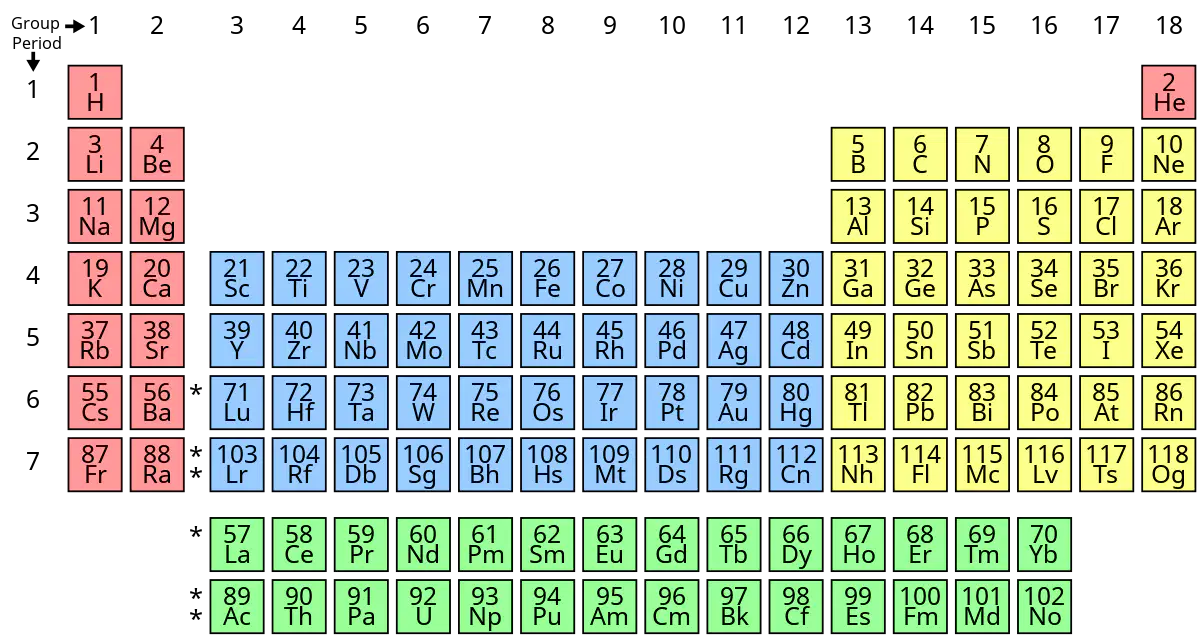
On the periodic table, the following elements, oxygen, sulfur, selenium and tellurium are considered a
group
period
The following elements (sodium, magnesium, aluminum, silicon, phosphorus and chlorine) are considered a
group
period
Atomic size decreases moving right to left on the Periodic Table.
true
false
As you move from left to right across each row of the Periodic Table, the size of an atom
Decreases because additional protons and electrons are added to the same principal energy level, resulting in more forces of attraction and pulling the electrons closer to the nucleus.
Increases because electrons are added to energy levels further away from the nucleus, which results in electron shielding.
Decreases because electrons are more easily lost.
Increases because additional neutrons added to the nucleus interfere with the forces of attraction between the protons and electrons.
As you move from top to bottom down the Alkali Metal group of the Periodic Table, the size of an atom
Decreases because additional protons and electrons are added to the same principal energy level, resulting in more forces of attraction and pulling the electrons closer to the nucleus.
Increases because electrons are added to energy levels further away from the nucleus, which results in electron shielding.
Decreases because electrons are more easily lost.
Increases because additional neutrons added to the nucleus interfere with the forces of attraction between the protons and electrons.
Why is the second ionization energy always greater than the first ionization energy for any element?
The charge on the ion has become more positive, causing an increased attraction of the positively charged nucleus for the decreasing number of electrons.
The charge on the ion has become more positive, causing a decreased attraction of the positively charged nucleus for the increasing number of electrons.
The charge on the ion has become more negative, causing an increased attraction of the positively charged nucleus for the decreasing number of electrons.
The charge on the ion has become more negative, causing a decreased attraction of the positively charged nucleus for the increasing number of electrons.
As you move from left to right across each row of the Periodic Table, ionization energy
Decreases, because additional protons are being added to the same principal energy level, leading to a weaker attraction for the electrons to the positively charged nucleus.
Decreases, because additional electrons are being added to different principal energy levels, leading to a weaker attraction for the electrons to the positively charged nucleus.
Increases, because additional protons are being added to the same principal energy level, leading to a greater attraction for the electrons to the positively charged nucleus.
Increases, because additional electrons are being added to different principal energy levels, leading to a weaker attraction for the electrons to the positively charged nucleus.
Which sequence of elements is arranged in order of decreasing atomic radii?
Al, Si, P
Li, Na, K
Cl, Br, I
N, C, B
Which sequence correctly places the elements in order of increasing ionization energy?
H, Li, Na, K
I, Br, Cl, F
O, S, Se, Te
H, Be, Al, Ga
Which sequence correctly places the elements in order of increasing electronegativity?
Ca, Zn, Br, K, Sc
Br, Zn, Sc, Ca, K
Sc, K, Br, Zn, Ca
K, Ca, Sc, Zn, Br
Where are the metalloids found
far left, vertical
stair step/diagonal
far right horizontal
at the bottom
Which element is most likely to have six valence electrons?
Barium (Ba)
Carbon (C)
Oxygen (O)
Americium (Am)
The energy it takes to remove one electron from an atom
Atomic Radii
Ionization Energy
Electronegativity
Electron Afinity
Oxidation Number

Which element has the highest electronegativity?
Mg
Al
Si
P

Which element has the larges atomic radius?
Silicon
Germanium
Tin
Lead

Which element as the smallest ionization energy?
Titanium
Chomium
Manganese
Copper

Which element has the highest ionization energy?
Boron
Aluminum
Gallium
Indium

Which element has the lowest electronegativity?
Strontium
Calcium
Magnesium
Beryllium

What is the likelihood of a substance to undergo a chemical reaction, either by itself or with other materials, and absorb or release energy?
group or family
reactivity
period
octet rule

What is a region of an atom where electrons with the same energy are found?
electron
orbital
sublevel
energy level
Which element is more reactive?
Li
Fr
Ba
Which alkaline Earth metal would have the smallest radius?
Be
Ca
Ra
Which noble gas has the largest radius?
Ne
Kr
Rn

2
3
5

Which element has the highest electronegativity?
The vertical (up and down) columns in the Periodic Table are called
groups
towers
periods
atomic numbers
An element with the lowest electronegativity would be found in of the periodic table.
Group 1, Period 7
Group 3, Period 4
Group 5, Period 3
Group 17, Period 2

