NEW
Font size
 Worksheets
Unit 3: Transfer of Thermal Energy
Total questions: 40
Worksheet time: 47mins
Which of the following best describes thermal energy?
Energy that comes from the Sun
Energy associated with motion
Energy related to heat
Energy stored in chemical bonds
How does heat move through convection?
Through direct contact
Through electromagnetic waves
Through the movement of fluids
Through the transfer of electrons
Which of the following is an example of radiation?
Feeling the heat of a bonfire from a distance
Holding a hot cup of coffee
Ice melting on a warm day
Warming your hands by rubbing them together
How does heat move through radiation?
Through direct contact
Through electromagnetic waves
Through the movement of fluids
Through the transfer of electrons
Which type of thermal energy transfer occurs through the direct contact of particles?
Conduction
Convection
Radiation
Insulation
Which type of thermal energy transfer occurs through the movement of fluids?
Conduction
Convection
Radiation
Insulation
Which type of thermal energy transfer occurs through electromagnetic waves?
Conduction
Convection
Radiation
Insulation
What is the transfer of heat through electromagnetic waves called?
Conduction
Convection
Radiation
Insulation
What is the transfer of heat through the movement of fluids called?
Conduction
Convection
Radiation
Insulation
If a metal spoon is left in a hot cup of tea, which type of thermal energy transfer is occurring?
Conduction
Convection
Radiation
Insulation
If warm air rises above a hot surface, which type of thermal energy transfer is occurring?
Conduction
Convection
Radiation
Insulation
If you stand close to a heater and feel the heat on your skin, which type of thermal energy transfer is occurring?
Conduction
Convection
Radiation
Insulation
What happens to the temperature of an object when thermal energy is transferred to it?
It remains the same
It decreases
It increases
It becomes nonexistent
Your finger feels cold when you dip it into ice water. This is because ___________________.
Temperature flows from your finger to the ice water.
Thermal energy flows from your finger to the ice water.
Thermal energy flows from the ice water to your finger.
Conduction can
only occur in solids.
only occur in fluids.
occur in solids and fluids.
Convection can
occur only in solids.
occur only in fluids.
occur in solids and fluids.
Convection current is formed because of
changes in density of fluids.
changes in mass of fluids.
changes in weight of fluids.
When a fluid is heated, it
expands, becomes denser, and sinks
expands, becomes less dense, and rises
contracts, becomes less dense, and rises
When a fluid is cooled, it
expands, becomes denser, and sinks.
contracts, becomes less dense, and sinks.
contracts, becomes denser, and sinks.
What is the main process that transfers thermal energy from the Sun to the Earth?
conduction
convection
radiation
Which process does not require a medium to transfer thermal energy?
conduction
convection
radiation
A heater is placed in a room.
Which diagram shows the movement of air as the room is heated?


Zoom in to read this MCAS question carefully. Which picture best shows the directions thermal energy will flow?
A
B
C
D

Zoom in to read this MCAS question.
A
B
C
D

Zoom in to read this MCAS question.
A
B
C
D

Zoom in to read this MCAS question.
A
B
C
D
The total energy of all the particles in a substance is called
temperature
thermal energy
degrees
mass
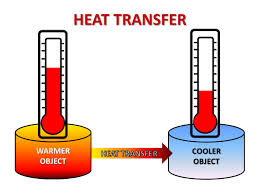
The movement of thermal energy from a warmer object to a cooler object is called
heat
temperatur
motion
momentum
Heat transfer occurs
in many directions
both from warm objects to colder ones and from cold objects to warmer ones
only from warm objects to colder ones
only from cold objects to warmer ones
A measure of the average kinetic energy of the individual particles in an object is called
thermal energy
conduction
convection
temperature
Which particles are moving fastest?
Particles in ice.
Particles in boiling water.
Particles in water from the sink.
Particles in steam.