
 Worksheets
Concept Check 2.B.1-3
Total questions: 31
Worksheet time: 30mins


A 10kg car travels at a constant speed of 20.0 m/s around a horizontal circular track. Which diagram correctly represent the direction of the car's velocity (v) and the direction of the net force acting on the car at a particular moment?


a car going around a level curve - identify the force(s) making up the net force. Select all that apply:
static friction
tension
normal force
gravitational force
a roller coaster car at the the top of a hill - identify the force(s) making up the net force. Select all that apply:
static friction
tension
normal force
gravitational force
a car going around a banked curve in icy conditions - identify the force(s) making up the net force:
static friction
tension
the horizontal component of the normal force
gravitational force

A curved groove is place on the top of a level table as shown in the diagram. A ball is pushed in the groove at P so that it leaves at Q. Which picture shows how the ball will move when it leaves the groove at Q?


it triples
it decreases by a factor of 6
it increases by a factor of 6
it increases by a factor of 9
What happens to the centripetal force exerted on an object if you half the velocity?
it doubles
it halves
it decreases by a factor of 4
it quadruples
As the radius of a spinning object decreases, acceleration
increases
decreases
stays the same
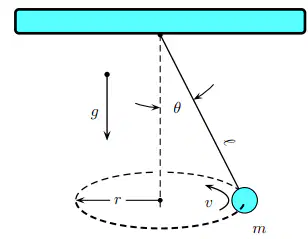
What do the 2nd Law equations look like for a ball swung in a horizontal circle from a ceiling? Assume θ is the angle shown.
Centripetal Direction: (a)
Tangential Direction: (b)
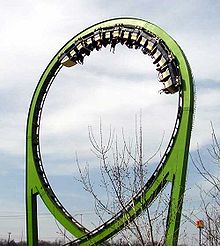
What does the 2nd Law equation look like for a rollercoaster at the top of a loop?
Fn - Fg = mv2/r
Fg - Fn = mv2/r
Fn + Fg = mv2/r
Fn = mv2/r
The time taken for one complete revolution is called the...
Speed
Why does an object experiencing uniform circular motion have an acceleration?
because it is changing speed
because it is changing direction
because it is moving in a straight line
because it has mass
A race car completes three laps of a circular track with a radius of 35 m in 9.0 seconds. Determine the speed of the car.
3.9 m/s
73.3 m/s
24.4 m/s
1.0 m/s

If the radius of the string is 0.3 meters long and the stopper makes 5 revolutions per second, what is the speed of the stopper?
Is it possible for an object moving with a constant speed to accelerate? Explain.
No, if the speed is constant, then the acceleration is equal to zero.
No, because constant speed means that there is no net force acting on it.
Yes, although the speed is constant, the direction of the velocity can be changing.
Yes, because any object that is moving experiences acceleration.
Which of the following forces is zero when you barely make it over the top of a loop?
Normal force
Weight
Centripetal Force
Who knows?
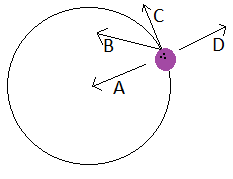
Which represents the acceleration of the ball in a horizontal circle?
A object is traveling in uniform circular motion. It has a period of 6 seconds. The radius of the circle is 3 meters. What is the tangential velocity/speed, in m/s?
(round to a whole number and do not include units)
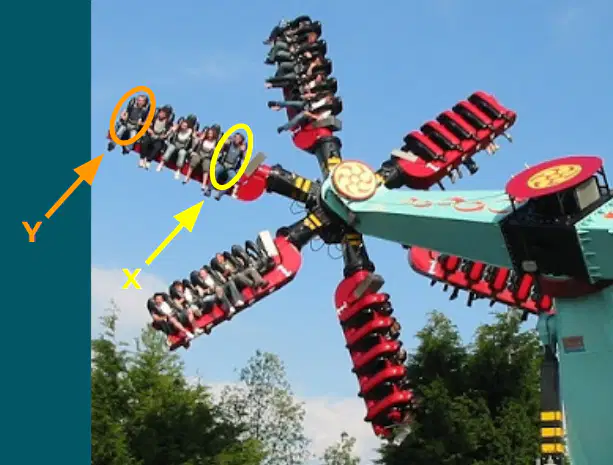
Two riders sit at positions X and Y. Do they have different periods of rotation and why / why not?
No, because they have the same tangential velocity.
No, because they take the same amount of time to complete 1 loop.
Yes, because they have different tangential velocities.
Yes, because they have different masses probably.
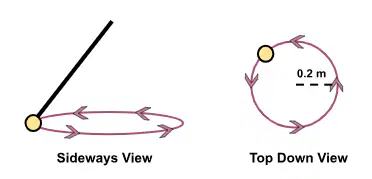
In a conical pendulum as shown, what force, or component of force, is equal to the net centripetal force?
The horizontal tension component
The vertical tension component
The force of gravity
The velocity force
Organize these positions on a vertical circle into the right categories.
the bottom of the circle
on the sides of the circle
the top of the circle
NEVER!
For a conical pendulum (i.e. Flying Pig), sort the concepts about forces along x and y-components.
Fnet=rmv2
FT sinθ=rmv2
Fnet=0
FT cosθ=mg
The fastest you can go over the top of a hill while still staying in the curve means for a split second, you just barely lose contact with the surface. To solve for this speed, you would set normal force equal to what?
9.8
Fg
Mass
0

Under the top of a loop, like in this picture, which way does normal force point?
Up, away from the center of the circle
Down, towards the center of the circle
Left, ignore it
Right, ignore it
In a vertical loop, when are you traveling the fastest?
At the left side
At the ride side
At the top of the loop
At the bottom of the loop
In a vertical loop, when is your centripetal acceleration greatest?
At the left side
At the ride side
At the top of the loop
At the bottom of the loop
Organize these positions on a vertical circle into the right categories.
the bottom of the circle
on the sides of the circle
the top of the circle
NEVER!

