
 Worksheets
G4 - Science - Waves
Total questions: 72
Worksheet time: 51mins
What is wave?
A disturbance that transfers energy and travels in a repeating pattern.
A form of static energy that stays in one place.
A random movement of particles without direction.
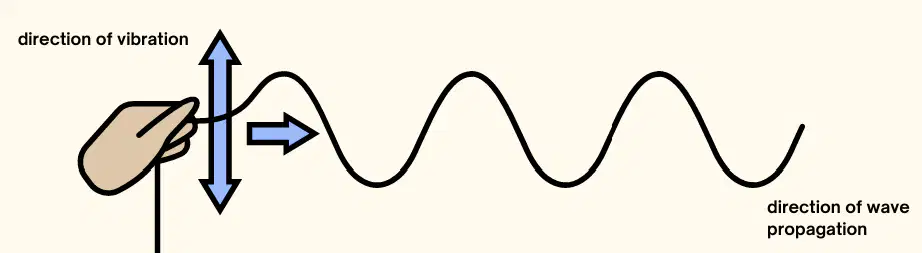
What type of wave is pictured?
Transverse wave
Longitudinal wave
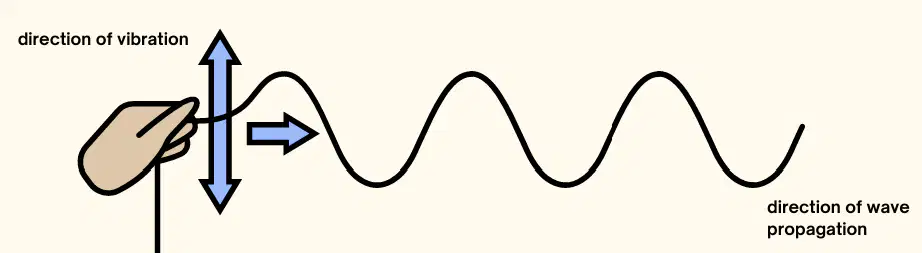
............. moves up and down.
Transverse wave
Longitudinal wave

What type of wave is pictured?
Transverse wave
Longitudinal wave
Wave, what wave?
Slinky wave

....... moves back and forth.
Transverse wave
Longitudinal wave
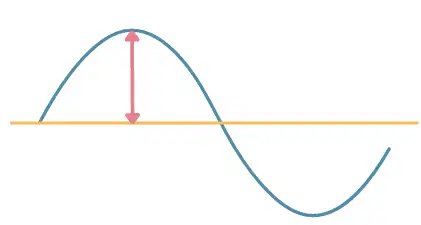
The length of a crest (peak) or trough measured from the rest point.
Wavelength
Frequency
Amplitude
The high points of a transverse wave.
Crest (peak)
Trough
Wavelength
Amplitude
The low points of a transverse wave.
Crest (peak)
Trough
Amplitude
Wavelength

The distance between any two crests (peaks) or troughs.
Frequency
Amplitude
Wavelength
Transverse
The number of times the wavelength occurs in a certain amount of time, measured in units called hertz.
Amplitude
Wavelength
Medium
Frequency
All waves carry ______________.
Sound
Light
Water
Energy
Sound travels in which kind of wave?
Longitudinal waves
Transverse waves

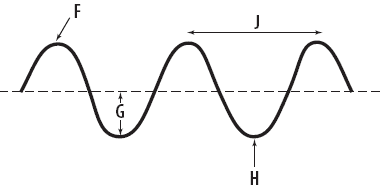
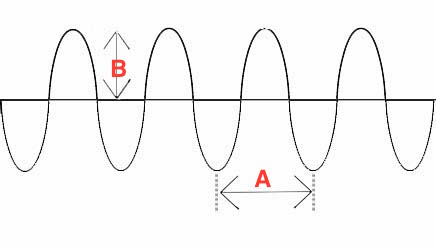
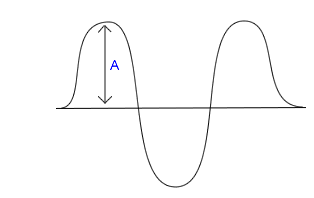
What part of the wave is shown?
wavelength
crest
amplitude
trough

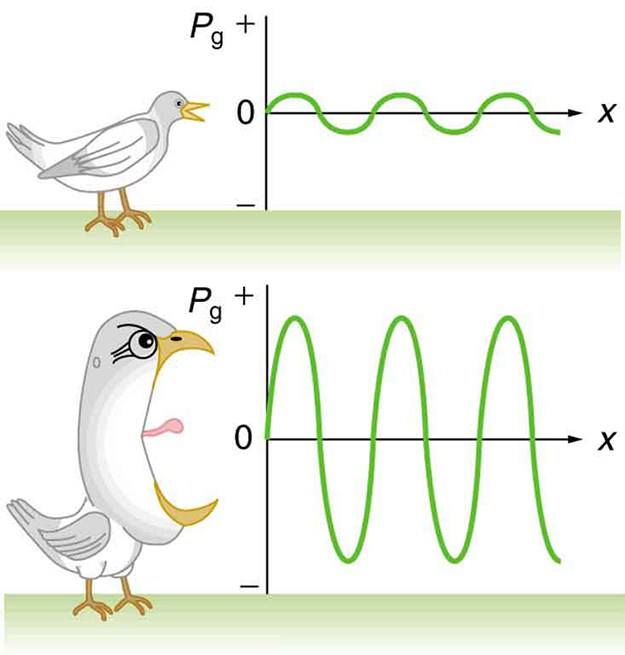
Which wave has high amplitude ?
Red wave
Blue wave
Which wave belongs to a louder sound (amplitude) ?
Red wave
Blue wave
Which wave has low amplitude ?
Red wave
Blue wave
Which wave belongs to a quieter sound (amplitude) ?
Red wave
Blue wave

A disturbance at a single point that moves outward in all directions.
circular wave
plane wave
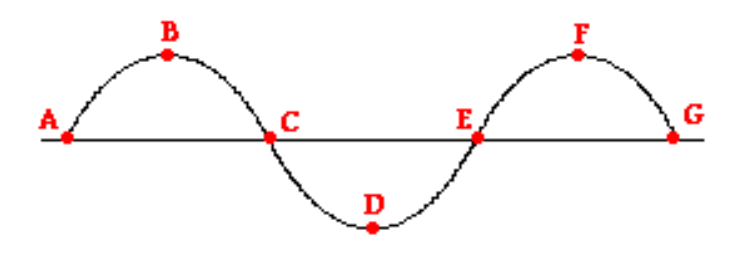
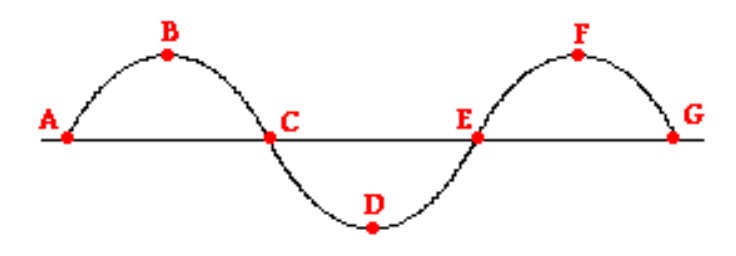
The highest point on a wave is:
(a)
The lowest point on a wave is the:
(a)

Amplitude is the distance between
the crest and the trough
each wave
the middle point of a wave and the clouds
the crest or trough and the middle point of the wave
The distance from one crest to the next crest in a wave is
wavelength
crest
trough
amplitude


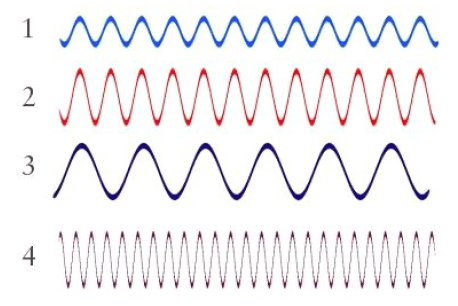
Which wave in the diagram has the longest wavelength?
1
2
3
4

Which of these waves would produce a high pitch sound?
Low frequency wave
High frequency wave
What determines the pitch of a sound?
The amount of energy used to create the vibration
The wavelength of the sound wave.
The volume of the sound.
The frequency of the vibrations.
A sound wave with low amplitude produces which type of sound?
High
Low
Loud
Soft

Which one has a higher pitch?
Cello
Violin
Which one has a lower pitch?
Cello
Violin
Which one is louder?
Cello
Violin
They have the same loudness

Which sound wave has low pitch?
Pick 2 answers.
a
b
c
d
Which sound wave has high pitch?
Pick 2 answers.
a
b
c
d
Which sound wave is loud?
Pick 2 answers.
a
b
c
d
Which sound wave is soft?
Pick 2 answers.
a
b
c
d

The higher the frequency, the (a) the pitch and vice versa.

Which of these waves would have a higher pitch?
Low Frequency
High Frequency
Frequency does not determine pitch
What is a pitch (as it relates to sound)?
the intensity of a vibration
the amplitude of a sound wave
volume of sound
highness or lowness of a sound
The total number of waves produced in a certain amount of time is called the ________ of the wave.
Vibration
Echo
Frequency
Amplitude

What does compression mean in the context of sound waves?
The point where the wave is most compact
The highest point of a wave
The origination point of a wave
How we are able to hear sound waves

What is amplitude as it refers to sound waves?
The distance between the same two points on a wave
The number of waves per second
The measure of the height of the wave
The frequency of the wave

Sound wave is a best example of what kind of wave?
Electromagnetic wave
Longitudinal Wave
Transverse waves

Property of longitudinal wave where particles are close together is called ___________?
Wavelength
Rarefaction
Compression

The place in a longitudinal wave where particles are far from each other is called_______________?
Compression
Rarefaction
Amplitude
Amplitude


Trough


Crest


Wavelength


A tuba has a low pitch sound. Which sound wave would represent a tuba?


Which wave has the higher frequency? Blue or red?
blue
red

__________ is how high or low a sound is.
volume
waves
pitch
vibration
Match the following
Highest point of wave
crest
Lowest point of wave
trough
Number of wave repetitions in a certain amount of time
wave frequency
How high or low the sound is
pitch
The height or size of a wave
amplitude

A microphone, when hooked into a speaker, will make the sound wave have a larger .............
amplitude
wavelength
frequency

As you play from left to right on a keyboard, the pitch becomes higher. Which is increasing?
amplitude
wavelength
frequency
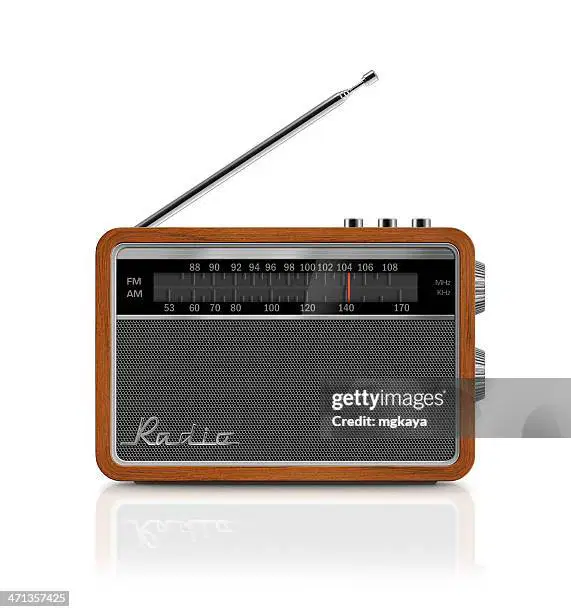
As you turn the radio dial from 90.1FM to 95.3FM, which is increasing?
amplitude
wavelength
frequency
The harder you strike a drum, the louder it sounds.
Which is increasing?
amplitude
wavelength
frequency

When you strum a guitar with more force, which increases?
amplitude
wavelength
frequency
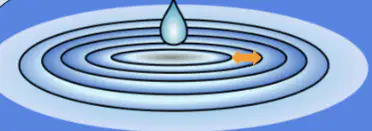
When the music teacher drops food in the fish bowl, it makes ripples in the water. Which wave property is shown in the picture?
amplitude
wavelength
frequency

A harmonica is an instrument that produces different pitches using air moving through it.
What kind of wavelength will a low-pitched have?
long wavelength
short wavelength
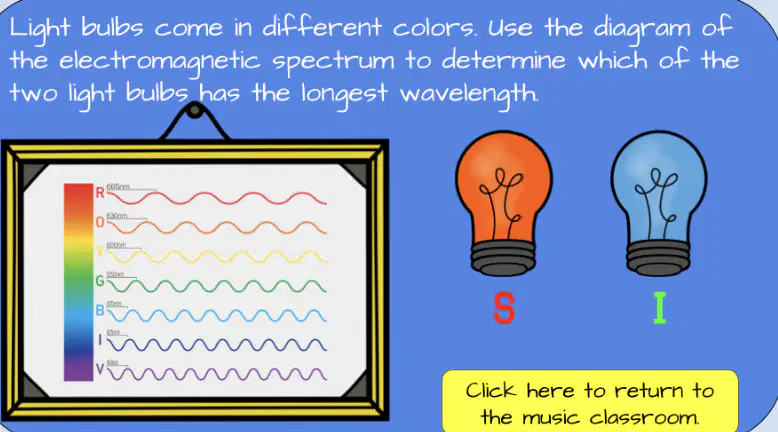
S
I
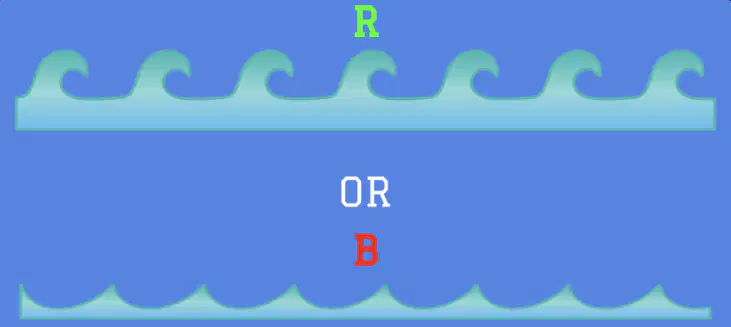
Which has larger amplitude?
R
B
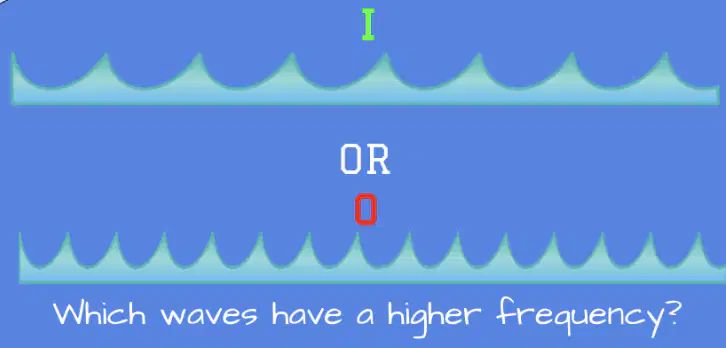
O
I

