
 Worksheets
electric charge
Total questions: 43
Worksheet time: 31mins
Electricity generated by rubbing materials is called (a) electricity.
Two negatively charged objects will (a) each other.
The tiny particles that make up everything are called (a) .
Electrons have a (a) charge.
Protons have a charge opposite to electrons, which is (a)
Materials that allow electrons to flow freely through them are called (a)
When materials are rubbed together, electrons may be (a) from one to the other
Materials that hold electrons tightly and don't allow easy flow are called (a)
The flow of electrons in a cable is what creates (a) .
What happens when a positively charged object is brought near a negatively charged object?
They repel each other.
They attract each other.
Nothing happens.
They create a spark.
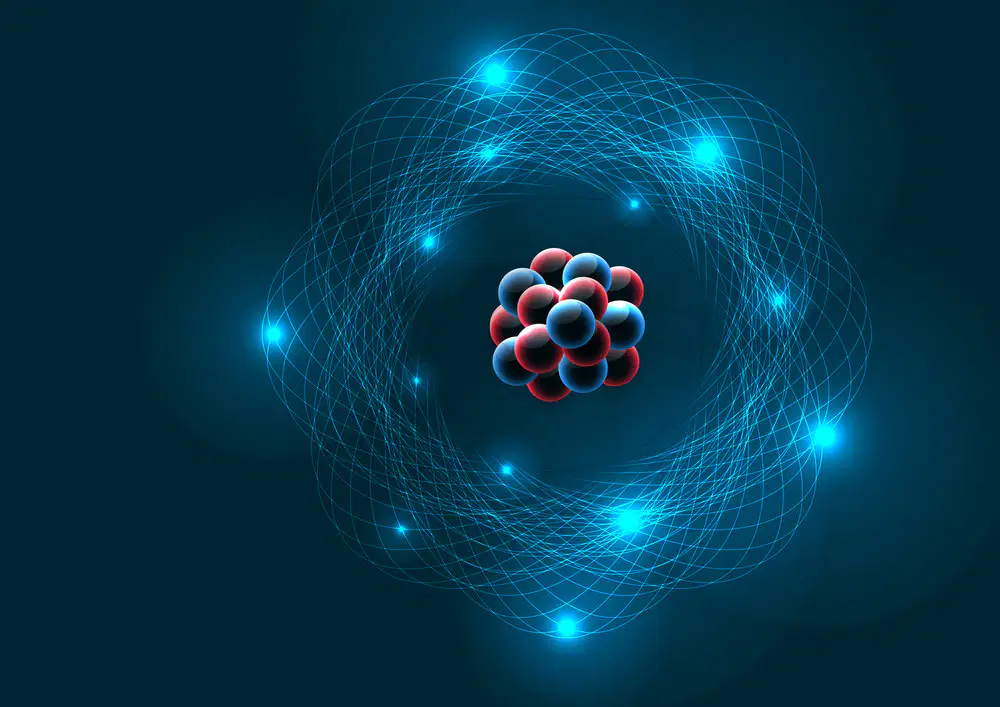
The nucleus of an atom contains
Electrons and protons only.
Protons and neutrons only.
Electrons, protons, and neutrons.
Neutrons only
Which of the following is an example of a conductor?
Rubber
Copper wire
Glass
Wood
What happens to the charge on an object that loses electrons through rubbing?
It becomes more positive.
It becomes more negative.
It remains neutral.
It disappears.
What is the main purpose of insulation around electrical wires?
To carry the current.
To create static electricity
To increase conductivity.
To prevent electric shock.
Why does rubbing two materials together cause them to become charged?
It creates new electrons.
It changes the type of charge.
It separates existing charges.
It removes all charge.
What is the role of electrons in conductors like copper wires?
They can move freely between atoms.
They are tightly bound to atoms
They are attracted to the insulation.
They prevent the flow of current.
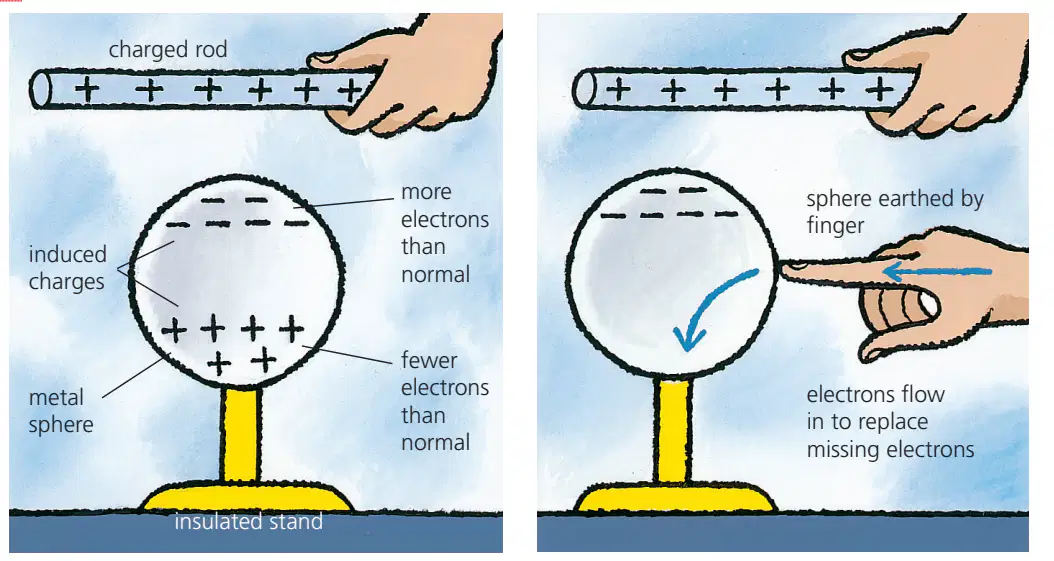
Charges that ‘appear’ on an uncharged object because of a charged object
nearby are called .......... .......... In the diagram below, a metal sphere is
being charged by induction. The sphere ends up with an opposite charge to
that on the rod, which never actually touches the sphere.
(a)

If enough charge builds up on something, electrons may be pulled through
the air and cause sparks – which can be dangerous. To prevent charge
building up, objects can be (a) : they can be connected to the ground by a
conducting material so that the unwanted charge flows away.
Unit of charge is:
Volt
Ampere
Coulomb
Electron
(a) : These are ‘in-between’ materials. They are poor conductors
when cold, but much better conductors when warm
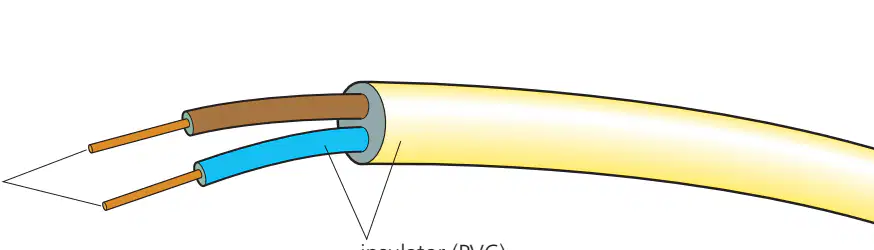
(a) are materials that let electrons pass through them.
.............. are materials that hardly conduct at all. Their electrons are tightly
held to atoms and are not free to move – although they can be transferred by
rubbing. ............ are easy to charge by rubbing because any electrons that
get transferred tend to stay where they are
(a)

Which of the following can move from one atom to another?
protons
neutrons
electrons
the nucleus
What is a static charge?
an electric charge that is unchanging
an electric charge that is fluctuating
an unbalanced charge on an object
a balanced charge on an object

What subatomic particles can you find at the center of nucleus?
electron and proton
proton only
neutron and proton
neutron and electron
What happen when unlike charges is held close to each other?
Repel
Attract
Explode
Dissolve
Which of the following is a semiconductor?
Silicon
Copper
Plastic
Brass
Which of the following is a material that does NOT allow current to easily flow through it?
Conductor
Insulator
Semiconductor
Silicon


Protons have a ______ charge.
positive
negative
neutral
I bring a positively charged rod near a neutral metal sphere, which causes the negative charge within the sphere to move toward the rod, and the positive charge to move away from the rod. This is an example of...
charging by induction
charging by polarization
charging by contact
charging by friction
I touched a negatively charged rod to a neutral object, and some negative charge was transferred to the object. This is an example of...
charging by induction
charging by polarization
charging by contact
not being smart - you should never do that
How many types of electric charges are there?
0
1
2
3
What is the frequency of a radio wave of wavelength 1.5km and velocity 300 million m/s?
200 kHz
20 kHz
450 kHz
450 Mhz
What is the wavelength of microwave radiation of velocity 300 million m/s and frequency 10 Ghz
3 m
0.03 m
33 m
33 cm
What is the refractive index of plastic if it slows the speed of light from 300 million m/s to 240 million m/s?
1.25 million
0.8 million
1.25
0.8
What is the angle of refraction in a glass block of refractive index 1.52 if the angle of incidence is 32 degrees?
20 degrees
54 degrees
23 degrees
60 degrees

