
 Worksheets
World History Semester Exam
Total questions: 102
Worksheet time: 26hrs 30mins

What is the area that is known as the land between two rivers?
Hillsborough
Europe
Mesopotamia
Fertile Crescent

Which area is known as the "cradle of civilization" because it is where civilization is believed to have begun?
Hillsborough
Europe
Chapel Hill
Fertile Crescent
Which shows correct order in the development of civilization?
settlement of fertile land ~~ surplus of crops~~rise of population & city-states~~need for government, laws, & writing system ~~ civilization
surplus of crops~~settlement of fertile land~~ need for gov't, laws, and writing system~~ rise of population & city-states ~~ civilization
need for gov't, laws, and writing system ~~ surplus of crops~~ civilization~~ settlement of fertile land~~ rise of population & city-states
civilization~~settlement of fertile land~~need for laws and gov't, and writing system~~ surplus of crops~~ rise of population and city-states

Sumer

Sumer

Sumer

Sumer

Where do natural rights come from?
Granted by a sovereign.
People are born with them.
Granted by the Church.
viewed equality in moral perspective. All men are created by God and they are born for justice. So man- made discrimination is not only unjust but also immoral.
Aristotle
Socrates
Plato
Cicero
to establish, philosophically, the ideal state, a state that would stand as a model for all emerging or existing societies currently functioning during this philosopher's time and extending into our own times. And we are to infer that any proposed changes in the policy of effecting justice in any state would have to meet the criteria of the ideal state: the Republic.
Plato
Aristotle
Socrates
Cicero
justice” means “lawfulness” and is concerned with the common advantage and happiness of the political community.
Plato
Aristotle
Socrates
Cicero
Which statement describes a characteristic of the Renaissance in Europe?
The social structure became very rigid
rebirth of Greek and Roman culture and ideas
The political structure was disorganized
Humanism decreased in importance
"It is better to be feared than loved, if you cannot be both."
Which Renaissance author was responsible for this quote?
Leonardo da Vinci
Niccolo Machiavelli
Marth Luther
Johannes Gutenberg
What was a reason why Machiavelli wrote The Prince?
To win the favor of King Ferdinand
To provide reasons for going to war
To help rulers attain greatness and establish a secure state
To win glory and fortune
According to Enlightenment ideas, governments exist to...
serve the ruler
serve the constituents / governed
serve the monarchy / royal family
serve the church

What did industrialized European powers demand from their African colonies?
Raw Resources
Slaves
Independence
Manufactured Goods
The most graceful of all was Raphael of Urbino. His colors were finer than those found in nature, and
his invention was original as anyone can realize by looking at his scenes. Which bring before our eyes
sites and buildings, the ways and customs of our own or of foreign peoples.
Michelangelo Buonarroti is supreme not in one art alone but in all three. Michelangelo has triumphed
over later artists, over the artists of the ancient world, over nature itself. He has shown his genius not
only in painting but also in the creation of sculptural works in full relief. And his fruitful and inspiring
labors have already spread their branches so wide that the world has been filled with an abundance of
fruits.
And the same holds true of Michelangelo's pictures. If it were possible to place them beside the
paintings of those Greeks and Romans they would be even more highly regarded as being as much
superior to the antiques.
We rightly admire the artists of the past who created great work, knowing their prize would be a happy
life and a generous reward. How much more, then, should we praise those rare men of genius who
create priceless work and who live not only unrewarded but in circumstances of poverty! It is true that
if the artists of our own time were justly rewarded they would produce even greater works of art, far
superior to those of the ancient world. Instead, the artist today struggles to ward off famine rather
than to win fame...
George Vasari
Explain in essay form , why the artists of the Renaissance greatly valued
the art of the classical world?
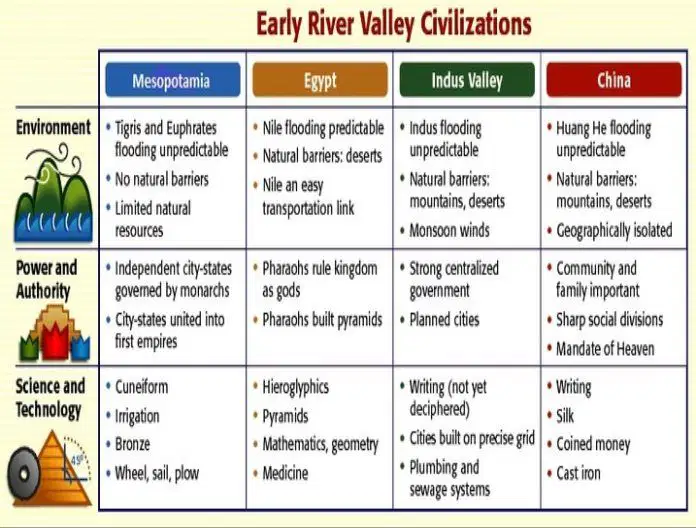
Explain why the civilization developed in areas with agriculture established?
Things they value most highly. Hence offerings are made of horses, arms, golden cloth, precious
stones and such ornaments, worthy of the greatness of the Prince...
We now consider what should be the manners and attitudes of a prince toward his subjects. A man
striving in every way to be good will meet his ruin among the great number who are not good. It is
necessary for a prince if he wishes to remain in power, to learn how not to be good.
Here the question arises. Whether it is better to be loved than feared or feared than loved. The answer
is that it would be desirable to be both. Since that is difficult, it is much safer to be feared than to be
loved, if one must choose. For on men in general this observation may be made: they are ungrateful,
fickle, and deceitful, and avid for gain...Hence a wise leader cannot and should not keep his
word when keeping it is not to his advantage or when the reasons that made him give it are no longer
valid. Since men are wicked and will not keep faith with you, you are not bound to keep faith with
them....
It is good to appear merciful, trustworthy, humane, religious, and honest, and also to be so, but always
with the mind that, when the occasion arises not to be so, you can become the opposite. It must be
understood that the necessity of preserving the state often compels him to take actions which are
opposed to loyalty, charity, humanity, and religion. As I have said, so far as he is able, a prince should
stick to the path of good but, if the necessity arises, he should know how to follow evil.
Nicolo Machiavelli
From the Prince
In Essay form explain Machiavelli's perspective in being the best ruler.
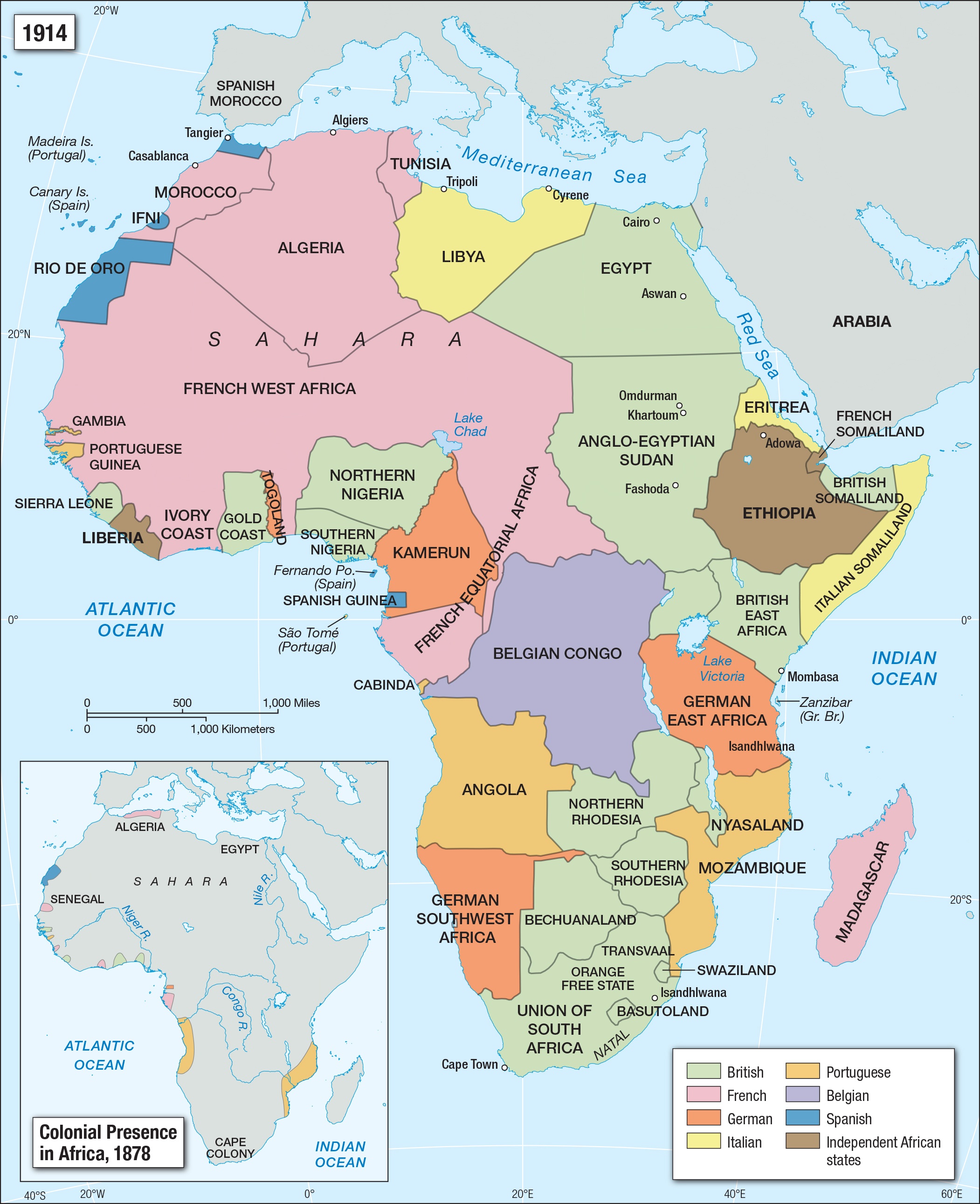
When a country controls the lands of another to gain from their resources and sends settlers...
colonialism
segregation
enclave
partition
DEDICATED MOST RESPECTFULLY TO THE BRITISH LEGISLATURE. THOSE who were involved in the
trade, manufactures, and commerce of this country thirty or forty years ago, formed but a very small
portion of the Empire. Prior to that period, Britain was agricultural. From that time to the present,
trade has increased so rapidly as to have raised commerce to an importance, that it never previously
had in any country. This change has been due to the mechanical inventions which introduced the
cotton trade into this country, and to the cultivation of cotton in America... The numerous useful
fabrics manufactured from cotton soon became objects of desire in Europe and America. The
resulting extension of the British foreign trade was such as to astonish and confound [confuse]
statesmen both at home and abroad. The immediate effects of this manufacturing phenomenon were
a rapid increase of the wealth, industry, population and political influence of the British Empire. By the
aid of which it has been enabled to contend for twenty-five years against the most formidable military
and immoral power that the world perhaps ever contained.
Source: Robert Owen, Observations on the Effect of the Manufacturing System: With Hints for the
Improvement of Those Parts of it Which are Most Injurious to Health and Morals, (Second Edition), R.
and A. Taylor, 1817 (adapted)
Based on the excerpt above, describe and explain in essay form the growth of industry and trade in Great
Britain?

Italy during the Renaissance would BEST be described as having ...
A Political disunity and religious unity
B Political unity and religious unity
C Political disunity and religious disunity
D Political unity and religious disunity
How did Locke's ideas differ from Hobbes' regarding leadership?
Locke favored a strong, absolute monarch
Locke believed people should follow the leader unconditionally
Locke supported the divine right of kings
Locke advocated for the people's right to replace bad leaders
The concept of 'consent of the governed' is most closely associated with:
Thomas Hobbes
Niccolo Machiavelli
John Locke
Ancient Greek & Roman philosophers
I give up my right to govern myself to this person or group, but only if you give up your right in the same way. When people unite under one authority, it’s called a commonwealth. This is the creation of the Leviathan, a "mortal god" that we owe peace and protection to under God.
John Locke
Thomas Hobbes
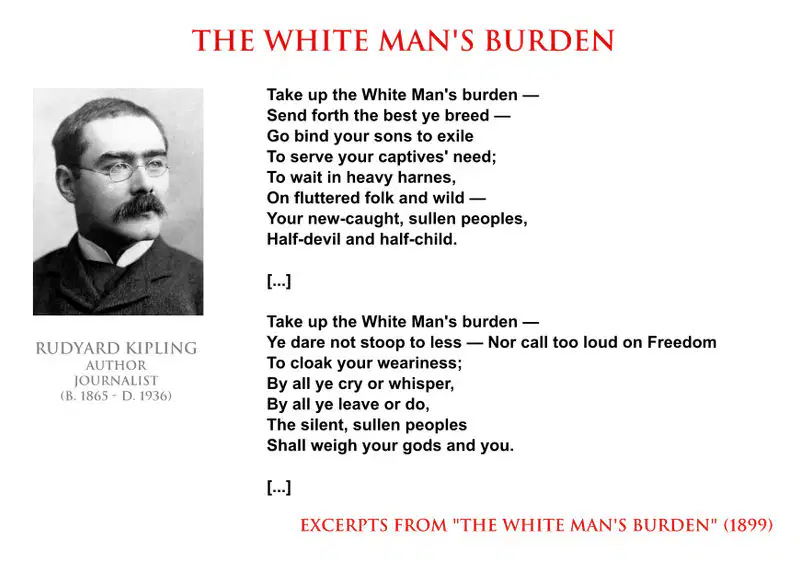
Which excerpt below shows how the author felt about the people England colonized?
A Send forth the best ye breed
B A Send forth the best ye breed
C Your new-caught, sullen peoples, Half-devil and half-child...
D Fill full the mouth of Famine And bid the sickness cease;
Send forth the best ye breed
Send forth the best ye breed
Fill full the mouth of Famine And bid the sickness cease;
Your new-caught, sullen peoples, Half-devil and half-child...

Which of the following statements accurately represents the significance of the Last Supper in world
history?
The Last Supper was a significant event in the life of Jesus Christ, as it was the final meal he
shared with his disciples before his crucifixion, and it became a central ritual in Christian
religious practice.
The Last Supper was a pivotal event in ancient Egyptian history, commemorating the
Pharaoh's final feast with his loyal subjects before his death and ascension to the afterlife.
The Last Supper was a symbolic gathering of influential leaders from various civilizations,
representing a turning point in world history as they discussed peace treaties and diplomatic
agreements.
The Last Supper was a cultural feast celebrated in medieval Europe, where members of the
aristocracy gathered to exchange gifts and indulge in lavish food and drink as a sign of
social status and wealth.
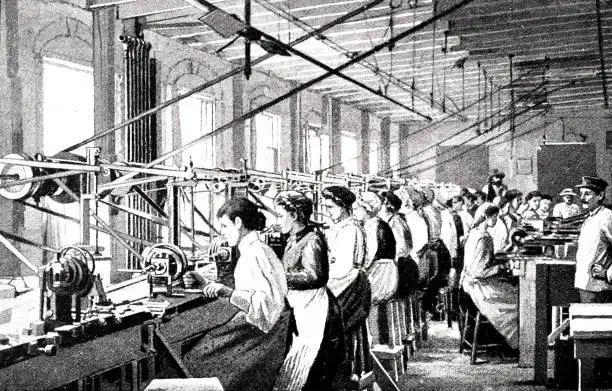
Based on the image above, what were conditions like in factories during the Industrial Revolution?
Women were largely in charge of running the factories.
Women and children formed the largest portion of the labor force.
Factories were equipped with plenty of safety equipment.
Factories were largely cheerful places.
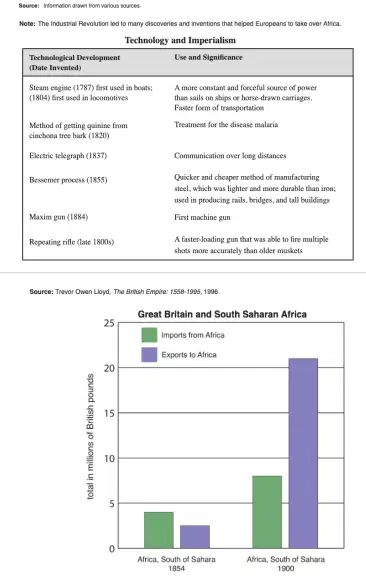
Which of the following statements
about the age of imperialism is most
likely true?
The industrial revolution had
a great impact on the growth
of imperialism.
Missionary zeal is what made
colonizing countries
successful.
The Age of Imperialism only
occurred in Africa.
The colonizers were better
than the colonized.
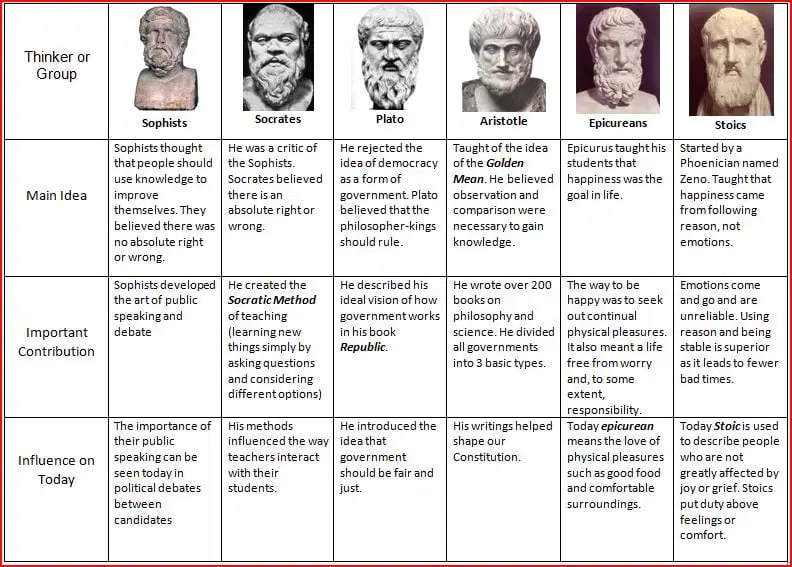
Compared to some other classical civilizations, the Greeks were more concerned with.
Religion of Salvation
philosophy and learning.
Pottery
Agriculture
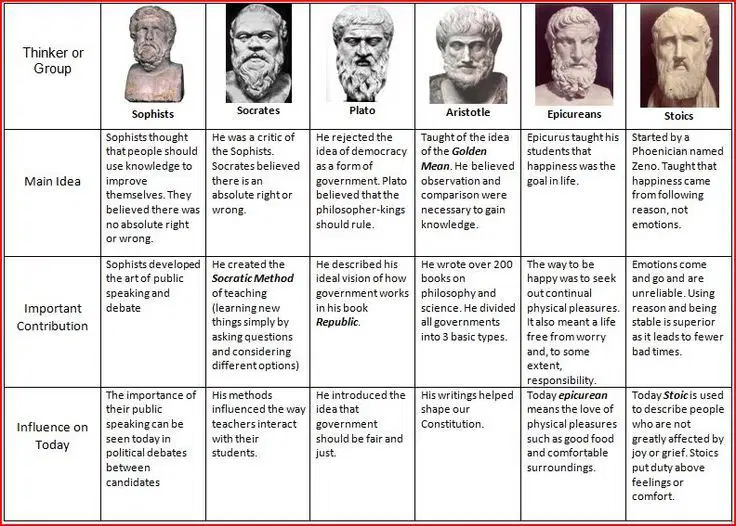
Using the chart as evidence, which of the following statements can BEST be supported?
The Sophists had the largest impact on us today.
The ancient Greeks greatly impacted American politics.
Plato would approve of the American system of government.
Socrates and the Sophists had very similar views.
Aristotle, Greek philosopher, scientist and mathematician, 384 - 324 BCE "As to the gure of the earth it must necessarily be spherical.... If it were not so, the eclipses of the moon would not have such sections as they have. For in the congurations in the course of a month the decient part takes all dierent shapes; it is straight, and concave, and convex; but in eclipses it always has the line of divisions convex; wherefore, since the moon is eclipsed in consequence of the interposition of the earth, the periphery of the earth must be the cause of this by having a spherical form. And again, from the appearance of the stars it is clear, not only that the earth is round, but that its size is not very large... For some stars are seen in Egypt or Cyprus, but are not seen in the countries to the north of these. The stars in the north are visible while they make a complete circuit, there undergo a setting... The mathematicians who try to calculate the measure of the circumference, make it amount to four hundred thousand stadia. From this, we understand that the Earth is not only spherical but is not large compared with the other stars.
Which of the following claims can be supported with evidence from Aristotle′s statements regarding the figure of the Earth?
The Earth′s shape must be straight, concave, and convex in different configurations.
The Earth′s spherical shape is necessary to explain the sections observed during lunar eclipses.
The Earth′s size is significantly larger than that of other stars.
The Earth′s circumference can be calculated to be approximately four hundred thousand stadia.
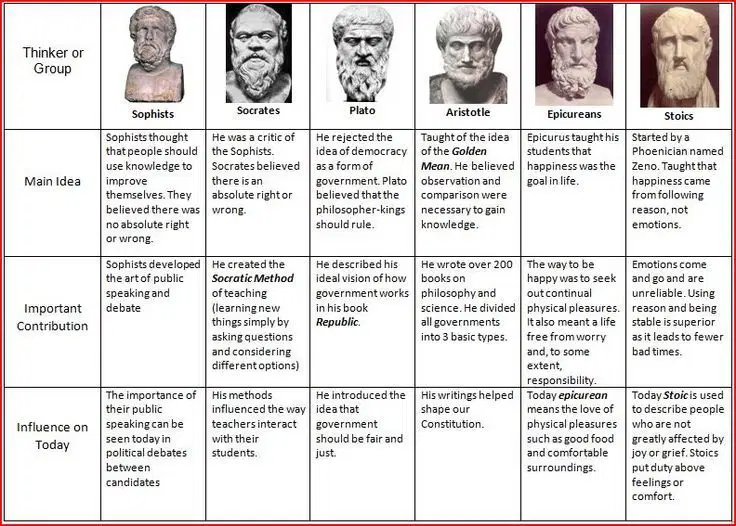
Aristotle, Greek philosopher, scientist and mathematician, 384 – 324 BCE "As to the figure of the earth it must necessarily be spherical.... If it were not so, the eclipses of the moon would not have such sections as they have. For in the configurations in the course of a month the deficient part takes all different shapes; it is straight, and concave, and convex; but in eclipses it always has the line of divisions convex; wherefore, since the moon is eclipsed in consequence of the interposition of the earth, the periphery of the earth must be the cause of this by having a spherical form. And again, from the appearance of the stars it is clear, not only that the earth is round, but that its size is not very large... For some stars are seen in Egypt or Cyprus, but are not seen in the countries to the north of these. The stars in the north are visible while they make a complete circuit, there undergo a setting... The mathematicians who try to calculate the measure of the circumference, make it amount to four hundred thousand stadia. From this, we understand that the Earth is not only spherical but is not large compared with the other stars.
Compelling Question: What was the greatest impact of the Greeks?
Claim: While the Greeks made important discoveries in math, their greatest impact was in politics.
Which of the following reasoning BEST supports this claim?
Politics is important because that is how the world works.
The Greek political system has given us the idea of democracy.
The Greek political system was much more advanced than math
The Greek political system gave the Romans their pantheon which is still with us today.

Which of the following statements accurately represents the significance of the Last Supper in world history?
The Last Supper was a significant event in the life of Jesus Christ, as it was the final meal he shared with his disciples before his crucifixion, and it became a central ritual in Christian religious practice.
The Last Supper was a pivotal event in ancient Egyptian history, commemorating the Pharaoh′s final feast with his loyal subjects before his death and ascension to the afterlife.
The Last Supper was a symbolic gathering of influential leaders from various civilizations, representing a turning point in world history as they discussed peace treaties and diplomatic agreements.
The Last Supper was a cultural feast celebrated in medieval Europe, where members of the aristocracy gathered to exchange gifts and indulge in lavish food and drink as a sign of social status and wealth.
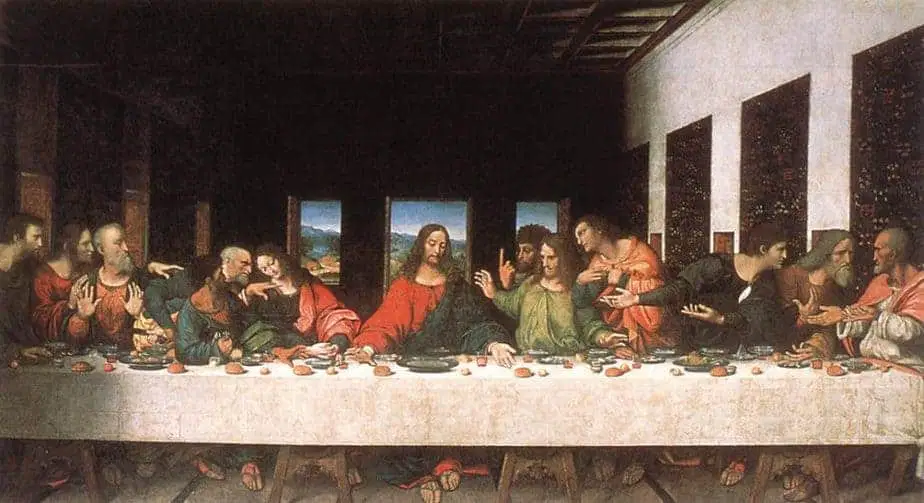
Which of the following statements can BEST be supported with evidence from the image?
The artist accurately captures what Jesus looked like.
The artist used modern painting techniques to represent a biblical scene.
The artist used archaic painting techniques to represent a classical scene.
The disciples had many disagreements.
Success came to the artists who followed. Leonardo originated the style which we like to call the modern age. In addition to the force of his exact reproduction of every detail in nature, he showed in his works an understanding of correct proportion, perfect design, and inspired grace. An artist of great vision and skill and great resources, Leonardo may be said to have painted figures that moved and breathed. The most graceful of all was Raphael of Urbino. His colors were finer than those found in nature, and his invention was original as anyone can realize by looking at his scenes. Which bring before our eyes sites and buildings, the ways and customs of our own or of foreign peoples. Michelangelo Buonarroti is supreme not in one art alone but in all three. Michelangelo has triumphed over later artists, over the artists of the ancient world, over nature itself. He has shown his genius not only in painting but also in the creation of sculptural works in full relief. And his fruitful and inspiring labors have already spread their branches so wide that the world has been filled with an abundance of fruits. And the same holds true of Michelangelo′s pictures. If it were possible to place them beside the paintings of those Greeks and Romans they would be even more highly regarded as being as much superior to the antiques. We rightly admire the artists of the past who created great work, knowing their prize would be a happy life and a generous reward. How much more, then, should we praise those rare men of genius who create priceless work and who live not only unrewarded but in circumstances of poverty! It is true that if the artists of our own time were justly rewarded they would produce even greater works of art, far superior to those of the ancient world. Instead, the artist today struggles to ward off famine rather than to win fame...
Georgio Vasari
Which excerpt could best be used to support a claim that the artists of the Renaissance greatly valued the art of the classical world?
An artist of great vision and skill and great resources, Leonardo may be said to have painted figures that moved and breathed.
The most graceful of all was Raphael of Urbino. His colors were finer than those found in nature, and his invention was original as anyone can realize by looking at his scenes.
If it were possible to place them beside the paintings of those Greeks and Romans they would be even more highly regarded as being as much superior to the antiques.
Michelangelo has triumphed over later artists, over the artists of the ancient world, over nature itself.
It is the custom of those who are anxious to find favor in the eyes of a prince to present him with things they value most highly. Hence offerings are made of horses, arms, golden cloth, precious stones and such ornaments, worthy of the greatness of the Prince... We now consider what should be the manners and attitudes of a prince toward his subjects. A man striving in every way to be good will meet his ruin among the great number who are not good. It is necessary for a prince if he wishes to remain in power, to learn how not to be good. Here the question arises. Whether it is better to be loved than feared or feared than loved. The answer is that it would be desirable to be both. Since that is difficult, it is much safer to be feared than to be loved, if one must choose. For on men in general this observation may be made: they are ungrateful, fickle, and deceitful, and avid for gain...Hence a wise leader cannot and should not keep his word when keeping it is not to his advantage or when the reasons that made him give it are no longer valid. Since men are wicked and will not keep faith with you, you are not bound to keep faith with them.... It is good to appear merciful, trustworthy, humane, religious, and honest, and also to be so, but always with the mind that, when the occasion arises not to be so, you can become the opposite. It must be understood that the necessity of preserving the state often compels him to take actions which are opposed to loyalty, charity, humanity, and religion. As I have said, so far as he is able, a prince should stick to the path of good but, if the necessity arises, he should know how to follow evil.
Nicolo Machiavelli
From the Prince
Which of the following attitudes and behaviors does Machiavelli suggest a prince should adopt, according to the passage?
Always remain truthful and loyal, even when it is not advantageous.
Be both loved and feared by the people.
Prioritize appearing merciful, trustworthy, humane, religious, and honest.
Adapt and use deception or cruelty when necessary to preserve the state.
It is the custom of those who are anxious to find favor in the eyes of a prince to present him with things they value most highly. Hence offerings are made of horses, arms, golden cloth, precious stones and such ornaments, worthy of the greatness of the Prince... We now consider what should be the manners and attitudes of a prince toward his subjects. A man striving in every way to be good will meet his ruin among the great number who are not good. It is necessary for a prince if he wishes to remain in power, to learn how not to be good. Here the question arises. Whether it is better to be loved than feared or feared than loved. The answer is that it would be desirable to be both. Since that is difficult, it is much safer to be feared than to be loved, if one must choose. For on men in general this observation may be made: they are ungrateful, fickle, and deceitful, and avid for gain...Hence a wise leader cannot and should not keep his word when keeping it is not to his advantage or when the reasons that made him give it are no longer valid. Since men are wicked and will not keep faith with you, you are not bound to keep faith with them.... It is good to appear merciful, trustworthy, humane, religious, and honest, and also to be so, but always with the mind that, when the occasion arises not to be so, you can become the opposite. It must be understood that the necessity of preserving the state often compels him to take actions which are opposed to loyalty, charity, humanity, and religion. As I have said, so far as he is able, a prince should stick to the path of good but, if the necessity arises, he should know how to follow evil. Nicolo Machiavelli
From the Prince
From Machiavelli′s point of view, which of the following would be the best ruler?
A leader who is always honest and virtuous
A leader who uses his subjects to gain more power and wealth.
A leader who knows when to be honest and when to lie.
A leader who is loved, but not respected.
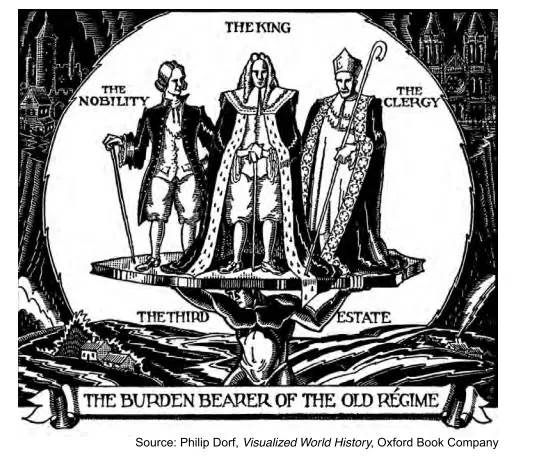
The French Revolution was largely caused by which of the following?
The unequal tax burden placed on the nobility.
. The struggle for power between the clergy and the king.
The unequal tax burden on the commoners.
The commoners′ seizure of clergy land.
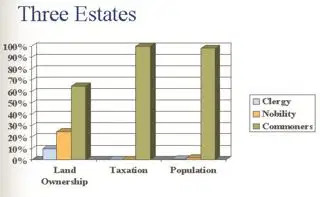
Which of the following statements is BEST supported by evidence from the chart and image?
The majority of the burden was laid on the king.
The clergy had it the best.
Most of the land was owned by the clergy and nobility.
The smallest groups benefitted the most.
Excerpt from the Declaration of the Rights of Man and of the Citizen, 1789 Articles 1. Men are born and remain free and equal in rights. Social distinctions may be founded only upon the general good. 2. The aim of all political association is the preservation of natural and imprescriptible [inalienable] rights of man. These rights are liberty, property, security, and resistance to oppression. 3. The principle of all sovereignty resides essentially in the nation. No body nor individual may exercise any authority which does not proceed directly from the nation.... Source: The Avalon Project at Yale Law School Excerpt from the Declaration of the Rights of Woman and Female Citizen, 1791 I. Woman is born free and remains equal to man in rights. Social distinctions can only be founded on common service. II. The aim of all political associations is to preserve the natural and inalienable rights of Woman and Man: these are rights to liberty, ownership, safety, and, above all, resistance to oppression. III. The principle of sovereignty resides in essence in the Nation, which is only the coming together of Woman and Man: authority emanating elsewhere can be exercised by no body or individual.... Source: Olympe de Gouges
Which of the following quotes can BEST be used as evidence to support the claim that the French commoners sought a more peaceful life?
Social distinctions may be founded only upon the general good.
These rights are liberty, property, security, and resistance to oppression.
The principle of sovereignty resides essentially in the nation.
No body nor individual may exercise any authority which does not proceed directly from the nation.
Excerpt from the Declaration of the Rights of Man and of the Citizen, 1789 Articles 1. Men are born and remain free and equal in rights. Social distinctions may be founded only upon the general good. 2. The aim of all political association is the preservation of natural and imprescriptible [inalienable] rights of man. These rights are liberty, property, security, and resistance to oppression. 3. The principle of all sovereignty resides essentially in the nation. No body nor individual may exercise any authority which does not proceed directly from the nation.... Source: The Avalon Project at Yale Law School Excerpt from the Declaration of the Rights of Woman and Female Citizen, 1791 I. Woman is born free and remains equal to man in rights. Social distinctions can only be founded on common service. II. The aim of all political associations is to preserve the natural and inalienable rights of Woman and Man: these are rights to liberty, ownership, safety, and, above all, resistance to oppression. III. The principle of sovereignty resides in essence in the Nation, which is only the coming together of Woman and Man: authority emanating elsewhere can be exercised by no body or individual....
Source: Olympe de Gouges
The author of the second document would MOST LIKELY agree with which of the following?
Might makes right.
The common man is the most important figure in France.
Women and men are of equal value.
The nobility benefits society
Who was the founder of Christianity?
Abraham
Jesus
Siddhartha Gautama
Muhammad

Jesus 's teachings contained many ideas from the Jewish tradition. Which of the following was NOT one of them?
Monotheism or belief in one god
Principles of the 10 Commandments
Being obedient to God's wishes
That he was the messiah sent by god

Why did the Roman governor Pontius Pilate have Jesus arrested?
For defying the authority of Rome
For disorderly conduct
For inciting a mob
For refusing to pay his taxes
The major difference between Judaism and Christianity is that Christians believe —
Jesus is the son of God
Christianity is polytheistic
Jesus is only a prophet
Jesus and Abraham were both sons of God
Which Da Vinci artwork depicts man in nature while engaging in a study of the proper proportions of man?
Virgin of the Rocks (1483-1486)
The Last Supper (1498)
The Vitruvian Man (1485)
Lady with an Ermine (1489-90)
Why is Leonardo Da Vinci's "Mona Lisa" so notable?
The vivid imagery
The incredibly realistic depiction of the merchant's wife, Lisa Gherardini
The mystery of her smile and the capturing of a moment mid-emotion
The soulfulness of her eyes

What type of things could da Vinci do? (select all that apply)
Artist
Architect
Musician
Scientist
Mathematician

When someone is good at everything they try, we call them...
Awesome!
a Renaissance Man
Smart
a Genius
Leonardo was considered a Renaissance Man because
he lived during the Renaissance time period.
he was very talented and educated in a variety of subjects and arts.
he owned his own workshop.
he designed weapons of war.
WHAT WAS THE LAST SUPPER?
THE LAST SUPPER WAS PAINT TO SHOW THE BETRAYAL TO JESUS
IT WAS PAINT IN 1945
THE LAST SUPPER WAS PAINTED TO SHOW THE BETRAYAL TO JESUS

How does Leonardo's "Last Supper" compare to the "Mona Lisa?"
The Last Supper was Leonardo's first major work, while the Mona Lisa was his last
The Last Supper celebrated Christianity, while the Mona Lisa was a simple portrait
Both the Last Supper and the Mona Lisa are housed at the Louvre in Paris
The Mona Lisa is a popular work, while the Last Supper is considered offensive

Why did Leonardo leave so much work unfinished?
He just didn't want to.
He didn't have enough money.
Not enough time.
He was distracted by his inventions.
How did Leonardo da Vinci write his notes?
Backwards
Hieroglyphs
Works version 10.5
Rich Text Format

Where was Da Vinci born?
New York
Italy
France
Spain
the chuch
critical thinking
feudalism
trade
Religion
Classical culture
Life (after the black death)
Middle Ages
Florence
Rome
Venice
Milan

Which of these famous structures did Michelangelo paint?
the Louvre
the Coliseum
the Sistine Chapel
the Eiffel Tower

The statue of "David" was created by _____________.
Da Vinci
Michelangelo
Erasmus
Gutenberg
The Pope
The King
Medici
Sforza

What were the consequences if a ruler lost the Mandate of Heaven?
Natural disasters, famines, and other calamities would occur, indicating that the ruler had lost the favor of the gods. This could lead to rebellion and the overthrow of the ruler's dynasty.
The ruler would be forgiven if they made a large enough sacrifice to the gods
The ruler would be forced to abdicate but could still retain some power
The ruler would be exiled to a foreign land
According to ancient Chinese beliefs, how was the Mandate of Heaven determined?
The Mandate of Heaven was determined through the belief that the ruler's right to govern was granted by the gods or divine forces.
The Mandate of Heaven was determined by the ruler's birthright and hereditary lineage.
The Mandate of Heaven was determined based on the ruler's physical strength and combat skills.
The Mandate of Heaven was determined through a democratic election process.
What was the result of the English Bill of Rights?
Parliament gains power
Parliament loses power
American Colonies gain independence
Tolerance is granted towards Catholics


Catherine the Great is remembered has doing what for Russia.
Improving education for women.
Bringing literature, music, and art to the people.
Modernizing Russia long European lines.
All of the above.
Catherine the Great became Empress when
her husband, Peter III, died.
she had had her husband left the country.
she had her husband removed from being the Czar.
What does Absolute Ruler mean?
a ruler who is sure of their power
A ruler who is involved in all aspects of government and public life
someone who has to answer to a separate government body
a ruler who shares power with the parliament

[p3] Which of these describe the actions & rule of Catherine II of Russia? Read the text carefully to learn the correct choices.
She seemed to favor enlightened reforms, but did nothing because she didn't want to anger the Russian nobles.
She favored the landed nobility, leading to worse conditions for Russia's serfs & eventually to rebellion across southern Russia.
She expanded Russia's territory, taking territory from the Turks & dividing Poland with Prussia & Austria.
She wrote a new law code that recognized the principle of equality of all people before the law.
She ruled Russia from 1740-1761.
One belief held by John Locke during the age of the Enlightenment was…
Monarchies should be upheld across Europe
Citizens must enter into a strict social contract to provide law and order in society
Governments exist to protect the natural rights of citizens
Separation of powers was necessary to the success of the government
John Locke believed a government should not deprive citizens of their natural rights of...
freedom of religion
life, liberty, and property
owning a weapon
a fair and speedy trial
Which of the following are examples of Enlightenment thinking?
I believe that humans are naturally evil and selfish.
I believe in a strict social contract that limits rights and freedoms.
I believe that humans are naturally good and can progress.
I believe in increasing the power of the church and monarchy
Why did Hobbes believe it was necessary to have all the power in the hands of 1 King?
It would prevent war and chaos
They could make rules faster
They could declare war against enemies of the kingdom
It would be easier to make decisions

Who wrote in his book, Leviathan, that the people needed a strong, powerful ruler?
John Locke
Denis Diderot
Thomas Hobbes
Voltaire

Which of the following is one of the similarities between the 3 major Middle East religions?
belief in reincarnation
polytheistic (believe in multiple Gods)
monotheistic (belief in one god)
followers of Buddha


Which religion's holy book is the Bible
Hinduism
Islam
Christianity
Islam
Judaism
the founder of Islam was...
Muhammad
no known founder
Jesus
Abraham
What is Polytheism?
belief in one god
belief in more than one god
belief in no god
all of the above

Put the religions in order from oldest to newest:
Judaism, Christianity, Islam
Christianity, Judaism, Islam
Judaism, Islam, Christianity
Christianity, Islam, Judaism


