
Font size
 Worksheets
AP Bio Unit 2
Total questions: 78
Worksheet time: 1hrs 5mins
Cystic fibrosis is a genetic condition that is associated with defects in the CFTR protein found in the membrane. Which organelle synthesized the protein?
Golgi Bodies
Rough ER
Smooth ER
Lysosome
Cystic fibrosis is a genetic condition that is associated with defects in the CFTR protein found in the membrane. After being synthesized, where does it go to be modified, packaged, and sorted?
Golgi Bodies
Rough ER
Smooth ER
Lysosome

The following data was collected by observing subcellular structures of three different types of cells. How can you determine these are eukaryotic cells?
They have ribosomes
They have membrane bound organelles
They have DNA
They have a plasma membrane

The following data was collected by observing subcellular structures of three different types of eukaryotic cells. Identify a function of Cell X.
Detoxification
Secretion of Proteins
Motility
Storage

The following data was collected by observing subcellular structures of three different types of eukaryotic cells. Identify a function of Cell Y.
Detoxification
Secretion of Proteins
Motility
Storage

The following data was collected by observing subcellular structures of three different types of eukaryotic cells. Identify a function of Cell Z.
Detoxification
Secretion of Proteins
Motility
Storage
How does the location of the ribosome affect the type of protein product?
Free ribosomes synthesize cytosolic proteins, while bound ribosomes synthesize membrane proteins
Free ribosomes synthesize membrane proteins, while bound ribosomes synthesize cytosolic proteins
Free ribosomes synthesize proteins for the mitochondria, while bound ribosomes synthesize cytosolic proteins
Free ribosomes synthesize cytosolic proteins, while bound ribosomes synthesize proteins for the mitochondria
Where is the mRNA (used for synthesis of proteins) made?
Nucleus
Ribosome
Rough ER
Smooth ER
What organelle is responsible for storing calcium?
Lysosome
Smooth ER
Rough ER
Golgi Bodies
Tay Sachs results from a build-up of fats due to an error in which organelle that is responsible for digesting macromolecules?
Rough ER
Smooth ER
Lysosome
Golgi Bodies

The sodium-potassium (Na+/K+) pump functions like an anti-porter transporting Na+ and K+ across membranes using ATP. This protein spans the membrane with intracellular and extracellular domains. It has a binding site for Na+, K+, and ATP. An experiment was conducted to determine the locations of these binding sites. Artificial cells were created and incubated in buffers containing ATP, ouabain (or oubain), Na+, and K+ in varying combinations inside and outside of the cell as indicated in the chart. The transport of Na+ and K+ was measured to determine activity of the Na+/K+ pump. Which of the following conclusions is supported by the data?
Ouabain does not disrupt ATP binding to the Na+/K+ pump.
ATP is required for transport of Na+ and not for transport of K+.
The ATP binding site of the Na+/K+ pump is located on the intracellular domain of the pump.
The ATP binding site of the Na+/K+ pump is located on the extracellular domain of the pump.

Paramecia are unicellular protists that have contractile vacuoles to remove excess intracellular water. In an experimental investigation, Paramecia were placed in salt solutions of increasing osmolarity. The rate at which a Paramecium's contractile vacuole contracted to pump out excess water was determined and plotted against osmolarity of the solutions, as shown in the graph. Which of the following is the correct explanation for the data?
At higher osmolarity, lower rates of contraction are required because more salt diffuses into the Paramecium.
In an isosmotic salt solution, there is no diffusion of water into or out of the Paramecium, so the contraction rate is zero.
The contraction rate increases as the osmolarity decreases because the amount of water entering the Paramecium by osmosis increases.
The contractile vacuole is less efficient in solutions of high osmolarity because of the reduced amount of ATP produced from cellular respiration.

An experiment was set up to determine the movement of molecules through a dialysis-tubing bag into water. A dialysis-tubing bag containing 5% lactose and 5% fructose was placed in a beaker of distilled water, as illustrated. After four hours, fructose is detected in the distilled water outside of the dialysis-tubing bag, but lactose is not. What conclusions can be made about the movement of molecules in this experiment?
Fructose, being a monosaccharide, diffused through the dialysis bag into the distilled water. However, lactose, being a disaccharide, could not diffuse through the dialysis bag.
Fructose was homogenized by lactose, allowing the fructose to diffuse through the dialysis bag and into the distilled water. Lactose is not homogenized, so it could not pass through the dialysis bag.
Fructose and lactose are oppositely charged and separated out due to the force of repulsion.
Fructose diffused because of the pore specificity of the semipermeable membrane, not because of its concentration gradient.
Which plasma membrane component can be either found on its surface or embedded in the membrane structure?
carbohydrates
cholesterol
glycolipid
protein
In addition to a plasma membrane, a eukaryotic cell has organelles, such as mitochondria, that also have membranes. In which way would these membranes differ?
The proportion of phosphate within the phospholipids will vary.
Only certain membranes contain phospholipids.
Only certain membranes are selectively permeable.
The proportions of proteins, lipids, and carbohydrates will vary.

Which characteristic of a phospholipid, shown here, increases the fluidity of the membrane?
cholesterol
its head
saturated fatty acid tail
double bonds in the fatty acid tail
How would an organism maintain membrane fluidity in an environment where temperatures fluctuated from very high to very low?
Greater proportion of unsaturated phospholipids in membranes.
Greater proportion of saturated phospholipids in membranes.
Greater proportion of carbohydrates in membranes.
Greater proportion of proteins in membranes.
According to the fluid mosaic model of the plasma cell membrane, what is the location of carbohydrates in the cell membranes?
Carbohydrates are in contact with the aqueous fluid both inside and outside the cell.
Carbohydrates are present only on the interior surface of a membrane.
Carbohydrates are present only on the exterior surface of a membrane.
Carbohydates span only the interior of a membrane.

Identify the principal driving movement in diffusion, such as depicted here.
concentration gradient
membrane surface area
particle size
temperature
Which of the following is an example of passive transport across a membrane?
the movement of H+ into a thylakoid disc during photosynthesis
the uptake of glucose in the intestine
the uptake of mineral ions into root hair cells of plants
the movement of water from the descending loop of a nephron into the interstitium
Water moves via osmosis across plasma cell membranes in which direction?
from an area with a high concentration of other solutes to a lower one
from an area with a high concentration of water to one of lower concentration
from an area with a low concentration of water to one of higher concentration.
throughout the cytoplasm
What problem is faced by organisms that live in fresh water?
They will have higher concentrations of body solutes.
Without compensating mechanisms, their bodies tend to take in too much water.
They have no way of controlling their tonicity.
Their bodies tend to lose too much water to their environment.
Why must active transport of molecules across plasma membranes function continuously?
Diffusion cannot occur in certain cells.
Diffusion is constantly moving solutes in opposite directions.
Facilitated diffusion works in the same direction as active transport.
Not all membranes are amphiphilic.
How does the sodium-potassium pump make the interior of the cell negatively charged?
by expelling anions
by pulling in anions
by expelling more cations than it takes in
by taking in and expelling an equal number of cations
What happens to the membrane of a vesicle after exocytosis?
It leaves the cell.
It is disassembled by the cell.
It fuses with and becomes part of the plasma membrane.
It is used again in another exocytosis event.

Why do phospholipids tend to spontaneously orient themselves into something resembling a membrane such as the lipid-bilayer sphere, single-layer lipid sphere, and lipid-bilayer sheet?
Phospholipids are amphipathic (having both hydrophilic and hydrophobic parts) molecules. The polar head faces towards water and the nonpolar fatty acid tails face towards other fatty acid tails.
Phospholipids are amphipathic molecules. The nonpolar head faces towards other fatty acid tails and the polar fatty acid tails face towards water.
Phospholipids are hydrophilic molecules. The polar head faces towards water and the nonpolar fatty acid tails face towards other fatty acid tails.

The fluid mosaic model described the plasma membrane, seen here, as a mosaic of components. Why is it advantageous for the plasma membrane to be fluid in nature?
Fluidity allows greater flexibility to the cell and motion of membrane components required for transport.
Fluidity helps only in transport of some materials, and does not contribute to the flexibility.
Fluidity helps in maintaining the pH of intracellular fluid, and helps in maintaining the physiological pH of the cell.
Fluidity helps in providing mechanical strength to the plasma membrane.
Which explanation identifies how the following affect the rate of diffusion: molecular size, temperature, solution density, and the distance that must be traveled?
Larger molecules move faster than lighter molecules. Temperature affects the molecular movement. Density is directly proportional to the molecular movement. Greater distance slows the diffusion.
Larger molecules move slower than lighter molecules. Increasing or decreasing temperature increases or decreases the energy in the medium, affecting molecular movement. Density is inversely proportional to molecular movement. Greater distance slows the diffusion.
Larger molecules move slower than lighter molecules. Temperature does not affect the rate of diffusion. Density is inversely proportional to molecular movement. Greater distance speeds up the diffusion.
Larger molecules move slower than lighter molecules. Increasing or decreasing temperature increases or decreases the energy in the medium, affecting molecular movement. Density is inversely proportional to the molecular movement. Greater distance speeds up the diffusion.

Both of the regular intravenous solutions administered in medicine, normal saline and lactated Ringer’s solution, are isotonic, such as seen in the middle image here. Why is this important?
Isotonic solutions maintain equilibrium and avoid the exchange of materials to or from the blood.
Isotonic solutions disrupt equilibrium and allow better exchange of materials in the blood.
Isotonic solutions increase the pH of blood and allow better absorption of saline in blood.
Isotonic solutions decrease the pH of the blood and avoid the exchange of materials to or from the blood.

If a doctor injected a patient with what was labeled as an isotonic saline solution, but then the patient died, and an autopsy revealed that several of the patient's red blood cells had burst, such as in the image on the right, would it be true that the injected solution was really isotonic? Why or why not?
False, the solution was hypertonic.
False, the solution was osmotic.
False, the solution was hypotonic.
True, the solution was isotonic.
The sodium-potassium (Na+/K+) pump functions like an anti-porter transporting Na+ and K+ across membranes using ATP. This protein spans the membrane with intracellular and extracellular domains. It has a binding site for Na+, K+, and ATP. An experiment was conducted to determine the locations of these binding sites. Artificial cells were created and incubated in buffers containing ATP, ouabain (or oubain), Na+, and K+ in varying combinations inside and outside of the cell as indicated in the chart. The transport of Na+ and K+ was measured to determine activity of the Na+/K+ pump. Which of the following conclusions is supported by the data?
Ouabain does not disrupt ATP binding to the Na+/K+ pump.
ATP is required for transport of Na+ and not for transport of K+.
The ATP binding site of the Na+/K+ pump is located on the intracellular domain of the pump.
The ATP binding site of the Na+/K+ pump is located on the extracellular domain of the pump.
Paramecia are unicellular protists that have contractile vacuoles to remove excess intracellular water. In an experimental investigation, Paramecia were placed in salt solutions of increasing osmolarity. The rate at which a Paramecium's contractile vacuole contracted to pump out excess water was determined and plotted against osmolarity of the solutions, as shown in the graph. Which of the following is the correct explanation for the data?
At higher osmolarity, lower rates of contraction are required because more salt diffuses into the Paramecium.
In an isosmotic salt solution, there is no diffusion of water into or out of the Paramecium, so the contraction rate is zero.
The contraction rate increases as the osmolarity decreases because the amount of water entering the Paramecium by osmosis increases.
The contractile vacuole is less efficient in solutions of high osmolarity because of the reduced amount of ATP produced from cellular respiration.
An experiment was set up to determine the movement of molecules through a dialysis-tubing bag into water. A dialysis-tubing bag containing 5% lactose and 5% fructose was placed in a beaker of distilled water, as illustrated. After four hours, fructose is detected in the distilled water outside of the dialysis-tubing bag, but lactose is not. What conclusions can be made about the movement of molecules in this experiment?
Fructose, being a monosaccharide, diffused through the dialysis bag into the distilled water. However, lactose, being a disaccharide, could not diffuse through the dialysis bag.
Fructose was homogenized by lactose, allowing the fructose to diffuse through the dialysis bag and into the distilled water. Lactose is not homogenized, so it could not pass through the dialysis bag.
Fructose and lactose are oppositely charged and separated out due to the force of repulsion.
Fructose diffused because of the pore specificity of the semipermeable membrane, not because of its concentration gradient.
1.) They act like gatekeepers, only let certain things in.
2.) Enzyme receptors embedded in the membrane.
when some molecules can cross the membrane while others cannot.


When particles move from low to high concentration
Passive Transport
Active Transport

Your gums are swollen. How will rinsing with warm salt water help the swelling?
swollen gums will absorb the salt
salt lowers the temp
salt goes against the concentration gradient
water in the gums will diffuse out of the cells


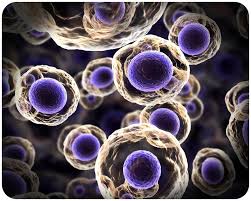


Where are lipids formed?
Rough ER
Smooth ER
Nucleus
Ribosomes

The difference in electric potential between the interior and the exterior of a cell is called:
Concentration Difference
Membrane Potential
Cotransport
Concentration Potential
The combination of an ion's concentration gradient and membrane potential is called
action potential
electrochemical potential
electrochemical gradient
action gradient
Which of the following describes an appropriate water movement pathway?
hypotonic solution to hypertonic solution
hypertonic solution to hypotonic solution
hypertonic solution to isotonic solution
isotonic solution to hypotonic solution

