Wayground logo

Free Printable Worksheets

Font size

S
M
L
XL
Worksheets

WAM 33

Total questions: 106

Worksheet time: 4hrs 8mins

Name
Class
Date
1.
∆ABC≅∆XYZ
which is true?
a)
AB≅XY
b)
AB≅YX
c)
AB≅XZ
d)
BC≅CB
2.
∆ABC ≅ ∆LMN. Which statement is NOT true?
a)
LM ≅ AB
b)
∆CAB ≅ ∆NLM
c)
∠C ≅ ∠N
d)
BC ≅ ML
3.
a)
A
b)
B
c)
C
d)
D
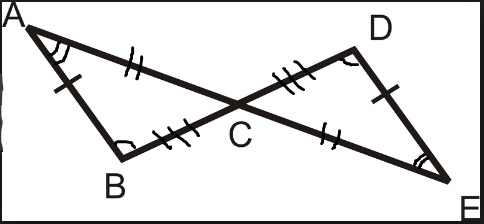
4.
∠E ≅ ∠ __
a)
A
b)
B
c)
C
d)
D
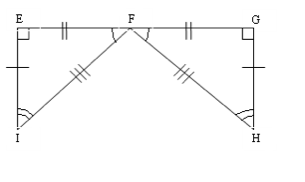
5.
Which segment is congruent to EF? 
a)
HG
b)
HF
c)
GF
d)
IE
6.
Name the corresponding angle or side.
a)
A
b)
B
c)
C
d)
D
7.
Which statement is the congruence statement for the 2 triangles?
a)
∆EFG ≅ ∆MLF
b)
∆EFG ≅ ∆MFL
c)
∆EGF ≅ ∆FML
d)
∆GEF ≅ ∆FML
8.
Use the congruence statement and figure to find the missing part of the statement
a)
∠FEG
b)
∠HEF
c)
∠EFH
d)
∠H
9.

Debbie is painting an image on a piece of art canvas. The image she is reproducing is 3 inches by 5 inches. She enlarges the dimensions 4 times. Which of the following statements is NOT true?

a)

The perimeter of the original image and the perimeter of the new image are related by a scale factor of 4.

b)

The area of the new image is 4 times the area of the original image.

c)

The area of the original image and the area of the new image are related by a scale factor of 16.

d)

The perimeter of the original image is 14\frac{1}{4} the perimeter of the new image.

10.

Which of the following statements is NOT true if quadrilateral ABCD is congruent to quadrilateral RSTU?

a)

CD‾ ≅ TU‾\overline{CD}\ \cong\ \overline{TU}

b)

AB‾ ≅ RS‾\overline{AB}\ \cong\ \overline{RS}

c)

∠T ≅ ∠C\angle T\ \cong\ \angle C

d)

∠A ≅ ∠U\angle A\ \cong\ \angle U

11.

Which of the following statements is NOT true if  ΔJKL\Delta JKL  is congruent to  ΔRST\Delta RST  ?

a)

 ∠J ≅ ∠R\angle J\ \cong\ \angle R  

b)

 ∠K ≅ ∠T\angle K\ \cong\ \angle T  

c)

 JK‾ ≅ RS‾\overline{JK}\ \cong\ \overline{RS}  

d)

 KL‾ ≅ ST‾\overline{KL}\ \cong\ \overline{ST}  

12.

Line segment AB is translated left 2 units and down 4 units to form line segment A'B'. What is the distance between point A' and point B'?

a)

2 units

b)

4 units

c)

6 units

d)

8 units

13.

Which of the following images shows a rotation of 180o?

a)
b)
c)
d)
14.

Line segment CD is translated left 5 units and down 1 unit to form line segment C'D'. What is the distance between point C' and point D'?

a)

3 units

b)

4 units

c)

5 units

d)

6 units

15.

A 115 degree angle is translated 4 units right and 1 unit down. What is the measure of the angle in the image?

a)

41 degrees

b)

14 degrees

c)

15 degrees

d)

115 degrees

16.
A turn is also called a ___________.
a)
Translation
b)
Reflection
c)
Rotation
d)
Transformation
17.
Name the transformation.
a)
Translation
b)
Reflection
c)
Rotation
18.
When you reflect a shape, you ______ over an axis or line.
a)
Flip
b)
Rotate
c)
Slide
d)
Expand
19.
Identify the transformation from ABC to A'B'C'.
a)
90o clockwise rotation
b)
90o counter clockwise rotation
c)
Reflection across the y-axis
d)
Reflection across the x-axis
20.
The image shows what type of transformation
a)
Rotation
b)
Translation
c)
Reflection
21.
What is the angle of rotation for this counterclockwise rotation about the origin?
a)
90°
b)
180°
c)
270°
d)
360°
22.
Identify the transformation from ABCD to A'B'C'D'.
a)
Translation
b)
Reflection across the y-axis
c)
Reflection across the x-axis
d)
90o counter clockwise Rotation
23.
Identify the transformation.
a)
Reflection across y-axis
b)
90 Rotation counter clockwise
c)
Translation 5 units left, 1 unit up.
d)
Translation 5 units right, 1 unit down
24.

What type of transformation is being shown?

a)

Translation

b)

Rotation

c)

Reflection

d)

Dilation

25.

What type of transformation is being shown?

a)

Translation

b)

Rotation

c)

Reflection

d)

Dilation

26.

What type of transformation is being shown?

a)

Translation

b)

Rotation

c)

Reflection

d)

Dilation

27.

What type of transformation is being shown?

a)

Translation

b)

Rotation

c)

Reflection

d)

Dilation

28.

What type of transformation is being shown?

a)

Translation

b)

Rotation

c)

Reflection

d)

Dilation

29.

What type of transformation is being shown?

a)

Translation

b)

Rotation

c)

Reflection

d)

Dilation

30.

What type of transformation is being shown?

a)

Translation

b)

Rotation

c)

Reflection

d)

Dilation

31.

What type of transformation is being shown?

a)

Translation

b)

Rotation

c)

Reflection

d)

Dilation

32.

What type of transformation is being shown?

a)

Translation

b)

Rotation

c)

Reflection

d)

Dilation

33.

What type of transformation is being shown?

a)

Translation

b)

Rotation

c)

Reflection

d)

Dilation

34.

What type of transformation is being shown?

a)

Translation

b)

Rotation

c)

Reflection

d)

Dilation

35.

Determine how to translate triangle ABC to triangle A'B'C'.

a)

2 units to the right, 5 units down

b)

2 units to the right, 9 units down

c)

2 units to the left, 9 units up

d)

2 units to the left, 5 units down

36.
Which answer shows a reflection across the y-axis?
a)
a
b)
b
c)
c
d)
d
37.
Which answer shows a reflection across the y-axis?
a)
a
b)
b
c)
c
d)
d
38.
A type of transformation where a figure is “flipped” over a line of symmetry. A reflection produces a mirror image of a figure.
a)
rotation
b)
translation
c)
dilation
d)
reflection
39.

Describe the transformation in the image.

a)

Translation

b)

Reflection

c)

Rotation

40.

What will be the new position of the given point after a reflection across the y-axis?

a)
b)
c)
d)
41.

Which of the following images shows a rotation of 180o?

a)
b)
c)
d)
42.

If you were to reflect ABCD across the y-axis, what would the coordinate of A' be?

a)

(3, -5)

b)

(-3, 5)

c)

(-5, 3)

d)

(-5, 5)

43.
How is trapezoid ABCD translated to trapezoid A'B'C'D'?
a)
Translated 5 units down and 5 units to the right
b)
Translated 5 units down and 1 to the right
c)
Translated 8 units down and 5 units to the right
d)
Translated 5 units down and 4 units to the right
44.
How is triangle ABC being translated to triangle A'B'C'?
a)
up 3, left 8
b)
up 9, left 4
c)
down 3, right 8
d)
down 9, right 4
45.
Reflect the point (2, -4) over the y-axis.
a)
(-4, 2)
b)
(-2, 4)
c)
(-2, -4)
d)
(2, 4)
46.
Reflect (6, -3) over the line x-axis.
a)
(6, 3)
b)
(-6, -3)
c)
(-3, 6)
d)
(3, -6)
47.
Flipping a figures is a ...
a)
Rotation
b)
Reflection
c)
Dilation
d)
Translation
48.
Reflect (6, -3) over the line x-axis.
a)
(6, 3)
b)
(-6, -3)
c)
(-3, 6)
d)
(3, -6)
49.

When you rotate 180 degrees the ( x , y ) becomes ?

a)

( y , x )

b)

( -y , x )

c)

( -x , y )

d)

( -x , -y )

50.

When you rotate 90 degrees clockwise ( x , y ) becomes ?

a)

( -x , -y )

b)

( y , -x )

c)

( y , x )

d)

( -y , -x )

51.

Triangle A is rotated 90° clockwise with the origin as the center of rotation to create a new figure. Which triangle shows the new location?

a)

A

b)

B

c)

C

d)

D

52.
Triangle A is rotated 270° counterclockwise with the origin as the center of rotation to create a new figure. Which triangle shows the new location?
a)
A
b)
B
c)
C
d)
D
53.
Determine where X' would be if you translated X 3 units to the left and 9 units down.
a)
(-4, 4)
b)
(-10, 2)
c)
(-4, -5)
d)
(-1, 5)
54.
Identify the transformation from ABCD to A'B'C'D'.
a)
Translation
b)
Reflection across the x-axis
c)
Reflection across the y-axis
d)
90o counter clockwise rotation
55.

Which graph shows the pre-image reflected over y-axis?

a)
b)
c)
d)
56.
Rotating a pre-image _____degrees will place it back to its original position.
a)
180
b)
90
c)
270
d)
360
57.
After being transformed the new point is called a(n):
a)
Pre-Image
b)
Post Image
c)
Transformed
d)
Image
58.
The point that is to be transformed is called the:
a)
Pre-Image
b)
Image
c)
Post-Image
d)
Transformation
59.

Determine how to translate triangle ABC to triangle A'B'C'.

a)

2 units to the right, 5 units down

b)

2 units to the right, 9 units down

c)

2 units to the left, 9 units up

d)

2 units to the left, 5 units down

60.
What does a translation do to an image?
a)
Turns it 90* clockwise
b)
Mirrors it
c)
Shrinks it
d)
Slides it
61.
Which answer shows a reflection across the y-axis?
a)
a
b)
b
c)
c
d)
d
62.
A type of transformation where a figure is “flipped” over a line of symmetry. A reflection produces a mirror image of a figure.
a)
rotation
b)
translation
c)
dilation
d)
reflection
63.

Which of the following images shows a rotation of 180o?

a)
b)
c)
d)
64.

Describe the transformation in the image.

a)

Translation

b)

Reflection

c)

Rotation

65.
Name the transformation.
a)
Translation
b)
Reflection
c)
Rotation
66.
Identify the transformation from ABC to A'B'C'.
a)
90o clockwise rotation
b)
90o counter clockwise rotation
c)
Reflection across the y-axis
d)
Reflection across the x-axis
67.
Determine where X' would be if you translated X 3 units to the left and 9 units down.
a)
(-4, 4)
b)
(-10, 2)
c)
(-4, -5)
d)
(-1, 5)
68.
If you were to rotate ABCD 180° about the origin, what would the coordinates of B' be?
a)
(0, 0)
b)
(-6, -5)
c)
(-1, 3)
d)
(-6, 2)
69.
Point (-5,2) is reflected over the y axis.  Where is the new point located?
a)
(5,2)
b)
(-5,-2)
c)
(-5,2)
d)
(5,-2)
70.
Identify the transformation from ABCD to A'B'C'D'.
a)
Translation
b)
Reflection across the x-axis
c)
Reflection across the y-axis
d)
90o counter clockwise rotation
71.

Describe how to reflect a point across the line y = x

4 lines
72.

Which graph shows the pre-image reflected over y-axis?

a)
b)
c)
d)
73.
Rotating a pre-image _____degrees will place it back to its original position.
a)
180
b)
90
c)
270
d)
360
74.
After being transformed the new point is called a(n):
a)
Pre-Image
b)
Post Image
c)
Transformed
d)
Image
75.
The point that is to be transformed is called the:
a)
Pre-Image
b)
Image
c)
Post-Image
d)
Transformation
76.

1.) Is the dilation from A to B an enlargement or a reduction?

a)

enlargement

b)

reduction

77.

2.) Is the dilation from A to B an enlargement or a reduction?

a)

enlargement

b)

reduction

78.

3.) Is the dilation from A to B an enlargement or a reduction?

a)

enlargement

b)

reduction

79.

4.) Is the dilation from A to B an enlargement or a reduction?

a)

enlargement

b)

reduction

80.

5.) What is the scale factor of the dilation from A to B ?

a)

1/4

b)

1/2

c)

1

d)

2

81.

6.) What is the scale factor of the dilation from A to B ?

a)

8

b)

2

c)

1/6

d)

1/3

82.

7.) What is the scale factor of the dilation from A to B ?

a)

2

b)

1

c)

1/2

d)

1/3

83.

8.) Jordan is putting a photo of the lacrosse team in a full-page layout in the yearbook. The original photo is 4 inches by 6 inches. If the photo in the yearbook is 6 inches by 9 inches, is the yearbook photo an enlargement or reduction of the original photo?

a)

enlargement

b)

reduction

84.

9.) Jordan is putting a photo of the lacrosse team in a full-page layout in the yearbook. The original photo is 4 inches by 6 inches. If the photo in the yearbook is 6 inches by 9 inches, what is the scale factor of the dilation?

a)

k = 1/2

b)

k = 5

c)

k = 3/2

d)

k = 9

85.

Challenge problem

What is the scale factor of the dilation shown ?

a)

2/5

b)

3/4

c)

5/12

d)

3

86.

Which series of transformations were performed in the figure?

a)

Translation 5 units down, reflection over the y-axis

b)

Reflection over the x-axis, translation 6 units right

c)

Rotation 90o clockwise, reflection over the x-axis

d)

Rotation 180o clockwise, reflection over the y-axis

87.
Solve for X.
a)
2 ft
b)
3 ft
c)
4 ft
d)
6 ft
88.
One side of a triangle on the coordinate plane is 4 units long. If it undergoes a dilation about the origin with a scale factor of 2, what will the length be?
a)
2
b)
4
c)
8
d)
16
89.
Suppose a triangle with the vertices A(–2, 4), B(–1, –3), and C(4, –2) were dilated, with the center of dilation at the origin and with a scale factor of 2. What will be the coordinates of C'?
a)
(2, -1)
b)
(8, -4)
c)
(8, 4)
d)
(2, 1)
90.
Which of the statements is true about the graphed triangles?
a)
They are similar, because one can be obtained by dilating the other about the origin with a scale factor of 2.
b)
They are similar, because one can be obtained by dilating the other about the origin with a scale factor of 1/2.
c)
They are not similar, because one can be obtained by dilating the other about the origin with a scale factor of 2.
d)
They are not similar, because one can be obtained by dilating the other about the origin with a scale factor of 1/2.
91.
Which of the following are Dilations?
a)
(x, y) → (x, 3y)
b)
(x, y) → (3x, 3y)
c)
(x, y) → (x, y - 3)
d)
(x, y) → (.5x, .4y)
92.

Determine how to translate triangle ABC to triangle A'B'C'.

a)

(x-2, y+5)

b)

(x+2, y-9)

c)

(x-2, y+9)

d)

(x-9, y+2)

93.

The image shows what type of transformation

a)

Rotation

b)

Translation

c)

Reflection across the x axis

d)

Reflection across the y axis

94.

Identify the transformation from ABC to A'B'C'.

a)

Reflection across the x-axis

b)

Reflection across the y-axis

c)

90o clockwise rotation

d)

90o counterclockwise rotation

95.

If you were to rotate ABCD 90° counterclockwise about the origin, what would the coordinate of A' be?

a)

(-5, 5)

b)

(-3, 5)

c)

(-5, 3)

d)

(-3, 3)

96.

Which of the following describes the sequence of transformations shown?

a)

Reflect across the x-axis and then rotate -90 degrees around the origin

b)

Rotate -90 degrees around the origin and then translate down.

c)

Reflect across the x-axis and then reflect across the y-axis.

d)

Translate up and then rotate 90 degrees about the origin.

97.

What is the sequence of transformations for the image given?

a)

Reflect over the x-axis, translate (x+8,y)

b)

Reflect over the x-axis then translate (x+6, y)

c)

Reflect over the y-axis then (x+1, y+1)

d)

Translate down 4 (y-4) and to the right 5 (x+5)

98.

Identify the transformation from ABC to A'B'C'.

a)

(x+8, y+4)

b)

(x-8, y-4)

c)

(x+4, y+8)

d)

(x-4, y-8)

99.
A triangle has vertices with coordinates (2,0), (3, -1) and (-2,-5). If the triangle is dilated by a scale factor of 3 with the origin as the center of dilation, what are the coordinates of the vertices of the image?
a)
(5,3), (6,2), (1,-2)
b)
(6,0), (9,-3), (-6,-15)
c)
(2/3,0), (1,-1/3), (-2/3,-5/3)
d)
(-1,-3), (0,-4), (-5,-8)
100.

Which transformations keep figures congruent?

a)

translation, reflection, and dilation

b)

reflection, rotation, and dilation

c)

dilation, translation, reflection, and rotation

d)

translation, reflection, and rotation

101.

Which scale factor shrinks a figure?

a)

k = 0

b)

k =2

c)

k= 1/3

d)

k = 1

102.

What are the coordinates of C(-6, 2) and B(-1, -1) if rotated 90 degrees counterclockwise?

a)

C' (-6, 2), B' (-1, -1)

b)

C' (6, 2), B' (1, -1)

c)

C' (2, -6), B' (-1, -1)

d)

C' (-2, -6), B' (1, -1)

103.

What is the rule for the dilation pictured below?

a)

(x, y) → (½x, ½y)

b)

(x, y) → (x + 2, y + 2)

c)

(x, y) → (2x, 2y)

d)

(x, y) → (2x, 3y)

104.
To measure the distance across a pond, a surveyor locates points A, B, C, D, and E as shown.  What is AB to the nearest meter?
a)
10
b)
12
c)
15
d)
18
105.
Name the series of transformations that maps ABC onto DEF
a)
reflect over x then translate left 6 up 1
b)
reflect over y then translate down 6 left 1
c)
translate right 6 down 1, then reflect over x
d)
rotate 90 clockwise then reflect over y
106.
Name three types of tessellations used by Escher in his artwork
a)
rotation, translation, dilation
b)
rotation, reflection, translation
c)
reflection,  dilation, translation