Worksheets
SCIENCE YEAR 5
Total questions: 86
Worksheet time: 1hrs 8mins
Which of the following groups consist of rusty objects?
nail, key, board and marble
nail, marble. needle and screw
nail, key, needle and screw
Marble. rubber band and clothes
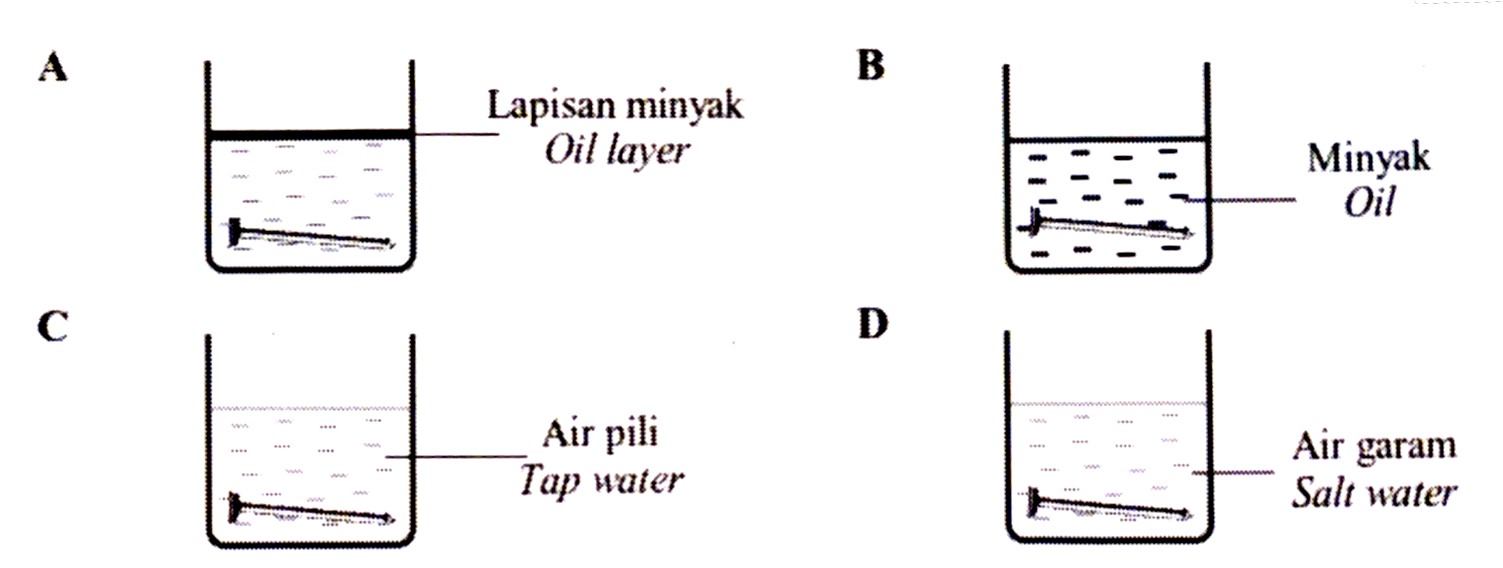
In which container the nails rust fastest?
A
B
C
D
What is the disease caused by rusting?
High blood pressure
Diabetes
Tetanus
Cancer
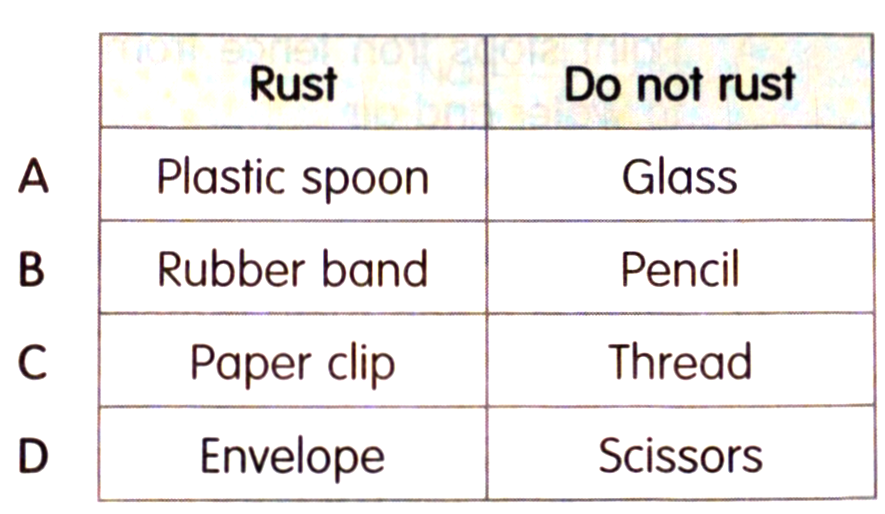
8. Which of the following objects will rust and
do not rust?
A
B
C
D
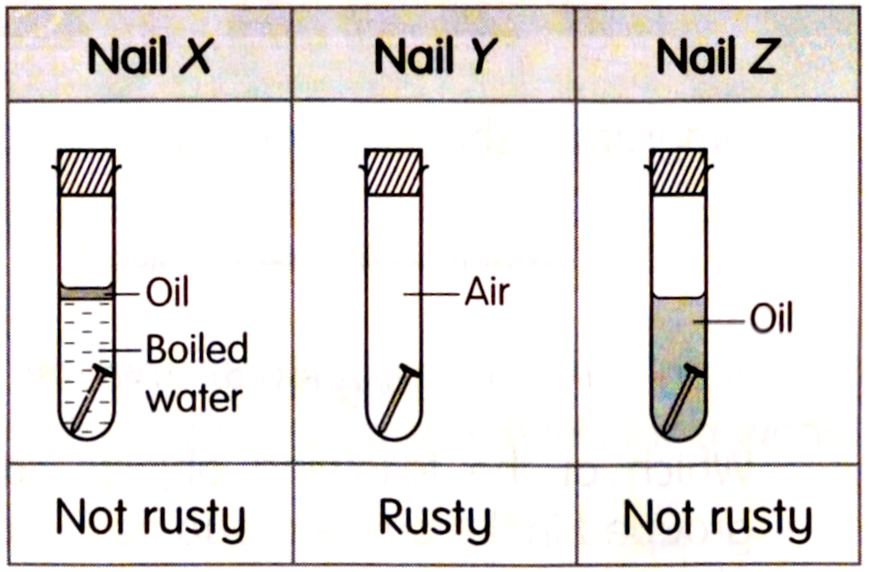
9.An experiment has been carried out by a group of pupils. The results of the
experiment are recorded in Table 2.
What can be concluded from this experiment?
Nail X did not rust because exposed to the air and water.
Nail Y rusts because exposed to the air and water
Nail X did not rust because exposed to the oil layer.
Nail Z did not rust because exposed to water.
10.What are the factors that cause rust?
Water and air
Water and fire
Water vapour and gas
Oil and grease

Diagram 1 shows a type of animal with shell. How can this specific characteristics help to protect the turtle from enemies?
Big shell that fits its body
Hard shell that protects its soft body
Hard shell that scares other animals
Heavy shell that is difficult to be lifted

Diagram 2 shows a group of animals. Which of these animals has the same way of protecting itself as shown in Diagram 2?
Puffer fish
Grasshopper
Turtle
Pangolin

Table 1 below shows the volume of water left after several objects put into 100 ml of water. Which object have the highest water absorption rate?
W
X
Y
Z

Diagram 3 shows the mass of four balls of the same types. What is the reading when 2 more balls of the same type added onto the plate of the balance?
2 000 g
2 500 g
3 000 g
3 500 g
Which one among below is the meaning of survival of plant species?
Food relationship amongst living things in a habitat
Ways of plants to maintain its species from extinct
Green plant makes its own food
Plants are the producer in the food chain

Diagram 4 shows a food chain. The deer was suffered from diseases and dead in this habitat. Amongst below, which one is true for the lion to ensure their survival of the species?
Lions eat amongst themselves
Lions hibernates all the times
Lions migrates to other places
Lions eat plants only

Diagram 5 shows two types of plant. What is the similar characteristic that these plants have to adapt themselves to the climate?
Have long roots
Have water-storing stems
Have wax-coated leaves
Shedding its leaves

Diagram 6 shows two animals. What characteristics that these animals have to adapt themselves to the extreme cold weather?
Have thick fur and small ears
Have small ears and thick layer of fat
Have small ears and long tail
Have thick layer of fat and long tail
'The grasshopper dies because it does not get enough air to breathe'. What science process skill is involved?
Predicting
Classifying
Making inferences
Defining operationally

Diagram 7 shows a food web in a habitat. How many omnivores are involved in this food web?
1
2
3
4

Diagram 10 shows fuel that is used to grill satay. Which of the following is the correct sequence of energy transformation?
Chemical energy --> Heat energy + Light energy
Chemical energy --> Heat energy --> Light energy
Chemical energy --> Kinetic energy --> Heat energy
Chemical energy --> Kinetic energy + Heat energy

*Remember Humans are on the top of all food chains because we do not get hunted.
Producers are:
animals
rocks
plants
Plants are called producers because they can produce their own:
music
food
air


Which of the following supplies light and heat?


The following are the types of fuel except....
petroleum
natural gas
nuclear power station
coal

Picture shows a device that uses an energy source. What is the source of energy used?
coal
dry cell
biomass
nuclear energy
Which of the following is kinetic energy ?


Which of the following have potential energy ?


The picture shows the change in energy when use this equipment.
electrical energy → kinetic energy→ heat energy₊ sound energy
potential energy→ sound energy
electrical energy → heat energy→ light energy
electrical energy → kinetic energy

Picture shows a electric equipment. Which of the following equipment are using the same energy as the diagram above ?


What is energy ?
The ability of object to be used
The process on how objects moves
The ability to do works
The process of life
What is the form of energy stored in a dry cell?
chemical energy
solar energy
nuclear energy
potential energy
Renewable energy means energy that can
be generated from the existing sources continuosly.
cause pollution.
be generated from fuel.
produce other energies
Hazlee is drawing using a pencil. He wants to erase some mistakes on his drawing. He does not have a rubber eraser.
What is the best way to erase the mistaken?
Use his wet finger's surface
Use a wet tissue
Use a rubber band
Use shoe whitener

Diagram 4 shows the results of an investigation using a balloon that has been blown and exposed under the sunlight. What conclusion can be made when the balloon receives heat?
The air in the balloon expands
Size of the balloon becomes bigger
The air in the balloon becomes hotter
The volume of the air in the balloon increases

Diagram 6 shows a type of seed that dispersed by wind. What will happen to the seed if the seed has no structure X?
Live healthily
Grow near the parent plant
Less competition with the parent plant
Get enough basic needs
Rosman will participate in a body building competition within six months. Which of the following types of food should be taken in a larger quantity to build his body muscles?


The following statement explains about a type of energy X. Which of the following is related to energy X?
Battery
Cooking gas
Solar cell
Petrol
The Moon has no light but receives light from the Sun and reflects it to the Earth. The light reflection can be seen at night. Which of the following situations uses the same principle?


Diagram 9 shows the properties of matter W,X and Y. Which of the following represents the state of matter W, X and Y?


Tissues are made of _______.
organs
systems
cells
blood
Which of the following body systems work together for support, protection, and movement?
respiratory and circulatory
skeletal and muscular
skeletal and respiratory
digestive and respiratory
Your skeletal system is in charge of making your blood.
True
False
The ribs protect your...
heart
lungs
all of the above
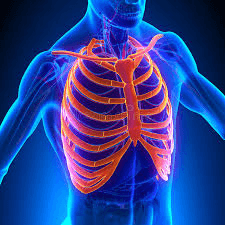
What bone is highlighted?
Ribs
Vertebrae
Clavicle
Femur

What bone is highlighted?
Skull (Cranium)
Scapula
Clavicle
Mandible

What bone is highlighted?
Skull (Cranium)
Mandible
Clavicle
Scapula
3 states of matter are ______________
oxygen, helium, smoke
bottle, cup, glass
water, milk, oil
solid, liquid, gas
Milk is an example of _________________
Solid
Liquid
Gas
Smoke is an example of _____________
Solid
Liquid
Gas
Bar soap is an example of ____________
Solid
Liquid
Gas
Smoke is an example of _____________
Solid
Liquid
Gas
Bar soap is an example of ____________
Solid
Liquid
Gas

The process is called ________________
Evaporation
Condensation
Freezing
Melting

This process is called __________________
Melting
Freezing
Condensation
Evaporation
Liquid --------> solid
Condensation
Melting
Freezing
Evaporation
Liquid --------> gas
Evaporation
Condensation
Freezing
Melting
Gas ---------> liquid
Melting
Freezing
Condensation
Evaporation
Solid --------> liquid
Melting
Freezing
Evaporation
Condensation
Gas ---------> liquid
Melting
Freezing
Condensation
Evaporation

This is an example of
Melting
Freezing
Evaporation
Condensation