
 Worksheets
Legislation and Standards
Total questions: 33
Worksheet time: 17mins
What are the statutory requirements for drainage systems in England and Wales?
They must comply with the Building Regulations.
They must be approved by the local council.
They must be designed by a certified engineer.
They must be inspected annually.
What is the purpose of the British Standards mentioned in the image?
To provide guidelines for quality and safety
To establish trade regulations
To promote cultural heritage
To enforce legal compliance
What is the significance of BS 8000: pt 13 in the context of good workmanship?
It provides guidelines for electrical installations.
It sets standards for plumbing work.
It outlines the code of practice for brickwork and blockwork.
It specifies the requirements for roofing materials.
Why is it important to follow manufacturers' instructions carefully?
To ensure proper use and safety and to maintain that the appliance does not lose its warranty.
To save time and effort
To avoid reading unnecessary information
To increase product sales
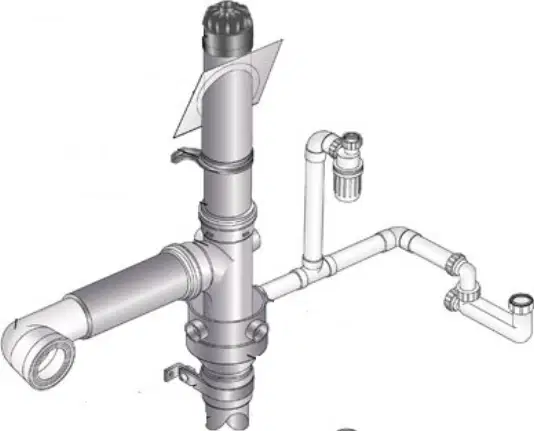
How do drainage pipework systems manage waste from appliances according to the text?
By using gravity to move waste through pipes and having a self cleansing velocity
By using pumps to push waste through pipes
By storing waste temporarily before disposal
By filtering waste before it enters the pipes
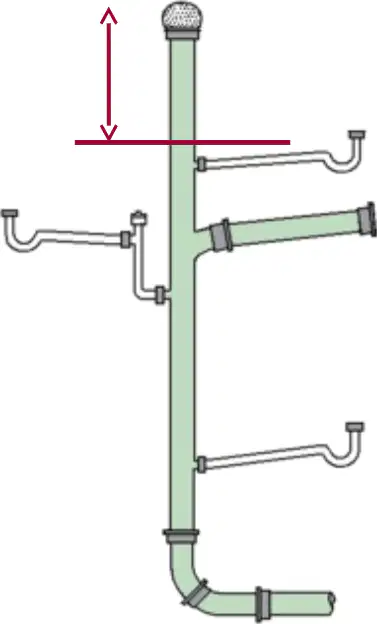
What is the function of the vent pipe in a standard domestic soil stack?
To allow water to flow
To allow air to enter the system and foul air to be released into the atmosphere
To block foul air
To increase pressure

What is the function of the soil pipe in a soil stack system?
To supply water to the building
To take effluent away from the building
To provide ventilation
To heat the building
Why should drainage be provided for all water supply points inside the building?
To prevent water accumulation and potential damage
To increase water pressure in the pipes
To reduce the cost of water supply
To ensure water supply is always available
What retains an element of water and should be attached to appliances connected to the drainage system to prevent foul air entering the building?
A trap
A filter
A pump
A valve
What is the minimum depth of water seal in a trap according to the compliance requirements?
25mm
50mm
75mm
100mm
The waste pipe diameter and gradient must maintain a trap seal depth of at least ____.
25mm.
15mm.
35mm.
45mm.
According to the compliance requirements, the nominal diameter of the discharge pipe shall not be reduced in the direction of ____.
flow.
installation.
pressure.
temperature.
Where air admittance valves are used to vent drainage systems, they shall be ____.
adequately sized.
installed at the highest point.
made of metal.
painted red.
What is the most common type of domestic stack?
Secondary ventilated stack
Primary ventilated stack
Tertiary ventilated stack
None of the above
Fill in the blank: The soil stack is large enough to allow pressure fluctuations without affecting the _______ in the system.
trap seal loss
water flow
pipe integrity
ventilation
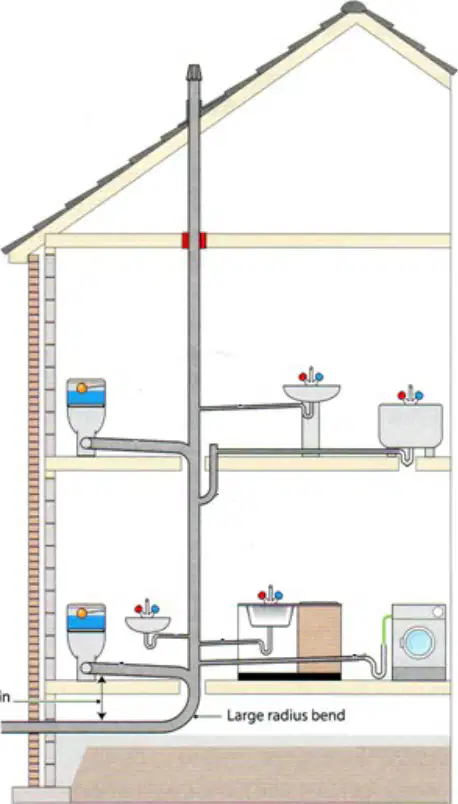
What type of system is shown in the diagram?
A) Secondary ventilated stack
B) Primary ventilated stack
C) Combined stack
D) Separate stack
What is the maximum gradient for discharge branches in a primary ventilated stack?
2 degrees
2½ degrees
5 degrees
10 degrees
Fill in the blank: The self-cleaning velocity means that the liquid carries the solids as it flows, so reducing the risk of _______.
blockage
evaporation
condensation
corrosion

What is the waste size for a WC (adult) in mm?
100
75
32
40
What happens to the gradient if a junior WC with a 75mm waste is fitted to a 75mm discharge pipe?
It increases
It decreases
It does not alter
It becomes zero
Junior WCs are often installed at ______ schools and infant schools.
nursery
high
middle
secondary
In a primary ventilated stack, if an installation exceeds the maximum length stated, what should the next pipe size be if the current size is 32mm?
35mm
40mm
45mm
50mm
Fill in the blank: In a primary ventilated stack, if multiple appliances are connected to a single discharge pipe, ___ is the minimum size that should be used.
50mm.
40mm.
60mm.
70mm.
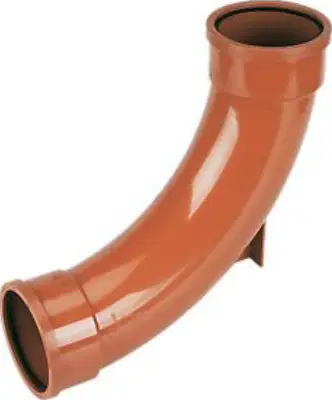
What is the purpose of installing a long radius bend at the base of a soil stack?
To increase the pressure
To maintain the effluent's velocity and stop back pounding/compression
To decrease the velocity
To block the flow
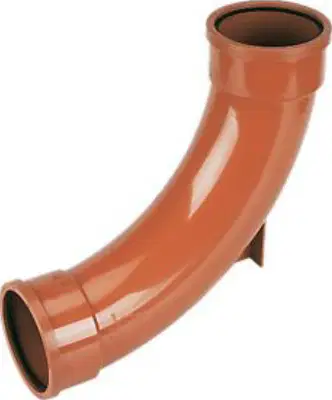
Fill in the blank: At the base of a soil stack, a long radius bend is installed to allow the effluent to maintain its ______ when changing from a vertical to horizontal movement.
velocity
temperature
pressure
density
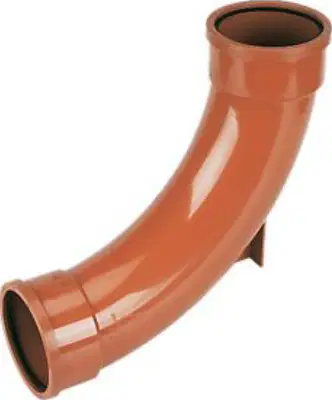
True or False: Older systems did not have a long radius bend, which caused problems with compression or back pressure for the discharge.
True
False

What is a good practice to follow at the base of a primary ventilated stack to prevent blockages?
Install a trap
Use a larger diameter pipe
Ensure an access door is installed so any blockages can be rodded if necessary/
Add a vent cap
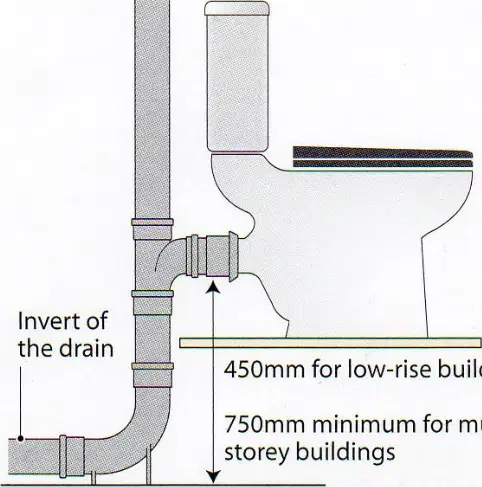
What is the lowest connection to the soil stack on low-rise buildings (two storeys)?
450mm
750mm
500mm
600mm
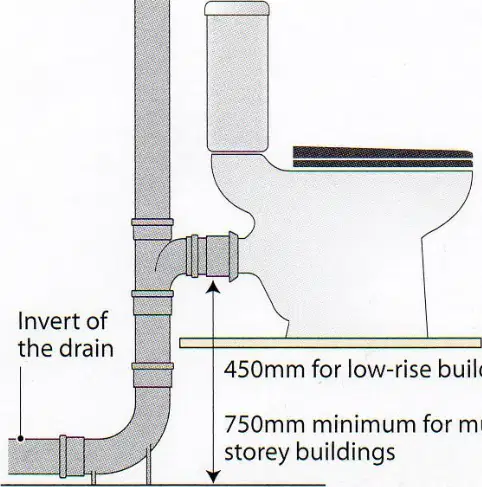
Fill in the blank: The lowest connection to the soil stack for buildings up to five storeys is ______.
750mm
500mm
1000mm
1200mm
What is the required angle or radius for branch connections up to 75mm diameter in a primary ventilated stack?
A) 45º angle or 25mm radius
B) 60º angle or 30mm radius
C) 90º angle or 50mm radius
D) 30º angle or 20mm radius
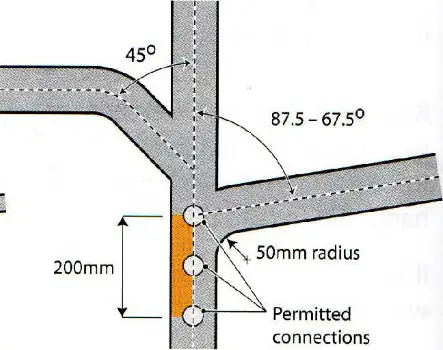
Fill in the blank: For branch connections over 75mm diameter in a primary ventilated stack, the required angle is 45º or the radius is _____.
50mm
60mm
70mm
80mm

What is the main purpose of preventing crossflow from one connection to another in a primary ventilated stack?
To increase water pressure
To avoid trap seal loss and effluent crossflow
To enhance water flow speed
To reduce pipe diameter
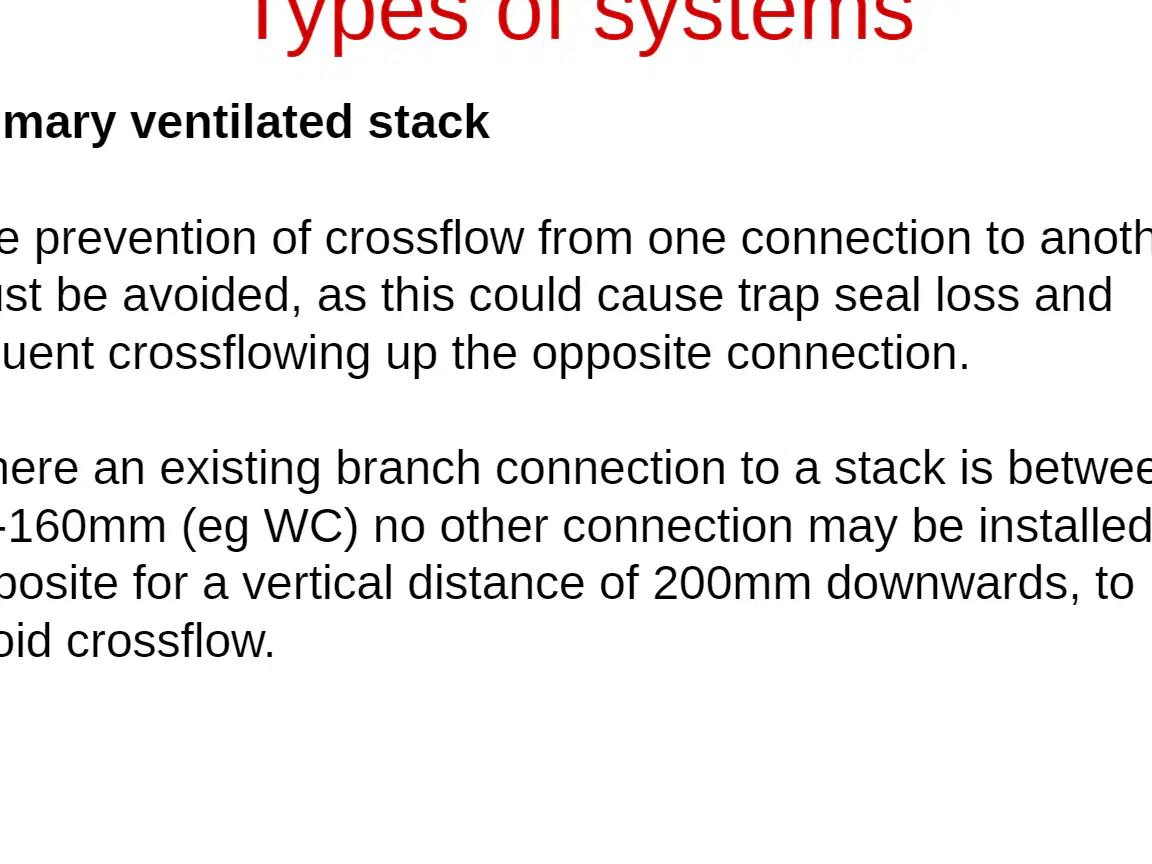
Fill in the blank: Where an existing branch connection to a stack is between 82-160mm (e.g., WC), no other connection may be installed opposite for a vertical distance of _____ mm downwards, to avoid crossflow.
200
150
250
300

