
 Worksheets
review jh2 ch 1 2 T2
Total questions: 46
Worksheet time: 35mins
In a plant, what is formed by a group of xylem vessels?
a cell
a tissue
an organ
an organ system

The diagram shows a palisade mesophyll cell.
Which structure is not found in an animal cell?
A
B
C
D
What is the correct order of increasing size of the following structures, from smallest to largest?
chromosome → liver → white blood cell
chromosome → white blood cell → liver
liver → chromosome → white blood cell
white blood cell → liver → chromosome
A palisade cell and a nerve cell are observed under a light microscope.
Only the palisade cell has a :
cell membrane.
cytoplasm.
nucleus.
vacuole.
A palisade cell and a nerve cell are observed under a light microscope.
Only the palisade cell has a :
cell membrane.
cytoplasm.
nucleus.
vacuole.
A palisade cell and a nerve cell are observed under a light microscope.
Only the palisade cell has a :
cell membrane.
cytoplasm.
nucleus.
vacuole.
Which of the following is true for root hair cell?
allows water to pass into the plant
increases the surface area of the root
loses water by transpiration
At which level of organisation is a root?
organ
organ system
organism
tissue
Which is not an organ?
blood
heart
tooth
vein
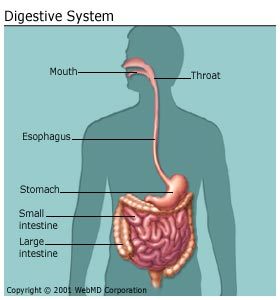
Select the option that correctly fills in the gaps in the following sentence. The skin is a(n) (i)__ that is mainly made up of (ii)__ tissue.
(i) tissue, (ii) epithelial
(i) organ, (ii) connective
(i) tissue, (ii) connective
(i) organ, (ii) epithelial
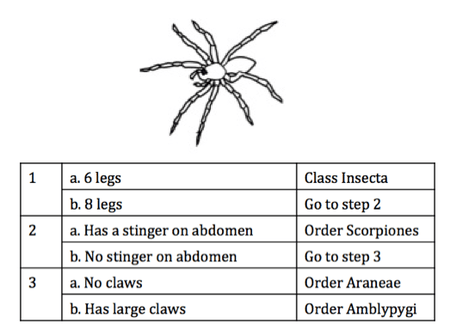

The first word in a scientific name is the
species
phylum
genus
class
The science of grouping and naming organisms
Phylogeny
Dichotomy
Taxonomy
Genetics
The taxonomic level that would include the MOST number of species
class
kingdom
phylum
genus
Which taxonomic level would include the LEAST number of organisms?
species
genus
order
phylum

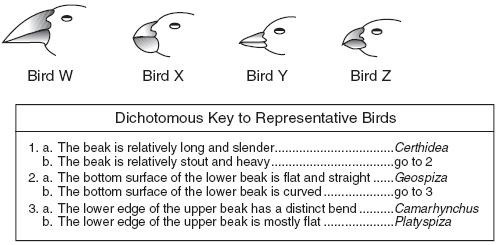
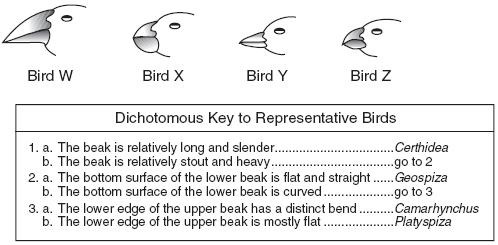

Leaf S (3RD LEAF)
Eastern white pine
balsam poplar
sweet gum
ginko
Leaf Q (1ST LEAF)
Eastern white pine
balsam poplar
sweet gum
ginko
Which characteristic means getting rid of all poisonous waste ?
Respiration
Excretion
Removal
Homeostasis


Which characteristic of living things is represented in the picture?
Share similar chemicals
Grows and develops
Responds to stimuli
Evolves (as a population)
homeostasis

Diagram shows a plant cell.What is organelle L?
Ribosome
Golgi body
Rough endoplasmic reticulum
Smooth endoplasmic reticulum
Nucleus
Which of the following organelles is only available in plants?
Mitochondria
Chloroplast
Golgi apparatus
Cell wall
Which of the following organelles is only available in animal cell?
Cytoplasm
Nucleus
Nucleolus
Centrosome
Ribosome is only available in rough endoplasmic reticulum.
True
False
True or Fales:
Red blood cells carry haemoglobin
True
False
True or False:
Red blood cells have a nucleus.
False
True
What is a specialised cell?
It has adapted features to carry out a specific function.
It is just like any cells.
Cells are not special.

An extensive network of tubules near the nucleus that develop and transport proteins
Endoplasmic Reticulum
Golgi Apparatus
Lysosome
Ribosome

Rigid outer layer of a plant cell
Plasma membrane
Cytoskeleton
Cell wall
Vacuole

Captures energy from the sun and uses it to produce organic molecules through photosynthesis in plant cells
Ribosome
Mitochondrion
Chloroplast
Golgi Apparatus

How is a plant root hair cell adapted for absorbing water from the soil efficiently?
It has many chloroplasts
It has lots of mitochondria
It has a large surface area
It has a large vacuole

How is a leaf cell adapted for absorbing light efficiently?
It has a cellulose cell wall
It has a large vacuole
It has lots of chloroplasts
It has a large nucleus

What is the function of nerve cells?
Allow for gas exchange to happen.
Transport oxygen throughout the body.
Control DNA expression.
Transmit electrical signals to different parts of the body.

