
 Worksheets
4th SOCIAL STUDIES BENCHMARK 2 REVIEW
Total questions: 86
Worksheet time: 1hrs 1mins
What made farming easier for people during the Agricultural Revolution?
making tools
studying plants
building settlements
roaming from place to place
a political and religious leader of ancient Egypt
prophet
pyramid
papyrus
pharaoh
a tomb with triangle-shaped sides
pharaoh
pyramid
papyrus
prophet
a system of writing based on pictures rather than letters
hieroglyphics
cataract
scribe
alphabet
a tall plant that ancient Egyptians used to make paper; the paper made from the plant of the same name
pyramid
grass
paper
papyrus
Which characteristic does this example show.
They believed people needed their bodies in good shape to reunite with if they were judged worthy of continuing on to the afterlife.
Social structure:
Belief systems:
Government:
Infrastructure
Which characteristic does this example show?
Pharaohs, scribes, priests, and warriors were at the top of the hierarchy; enslaved people and servants were at the bottom.
Job specialization
Organized Religion
Social Structure
Government
Which characteristic does this example show?
Most people were farmers, but there were scribes, priests, and craftspeople, too.
Government
Organized Religion
Social Structure
Specialization
The Egyptians irrigation system helped them...
move water inland for farming
Make more homes
Build the pyramids
Catch more fish
The written language that the Egyptians used is called...
Papyrus
Obelisk
Hieroglyphics
Nile River
What are 3 main reasons the Nile River was important for the Ancient Egyptians?
provided water for drinking and bathing
provided wet sand to help build pyramids
water for swimming
was a place for them to fish for food
provided water for their farm land
The land of Ancient Egypt was mostly...
rainforest
desert
grassland
tundra
The Ancient Egyptians settled along what river?
Rio Grande
Mississippi
Huang He
Nile
The physical feature that allowed ancient Egyptians to settle near it and grow their population?
Pyramid
Mediterranean Sea
Nile River
Egypt
Definition of Pharaoh
Sometimes acted as a body guard and protected the Pharaoh
Managed and tended to the livestock
Oversaw Funerals and spiritual ceremonies
Ruled Egypt as a God, in charge of all Egyptian people
Definition of Priest
Oversaw the construction of new temples, build goods, in the middle class
Seen as part of the Egyptian government and oversaw funerals and spiritual needs
Managed and tended to the livestock seen as a peasant
Ruled Egypt as a God, in charge of all people
Social Hierarchy Class that consists of the Pharaoh and the royal family plus his vizier
Lower Class
Upper Class
Middle Class
High Class
Who are the Egyptians that could be mummified?
The peasants
Everyone
The Craftsmen
The Pharaoh and rich Egyptians
Why is the Nile River important
the many resources it provided
water
fishing
traveling

Which group of people may have brought Hindu beliefs to India?
Aryans
Buddhists
Mesopotamians
Shudras

How are Indian people placed in a caste?
They are born into a certain caste.
They earn their position based on educational level.
Their parents choose their caste.
When they are old enough, the ruler assigns them a caste.

Your caste in Hindu society is mostly dependent on your:
wealth
education
intelligence
karma

Hinduism began in the continent of
Asia
Europe
Africa
America
Hinduism
a religion that developed in India over many centuries
a religion that developed in China over many centuries
a religion that developed in Egypt over many centuries
a religion that developed in Mesopotamia over many centuries
Karma
a belief that your soul will be born again after you die
a belief that a person has a duty or obligation to live an honorable life
a belief that the actions from your past life determine what happens to your soul in the next life
a green frog
Hindus believe this river is sacred
Indus
Ganges
Nile
Euphrates
Karma
Dharma
Reincarnation
Vedas


Why is India considered to be part of a subcontinent?
It is located farthest south of all the Asian countries.
It is part of an Island chain far from the Asian mainland.
It is isolated from the rest of Asia by mountains and water.
It does not share a language or culture with other Asian counties.
Where did ancient India peoples move after the decline of the Indus Valley civilization?
Into Central Asia
near the Ganges River
near the southern peninsula
into the central plateau region

Use the image to answer the questions: What type of artifact is depicted in this images?
a piece of pottery
a piece of leather
a sculpture
a seal

Use the image to answer the question: which religion worshipped the god shown in this sculpture?
Jainism
Vedism
Hinduism
Buddhish
What mountain range separates the Indian Subcontinent from the rest of the continent?
The Rockies
The Grand Tetons
The Himalayas
The Sierra Madre
Indus valley civilization is also called as _______________
Harrapan civilization
River Civilization
Indian Civilization
Civilization
What was the main occupation of the Indus Valley civilization?
Agriculture
Pottery
Painting/Art
Building

What did most people in early China do for a living?
Trading
Farming
Fishing
Hunting

Where did the earliest civilization in China arise?
Yangzi River valley
Gobi Desert
Himalayas
Yellow River (Hung He valley)
What did the floods bring to the Huang He valley that supported agriculture?
Sand
Rocks
Silt
Salt
What did the Zhou kings believe they had to rule from heaven?
Mandate of Heaven
Mandate of Earth
Mandate of the People
Mandate of the Gods
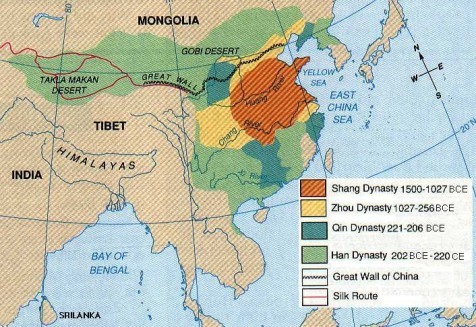

Why is India considered to be part of a subcontinent?
It is located farthest south of all the Asian countries.
It is part of an Island chain far from the Asian mainland.
It is isolated from the rest of Asia by mountains and water.
It does not share a language or culture with other Asian counties.
Why is India considered to be part of a subcontinent?
It is located farthest south of all the Asian countries.
It is part of an Island chain far from the Asian mainland.
It is isolated from the rest of Asia by mountains and water.
It does not share a language or culture with other Asian counties.
Where did ancient India peoples move after the decline of the Indus Valley civilization?
Into Central Asia
near the Ganges River
near the southern peninsula
into the central plateau region
Use the image to answer the questions: What type of artifact is depicted in this images?
a piece of pottery
a piece of leather
a sculpture
a seal

How was this artifact used?
as money
as a decoration
to mark ownership
to provide directions
Use the image to answer the question: which religion worshipped the god shown in this sculpture?
Jainism
Vedism
Hinduism
Buddhish
Which of these beliefs is shared by Hinduism, Buddhism, and Jainism?
reincarnation
nirvana
kerma
caste

Use the image to answer the question: What is pictured in this image?
A Gupta home
an Indus valley city
a Mauryan hospital
a Buddhist place of worship

Under whose leadership was the building in the image constructed?
Shiva
Ashoka
Harappan
Samudragupta
Which were achievements of the Gupta empire? Select the two correct answers.
determining Earth is round
creating the first writing system
inventing addition and subtraction
recording the first known sighting of a shooting star
creating the symbol 0
What caused the decline of the Gupta empire?
the death of Ashoka
the influence of Islamic powers
famine caused by climate change
illnesses introduced foreigners
Which of the following statements are true about Hinduism? Select the THREE correct answers.
They believe in reincarnation.
They are a nontheistic religion.
They are the oldest religion.
Hinduism evolved from Brahmanism.
Which of the following statements are true about Buddhism? Select the THREE correct answers.
It has an eightfold path.
It is a polytheistic religion.
It evolved from Brahmanism.
It was founded by Siddhartha Guatama.
It is a nontheistic religion.
What was the social ranking called that was used to keep people separated in ancient India?
social pyramid
caste system
city protection
city walls
Which empire was ruling during the Golden Age of India?
Gupta
Siddhartha
Maratha
Dhoti

The highest mountain range in the world separates the Indian subcontinent from the rest of Asia. It is the
Rockies
Zagros
Ghats
Himalayas

One of the first civilizations in India, the Harappans, built their cities along the
Brahmaputra River
Indus River
Amazon River
Nile River

Personified as a goddess, Hindus believe this is the holiest river in India
Brahmaputra River
Indus River
Ganges River
Euphrates River
A difficult pass through the Hindu-Kush Mountains bordering northwestern India is the
Deccan Pass
Over Pass
Khyber Pass
Under Pass
What physical feature helped the Chinese to settle near and survive
Himalayan Mountains
Great Wall of China
Huang He ( Yellow River )
Desert
What physical feature made Chinese daily life harder to live?
Gobi Desert
Yellow Sea
Great Wall of China
Plateau of Tibet
What are the 3 most practiced religions in China?
Confucianism
Taoism
Buddhism
Osiris
Isis
Afterlife
Buddhism
Legalism
Confucianism
What is the definition of Confucianism?
Belief in the goodness of humanity, following rules, and fairness.
Monasteries and places of worship were built to support the participation of the religion.
Worshipped many gods and ancestors, believe everything is one, believed in “chi” energy in the body.
The idea of living or lasting forever. Humans are not immortal
What is the definition of the Silk Road?
An ancestor is a person from whom one is descended. Usually, it refers to a remote person, rather than the immediate parents or grandparents.
The Silk Road was a group of trade routes that went across Asia to the Mediterranean Sea. This let China trade with the Middle East and the Mediterranean world. Traded goods, materials, food, spices, money, silk, Ideas, and religions.
A series of rulers of the same family.
The idea of living or lasting forever Humans are not immortal.
This is one of the largest frontier defenses in the world. It was built by millions of poor, lower class Chinese workers.
silk road
aristocrat
mandate
the great wall of china
Which dynasty did this happen during: RULED FOR ALMOST 1,000 YEARS
shang dynasty
zhou dynasty
han dynasty
Which dynasty did this happen during: BROUGHT STRENGTH TO THE GREAT WALL.
shang dynasty
zhou dynasty
han dynasty
Which dynasty did this happen during: BUILT THE FIRST CITIES
shang dynasty
zhou dynasty
han dynasty
Which dynasty did this happen during: THE FIRST CHINESE WRITING SYSTEM.
shang dynasty
zhou dynasty
han dynasty


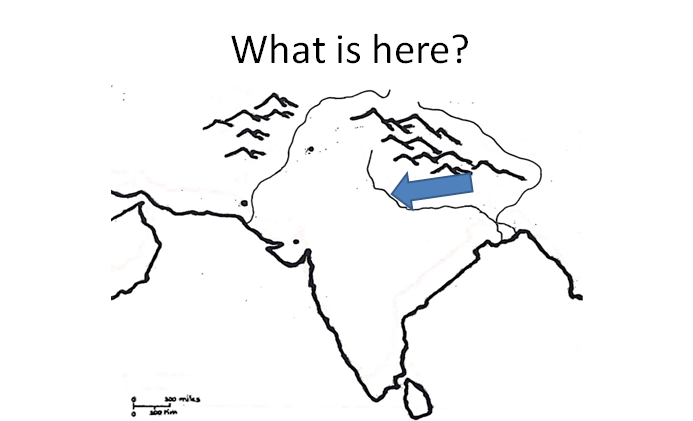
What body of water is here?
Indus River
Ganges River
Brahmaputra River
Euphrates
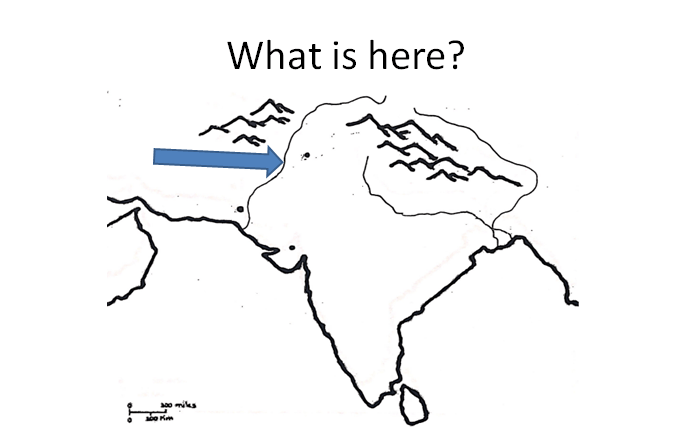
What body of water is here?
Indus River
Ganges River
Brahmaputra River
Tigris River
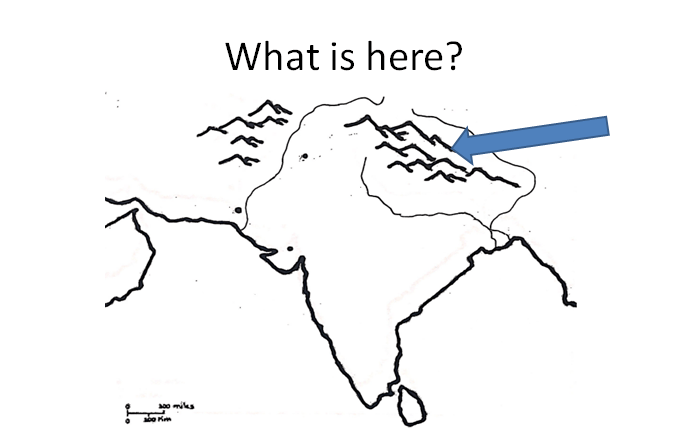
What is here?
Zagros Mountains
Hindu Lush
Himalayas
Taurus Mountains

