
 Worksheets
WEATHER TEST
Total questions: 35
Worksheet time: 18mins
Name
Class
Date
1.
The condition of the atmosphere at a certain place or time.
a)
weather
b)
climate
c)
temperature
d)
air pressure
2.

Low pressure is usually associated with what type of weather?
a)
sunny and fair
b)
rainy and cloudy
c)
clear and cold
d)
partly cloudy with a light breeze
3.

Hurricanes that strike the southeastern coast of the US originally form over what body of water?
a)
The North Atlantic Ocean
b)
The middle of the Gulf of Mexico
c)
The Arctic Ocean
d)
The Atlantic Ocean, near the Equator
4.
What weather feature forms at the boundary between air masses as they move and collide?
a)
storms
b)
low pressure systems
c)
weather systems
d)
fronts
5.

What type of weather do high pressure systems usually signal?
a)
stormy
b)
fair
c)
dangerous
d)
hurricanes
6.
Large bodies of air that have similar temperatures and moisture properties throughout are called-
a)
air currents
b)
air fronts
c)
air masses
d)
hurricanes
7.
How does being over land or water affect a hurricane?
a)
Hurricanes form over land but grow stronger over water.
b)
Hurricanes form and grow stronger over water but grow weaker over land.
c)
Hurricanes can form over land or water but grow weaker over water.
d)
Hurricanes only exist over water.
8.
The amount of water vapor in the air is-
a)
air pressure
b)
temperature
c)
humidity
d)
thermal energy
9.
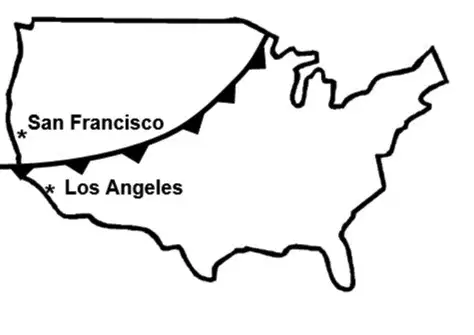
What type of front is shown on the map?
a)
warm
b)
cold
c)
stationary
d)
occluded
10.
Dalton has a baseball game today. He checks the weather and notices a big "L" on the weather map for his area. What can be predicted about the weather?
a)
Dalton’s game will probably go on as planned because the “L” symbolizes a low pressure system which usually brings sunny weather.
b)
Dalton’s game will probably be cancelled because the “L” symbolizes low temperature and it will be too cold to play.
c)
Dalton’s game will probably be cancelled because the “L” symbolizes a low pressure system which is usually responsible for rain.
d)
Dalton’s game will probably go on as planned because the “L” symbolizes a low chance of bad weather.
11.
Hurricanes form mostly in areas close to the equator. Why is this?
a)
solar heating is greatest near the equator.
b)
the Moon’s plane of orbit is close to the equator.
c)
Earth’s volcanic activity is clustered around the equator.
d)
the rate of rotation of Earth’s surface is less at the equator.
12.
A funnel shaped cloud that reaches down from a storm cloud to touch the Earth is a-
a)
hurricane
b)
drought
c)
thunderstorm
d)
tornado
13.

A(n) _________________________________ front is when a cold and warm air mass meet and neither has enough strength to move the other one, so the weather stays the same for a while.
a)
Warm
b)
Cold
c)
Stationary
d)
Occluded
14.
What is the term used to describe long periods of unusually low precipitation.
a)
Monsoon
b)
Flash Flooding
c)
Drought
d)
Cold Front
15.
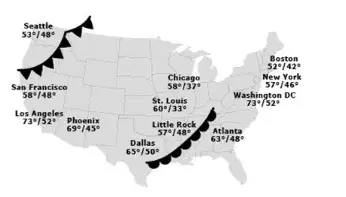
What type of weather front is moving toward San Francisco?
a)
warm
b)
cold
c)
stationary
d)
occluded
16.
Which of these is an example of extreme weather?
a)
Option 1
b)
Option 2
c)
Option 3
d)
Option 4
17.
All weather occurs in which layer of the atmosphere?
a)
stratosphere
b)
troposphere
c)
thermosphere
d)
exosphere
18.
What is the tool a meteorologist uses to measure air pressure?
a)
thermometer
b)
anemometer
c)
barometer
d)
rain gauge
19.
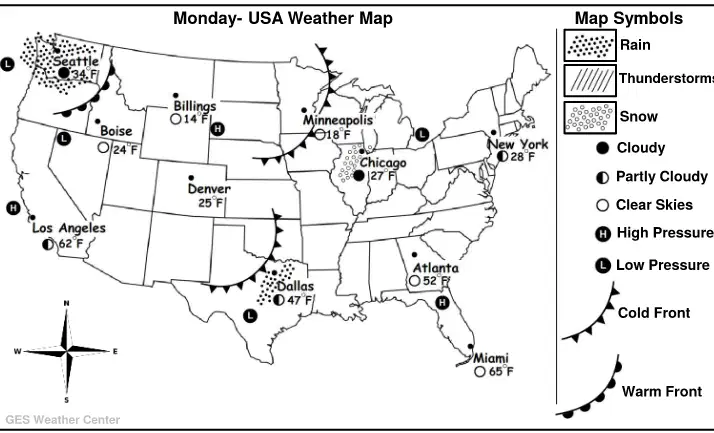
Which city is experiencing Snow according to the weather map?
a)
Seattle
b)
Atlanta
c)
Chicago
d)
New York
20.
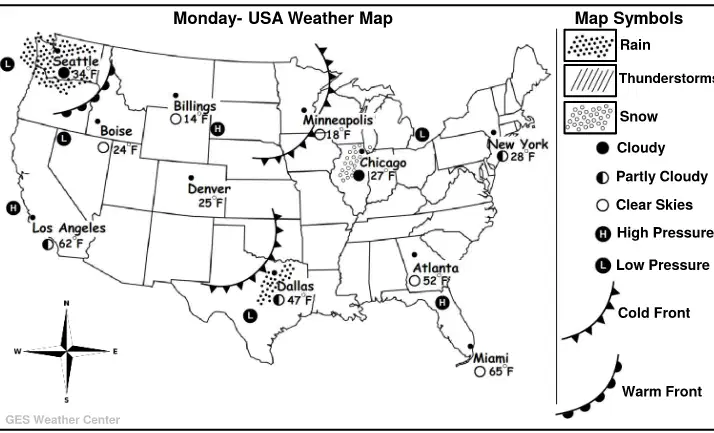
What type of weather can the people of Los Angeles expect according to the weather map?
a)
cloudy and rainy
b)
thunderstorms
c)
snowy and cold
d)
Sunny, clear, and warm
21.

If air temperature drops, then we can expect snow. What is the independent variable in this hypothesis?
a)
snow
b)
type of precipitation
c)
air pressure
d)
air temperature
22.
a scientist who studies the weather.
a)
biologist
b)
astrologist
c)
meteorologist
d)
geologist
23.
water that falls from the sky as rain, snow, sleet, or hail.
a)
condensation
b)
evaporation
c)
precipitation
d)
transpiration
24.
the amount of water vapor (moisture) in the air.
a)
temperature
b)
humidity
c)
air pressure
d)
density
25.
An overflow of water onto an area that is otherwise dry.
a)
hurricane
b)
flood
c)
drought
d)
tornado
26.
violent, rotating storms that form over warm ocean water.
a)
hurricane
b)
flood
c)
drought
d)
tornado
27.
a large body of air that has similar temperature and moisture throughout
a)
front
b)
air mass
c)
air pressure
d)
tornado
28.

when a cold air mass replaces a warm air mass; usually brings bad weather
a)
warm front
b)
cold front
c)
occluded front
d)
stationary front
29.

a prediction of the weather is called a
a)
hypothesis
b)
guess
c)
weather map
d)
forecast
30.

air pressure
a)
barometer
b)
hygrometer
c)
thermometer
d)
anemometer
31.

wind speed
a)
barometer
b)
hygrometer
c)
thermometer
d)
anemometer
32.
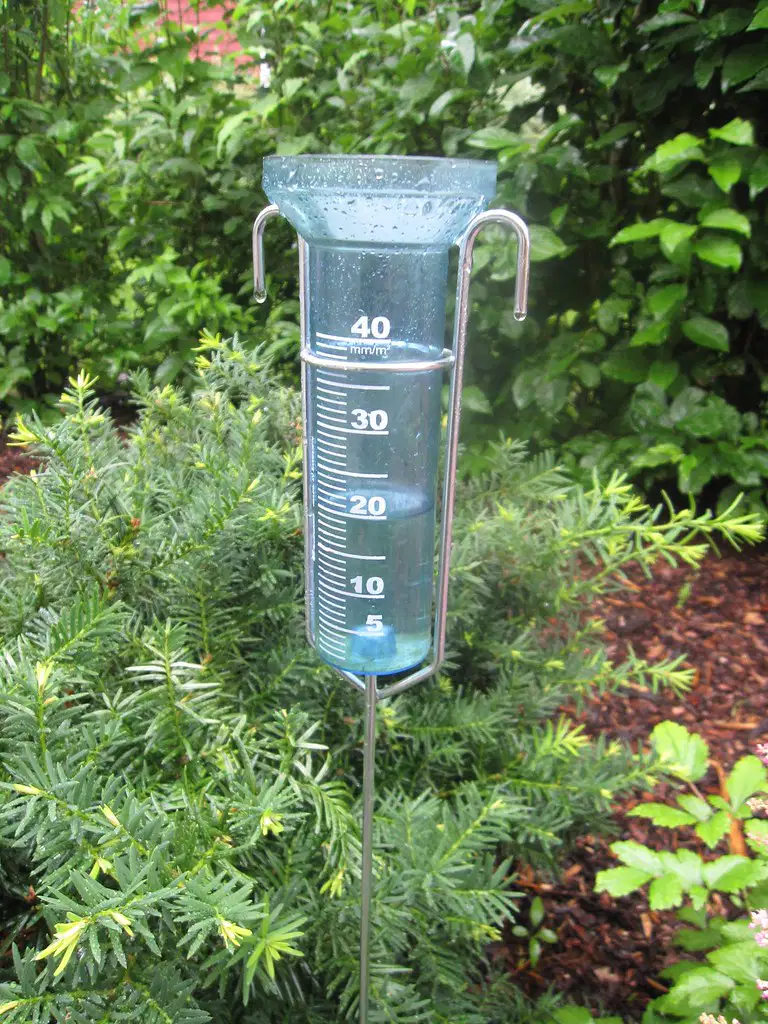
amount of precipitation
a)
rain gauge
b)
hygrometer
c)
thermometer
d)
weather vane
33.

Wind direction
a)
rain gauge
b)
hygrometer
c)
thermometer
d)
weather vane
34.
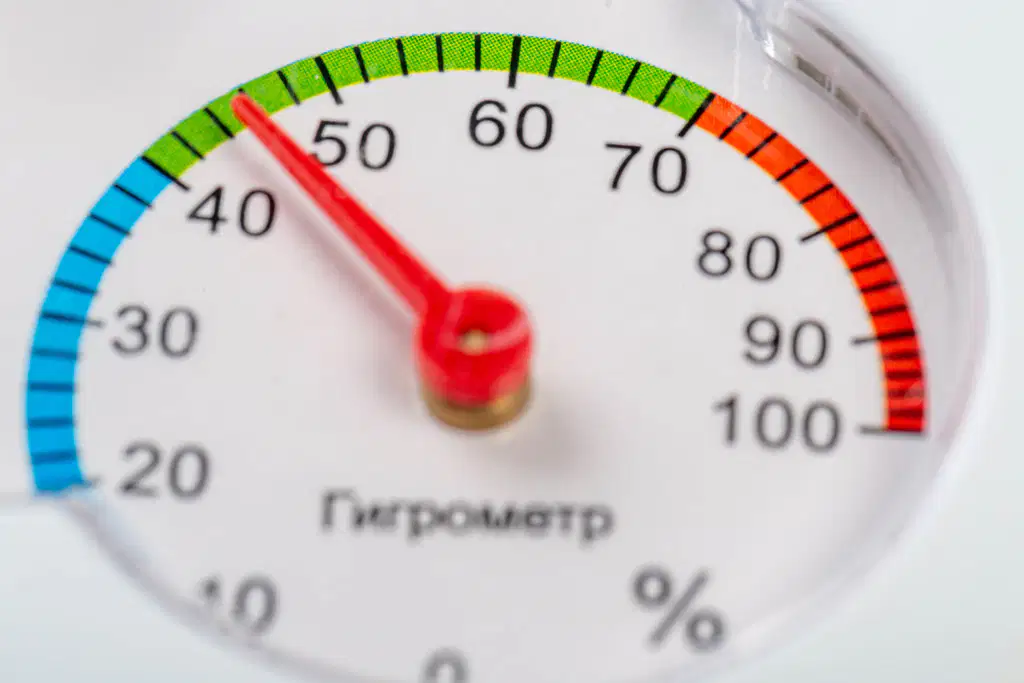
humidity
a)
rain gauge
b)
hygrometer
c)
thermometer
d)
weather vane
35.
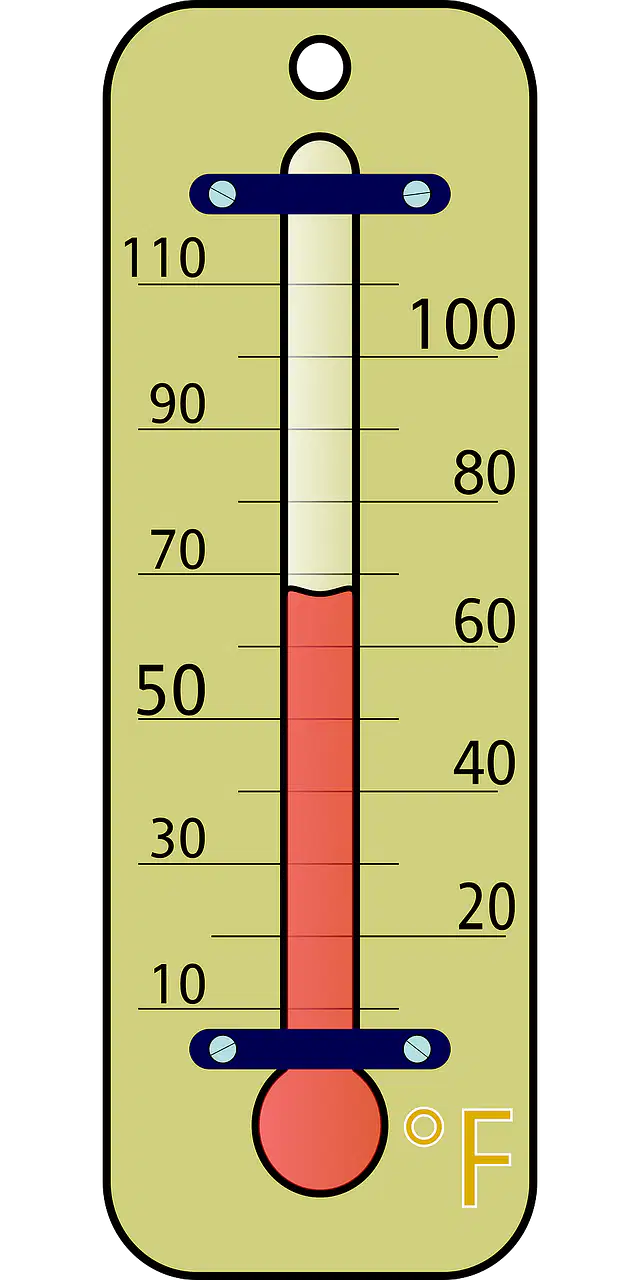
temperature
a)
rain gauge
b)
hygrometer
c)
thermometer
d)
weather vane
100 %

