wayground logo

Free Printable Worksheets

Font size

S
M
L
XL
Worksheets

Periodic Table Review

Total questions: 163

Worksheet time: 2hrs 32mins

Name
Class
Date
1.

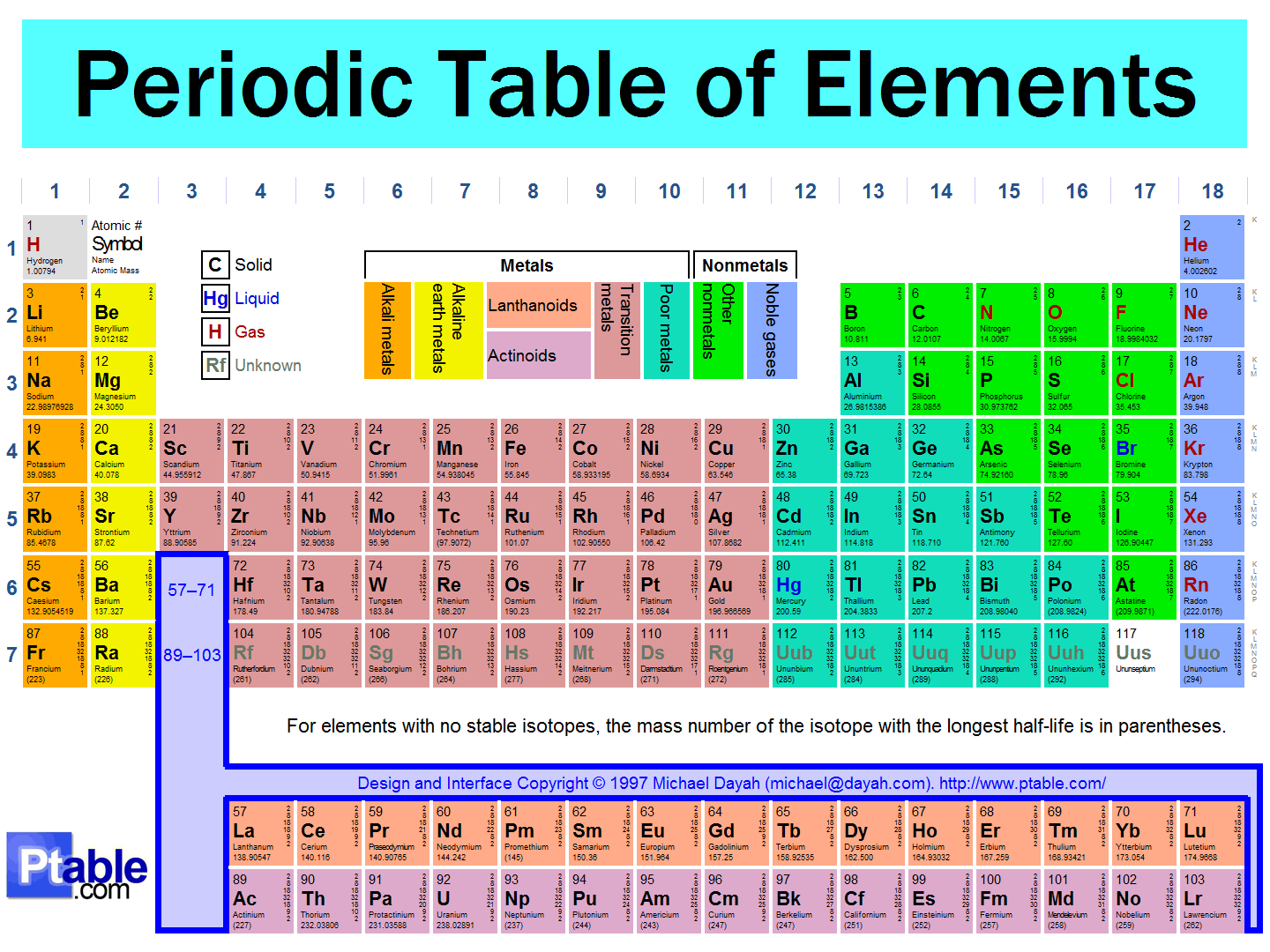
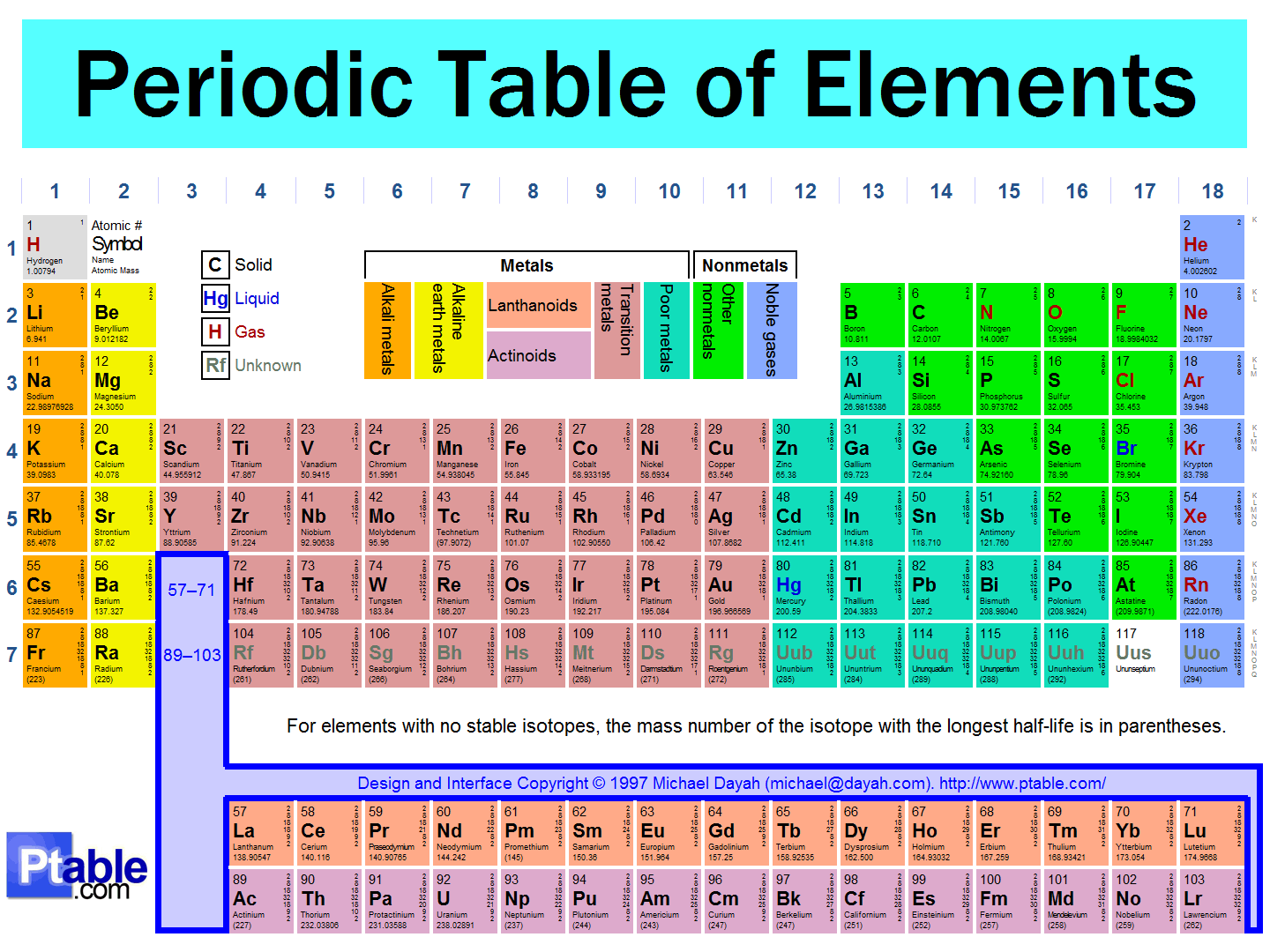
What is the atomic number of Be?

a)

2

b)

4

c)

6

d)

8

2.

What is the atomic number of Cu?

a)

25

b)

26

c)

27

d)

29

3.

What is the atomic number of vanadium?

a)

19

b)

21

c)

23

d)

25

4.

What is the atomic number of aluminum?

a)

10

b)

11

c)

12

d)

13

5.

What is the atomic number of fluorine?

a)

4

b)

5

c)

7

d)

9

6.

Atomic number 21 is

a)

Ca

b)

Sc

c)

Fe

d)

Co

7.

Atomic number 25 is

a)

Ni

b)

Mg

c)

Mn

d)

Zn

8.

Atomic number 26 is

a)

Fe

b)

Cr

c)

Si

d)

Cl

9.

Atomic number 11 is

a)

Ar

b)

K

c)

Na

d)

Ti

10.

Atomic number 19 is

a)

H

b)

He

c)

K

d)

Sc

11.

What is the atomic number of boron?

a)

3

b)

4

c)

5

d)

6

12.

What is the atomic number of lithium?

a)

2

b)

3

c)

4

d)

5

13.

What is the atomic number of hydrogen?

a)

4

b)

3

c)

2

d)

1

14.

What is the atomic number of oxygen?

a)

10

b)

9

c)

8

d)

7

15.

What is the atomic number of nitrogen?

a)

6

b)

7

c)

8

d)

9

16.

Atomic number 2 is

a)

oxygen

b)

carbon

c)

helium

d)

hydrogen

17.

Atomic number 18 is

a)

neon

b)

helium

c)

argon

d)

chlorine

18.

Atomic number 28 is

a)

chromium

b)

iron

c)

nickel

d)

phosphorus

19.

Atomic number 30 is

a)

sulfur

b)

zinc

c)

potassium

d)

sodium

20.

Atomic number 12 is

a)

manganese

b)

silicon

c)

titanium

d)

magnesium

21.

Carbon has atomic number 6. This means it has _____ protons.

a)

2

b)

8

c)

6

d)

12

22.

The whole number above an element's symbol represents what?

a)

Atomic Number

b)

Average Atomic Mass

c)

Number of Neutrons

d)

Number of Isotopes

23.

The decimal number below an element's symbol represents what?

a)

Atomic Number

b)

Average Atomic Mass

c)

Number of Neutrons

d)

Number of Protons

24.

As a neutral atom, which element will have exactly 29 protons?

a)

Cobalt

b)

Chromium

c)

Copper

d)

Chlorine

25.

As a neutral atom, which element will have exactly 17 electrons?

a)

Cobalt

b)

Chromium

c)

Copper

d)

Chlorine

26.

Using mass number 31, Phosphorus will have how many neutrons?

a)

15

b)

16

c)

31

d)

1

27.

Using mass number 59, Cobalt will have how many neutrons?

a)

27

b)

28

c)

32

d)

33

28.

The average atomic mass is a decimal because the atoms of an element will have different numbers of what?

a)

Protons

b)

Electrons

c)

Neutrons

d)

Atomic Numbers

29.

How do you figure out the number of protons of an element?

a)

It is the same as the atomic number

b)

It is the same as the average atomic mass

c)

It is the same as the mass number

d)

It is the same as the elements on the periodic table

30.

What formula is used to find the number of neutrons in an element?

a)

Atomic Number + Mass Number

b)

Atomic Number - Mass Number

c)

Mass Number + Atomic Number

d)

Mass Number - Atomic Number

31.

The nucleus of an atom is comprised of

[select all that apply]

a)

protons

b)

neutrons

c)

electrons

d)

nucleons

32.

Neutrons have a ____ charge.

a)

Positive

b)

Neutral

c)

Negative

33.

Electrons have a ____ charge.

a)

Positive

b)

Neutral

c)

Negative

34.

Protons have a ____ charge.

a)

Positive

b)

Neutral

c)

Negative

35.

Electrons are found in the

a)

electron cloud

b)

nucleus

c)

Upper orbitals

d)

Valence Nucleus

36.

Neutrons are found in the

a)

electron cloud

b)

nucleus

c)

outer orbitals

d)

Valence Shells

37.

Protons are found in the

a)

electron cloud

b)

nucleus

c)

outer orbitals

d)

Valence Shells

38.

Electrons are counted in an atom's atomic mass

a)

True

b)

False

39.

What is the atomic number of Sodium?

a)

11

b)

22.99

c)

23

d)

12

40.

How many protons does Sodium have?

a)

23

b)

11

c)

22.99

d)

12

41.

How many electrons does Sodium have?

a)

11

b)

12

c)

22.99

d)

23

42.

What is the atomic mass of Sodium?

a)

11

b)

22.99 (23 rounded)

c)

12

43.

What is the atomic number of Calcium?

a)

41

b)

40.08

c)

20

44.

How many protons does Calcium have?

a)

40

b)

20

c)

40.08

45.

How many electrons does Calcium have?

a)

40

b)

20

c)

40.08

46.

What is the atomic mass of Sodium?

a)

40.08 (40 rounded)

b)

20

c)

60

47.

How many neutrons does Calcium have? Use calculator!

a)

40.08

b)

20

48.

What is the atomic number of Argon?

a)

18

b)

39.948

c)

39

d)

40

49.

How many protons does Argon have?

a)

40

b)

39.948

c)

18

d)

39

50.

How many electrons does Argon have?

a)

39.948

b)

39

c)

40

d)

18

51.

What is the atomic mass of Argon?

a)

39.948 (40 rounded)

b)

18

52.

How many neutrons does Argon have? Use calculator!

a)

18

b)

40

c)

22

53.

How many electrons are in Aluminium?

a)

40

b)

27

c)

13

d)

14

54.

How many protons, neutrons, and electrons are in Oxygen?

a)

Protons = 8; Neutrons = 16; Electrons = 8

b)

Protons = 8; Neutrons = 8; Electrons = 8

c)

Protons = 16; Neutrons = 8; Electrons = 16

d)

Protons = 16; Neutrons = 24; Electrons = 16

55.

Arsenic has an atomic mass of _______

a)

33

b)

42

c)

75

d)

108

56.

How many neutrons are in Magnesium?

a)

36

b)

12

c)

24

d)

6

57.

How many protons are in Silicon?

a)

7

b)

42

c)

28

d)

14

58.

How many neutrons are in Phosphorus?

a)

16

b)

15

c)

31

d)

46

59.

How many electrons are in Sulfur?

a)

32

b)

16

c)

48

d)

8

60.

How many protons are in Chlorine?

a)

35

b)

18

c)

17

d)

52

61.

How many electrons are in Potassium?

a)

19

b)

20

c)

58

d)

39

62.

Arsenic has a mass of _______

a)

33

b)

79

c)

75

d)

47

63.

How many protons are in Gold

a)

79

b)

197

c)

118

d)

276

64.

How many electrons are in Gold

a)

79

b)

118

c)

197

d)

276

65.

How many neutrons are in Gold

a)

118

b)

79

c)

197

d)

276

66.

How many Neutrons are in Neon

a)

10

b)

21

c)

20

d)

30

67.

How many protons are in Neon

a)

10

b)

20

c)

21

d)

30

68.

How many electrons are in Potassium

a)

19

b)

39

c)

20

d)

58

69.

How many neutrons does a Hydrogen atom have?

a)

1

b)

2

c)

3

d)

0

70.

How many electrons does an Iodine atom have?

a)

53

b)

126

c)

73

d)

179

71.
Which of the following is an Alkali Metal? 
a)
Magnesium
b)
Chromium
c)
Sodium
d)
Fluorine 
72.
Which of the following is an Alkaline Earth Metal? 
a)
Calcium
b)
Lithium
c)
Phosphorus
d)
Copper 
73.
Which of the following is a transition metal? 
a)
Iron
b)
Oxygen
c)
Neon
d)
Barium
74.
Which of the following is a Halogen? 
a)
Bromine
b)
Rubidium
c)
Argon
d)
Beryllium
75.
Which of the following is a Noble Gas? 
a)
Krypton
b)
Chlorine
c)
Radium
d)
Gallium
76.
Which of the following is the most reactive group of metals? 
a)
Alkali
b)
Alkaline Earth
c)
Halogen
d)
Transition Metals
77.
Which of the following is the most reactive group of non-metals? 
a)
Alkali
b)
Alkali Earth
c)
Halogen
d)
Noble Gas
78.
Which of the following groups is inert? 
a)
Alkali
b)
Transition Metals
c)
Halogens
d)
Noble Gas
79.
Which of the following is the atomic number of an alkali metal?
a)
31
b)
20
c)
18
d)
19
80.
Which properties are characteristic of the Group 1 metals?
a)
high reactivity and the formation of unstable compounds
b)
low reactivity and the formation of unstable compounds
c)
high reactivity and the formation of stable compounds
d)
low reactivity and the formation of stable compounds
81.
What group on the Periodic Table contains the elements of the alkaline earth family?
a)
1
b)
2
c)
17
d)
18
82.
Gold (Au)
a)
Transition Metal
b)
Alkali Metal
c)
Alkaline Earth Metal
d)
Heavy Metal
83.
Argon (Ar)
a)
alkali metal
b)
alkaline earth metal
c)
halogen
d)
noble gas
84.

The is family has properties of both metals and nonmetals.

a)

Alkali

b)

Halogens

c)

Nonmetals

d)

Metalloids

85.

Sulfur is a...

a)

metal

b)

nonmetal

c)

metalloid

86.
Which is a metal?
a)
Rhodium (Rh)
b)
Arsenic (As)
c)
Hydrogen
d)
Argon (Ar)
87.
Which is an alkaline earth metal?
a)
Calcium
b)
Rubidium
c)
Carbon
d)
Iodine
88.
Radium (Ra)
a)
alkali metal
b)
alkaline earth metal
c)
halogen
d)
noble gas
89.

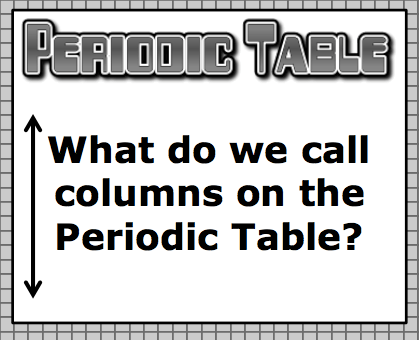
Vertical columns on the periodic table are called ___?

a)

groups

b)

periods

c)

rows

d)

families

90.

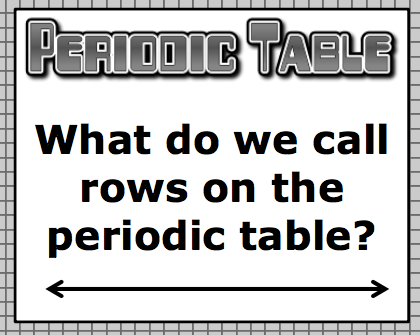
Horizontal rows on the periodic table are called ___?

a)

groups

b)

periods

c)

rows

d)

families

91.
Which of these is a property of metals?
a)
It's malleable
b)
It can't conduct electricity
c)
They are used in food
d)
It's very brittle
92.
How do metals differ from nonmetals?
a)
metals are shiny, nonmetals are dull
b)
metals are good insulators, nonmetals are good conductors
c)
metals are powdery
d)
nonmetals are shiny
93.
At room temperature metals are ____________.
a)
plasma
b)
gases
c)
liquid
d)
solid
94.
What are the three major categories of the periodic table?
a)
Alpha, Beta & Gamma
b)
Metals, Non-Metals and Metalloids
c)
Metals, Semi-metals and Metalloids
d)
Non-Metals, Semi-Metals and Metalloids
95.

Horizontal rows on the periodic table are called ___?

a)

groups

b)

periods

c)

rows

d)

families

96.

Vertical columns on the periodic table are called ___?

a)

groups

b)

periods

c)

rows

d)

families

97.
Radium (Ra)
a)
alkali metal
b)
alkaline earth metal
c)
halogen
d)
noble gas
98.

The is family has properties of both metals and nonmetals.

a)

Alkali

b)

Halogens

c)

Nonmetals

d)

Metalloids

99.
Argon (Ar)
a)
alkali metal
b)
alkaline earth metal
c)
halogen
d)
noble gas
100.
Gold (Au)
a)
Transition Metal
b)
Alkali Metal
c)
Alkaline Earth Metal
d)
Heavy Metal
101.

The horizontal row on the periodic table is called a

a)

group

b)

family

c)

period

102.

A vertical column is called...

a)

group

b)

tower

c)

period

103.

The elements in this family are soft, silvery, and very reactive with water.

a)

Alkaline Earth Metals

b)

Alkali Metals

c)

Transition Metals

d)

Lanthanides

104.

What group is the family found? These halides are very reactive and almost have full outer energy level/shell.

a)

1

b)

2

c)

16

d)

17

105.
Which element is not in the Alkali metal family?
a)
Li
b)
H
c)
Fr
d)
Cs 
106.
Which of the following is the most reactive group of non-metals? 
a)
Alkali
b)
Alkali Earth
c)
Halogen
d)
Noble Gas
107.
Which of these is a property of metals?
a)
It's malleable
b)
It can't conduct electricity
c)
They are used in food
d)
It's very brittle
108.
What is the atomic number?
a)
the number of protons
b)
the number of protons and neutrons
c)
the number of neutrons
d)
the number of protons and electrons
109.
a)
Periods
b)
Groups
110.
a)
Periods
b)
Groups
111.
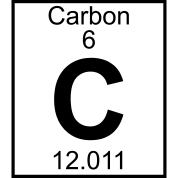
What does the 6 represent?
a)
atomic mass
b)
atomic number
c)
element name
d)
chemical symbol 
112.
What does 12.011 represent?
a)
atomic mass
b)
atomic number
c)
element name
d)
chemical symbol 
113.
What does the C represent?
a)
atomic mass
b)
atomic number
c)
element name
d)
chemical symbol 
114.
These are found on the Periodic Table.
a)
Compounds
b)
Elements
c)
Mixtures
115.

the positively charged subatomic particle contained in the nucleus of an atom

a)

proton

b)

neutron

c)

electron

d)

matter

116.

a subatomic particle, contained in the nucleus of an atom, having the same mass as a proton but no electrical charge

a)

proton

b)

neutron

c)

electron

d)

matter

117.

a negatively charged subatomic particle that orbits the nucleus of an atom

a)

proton

b)

neutron

c)

electron

d)

matter

118.

What group number are the halogens found?

a)

18 (8A)

b)

1

c)

2

d)

17 (7A)

119.
Which of the following is the atomic number of an alkali metal?
a)
31
b)
20
c)
18
d)
19
120.
Which properties are characteristic of the Group 1 metals?
a)
high reactivity and the formation of unstable compounds
b)
low reactivity and the formation of unstable compounds
c)
high reactivity and the formation of stable compounds
d)
low reactivity and the formation of stable compounds
121.
What group on the Periodic Table contains the elements of the alkaline earth family?
a)
1
b)
2
c)
17
d)
18
122.
Gold (Au)
a)
Transition Metal
b)
Alkali Metal
c)
Alkaline Earth Metal
d)
Heavy Metal
123.
Argon (Ar)
a)
alkali metal
b)
alkaline earth metal
c)
halogen
d)
noble gas
124.
Which of the following is the most reactive group of non-metals? 
a)
Alkali
b)
Alkali Earth
c)
Halogen
d)
Noble Gas
125.
Which of the following in not a diatomic element?
a)
hydrogen
b)
carbon
c)
nitrogen
d)
oxygen
126.

The is family has properties of both metals and nonmetals.

a)

Alkali

b)

Halogens

c)

Nonmetals

d)

Metalloids

127.

This type of element is dull, brittle solids and gases, insulators, poor conductors of heat and electricity, as well as having low melting points.

a)

metals

b)

metalloids

c)

nonmetals

128.
Which of the following is an Alkali Metal? 
a)
Magnesium
b)
Chromium
c)
Sodium
d)
Fluorine 
129.
Which of the following is an Alkaline Earth Metal? 
a)
Calcium
b)
Lithium
c)
Phosphorus
d)
Copper 
130.
Which of the following is a transition metal? 
a)
Iron
b)
Oxygen
c)
Neon
d)
Barium
131.
Which of the following is a Halogen? 
a)
Bromine
b)
Rubidium
c)
Argon
d)
Beryllium
132.
Which of the following is a Noble Gas? 
a)
Krypton
b)
Chlorine
c)
Radium
d)
Gallium
133.
Which of the following is the most reactive group of metals? 
a)
Alkali
b)
Alkaline Earth
c)
Halogen
d)
Transition Metals
134.
Which of the following is the most reactive group of non-metals? 
a)
Alkali
b)
Alkali Earth
c)
Halogen
d)
Noble Gas
135.
Which of the following groups is inert? 
a)
Alkali
b)
Transition Metals
c)
Halogens
d)
Noble Gas
136.
Which of the following is the atomic number of an alkali metal?
a)
31
b)
20
c)
18
d)
19
137.
Which properties are characteristic of the Group 1 metals?
a)
high reactivity and the formation of unstable compounds
b)
low reactivity and the formation of unstable compounds
c)
high reactivity and the formation of stable compounds
d)
low reactivity and the formation of stable compounds
138.
What group on the Periodic Table contains the elements of the alkaline earth family?
a)
1
b)
2
c)
17
d)
18
139.
Gold (Au)
a)
Transition Metal
b)
Alkali Metal
c)
Alkaline Earth Metal
d)
Heavy Metal
140.
Argon (Ar)
a)
alkali metal
b)
alkaline earth metal
c)
halogen
d)
noble gas
141.

The is family has properties of both metals and nonmetals.

a)

Alkali

b)

Halogens

c)

Nonmetals

d)

Metalloids

142.

Sulfur is a...

a)

metal

b)

nonmetal

c)

metalloid

143.
Which is a metal?
a)
Rhodium (Rh)
b)
Arsenic (As)
c)
Hydrogen
d)
Argon (Ar)
144.
Which is an alkaline earth metal?
a)
Calcium
b)
Rubidium
c)
Carbon
d)
Iodine
145.
Radium (Ra)
a)
alkali metal
b)
alkaline earth metal
c)
halogen
d)
noble gas
146.

Vertical columns on the periodic table are called ___?

a)

groups

b)

periods

c)

rows

d)

families

147.

Horizontal rows on the periodic table are called ___?

a)

groups

b)

periods

c)

rows

d)

families

148.
Which of these is a property of metals?
a)
It's malleable
b)
It can't conduct electricity
c)
They are used in food
d)
It's very brittle
149.
How do metals differ from nonmetals?
a)
metals are shiny, nonmetals are dull
b)
metals are good insulators, nonmetals are good conductors
c)
metals are powdery
d)
nonmetals are shiny
150.
At room temperature metals are ____________.
a)
plasma
b)
gases
c)
liquid
d)
solid
151.
What are the three major categories of the periodic table?
a)
Alpha, Beta & Gamma
b)
Metals, Non-Metals and Metalloids
c)
Metals, Semi-metals and Metalloids
d)
Non-Metals, Semi-Metals and Metalloids
152.

Horizontal rows on the periodic table are called ___?

a)

groups

b)

periods

c)

rows

d)

families

153.

Vertical columns on the periodic table are called ___?

a)

groups

b)

periods

c)

rows

d)

families

154.
Radium (Ra)
a)
alkali metal
b)
alkaline earth metal
c)
halogen
d)
noble gas
155.

The is family has properties of both metals and nonmetals.

a)

Alkali

b)

Halogens

c)

Nonmetals

d)

Metalloids

156.
Argon (Ar)
a)
alkali metal
b)
alkaline earth metal
c)
halogen
d)
noble gas
157.
Gold (Au)
a)
Transition Metal
b)
Alkali Metal
c)
Alkaline Earth Metal
d)
Heavy Metal
158.

The horizontal row on the periodic table is called a

a)

group

b)

family

c)

period

159.

A vertical column is called...

a)

group

b)

tower

c)

period

160.

The elements in this family are soft, silvery, and very reactive with water.

a)

Alkaline Earth Metals

b)

Alkali Metals

c)

Transition Metals

d)

Lanthanides

161.

What group is the family found? These halides are very reactive and almost have full outer energy level/shell.

a)

1

b)

2

c)

16

d)

17

162.
Which element is not in the Alkali metal family?
a)
Li
b)
H
c)
Fr
d)
Cs 
163.
Which of the following is the most reactive group of non-metals? 
a)
Alkali
b)
Alkali Earth
c)
Halogen
d)
Noble Gas