
 Worksheets
Phase Change Final Study Guide
Total questions: 67
Worksheet time: 34mins
Name
Class
Date
1.
When you transfer energy into a substance, what happens to the temperature?
a)
It stays the same
b)
It decreases
c)
It becomes negative
d)
It increases
2.
When you transfer energy into a substance, what happens to the molecules’ kinetic energy?
a)
It decreases
b)
It increases
c)
It stays the same
d)
It disappears
3.
Is burning a phase change?
a)
Yes
b)
Trick question none of these are right
c)
It is a chemical reaction
4.
When energy is transferred to or from a substance, it can change the molecules’ freedom of movement.
a)
True
b)
Neither true nor false
c)
False
d)
Not enough information
5.
What happens to the kinetic energy of a substance when it transfers that energy to another substance?
a)
It is converted to potential energy
b)
It stays the same
c)
It loses kinetic energy
d)
It increases its kinetic energy
6.
What is kinetic energy?
a)
a pull between two molecules that is always the same for a substance
b)
the way molecules in a substance move around relative to each other
c)
a group of atoms joined together in a particular way
d)
the energy that an object has because it is moving
7.
Scenario 1: A student wants to test how different amounts of water affect plant growth.
Is this the Independent or Dependent variable?
A student adds different amounts of water to each plant to see how it grows.
a)
Independent Variable
b)
Dependent Variable
8.
Scenario 2: A researcher investigates if the temperature of water affects how fast sugar dissolves.
Is this the Independent or Dependent variable?
A researcher records how quickly the sugar dissolves.
a)
Independent Variable
b)
Dependent Variable
9.
Scenario 3: A teacher wants to know if study time affects students' test scores.
Is this the Independent or Dependent variable?
The teacher has students study for different amounts of time.
a)
Independent Variable
b)
Dependent Variable
10.
Scenario 4: An experiment is conducted to determine whether the type of exercise affects heart rate.
Is this the Independent or Dependent variable?
The researcher measures the heart rate of each participant.
a)
Independent Variable
b)
Dependent Variable
11.
Scenario 5: A student wants to know if sunlight exposure affects the number of flowers a plant produces.
Is this the Independent or Dependent variable?
A student varies the amount of sunlight given to each plant.
a)
Independent Variable
b)
Dependent Variable
12.
Scenario 6: A scientist is testing how fertilizer type impacts crop yield.
Is this the Independent or Dependent variable?
The scientist measures the crop yield for each type of fertilizer.
a)
Independent Variable
b)
Dependent Variable
13.
Scenario 7: A researcher is examining if the amount of sleep affects memory retention.
Is this the Independent or Dependent variable?
Participants are given different amounts of sleep each night.
a)
Independent Variable
b)
Dependent Variable
14.
Scenario 8: A student wonders if the temperature of a classroom impacts student focus.
Is this the Independent or Dependent variable?
The student observes the focus level of students.
a)
Independent Variable
b)
Dependent Variable
15.
Scenario 9: A chef wants to see if cooking time affects the texture of pasta.
Is this the Independent or Dependent variable?
The chef changes the cooking time for the pasta.
a)
Independent Variable
b)
Dependent Variable
16.
Scenario 10: A researcher is interested in whether music volume affects productivity.
Is this the Independent or Dependent variable?
The researcher changes the volume of the music.
a)
Independent Variable
b)
Dependent Variable
17.
What is an independent variable in an experiment?
a)
A. The factor that is changed or controlled by the experimenter
b)
B. The factor that is measured or observed
c)
C. The variable that remains constant
d)
D. The conclusion of the experiment
18.
What is an dependent variable in an experiment?
a)
A. The factor that is changed or controlled by the experimenter
b)
B. The factor that is measured or observed
c)
C. The variable that remains constant
d)
D. The conclusion of the experiment
19.
Which of the following best defines a dependent variable?
a)
A. It is what you change in the experiment
b)
B. It is the result or outcome that is measured
c)
C. It is the control group
d)
D. It is the variable that is not measured
20.
In the vinegar and baking soda lab, which was the independent variable?
a)
A. Amount of vinegar
b)
B. Amount of baking soda
c)
C. Size of the container
d)
D. Temperature of vinegar
21.
What is a key difference between an independent and a dependent variable?
a)
A. The independent variable is measured, while the dependent variable is controlled
b)
B. The independent variable is changed, while the dependent variable is measured
c)
C. Both are kept constant during the experiment
d)
D. The dependent variable is manipulated, while the independent variable is observed
22.
Article Question: What happens to chocolate when it's placed near a campfire, and why does it change?
a)
It burns because its molecules react with oxygen.
b)
It melts because heat makes the molecules move around more.
c)
It freezes because the fire removes energy.
d)
It evaporates because the temperature is too high.
23.
Article Question: What is the difference between burning and melting?
a)
Melting turns something into gas, and burning turns it into liquid.
b)
Burning is a phase change, and melting is a chemical reaction.
c)
Melting is a phase change, and burning is a chemical reaction.
d)
Both burning and melting are chemical reactions.
24.
What is a molecule?
a)
the energy that an object has because it is moving
b)
a pull between two molecules that is always the same for a substance
c)
a group of atoms joined together in a particular way
d)
the way molecules in a substance move around relative to each other
25.
What is phase?
a)
a noticeably different form or state of the same substance
b)
the way molecules in a substance move around relative to each other
c)
a pull between two molecules that is always the same for a substance
d)
the energy that an object has because it is moving
26.
What does it mean to refute something?
a)
the energy that an object has because it is moving
b)
a pull between two molecules that is always the same for a substance
c)
the way molecules in a substance move around relative to each other
d)
to provide evidence that goes against a claim
27.
What is scale?
a)
the relative size of things
b)
a pull between two molecules that is always the same for a substance
c)
the energy that an object has because it is moving
d)
the way molecules in a substance move around relative to each other
28.
A liquid does not flow and can not take the shape of its container.
a)
True
b)
False
29.
A solid holds its shape and does not take
the shape of its container.
a)
True
b)
False
30.
A gas has no visible shape and fills its
container.
a)
True
b)
False
31.

What state of matter is this?
a)
Gas
b)
Liquid
c)
Soild
32.
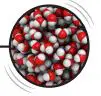
What state of matter is this?
a)
Gas
b)
Liquid
c)
Soild
33.
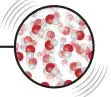
What state of matter is this?
a)
Gas
b)
Liquid
c)
Soild
34.
What is freedom of movement?
a)
the way molecules in a substance move around relative to each other
b)
the energy that an object has because it is moving
c)
a group of atoms joined together in a particular way
d)
a pull between two molecules that is always the same for a substance
35.
Article Question: What planet does Titan orbit around?
a)
Jupiter
b)
Earth
c)
Mars
d)
Saturn
36.
Article Question: How far is Titan from the sun?
a)
93 million miles
b)
500 million miles
c)
866 million miles
d)
1 billion miles
37.
Article Question: What is the thick, hazy atmosphere on Titan made of?
a)
Water vapor
b)
Methane gas
c)
Oxygen
d)
Carbon dioxide
38.
Article Question: What fills the lakes and seas on Titan?
a)
Water
b)
Liquid oxygen
c)
Carbon dioxide ice
d)
Tar-like substances like methane and ethane
39.
Article Question: What is the average surface temperature of Titan?
a)
0°C (32°F)
b)
-100°C (-148°F)
c)
-179°C (-290°F)
d)
-273°C (-459°F)
40.
Article Question: Who was Robert Boyle, and what did he discover about air?
a)
An English scientist who discovered that air is matter.
b)
A French scientist who discovered gravity.
c)
An Italian explorer who found new continents.
d)
A German philosopher who studied the stars.
41.
Article Question: What two things did Boyle study to understand air?
a)
Temperature and distance
b)
Volume and pressure
c)
Speed and direction
d)
Weight and color
42.
Article Question: What happens to the pressure of a gas when the volume goes up?
a)
Pressure stays the same
b)
Pressure goes down
c)
Pressure goes up
d)
Pressure disappears
43.
Article Question: What tool did Boyle use to conduct his air pressure experiments?
a)
A J-shaped glass tube
b)
A thermometer
c)
A scale
d)
A beaker
44.
Article Question: How did Boyle’s experiments change how scientists study gases today?
a)
He relied on theories from old philosophers.
b)
He used ideas without testing them.
c)
He based his discoveries on physical evidence that could be tested.
d)
He guessed the properties of air.
45.
Article Question: What are the three phases of water?
a)
Liquid, Solid, Plasma
b)
Liquid, Gas, Solid
c)
Gas, Vapor, Ice
d)
Ice, Steam, Liquid
46.
Article Question: How do water molecules behave in the liquid phase compared to the solid phase?
a)
They are locked in place in both phases
b)
They flow past each other in both phases
c)
They move freely in the liquid phase but are locked in place in the solid phase
d)
They fly apart in both phases
47.
Article Question: What causes a flash flood in a desert, like Antelope Canyon?
a)
Underground rivers
b)
Intense windstorms
c)
Quick rainfall on dry, hard ground
d)
Overflow from nearby lakes
48.
Article Question: What happens to water vapor when it cools in the atmosphere?
a)
It becomes solid ice
b)
It evaporates into thin air
c)
It turns into liquid droplets
d)
It stays as a gas
49.
Article Question: Why do the walls of glacier caves in Iceland sparkle in the light?
a)
The ice is transparent
b)
Water vapor reflects light
c)
The solid ice reflects light due to its rigid structure
d)
The ice is covered in reflective minerals
50.
Article Question: How does the ice in glaciers change when it comes into contact with volcanic rock?
a)
It turns into vapor
b)
It melts into liquid water
c)
It freezes even harder
d)
It stays as solid ice
51.
Article Question: What phase change happens at Niagara Falls during cold winters?
a)
Gas to liquid
b)
Liquid to vapor
c)
Liquid to solid
d)
Solid to gas
52.
Article Question: How does water in geysers like Old Faithful change phase before an eruption?
a)
Liquid water evaporates directly into vapor
b)
Liquid water is heated and turns into gas
c)
Water vapor turns into liquid
d)
Solid ice melts into liquid water
53.
Article Question: What allows the water in Old Faithful to erupt every 90 minutes?
a)
Pressure from underground rivers
b)
Continuous rainfall in the area
c)
Movement of tectonic plates
d)
A buildup of water vapor that forces liquid water upward
54.
Article Question: Why does rainwater flow across the desert floor instead of soaking in during a flash flood?
a)
The ground is too dry and hard to absorb the water quickly
b)
The ground is too sandy to retain water
c)
The water evaporates too fast
d)
The water runs uphill
55.
Article Question: What is combustion, and what conditions are needed for it to happen?
a)
Combustion happens when materials reach a low temperature and react with water.
b)
Combustion happens when materials reach a certain temperature and react with oxygen.
c)
Combustion happens when materials cool down and react with carbon dioxide.
d)
Combustion happens when materials melt and freeze at the same time.
56.
Article Question: Why does wood burn in a campfire instead of melting like chocolate?
a)
Because the wood is too wet to melt.
b)
Because wood’s melting point is higher than its flash point, so it burns.
c)
Because wood’s melting point is lower than its flash point, so it melts first.
d)
Because wood doesn’t react with oxygen in a fire.
57.
Article Question: What factors determine whether a material will burn or melt when heated?
a)
The speed at which the fire is burning.
b)
The type of fuel being used to heat the material.
c)
The material’s melting point and flash point.
d)
The amount of light and sound produced by the fire.
58.
Article Question: What is liquid oxygen, and why is it rare in everyday life?
a)
Liquid oxygen is a common liquid found in stores.
b)
Liquid oxygen is blue and can be made by scientists, but it's rare because it requires very cold temperatures to exist.
c)
Liquid oxygen forms naturally in puddles on the ground.
d)
Liquid oxygen is the same as water but in a different form.
59.
Article Question: Why is it harder to find liquid oxygen than liquid water?
a)
Oxygen molecules are not attracted to each other very strongly, so it's harder to turn them into a liquid.
b)
Water evaporates faster than oxygen.
c)
Oxygen molecules are smaller than water molecules.
d)
Oxygen is only found in gas form.
60.
Article Question: What process do scientists use to produce liquid oxygen from air?
a)
Scientists increase the temperature of air to turn it into liquid.
b)
Scientists lower the temperature of air in different tanks to separate gases and produce liquid oxygen.
c)
Scientists mix air with chemicals to create liquid oxygen.
d)
Scientists combine oxygen with nitrogen to produce liquid oxygen.
61.
Article Question: Why do oxygen molecules need to be extremely cold to change from gas to liquid?
a)
Oxygen molecules have strong attraction, so they don’t need to be cooled much.
b)
Oxygen molecules have weak attraction, so they need to lose a lot of energy before they can come together as a liquid.
c)
Oxygen molecules are naturally cold and easily turn into a liquid.
d)
Oxygen molecules need heat to turn into a liquid.
62.
Article Question: What other gases, like oxygen, are hard to condense into liquids, and why?
a)
Nitrogen and carbon dioxide, because they are too heavy.
b)
Hydrogen and methane, because they also have weak molecular attraction.
c)
Water vapor and helium, because they are both light gases.
d)
Nitrogen and oxygen, because they have very strong attraction.
63.
Article Question: Why does liquid water on Mars evaporate so quickly?
a)
The temperature on Mars is always very hot.
b)
The air pressure on Mars is low, so water evaporates at a lower temperature.
c)
Mars has a lot of water, so it evaporates fast.
d)
There is no sunlight on Mars to keep the water from evaporating.
64.
Article Question: What is air pressure, and how does it affect water on Earth compared to Mars?
a)
Air pressure is the weight of the atmosphere pushing down, and on Earth, it makes water evaporate at a higher temperature than on Mars.
b)
Air pressure is the weight of the atmosphere, and it doesn’t affect water on either planet.
c)
Air pressure on Mars is higher than on Earth, so water evaporates more slowly.
d)
Air pressure is the wind speed, and on Earth, it keeps water from freezing.
65.
Article Question: Why does water on Mars evaporate at a lower temperature than on Earth?
a)
The gravity on Mars is stronger, so water evaporates faster.
b)
Mars has more sunlight, which makes the water boil faster.
c)
The water on Mars is different from the water on Earth.
d)
The air pressure on Mars is lower, so water molecules escape more easily.
66.
Article Question: How does a pressure cooker use air pressure to cook food faster?
a)
It lets steam out to lower the temperature of the water.
b)
It traps steam inside, raising the pressure and the temperature of the water.
c)
It increases the amount of air pressure inside to cool the water down.
d)
It uses a fan to make the water boil faster.
67.
Article Question: Why do scientists look for water when searching for life on Mars?
a)
Water is a sign that there may have been or still is life on Mars.
b)
Water is the most common element in the universe.
c)
Scientists think Mars will eventually become like Earth.
d)
Water creates more sunlight for plants to grow.
100 %

