
 Worksheets
Quiz #15 - Magnetics and waves
Total questions: 155
Worksheet time: 2hrs 9mins
Magnetism is a force of ____________________________ that occurs between two _____________ objects.
attraction or repulsion, magnetic
external or internal, magnetic
external or repulsion, electronic
attraction or internal, electronic
A magnetic field is a field of force that is produced by moving ________ charges.
northern
positive
gravitational
electric

The magnetic ____________ around a bar magnet is shown above.
legs
flowers
field
direction
The Earth produces its own ________ field.
spectrum
electric
magnetic
progressive
A compass points toward the south pole of Earth's magnetic field, located near the Earth's geographical ________.
north
south
east
west
In magnetic materials, all of the ________ are pointing in the same direction.
doors
electrons
domains
orbits
A permanent magnet is a material that produces a ___________________ field without any ___________________ magnetic field being present.
electronic, internal
magnetic, internal
magnetic, external
electronic, external
Permanent magnets can be demagnetized by ___________________ them past the Curie point (approximately 1,060 °F).
heating
freezing
shaking
solidifying
Every magnet has both a _________ pole and a __________ pole.
North, South
East, West
Positive, Negative
Positive, South
Certain materials respond to magnetic fields by becoming ______________ themselves. ____________ is one of these materials.
magnetic, Plastic
electronic, Iron
magnetic, Iron
electronic, Plastic
Some objects that normally aren't magnetic can become magnetized when connected to a circuit. Items that are magnetized in this way are called ________.
electromagnets
electrons
electrochromic devices
permanent magnets
Probably the most useful thing about electromagnets is that they can be turned ________ and ________.
on, off
positive, negative
north, south
on, negative
If two magnets are close together, the magnetic force will be ________.
smelly
weak
strong
positive
If two magnets are placed so that a north pole and a south pole are facing each other, they will _____________ each other.
date
spin
repel
attract
If two magnets are placed so that two ____________ poles or two ____________ poles are facing each other, they will repel each other.
North, South
external, internal
positive, negative
North, West

Although magnetic fields are _____________, one common way that people investigate them is to use ________ filings.
invisible, iron
touchable, iron
invisible, plastic
touchable, plastic

By sprinkling iron filings in a magnetic field on a flat surface, it is possible to see the __________ of a magnetic field.
shape
distance
mass
temperature

The image above shows how iron filings respond to magnetic fields generated by two magnets with ____________ poles facing each other.
opposite
like
positive
negative

The image above shows how iron filings respond to magnetic fields generated by two magnets with ____________ poles facing each other.
like
opposite
positive
negative

A horseshoe magnet will generate a magnetic field similar in shape to that of two ________ poles brought near each other.
like
opposite
positive
negative

Look at the picture carefully.
Which screws will be attracted?
iron and steel screws
iron and aluminum screws
steel and aluminum screws
all screws

What would happen when two north poles of magnets are placed together?
The force will pull them together (attract).
The force will push them away from each other (repel).
The strength of the magnet is doubled.
What would happen when two north poles of magnets are placed together?
The force will pull them together (attract).
The force will push them away from each other (repel).
The strength of the magnet is doubled.

What would happen when the opposite poles of magnets are placed together?
The force will pull them together (attract).
The force will push them away from each other (repel).
The strength of the magnet is doubled.
True or False: All metals are attracted to magnet.
True
False
Where is the force of attraction the strongest on a magnet?
above the magnet
below the magnet
at the poles
in the middle

What do the lines around this magnet represent?
North Pole
South Pole
Magnetic Declination
Magnetic Field
If you cut a magnet in half, what happens to the poles?
One half gets the North Pole, the other half gets the South Pole.
Both halves get only a South Pole.
Both halves get only a North Pole.
Both halves get a North pole and a South Pole.
Which of the following objects will not be attracted to a magnet?
fridge
wooden bowl
microwave
cooking pot

Look at the picture carefully.
The paper clips are . . .
magnet
magnetic objects
How many poles does a magnet have?
1 pole
3 poles
2 poles
o pole
like poles of a magnet attract each other and unlike poles of a magnet repel each other.
true
false
usually the north pole of a compass needle is painted with
Red
blue
black
green
Where is the strongest magnetic field around a bar magnet?
above and below
near the poles
in the middle
on the north pole
A magnetic force becomes weaker as magnets ________.
repel
attract
move together
move apart
Objects that are attracted to magnets are called...
ferromagnetic
magnet
attraction
repulsion
To push away from a magnet
repel
attract
levitate
like
A magnet created by running an electric current through it
temporary magnet
superconductor
permanent magnet
electromagnet
Which of the following items is NOT attracted to a magnet?
paper clip
iron nail
rubber band
In order to magnetize an object for electromagnetism, it needs to have iron or steel (ex. a rod or nail).
True
False
Electromagnets can be turned on and off.
True
False
Electromagnets need a power source.
True
False

A device that uses a free-moving magnetic needle to show direction is a:
Ruler
magnet
compass
magnetic field


What are the 2 parts of a magnet?
North Pole and South Pole
North Pole and West Pole
South and East Pole
South and South Pole

In which part of a magnet is the magnetic force strongest?
In the Center
At the Poles
In the middle
At the North Pole only
What will happen when two like poles of magnets are put together?
They attract each other
They repel each other
What will happen when two opposite poles of magnets are put together?
They attract each other
They repel each other
Which is an example of magnetic object?
Iron screw
Copper wire
Rubber toy
newspaper

How is magnet used in the picture?
hold objects
show direction
produces movements
lift heavy objects

What is the use of the magnet in the picture?
to produce sounds
to show directions
to store information
When _______________ travels through a
conductor, a magnetic field is created
current
a magnetic field
neutrons
Electric currents produce _____________
electron clouds
magnetic fields
sound waves
In magnets and electromagnets, similar poles attract
true
false
In magnets and electromagnets, dissimilar (opposite) poles attract
true
false
Electrons which collect at the negative end of the battery, can flow to the positive end through a ___________________
wire
electron cloud
magnet
When the strength of the magnetic field changes, the ________________________between the coil and the permanent magnet changes.
attractive force
polarity
wire
Which of the following are important parts in allowing the speaker to function?
A wire
Speaker cone/membrane
magnet
Music player
Spider
Potential energy is stored within the magnetic field and is transferred to the magnets. When the magnets move, this is _________ energy.
Magnetic
Kinetic
Plain ol' energy
Force
True or False: Taking air out from between two magnets takes away the magnetic field.
True
False
What factors affect the strength of magnetic forces?
Distance between the magnets
Number of magnets
Number of coils
Strength of the current
True or False: Electromagnets can be turned off.
True
False
What direction does the magnetic force point?
Out of north, into south
Out of south, into north
Out of north and south
It has no direction
Which part of the speaker system vibrates so that we can hear the sound?
Wire
Magnet
Cone/Membrane
Music Player

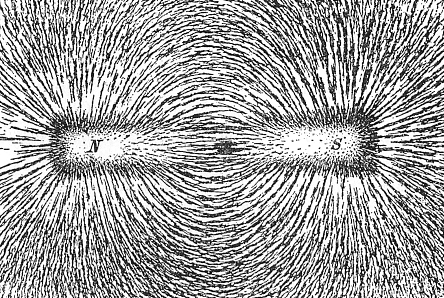
The magnetic field stores _____________ ___________.
potential energy
iron filings
kinetic energy
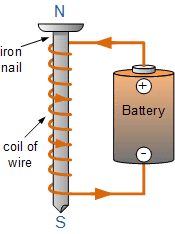
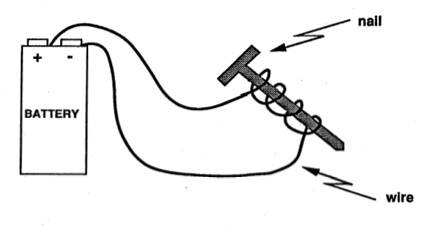
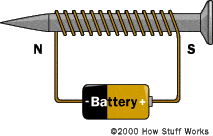
In order for an electromagnet to be formed, an __________ current must pass through a coil of __________.
wire, iron
electric, wire
iron, electric
excited, hair


In magnets and electromagnets, similar poles attract
true
false
In magnets and electromagnets, dissimilar (opposite) poles attract
true
false
add more batteries

Refrigerator magnets and bar magnets are what type of magnet?
electromagnet
electronic
permanent
A force that can act at a distance is called
non contact force
friction
balanced

rhythmic disturbance that moves through a medium or vacuum
wave
wavelength
seismic waves
transverse waves

The distance between two corresponding parts of a wave, such as from crest to crest
wavelength
amplitude
compression
rarefaction

Lowest part of a wave
trough
crest
amplitude
wavelength

Highest part of a wave
crest
trough
wave
amplitude

the height of a wave from the origin to the crest
amplitude
wavelength
compression
rarefaction

a denser, tightly packed region of a longitudinal wave
compression
rarefaction
amplitude
wavelength

The less dense, more spread out region of a longitudinal wave
rarefaction
compression
wavelength
trough

Waves of energy that provide us with the visible light spectrum (the colors we see)
light waves
sound waves
seismic waves
wave

waves of energy that travel through the Earth and are the result of an earthquake, volcano, or explosion
seismic waves
light waves
sound waves
longitudinal waves

waves of energy made by vibrations; require a medium (air, water, or solids) to travel
sound waves
seismic waves
light waves
transverse waves

A wave that moves in a direction perpendicular to the displacement of the transmitting medium
transverse wave
longitudinal wave
seismic wave
light wave

a wave that moves in the same direction as the displacement of the transmitting medium
longitudinal wave
transverse wave
sound wave
light wave

What type of electromagnetic waves have the longest wavelength?
Radio Waves
Microwaves
Visible Light
X-Rays
What type of electromagnetic waves have the shortest wavelength?
Radio Waves
Microwaves
Visible Light
Gamma Rays
Which of these two electromagnetic waves has a shorter wavelength?
Radio Waves
Microwaves
Which of these two electromagnetic waves has a shorter wavelength?
Visible Light
Infrared Light
Which of these two electromagnetic waves has a shorter wavelength?
X-Rays
Ultraviolet Light
Which of these two electromagnetic waves has a longer wavelength?
Microwaves
Ultraviolet Light
Which of these two electromagnetic waves has a longer wavelength?
Ultraviolet Light
Gamma Rays
Which of these two electromagnetic waves has a longer wavelength?
Radiowaves
Visible Light
Which of these two electromagnetic waves has a higher frequency?
Radio Waves
Infrared
Which of these two electromagnetic waves has a higher frequency?
X-Rays
Gamma Rays
Which of these two electromagnetic waves has a higher frequency?
Microwaves
Visible Light
Which of these two electromagnetic waves has a lower frequency?
Radio Waves
Visible Light
Which of these two electromagnetic waves has a lower frequency?
Visible Light
X-Rays
Which of these two electromagnetic waves has a lower frequency?
Ultraviolet Light
Gamma Rays
Which of these two electromagnetic waves has higher energy?
Gamma Rays
X-Rays
Which of these two electromagnetic waves has higher energy?
Visible Light
Microwaves
Which of these two electromagnetic waves has higher energy?
Infrared
Radio Waves
Which of these two electromagnetic waves has lower energy?
Radio Waves
Gamma Rays
Which of these two electromagnetic waves has lower energy?
Visible Light
X-Rays
Which of these two electromagnetic waves has lower energy?
Microwaves
Infrared
______________________ are synchronized oscillations of electric and magnetic fields.
Sound Waves
Ocean Waves
Electromagnetic Waves
Compression Waves
Electromagnetic waves are commonly referred to as?
Light
Sound
Matter
Space


What do all waves transfer?
Matter
Heat
Electricity
Energy
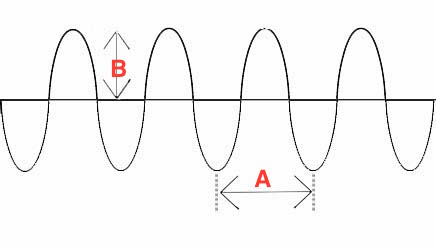
Six waves go past a fixed point in two seconds. What is the frequency of the wave?
3
6 Hz
3 Hz
2
20 waves go past a fixed point in 10 seconds. What is the frequency of the wave?
20 seconds
20 Hz
2 Hz
2

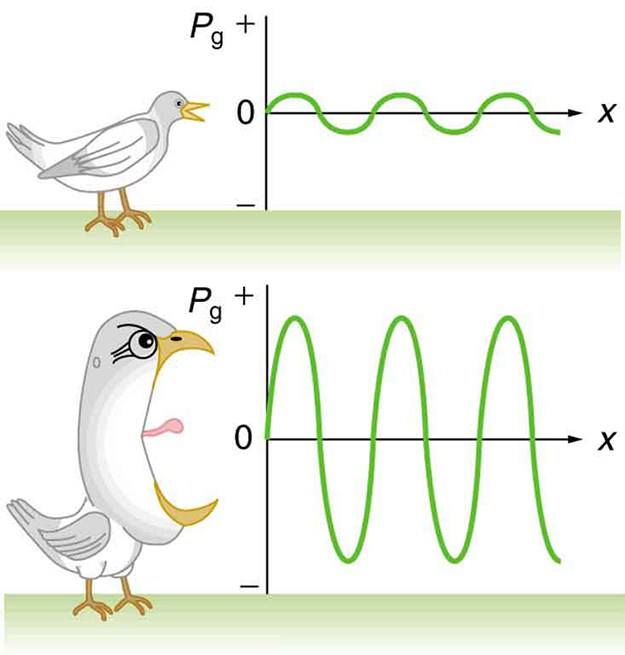
If 120 waves are emitted in 1 minute, then the frequency of this source is?
5 Hz
6 Hz
2 Hz
4 Hz
The material through which a wave travels is?
a rope
water wave
snaves
medium
Waves that require a medium are known as
Medium waves
Mechanical waves
Air waves
Heat waves
What is a longitudinal wave?
the matter through which a mechanical wave travels
two lines that will never touch
the particles of a medium that travel parallel to a wave
two lines that meet at a right angle
What is a transverse wave?
the particles of a medium that travel perpendicular to a wave
the particles of a medium that are fast
the particles of a medium that travel parallel to a wave
the particles of a medium that you can touch

What type of wave is this?
Transverse
Longitudinal
Surface
Hair wave

What type of wave is this?
Transverse
Longitudinal
Surface
Hair wave
Which seismic waves travel through the interior layer of the Earth?
body waves
deep waves
inner waves
surface waves
What do you call the motion or vibration of earthquake that travels outward from the focus?
chemical energy
electromagnetic waves
gravity waves
seismic waves

Which set of waves are the S waves?
Wave A
Wave B
Wave C
They are all S waves

Which set of waves are the P waves?
Wave A
Wave B
Wave C
They are all P waves
P waves are also called
pushing waves
pulling waves
primary waves
primordial waves
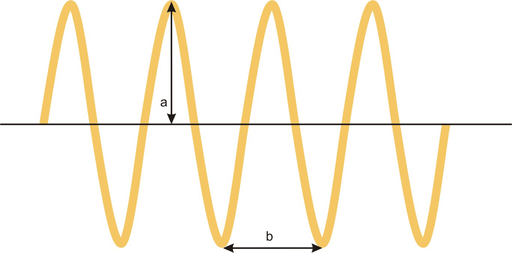

If this wave chain represents 1 second, What is the frequency of the waves?
1 Hz
9 Hz
3 Hz
6 Hz
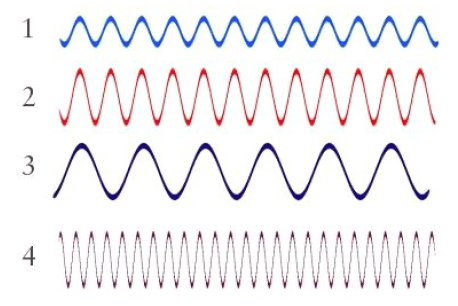

A guitar string vibrates with a frequency of 320 hz. If the wavelength of the vibration is 0.23 meters what is the speed of the wave?
320.23 m/s
1391.3 hz
73.6 m/hz
73.6 m/s
The blue-throated hummingbird flaps its wings 300 times a minute. What is its frequency?
5 Hz
300 Hz
50 Hz
2 Hz

