
 Worksheets
Ecosystem Ecology
Total questions: 38
Worksheet time: 19mins
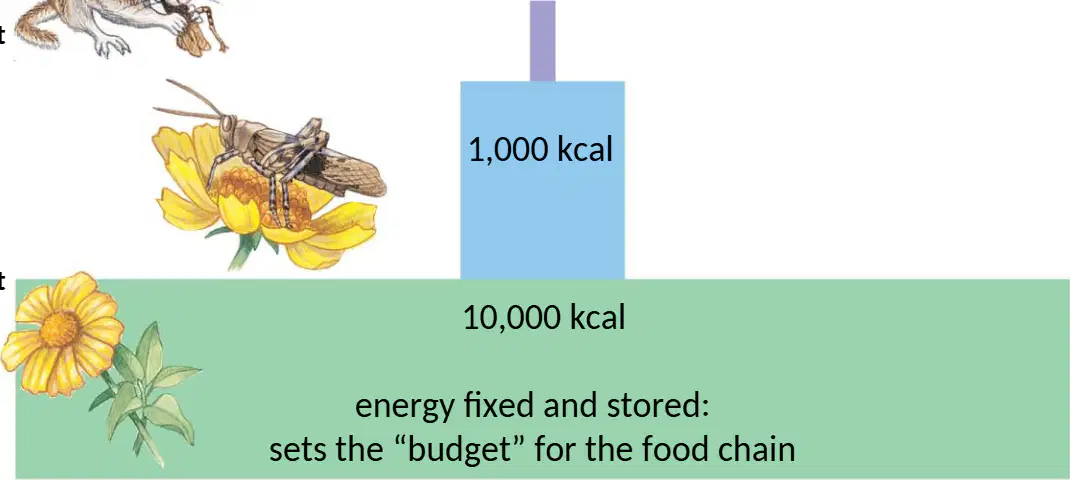
What is the "10% rule" in an energy pyramid?
Only 10% of energy is lost as heat at each level.
Only 10% of energy is passed to the next trophic level.
10% of energy is used for growth at each level.
10% of energy is stored as fat at each level.
In an energy pyramid, if a primary consumer eats 10,000 kcal, how much of that energy will be available to a tertiary consumer?
10 kcal
100 kcal
1,000 kcal
10,000 kcal
Which of the following is a primary consumer in the energy pyramid?
Snake
Mouse
Grasshopper
Flower
Why is it more resource-intensive to obtain energy from meat compared to a plant-based diet?
It requires less land and water.
It involves fewer chemicals.
It requires more land, water, and chemicals.
It is more efficient in terms of energy transfer.
What is biogeochemical cycling?
The movement of chemicals between living and non-living components
The process of photosynthesis in plants
The cycle of water evaporation and precipitation
The formation of rocks and minerals
Which of the following are important biogeochemical cycles for living organisms?
Oxygen, hydrogen, and helium
Water, carbon, nitrogen, and phosphorus
Iron, copper, and zinc
Sodium, potassium, and chlorine
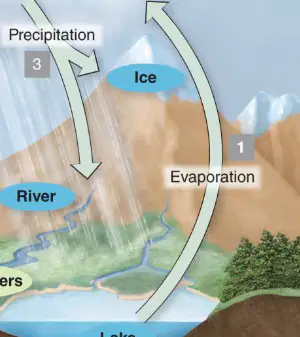
Which shape represents reservoirs in the cycle diagram?
Ovals
Arrows
Rectangles
Circles
What do arrows indicate in a biogeochemical cycle diagram?
Reservoirs
Movement between reservoirs
Transfer processes
Storage
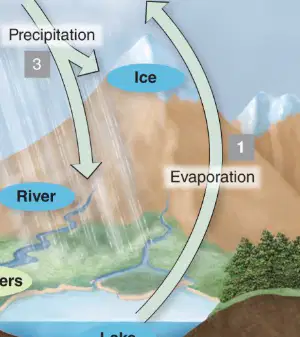
Which shape is used to represent transfer processes in the cycle diagram?
Ovals
Arrows
Rectangles
Triangles
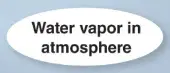
What is the process called when water vapor turns into liquid water in the atmosphere?
Evaporation
Condensation
Precipitation
Transpiration
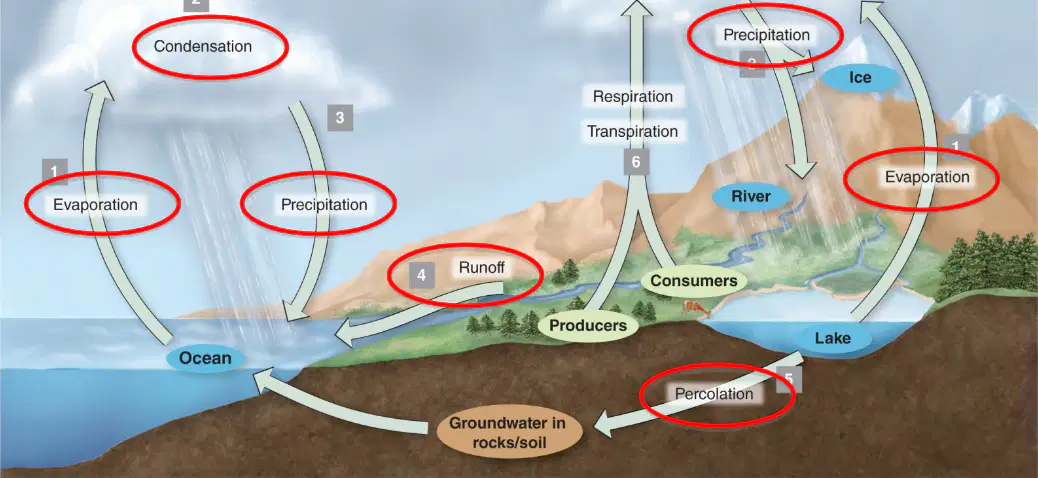
Which of the following is a major physical transfer process in the water cycle?
Photosynthesis
Evaporation
Combustion
Erosion
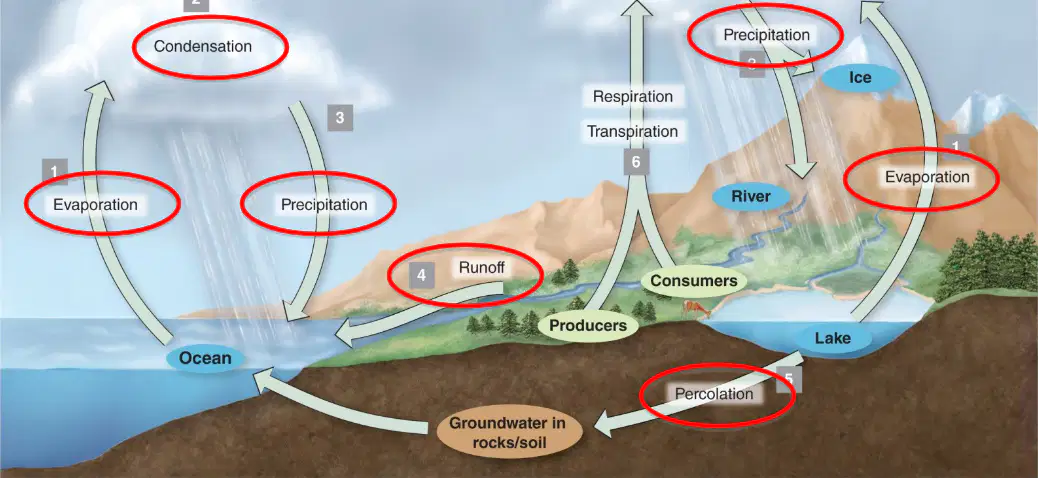
What process in the water cycle involves water vapor cooling and changing into liquid droplets?
Evaporation
Transpiration
Condensation
Percolation
In the water cycle, what is the process by which water moves from the surface to the atmosphere?
Runoff
Precipitation
Evaporation
Percolation
Which process in the water cycle is responsible for water returning to the earth's surface from the atmosphere?
Transpiration
Precipitation
Percolation
Respiration
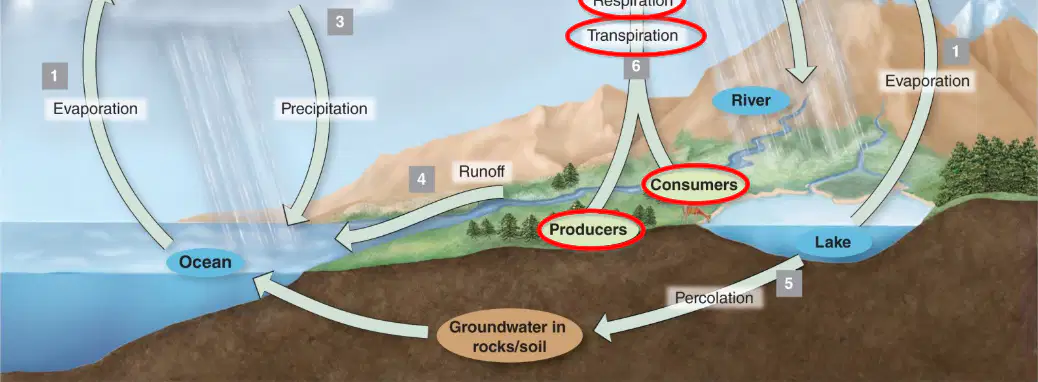
How do living organisms return water to the atmosphere in the global water cycle?
Evaporation
Condensation
Respiration and transpiration
Precipitation
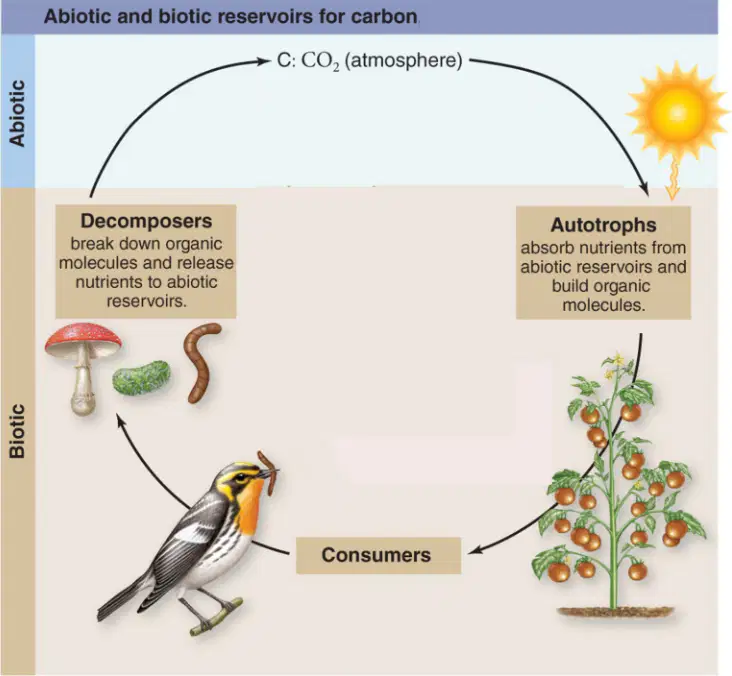
What is the role of producers in the carbon cycle?
Convert organic carbon to an abiotic form
Access abiotic source and convert to an organic form
Break down organic molecules
Release carbon as waste
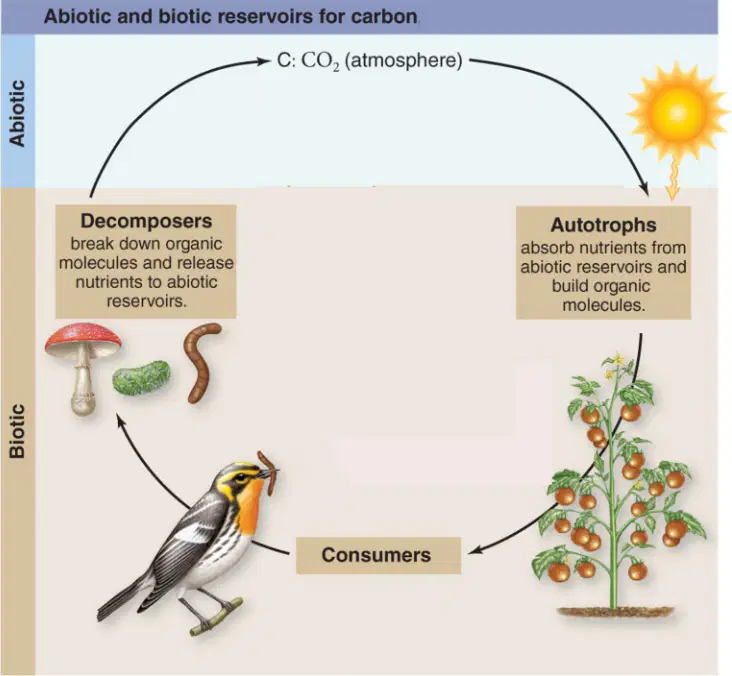
How do consumers contribute to the carbon cycle?
They absorb nutrients from abiotic reservoirs
They break down organic molecules
They incorporate carbon into their bodies and release some as waste
They convert carbon to an abiotic form
What is the function of decomposers in the carbon cycle?
Absorb nutrients from abiotic reservoirs
Convert carbon to an organic form
Break down wastes and return carbon to abiotic reservoirs
Incorporate carbon into their bodies
What process in the carbon cycle involves plants converting carbon dioxide into organic matter using sunlight?
Respiration
Photosynthesis
Decomposition
Combustion
Which process in the carbon cycle is responsible for releasing carbon dioxide back into the atmosphere from living organisms?
Photosynthesis
Decomposition
Respiration
Mining

In the carbon cycle, what is the role of decomposers?
To produce fossil fuels
To break down organic matter in soil
To perform photosynthesis
To mine carbon
What process in the carbon cycle involves the conversion of organic matter into fossil fuels over millions of years?
Photosynthesis
Compression
Combustion
Dissolution
What is the carbon cycle?
A) A process involving only biotic components
B) A global exchange between biotic and abiotic components
C) A cycle that occurs only in the ocean
D) A process that only involves fossil fuels
Which element below is the central element of life?
A) Oxygen
B) Hydrogen
C) Carbon
D) Nitrogen
How is human activity disrupting the carbon cycle?
It stabilizes the fast cycle by storing more CO₂.
By moving carbon from a long-term stable reservoir into the atmosphere.
It has no impact on the carbon cycle.
It reduces the amount of CO₂ in the atmosphere.
What is especially important in the context of changes in communities?
Changes to consumers
Changes to producers
Changes to decomposers
Changes to predators
What is ecological succession?
The process of rapid change in a community
The process of gradual change in a community, both terrestrial and aquatic
The process of sudden change in an aquatic community
The process of gradual change in a terrestrial community only
Ecological succession occurs ______.
When competing organisms modify the physical environment
When the climate remains constant
When there is no competition among organisms
When the physical environment remains unchanged
What is primary succession?
Occurs where a community has been disturbed but not destroyed
Changes that occur where no community existed before
Occurs in aquatic environments only
Occurs in urban areas only
Secondary succession (rather than primary succession) will follow which of these?
Volcanic eruption
Glacier retreat
Fire
Road cuts
What is the role of pioneer species in ecological succession?
They are the last to colonize an area.
They alter physical conditions and enable other species to establish.
They follow grasses and shrubs.
They are long-lived, late-maturing species.
What happens after colonists alter physical conditions in ecological succession?
Pioneer species return to the area.
Further decomposition leads to more soil and rooted species.
The environment becomes barren again.
Animal species disappear.
Which type of species are described as long-lived and late-maturing in ecological succession?
Pioneer species
Colonist species
Equilibrium species
Opportunistic species
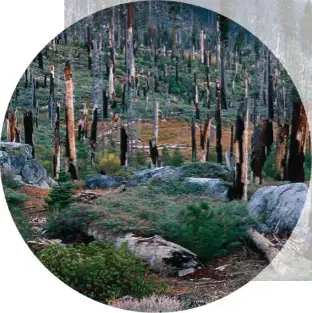
What is a common effect of disturbance events on biological communities?
Permanent destruction of the community
Temporary damage and resource alteration
Complete immunity to change
Immediate recovery without any change
What type of succession is typically initiated by disturbance events?
Primary succession
Tertiary succession
Secondary succession
No succession
Which statement is true regarding community change due to disturbances?
Non-change is more typical than change
Change is more typical than non-change
Communities never experience disturbances
Disturbances always lead to destruction
What happens after colonists alter physical conditions in an ecological succession?
Pioneer species return to the area.
The environment becomes unsuitable for rooted species.
Further decomposition leads to more soil and rooted species.
The area becomes barren again.
Which type of species are considered strong competitors in a stable environment during ecological succession?
Pioneer species
Opportunistic species
Long-lived, late-maturing equilibrium species
Rapidly reproducing species

