
 Worksheets
Midterm World History Review
Total questions: 87
Worksheet time: 1hrs 11mins
Who founded the religion of Buddhism?
The Aryans
Siddhartha Gautama
Mahatma Gandhi
Sargon
According to Buddha, what is the cause of all human suffering?
Selfish desires and greed
The Eightfold Path
Four Noble Truths
Meditating
How many Noble truths are in Buddhism?
1
4
5
2
Origin: India
Hinduism
Buddhism
Both
Eightfold Path
Hinduism
Buddhism
Both
4 Noble Truths
Hinduism
Buddhism
Both
Nirvana
Hinduism
Buddhism
Both
Moksha
Hinduism
Buddhism
Both
Vedas
Hinduism
Buddhism
Both
Had a caste system
Hinduism
Buddhism
Both
The place of worship for Muslims is called?
Mosque
Church
Temple
Synagogue
What are the five pillars of Islam?
Pilgrimage, Fasting, Charity
Reincarnation, Charity, Caste System
The Holy Trinity, Torah, Noble Truths
Eight Fold Path, Charity, Good Deeds
Siddhartha Gautama is known today as ...
Hindu
Buddha
Dr. Gautama
Harrapan
Buddha's "Fourth Truth" says we can overcome suffering following the eightfold path, which includes
We must try to improve ourselves
We should be kind and honest
We should not harm others
We must meditate
Which is not one of the 3 divine people that make up the Holy Trinity?
God
Jesus
Moses
Holy Spirit
Which is an example of Cultural Diffusion along the Silk Road
The spread of the Black Plague
The spread of Buddhism from India to East Asia
The spread of the process to make paper
The spread of new spieces of animals from one country to the next

The Silk Road was a network of trade routes that connected China to other parts of _____and the _______.
Asia/West
China/West
China/Mediterranean
Asia/Europe

While the Silk Road transported goods, it also spread technology, religion, art, language, new ideas, and diseases.
True
False
What was the Silk Road?
a road made of silk
an network of trading routes that connected Europe and Asia
a way to Italy
a party with peppa pig
Which is the most important fact that makes the Silk Road significant to history ?
the exchange of culture, Art, religion, philosophy, technology, language, science, architecture.
diseases
poisonous snakes
Black Plague

Wild fires would break out.
bandits
lack of water
bad weather
Chicken Pox
Flu
Dehydration
Bubonic Plague (Black Plague)
What does "Renaissance" mean?
Reconvert
Rebirth
Re-examine
Review

Who painted the Mona Lisa?
Michelangelo
Donatello
Jan Van Eyck
Leonardo da Vinci
Where did the Renaissance begin?
England
Norway
Italy
Spain
Who were the main Patron class family in Italy? (First mafia family)
Barrone
Medici
da Vinci
Marietta
What were the two most famous works by Michelangelo?
The Last Supper
David
The Sistine Chapel
The Wedding
What institution did people lose faith in because of its inability to fight the Black Death?
The Monarchy
The Police
The Church
The Trade Market
Who wrote about how to effectively lead a state in "The Prince?"
Erasmus
Albrect Durher
Shakespeare
Machiavelli

painted the ceiling of the Sistine Chapel
Donatello
Da Vinci
Michelangelo
Which of these events influenced the changing role of religion during the Renaissance?
the humanist movement
the removal of the pope
the burning of bibles
the invention of movable type
Which one did Suleiman NOT do?
Ruled the largest lands
Modernized the Army
Lost many battles
Improved the government
Janizaries were NOT responsible for...
Guarding the Sultan
Transporting Grain
Fighting in battles
Helping in government
The Sultan was...
A farmer
A Janizary
A merchant
The Ruler
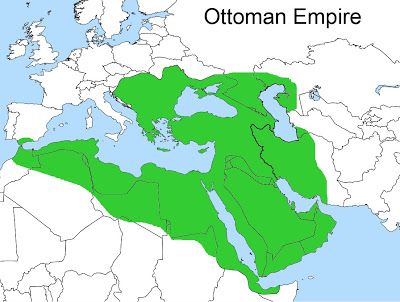
Which continents did the Ottoman Empire have some control over? Click all that apply.
Europe
Asia
Africa
North America
South America
What were Suleyman I achievements?
He led a powerful navy and army
He captured and ended the Byzantine Empire
He reformed the legal system and passed laws to protect non-Muslims
He restored the Grand Mosque in Mecca
Suleiman the Magnificent was an Ottoman Turk leader (1520–1566.) He is also known as "The Codifier" because he
organized the legal system
supported the arts
was a military genius
encouraged education for women
The Ottoman and Safavids were the first to use this military invention throughout their empire:
Ships
Telescopes
Gunpowder
Bows and arrows
What were the main military tactics used by the Ottoman Empire?
Archery and spears
Gunpowder weapons, highly trained infantry and cavalry
Nuclear weapons and tanks
Untrained soldiers and no strategy
How did the Ottoman Empire utilize its Janissary corps in military operations?
As naval officers
As elite infantry units
As diplomats
As agricultural workers
What are some examples of art and architecture from the Safavid Empire?
Stone sculptures, stained glass windows, and Gothic cathedrals
Mayan pyramids, African masks, and Greek temples
Renaissance paintings, Roman aqueducts, and Baroque palaces
Intricate tile work, calligraphy, and Isfahan mosques
How did Safavid rulers promote the development of art and architecture in their empire?
By destroying all existing art and architecture
By patronizing artists and architects, and incorporating artistic elements into their buildings.
By banning all forms of art and architecture
By ignoring the artistic community completely
What is the correct location of the Mughal Empire


The map below displays which gunpowder empire?
Ottoman
Safavid
Mughal
Russia
Which empire ended religious toleration and created civil war between Muslims and Hindus?
Ottoman Empire
Ming Dynasty
Safavid Empire
Mughal Empire
Who was the Mughal emperor with a genius for cultural blending, military conquest, and art? He ruled from 1556 to 1605.
Akbar
Babur
Shah Jahan
Shivaji

The Spanish colonized America for...
Gold
God
Glory
All of the above
What explorers ship was the first to sail around the world?
Ferdinand Magellan
Hernando De Soto
Henry Hudson
Robert LaSalle
What was the significance of the Treaty of Tordesillas?
It divided the newly discovered lands between Spain and Portugal
It established trade routes between Europe and Asia
It ended the conflict between European nations
It granted exclusive rights to England in the Americas
Why did so many natives die of diseases from the Old World?
They were weaker than the Europeans
They were never exposed to these diseases so they were not immune
They got infections from battling the Europeans
They didn't, populations actually increased among native peoples
Europe was also known as the __________.
New World
Old World
Which is not part of the Old World?
Africa
Asia
Europe
North & South America


What Native American empire did Cortes defeat?
Comanche
Karankawa
Aztec
Apache
Who was the French king known as the Sun King?
Louis XIII
Louis XIV
Henry IV
Anne of Austria
Peter the great was able to westernize Russia by
implementing policies that forced Russians to dress in Western European clothes
Forcing Russian males to shave their beards or pay a tax
Constructing St. Petersburg in Western European architecture
All of the above
What was the purpose of Louis XIV's massive expansion of Versailles?
To create a palace suitable for Europe's king of kings
To host nobles and their entourages
To turn his dad's hunting lodge into a royal residence
To establish a centralized government
Locke argued that we had 3 main natural rights. What are they? (Select 3)
Life
Liberty
Pursuit of Happiness
Property
What concept is Montesquieu best known for contributing to political theory?
The invisible hand
Laissez-faire economics
The separation of powers
The labor theory of value
Which Philosopher was famous for developing 'Social Contract'
Thomas Hobbes
Jean Jacques Rousseau
Montesquieu
John Locke
Voltaire
What Enlightenment thinker fought for tolerance, and a freedom of speech and religion?
Locke
Voltaire
Thomas Paine
Thomas Jefferson
The Declaration of Independence states that the purpose of the government is to secure and protect the natural born rights (permanent) of citizens. What are the permanent rights we all have?
life, liberty, pursuit of a job
liberty, freedom, pursuit of happiness
life, liberty, pursuit of happiness
life, freedom, do what we want
Which of the following events became a symbol of the French Revolution?
the Revellon riots
the establishment of the National Assembly
the storming of the Bastille
the summoning of the Estates-General
Most of the 30-60,000 executions that took place during the French Revolution were done by:
Hanging
Electric chair
Firing Squad
Guillotine
What was the Reign of Terror?
A peaceful protest
A festival
A time of extreme violence and paranoia
A royal celebration
The Reign of Terror took place during which important historical event?
American Revolution
World War I
French Revolution
Hundred Years' War
What was the Napoleonic Code?
A system of national laws implemented by Napoleon
A military strategy used by Napoleon
A coalition of European forces against Napoleon
A series of meetings to restore order in Europe
Why did the people accept Napoleon as Emperor after getting rid of their king?
They didn't like having rights
He promised equality
They didn't. They fought against him.
He had a nice horse.
Who were the major powers involved in the Congress of Vienna?
France, Spain, Portugal, and Italy
Austria, Prussia, Russia, and the United Kingdom
Germany, Belgium, Netherlands, and Denmark
Sweden, Norway, Finland, and Switzerland
What was the main goal of the Congress of Vienna?
Promote religious freedom
Establish a communist government
Establish a new balance of power in Europe
Create a global empire
The global trading of plants, animals, diseases, and ideas begun after Columbus's first voyage is known as __________________.
The Great Exchange
The Columbian Exchange
The New World Exchange
The American Exchange

Where did potatoes come from?
New World
Old World

Where did corn come from?
New World
Old World

Where did tomatoes come from?
New World
Old World

Where did pigs come from
New World
Old World

