
 Worksheets
Earth Science Midterm Review
Total questions: 77
Worksheet time: 1hrs 6mins
What is the correct ORDER of the Earth's layers, starting from the inside.
Inner Core, Outer Core, Mantle, Crust
Crust, Inner Core, Mantle, Outer Core
Inner Core, Mantle, Outer Core, Crust
Crust, Mantle, Outer Core, Inner Core

Which Earth layer is most dense
mantle
crust
outer core
inner core

Which one is not a property used to identify minerals?
streak
weight
hardness
color
Which one is not a property used to identify minerals?
streak
luster
hardness
shape
Which one is not a property used to identify minerals?
density
luster
weight
color

A landform that is a result of the deposition of sediments at the mouth of a river
canyon
mountain
plateau
delta

_____ is the process by which soil and sediment (weathered rock) are transported (moved) from one place to another by water, wind, glaciers, and gravity
Erosion
Deposition
Weathering
Running Water
_____________________ happens when rocks on Earth's surface break apart or change without moving anywhere.
Erosion
Weathering
Deposition
______________________ occurs when eroded materials stop moving and begin to build up.
Weathering
Erosion
Deposition
Any rock that forms from another rock as a result of changes in heat or pressure (or both) is a:
chemical rock
igneous rock
sedimentary rock
metamorphic rock

According to the diagram, what process is shown by letter B?
compaction & cementation
weather & erosion
heat & pressure
melting

This rock formed when bits of other rocks and sediment were pressed into a solid. What type of rock is it?
Sedimentary Rock
Metamorphic Rock
Igneous Rock

This rock was formed when magma cooled very slowly inside the Earth. What specific type of rock is it?
Igneous Rock
Moon Rock
Metamorphic Rock
Sedimentary Rock

This rock formed when lava cooled very quickly on Earth's surface. What specific type of rock is it?
Igneous Rock
Moon Rock
Metamorphic Rock
Sedimentary Rock


Trenches, deep underwater canyons on the sea floor are created at this type of boundary
Divergent
Convergent, Subduction Zone
Transform

Shark teeth were discovered in an area where there was no source of water. What is the BEST explanation for this?
Sharks used to live on flat land.
The area was once covered with salt water.
The area was once covered with freshwater.
Someone buried the shark teeth deep in the ground.
Tree fossils were found in the desert. What can we infer about the tress and the land where the fossils were found?
Trees adapted to live in the desert.
The tress are extinct now, but used to live in the desert.
This area has many trees because it has always been a desert.
The area was once home to many trees and has not always been a desert.

What type of plate boundary is pictured above?
Convergent
Transform
Divergent
Which statement best explains the formation of the Himalayan mountains based on the model?
Two oceanic crust plates collided at a convergent boundary.
Two continental plates collided at a convergent boundary.
An oceanic plate collided with a continental plate at a divergent boundary.
An oceanic plate collided with a continental plate at a transform boundary.
any material produced originally by living organisms (plant or animal) that is returned to the soil and goes through the decomposition process
organic matter
soil horizons
decomposers
subsoil

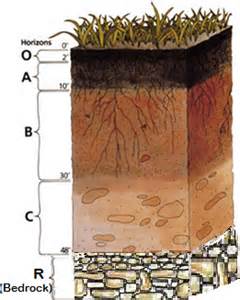
Which horizon is made up of organic material including worms and microscopic organisms?
Horizon O
Which of the following is a renewable resource?
Coal
Petroleum
Solar Energy
Natural Gas
Which of the following resources is nonrenewable?
Plants
Ice
Natural gas
Water
What makes something a nonrenewable resource?
it is a resource that can be easily replaced.
it is a resource that cannot be replenished or replaced in a short period of time.
it is a resource that is abundant in nature.
What makes something a renewable resource?
it can be replenished at the rate that it is being used
it takes years to be replenished
it has to contain water
What are fossil fuels?
Natural resources formed from the remains of ancient plants and animals.
Chemical compounds used to generate electricity.
Renewable energy sources derived from wind and solar power.
Artificial substances created through industrial processes.
What are the main types of fossil fuels? (think CON)
uranium, wind, and solar
wood, hydroelectric, and geothermal
nuclear, biomass, and propane
coal, oil, and natural gas

Wind is a renewable resource.
True
False

Oil is a renewable resource.
True
False
Fossil fuels are
always available for consumption
take millions of years to be produced.
made up of living plants and animals.
What is one disadvantage of using fossil fuels?
They do not produce much heat.
They are difficult to use.
They are nonrenewable resources.
They produce more water than other fuels.

What is the primary benefit of solar power plants compared to many traditional power plants?
They can operate at night.
They produce electricity by burning fuel.
They help reduce the amount of carbon dioxide in the atmosphere.
They require less engineering.
Why do power plants contribute to carbon dioxide emissions?
They use solar energy which emits carbon dioxide
They operate entirely on electrical energy
They burn fossil fuels like coal, oil, or natural gas
They capture carbon dioxide from the atmosphere

The graph shows changes in carbon dioxide
(CO2) concentrations and surface temperatures
on Earth from the years 1880 to 2000.
Why do carbon dioxide concentrations and
surface temperatures show the relationship seen
in the graph?
because lower carbon dioxide levels mean more heat is retained in Earth's atmosphere
because higher carbon dioxide levels mean more heat is retained in Earth's atmosphere
because lower carbon dioxide levels mean less heat is retained in Earth's atmosphere
because higher carbon dioxide levels mean less heat is retained in Earth's atmosphere

Which human activity would help reduce the amount of carbon dioxide in the atmosphere?
increase the number of cars being driven
decrease the number of recycling programs
decrease the burning of fossil fuels
increase the human population
What is the primary gas responsible for the greenhouse effect?
Oxygen
Carbon Dioxide
Nitrogen
Hydrogen
Explain how the greenhouse effect contributes to global warming.
The greenhouse effect traps heat in the atmosphere, leading to an increase in Earth's temperature.
The greenhouse effect releases heat into space, cooling the Earth.
The greenhouse effect blocks sunlight, reducing Earth's temperature.
The greenhouse effect has no impact on Earth's temperature.
The concentration of greenhouse gasses will likely increase in the future.
False
True
The concentration of greenhouse gasses will likely decrease in the future.
False
True
How can Global Warming cause sea levels to rise?
by causing it to rain more often.
by creating bigger and more powerful hurricanes.
by melting glaciers and ice caps.
by increasing the number of undersea volcanic eruptions.
What is the energy source for the water cycle?
the Sun
the Earth
water
the Moon


Which part of the ocean floor is this?
Oceanic Ridge
Trench
Seamount
Magma
An underwater mountain range that is an oceanic spreading center. Responsible for the creation of new ocean floor.
trench
mid-ocean ridge
abyssal plain
continental shelf

Name feature B
guyot
seamount
abyssal plain
volcanic island

Which part of the ocean floor is this?
Oceanic Ridge
Trench
Seamount
Magma

Surface currents are a result of
Global Wind Patterns
Density
Earth's Rotation
All of the above
Deep Ocean currents are a result of
Global Wind Patterns
Earth's Rotation
Density
All of the above
The Coriolis Effect is caused by
Earth rotating around the sun
Earth rotating on its axis
The tides
Gravity
Regular movements of water far below the oceans surface are called
Warm Currents
Deep Currents
Shallow Currents
Surface Currents
_________ and ________ affect the ocean's density and cause the Global Conveyor Belt to travel
gravity and the Coriolis Effect
temperature and salinity
wind and climate
temperature and the Coriolis Effect
Salinity is
The salt content of a substance
The Pepper content of a substance
The circulation of hot and cold matter
the weather pattern of a region
This factor affects the density of water
temperature of the water
amount of fish
amount of ships
number of islands
Deep currents are caused by
temperature differences and salinity
temperature differences and islands
surface winds and salinity
density and continental deflection
Which claim describes the role heat plays in the formation of convection currents?
When water loses heat, it becomes denser and sinks.
When water gains heat, it becomes denser and sinks.
When water loses heat to cooler water, the cooler water becomes denser and sinks.
When water gains heat, it dissolves more solids and gases, becomes denser, and sinks.

