Worksheets
Inorganic Chem III: Magnetism
Total questions: 66
Worksheet time: 48mins
what is the term for orbitals that retain phase after an inversion operation?
gerade
ungerade
what is the term for orbitals that changes phase after an inversion operation?
gerade
ungerade
Is I- high-spin or low-spin?
high-spin
low-spin
Is CO high-spin or low-spin?
high-spin
low-spin
Is F- high-spin or low-spin?
high-spin
low-spin
Is S2- high-spin or low-spin?
high-spin
low-spin
Is PPh3 high-spin or low-spin?
high-spin
low-spin
Is SCN- high-spin or low-spin?
high-spin
low-spin
Is phen high-spin or low-spin?
high-spin
low-spin
Is NO2- high-spin or low-spin?
high-spin
low-spin
Is NO3- high-spin or low-spin?
high-spin
low-spin
Is CN- high-spin or low-spin?
high-spin
low-spin
Is Cl- high-spin or low-spin?
high-spin
low-spin
Is bipy high-spin or low-spin?
high-spin
low-spin
Is en high-spin or low-spin?
high-spin
low-spin
Is NH3 high-spin or low-spin?
high-spin
low-spin
Is N3- high-spin or low-spin?
high-spin
low-spin
Which if the following complexes is most likely to adopt a high spin configuration?
[Fe(H2O)6]3+
[Fe(Cl)6]3-
[Fe(NH3)6]3+
[Ru(H2O)6]3+
[Ru(Cl)6]3-
Which of these would you expect to have the highest jahn-teller distortions? (Assume low-spin configuration)
[Mn(CN)6]3-
[Fe(CN)6]3-
[Co(NH3)6]2+
[Ni(NH3)6]4+
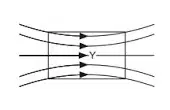
What does this graph represent?
(a)
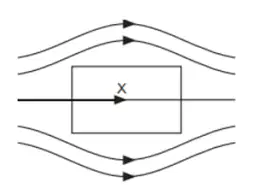
What does this graph represent?
(a)
For a diamagnetic species k = ?
(a)
For a paramagnetic species k = ?
(a)
In a vacuum k = ?
(a)
What does the symbol k represent?
(a)
What does the symbol B/H represent?
(a)
What does the symbol B represent?
(a)
What does the symbol H represent?
(a)

What is it called when spins are aligned?
(a)
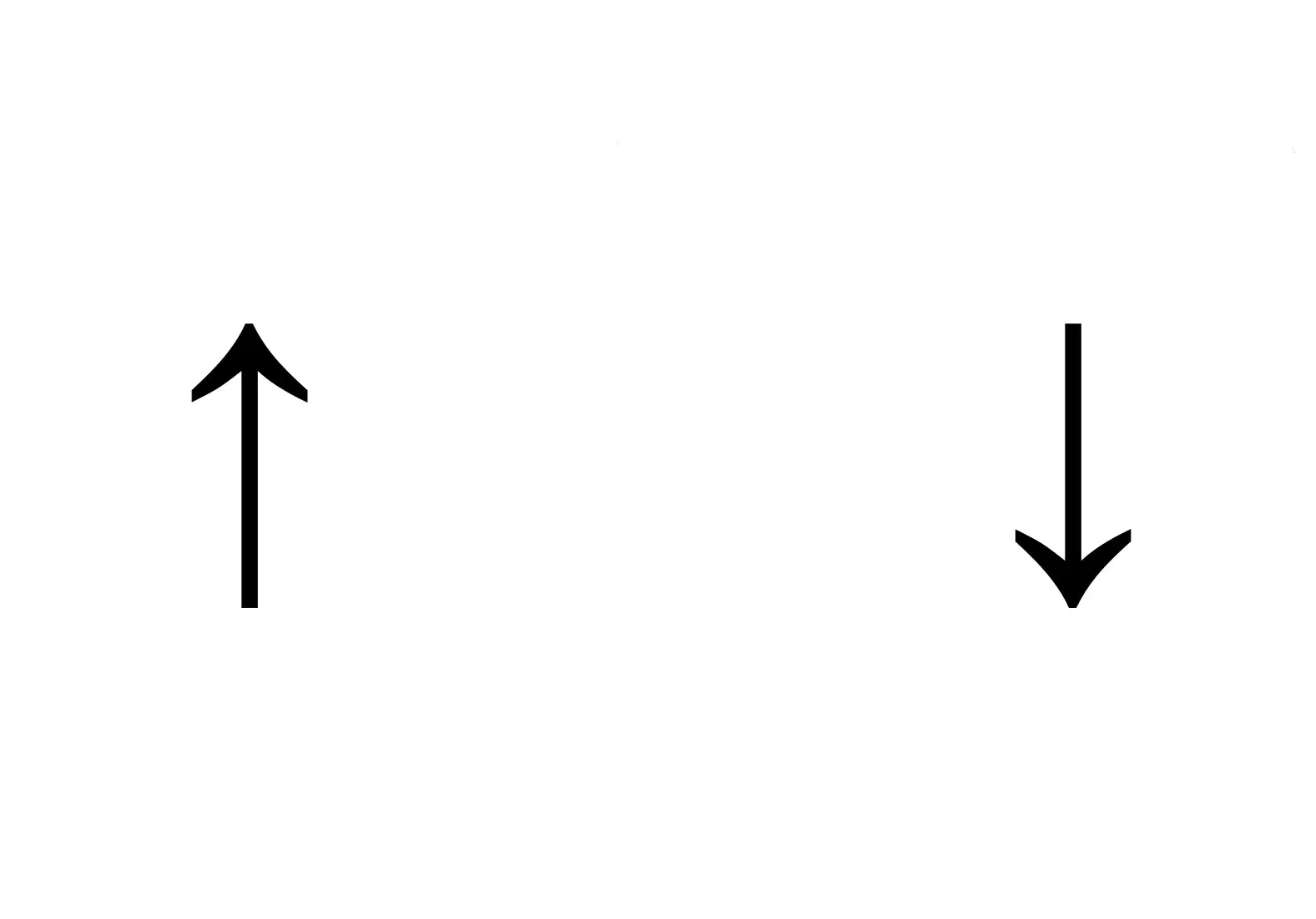
What is it called when spins are NOT aligned?
(a)

What does A represent in this diagram?
(a)
What does B represent in this diagram?
(a)
What does C represent in this diagram?
(a)
What does D represent in this diagram?
(a)
What does E represent in this diagram?
(a)
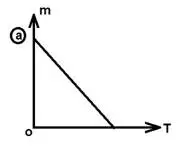
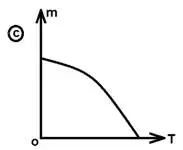
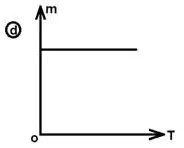
Which of these magnetic susceptibility (x) vs temperature charts represents a diamagnetic substance?
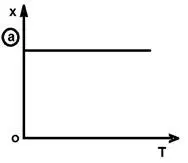
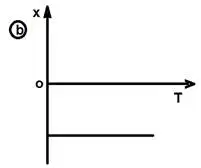

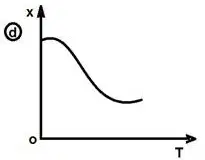
Which of these magnetic susceptibility (x) vs temperature charts represents a paramagnetic substance?
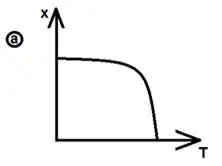
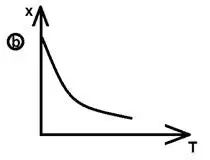

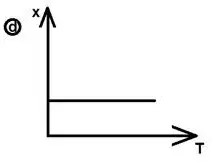
Which of these magnetic susceptibility (x) vs temperature charts represents a ferromagnetic substance?
Write the equation for magnetic moment (Ms) of a single e-
(a)
What is the gyromagnetic ratio (g) for a free e-?
(a)
Which of these has no spin-orbital coupling?


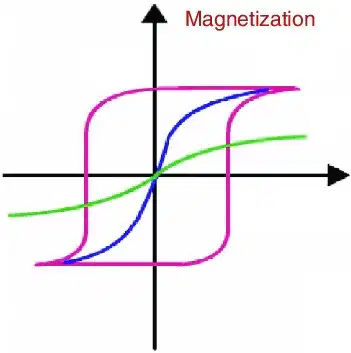
What does the pink line represent?
(a)
What does the blue line represent?
(a)
What does the green line represent?
(a)
What kind of magnet retains magnetism after the field is turned off?
(a)
What does a ferromagnet become when you heat it up?
(a)
Does the curie-Weiss law refer to paramagnets or ferromagnets?
(a)
Write the formula for Curie’s law
(a)
Write the formula for Curie-Weiss law
(a)
What does the symbol q represent in the curie-weiss law?
(a)
Which of these have high permeability?
Soft materials
Hard materials
What is the coercivity range of hard materials?
(a)
What is the coercivity range of soft materials?
(a)
Which of these has easy reversal of induction?
Soft materials
Hard materials
Which of these represents ferromagnetism?
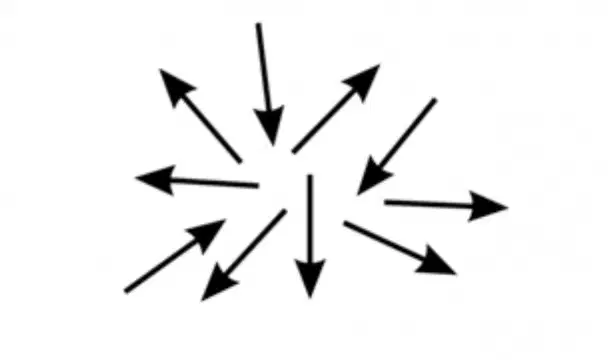
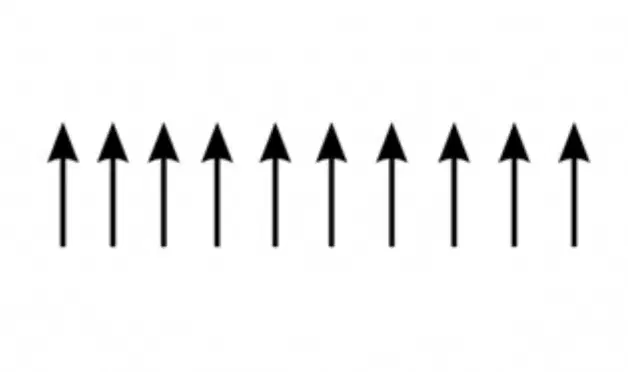
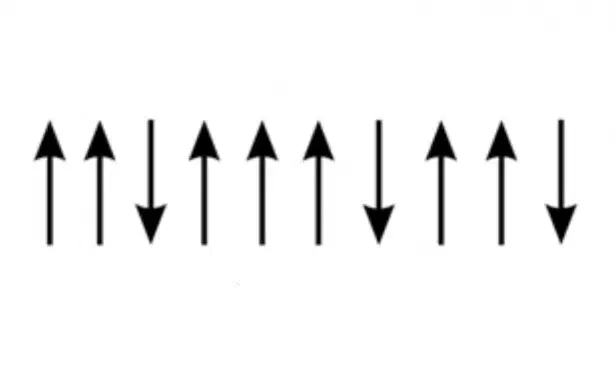
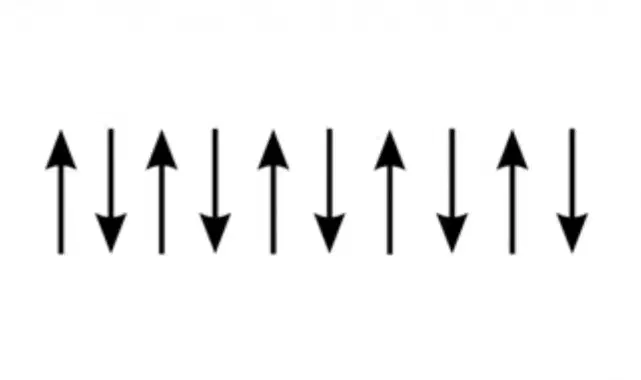
Which of these represents ferrimagnetism?
Which of these represents antiferromagnetism?
Which of these represents paramagnetism?
Which of these has spontaneous alignment?
What kind of graph shows how magnetization changes in a magnetic field?
(a)
Which of these has a high remanant magnetization?
Soft materials
Hard materials
H2O, wood, plastic, and Cu are all examples of what kind of magnet?
Paramagnetic
Diamagnetic
Ferromagnetic
Antiferromagnetic
Fe, Co, Gd, and Ni are all examples of what kind of magnet?
Paramagnetic
Diamagnetic
Ferromagnetic
Antiferromagnetic
Al, O2, Li, Mb are all examples of what kind of magnet?
Paramagnetic
Diamagnetic
Ferromagnetic
Antiferromagnetic
Hematite, oxides, Cr, and FeMn are all examples of what kind of magnet?
Paramagnetic
Diamagnetic
Ferromagnetic
Antiferromagnetic
Which of these shows the relationship between magnetic moment and temperature?