wayground logo

Free Printable Worksheets

NEW

Font size

S
M
L
XL
Worksheets

Unit 1 Review

Total questions: 55

Worksheet time: 49mins

Name
Class
Date
1.
What two elements make up water?
a)
Helium and oxygen
b)
Hydrogen and oxygen
c)
helium and carbon
d)
oxygen and carbon
2.
What word describes when water is attracted to other substances?
a)
cohesion
b)
adhesion
c)
capillary action
d)
surface tension
3.
Attractions between the negative Oxygen atom of one water molecule and the positive Hydrogen atom of another water molecule are called
a)
Covalent bonds
b)
Ionic bonds
c)
Polar bonds
d)
Hydrogen bonds
4.
Which end of the water molecule has a slightly positive charge?
a)
the oxygen end
b)
the hydrogen end
c)
both ends are slightly positive
d)
neither end is positive
5.
Water is a universal solvent because it...
a)
It can be found anywhere
b)
It freezes when it gets cold
c)
floats when frozen
d)
Dissolves most substances
6.
Which of the following is LEAST likely to dissolve in water?
a)
nonpolar fats and oils
b)
polar sugar molecules
c)
salt made of a positive sodium ion and a negative chloride ion
d)
all of the substances will dissolve easily in water
7.
Large bodies of water, such as lakes and oceans, do not quickly fluctuate in temperature. What is the reason for this phenomenon?
a)
Water is an acid.
b)
Water is a versatile solvent.
c)
Water has a high heat capacity.
d)
 Water acts as a buffer.
8.
 Small insects can walk across the surface of calm water. Their feet push the surface of the water down slightly, somewhat like a person walking across a trampoline, but they do not break the surface. What is the best explanation for why this happens?
a)
The insects are light enough so that they do not break the hydrogen bonds holding the water molecules together
b)
The insects actually use their wings to hover slightly above the water's surface and they only skim it with their feet
c)
The insects' feet are non-polar, so they are repelled by the polar water molecules and are pushed away from the water's surface
d)
The insects are small enough to see the individual water molecules, so they are able to step carefully from one molecule to the next
9.
The fact that ice floats on liquid water is due to the fact that water's solid is ___________ than it's liquid form
a)
less polar
b)
more polar
c)
less dense
d)
more dense
10.
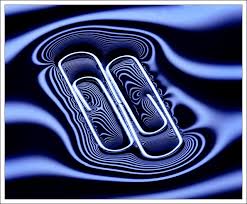
The tightness across the surface of water that enables paper clips to float is ____________.
a)
adhesion
b)
capillary action
c)
surface tension
d)
polarity
11.
Which statement explains why water molecules stick together?
a)
both sides are negative
b)
one side has a positive charge and the other side has a negative charge
c)
one side has a negative charge adn the other side has a neutral charge
d)
both sides are positive
12.
When a molecule has an opposite electrical charge on each end, it is known as what?
a)
cohesion
b)
polar molecule
c)
hydrogen bond
d)
solution
13.
When water molecules stick easily to other water molecules, this is called what?
a)
cohesion
b)
adhesion
c)
solution
d)
polar molecule
14.
The pH scale is a range from:
a)
1-7
b)
0-14
c)
1-14
d)
1-20
15.
A(n) ______ is a substance with a pH less than 7
a)
Acid
b)
Alkaline
c)
Base
d)
Buffer
16.
A(n) _______ is a substance with a pH greater than 7.
a)
Base
b)
Acid
c)
Buffer
d)
Water
17.
What is the only substance with a neutral pH of 7?
a)
Milk
b)
Orange Juice
c)
Water
d)
Blood
18.
According to the pH range which substance is more acidic than lemon juice
a)
Hydrochloric acid
b)
cabbage
c)
milk
19.
Bleach is a strong base, what is the pH level of bleach?
a)
13
b)
14
c)
1
d)
2
20.
Proteins are made of monomers called ___________
a)
Nucleotides
b)
Monosaccharides
c)
Amino Acids
d)
Glycerol and fatty acids
21.
DNA and RNA are examples of 
a)
Carbohydrates
b)
Lipids
c)
Proteins
d)
Nucleic Acids
22.
Nucleotides are monomers of
a)
Carbohydrates
b)
Lipids
c)
Proteins
d)
Nucleic Acids
23.
Monosaccharides are monomers of
a)
Carbohydrates
b)
Lipids
c)
Proteins
d)
Nucleic Acids
24.
Waxes, oils and fats are examples of
a)
Carbohydrates
b)
Lipids
c)
Proteins
d)
Nucleic Acids
25.

Which of the following conclusions can be drawn from the graph?

a)

The optimum temperature is 20C

b)

The optimum temperature is 38C

c)

The enzyme's activity continually increases as temperature increases.

d)

The enzyme's activity continually decreases as temperature increases.

26.

The cell membrane of a cell consists of

a)

protein molecules arranged around 2 layers

b)

two layers of lipids with embedded proteins built in

c)

lipid molecules positioned between two carbohydrate layers

d)

protein molecules which are made of sugar

27.

What are examples of lipids?

a)

triglycerides, waxes, fats, and oils

b)

form polypeptides such as antibodies, enzymes, and hormones

c)

glucose, fructose, cellulose, and lactose

d)

DNA and RNA

28.

What are examples of proteins?

a)

triglycerides, waxes, fats, and oils

b)

form polypeptides such as antibodies, enzymes, and hormones

c)

glucose, fructose, cellulose, and lactose

d)

DNA and RNA

29.

What are examples of carbohydrates?

a)

triglycerides, waxes, fat, and oils

b)

form polypeptides such as antibodies, enzymes, and hormones

c)

glucose, fructose, cellulose, and lactose

d)

DNA and RNA

30.

What does an enzyme do for reactions?

a)

Act as catalysts to speed up reactions.

b)

Act as catalysts to slow down reactions.

c)

Act as catalysts to keep reactions stable.

31.

What macromolecule is classified as an enzyme?

a)

Carbohydrate

b)

Protein

c)

Nucleic Acid

d)

Lipids

32.

What is an example of a nucleic acid?

a)

b)

c)

d)

33.

What is an example of a protein?

a)

b)

c)

d)

34.

What is an example of a carbohydrate?

a)

b)

c)

d)

35.

What is an example of a lipid?

a)
b)

c)

d)

36.

What is the function of nucleic acids?

a)

Main source of energy.

b)

Energy storage, protection, water proofing, and insulation.

c)

Control rates of reactions and form muscles and bones.

d)

Store and transmit genetic information.

37.

What is the function of proteins?

a)

Main source of energy.

b)

Energy storage, protection, waterproofing and insulation

c)

Store and transmit genetic information.

d)

Control rates of reactions and form muscles and bones.

38.

What is the function of lipids?

a)

Control rates of reactions and forms muscle and bones.

b)

Main source of energy.

c)

Energy storage, protection, waterproofing and insulation.

d)

Store and transmit genetic information.

39.

What is the function of a carbohydrate?

a)

Control rates of reactions, form muscle and bones

b)

Provide long term energy, protection, waterproofing, and insulation.

c)

Main source of energy and is quick.

d)

Store and transmit genetic information.

40.

What is the function of the macromolecule shown?

a)

Short term energy

b)

Structural components of plants

c)

Long term energy storage

d)

Speeding up chemical reactions

41.

What macromolecule is shown and comprises the main structure of the cell membrane?

a)

Carbohydrates

b)

Lipids

c)

Proteins

d)

Nucleic Acids

42.

What macromolecule is shown?

a)

Carbohydrate

b)

Lipid

c)

Protein

d)

Nucleic Acid

43.

The image shows a particular macromolecule. Some humans do not have the ability to digest this molecule due to genetics. The enzyme lactase breaks down this molecule. What macromolecule is an enzyme?

a)

Carbohydrate

b)

Lipid

c)

Protein

d)

Nucleic Acid

44.
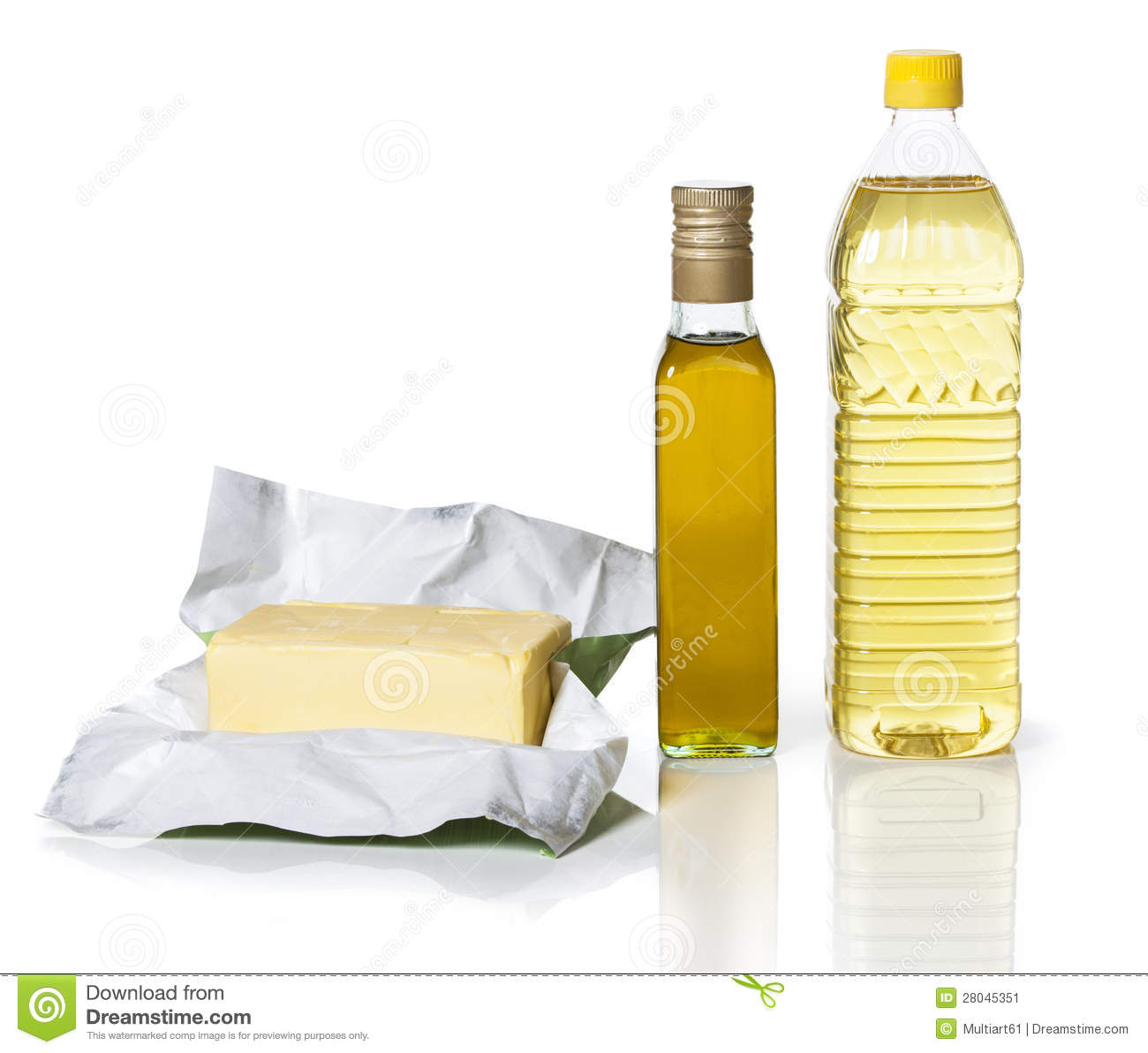
Which biomolecule is found in fats, oils, and waxes and is a source of long-term energy
a)
Proteins
b)
Nucleic Acid
c)
Lipids
d)
Carbohydrate
45.
Which biomolecule is a main source of quick energy?
a)
Nucleic Acid
b)
Protein
c)
Lipid
d)
Carbohydrate
46.

What elements (monomers) make up a protein?

a)

C, H, O

b)

C, H, O, N, (S)

c)

C, H, O, N, P

47.
The element _______is found in all of the organic compounds.
a)
Iron
b)
Nitrogen
c)
Carbon
d)
Oxygen
48.
What is structure A?
a)
Substrate
b)
Active site
c)
Enzyme
d)
Products
49.
What is a substance called if it speeds up a chemical reaction?
a)
reusable
b)
catalyst
c)
specific
d)
fragile
50.
What is the name for the mechanism of enzyme activity?
a)
Lock and key
b)
jigsaw puzzle
c)
hammer and nail
d)
two hands pattern
51.
Which of the following conclusions can be drawn from this graph?
a)
The optimum pH of the enzyme is 6.6.
b)
The optimum pH of the enzyme is 5.8
c)
The enzyme’s activity increases as pH increases 5.0 to 9.0
d)
The enzyme’s activity is greater around pH of 8.0 .
52.
Enzymes need certain environmental conditions in order to function properly.  What happens when enzymes are heated to a high temperature?
a)
they die
b)
they denature
c)
they change their amino acid sequence
d)
they work better
53.
Which substrate would this enzyme catalyze?
a)
Δ
b)
σ
c)
d)
μ
54.
What factors affect an enzyme's reaction rate?
a)
temperature 
b)
pH
c)
substrate concentration
d)
all of these
55.

What happens to an enzyme when it is denatured?

a)

Activation energy is lowered

b)

It becomes stronger

c)

It loses its shape

d)

Activation energy is raised