
Font size
 Worksheets
AP Unit 8 - Ecology
Total questions: 138
Worksheet time: 5hrs 45mins
Shall we stand and fight?
Yes
No
What type of response involves internal bodily adjustments to environmental changes?
Behavioural Responses
Evolutionary Responses
Physiological Responses
Morphological Responses
Which of the following is an example of a behavioural response?
Plant phototropism
Bird migration to warmer regions
Camouflage in chameleons
Thick fur in Arctic foxes
What is the process called where the most suited organisms survive and reproduce?
Natural Selection
Genetic Drift
Artificial Selection
Gene Expression
Which response involves physical changes in an organism’s structure?
Behavioural Responses
Physiological Responses
Morphological Responses
Genetic Responses
What is an example of a physiological response in humans?
Hibernation
Camouflage
Sweating to cool down
Migration
Which of the following is a long-term adaptation example?
Thermoregulation
Bird migration
Peppered moths evolving darker colouration
Plant phototropism
What is the study of species responses to climate change and habitat loss called?
Evolutionary Biology
Genetics
Conservation Biology
Ecology
Which of the following is a morphological adaptation in cacti?
Thick skin and spines
Courtship displays
Migration
Thermoregulation

What pattern description best matches the data in this graph?
As the seal dives their heart rate increase dramatically
As the seal dives, the heart rates decreases instantly
As the seal dives, it's heart rate increases at first and then starts to decrease.
As the Seal dives, their heart rate stays the same
A fungi absorbs nutrients from dead and decaying organisms. It is ......
A heterotroph
An autotroph
A chemotroph
none of these
All energy on Earth comes from
food.
the sun.
chemicals.
non-living things.
An autotroph can also be called a
animal.
consumer.
heterotroph.
producer.
Which of the following heterotrophs are help keep the ecosystem alive by recycling nutrients between dead and living organisms?
Carnivores
Omnivores
Decomposers/ Detritvores
Herbivores
A difference between photosynthesis and chemosynthesis
Photosynthesis doesn't use light and chemosynthesis does
Photosynthesis makes sugar and chemosynthesis doesn't
Photosynthesis uses light and chemosynthesis doesn't
Photosynthesis doesn't make sugar and chemosynthesis does
What process occurs when light energy is captured by chlorophyll in autotrophs and converted into sugar?
Photosynthesis
Cellular Respiration

Animal that gets its energy and nutrition from eating meat.
Detritivore
Ominvore
Carnivore
Herbivore

which number on the diagram below sows the level of secondary consumers?
3
2
1
in an energy pyramid, which way does the energy transfer?
from top of the pyramid to the bottom
from the bottom of the pyramid to the top
all of these
none of these


100%
10%
50%
75%

In the food chain pictured, what type of organism is the bird?
producer
primary consumer
secondary consumer
tertiary consumer

if birds eat insects that feed on corns, discuss which pyramid level would birds occupy.
A
B
C
D

Look at the above energy pyramid, if the producers have 7000 kcal of energy, how much energy will be available for the sheephead fish?
7 kcal
70 kcal
700 kcal
7000 kcal
The lion is the natural predator of the zebra. If the zebra population drops, what will likely happen to the lion population?
worms, plants, and temperature

These organisms occupy stable environments, are larger in size and have longer life expectancies. They produce, during their life spans, fewer offspring, but place a greater investment in each.
k-strategist
r-strategist
m-strategist
s-strategist
These organisms typically live in unstable, unpredictable environments & are able to reproduce rapidly (exponentially). They do not take care of their young & are subject to predation.
k-strategist
r-strategist
m-strategist
s-strategist
Processes that remove individuals from a population.
death and emigration
birth and immigration
Which of the following are density independent factor(s)?
competition for resources
predator-prey relationships
parasitism and disease
weather, natural disaster and man made disturbances

What type of growth is represented in this graph?
logistic
survivorship curve
predator-prey


Which curve best describes an organism that invests a lot of energy in parenting?
Which best describes the graph of logistic growth?
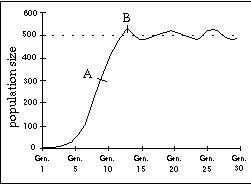
What is the carrying capacity of the graph?
around 500
more than 800
less than 300
around 700

What is the largest number of individuals that an environment can support long term?
carrying capacity
emigration
immigration
survivorship

Describes organisms with a high death rate (or low survivorship rate) immediately following birth. Examples include bacteria, fishes, and invertebrates.
Type I
Type II
Type III
Type IV

What term is used to define anything that regulates the size of a population?
density
a limiting factor
carrying capacity
biodiversity
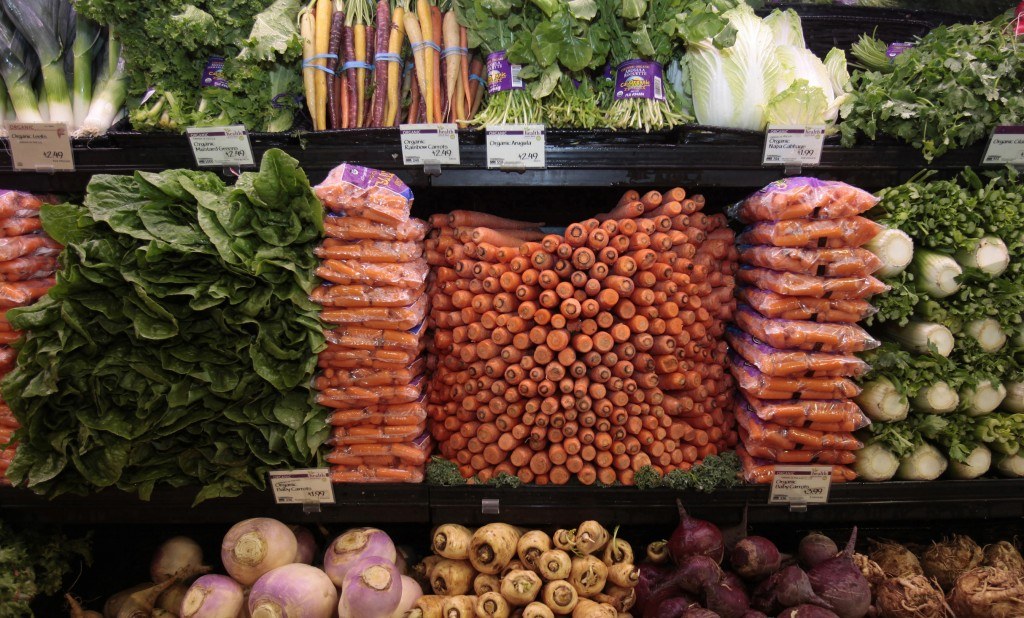

Which of the following describes a population?
The total number of people, animals, and plants in New York City
The total number of apartments in New York City
The total number of people living in New York City
The amount of water in the Hudson River
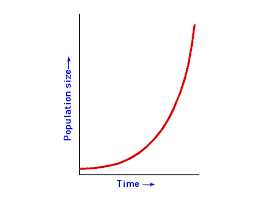
What type of growth is shown in the diagram?
exponential growth
logistic growth
predator-prey cycle
boom-bust curve
Largest number of individuals of a population that the environment can support...
carrying capacity
population
biome
mutualism
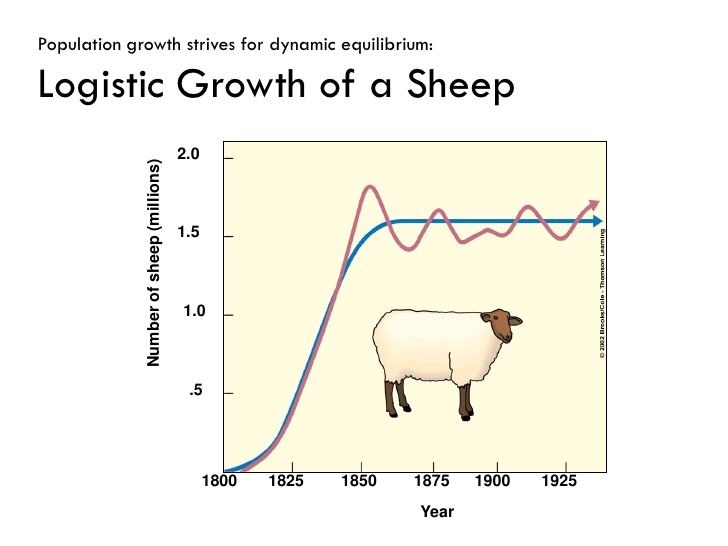
What is the carrying capacity for this sheep population?
2.0 million
1.0 million
1.6 million
0.5 million

What is the approximate carrying capacity of Paramecium aurelia grown alone?
100
200
300
450

If a disease destroying wheat plants in a field swept through an ecosystem, what would happen to the bird population that feed off of the wheat in the the field ?
The bird population would stay the same
The bird population would increase
The bird population would decrease

Will competition increase or decrease the population of a species of animals?
Decrease
Increase

What point on the graph represents the carrying capacity?
A
B
C
D

When a population grows past the ecosystem's carrying capacity, what most likley happens to the population?
Continues to grow
The population starts to die off to return to carrying capcity
The population will go completely extinct due to lack of resources
Limiting factors are sometimes helpful because they can keep the population from getting to large.
True
False
Which limiting factor is density independent?
water
food
natural disasters
Which limiting factor would increase due to the number of individuals in a population?
Unusual weather
Natural disaster
Disease
An environmental factor such as amount of space, disease, and availability of mates that depends on the number of members in a population is called
density- dependent factor
density- independent factor
Food, water, sunlight, shelter, and space are resources that are called
limiting factors
species
biotic
none of the above
Which of the following is a density dependent factor?
volcanic eruption
earthquake
disease
hurricane
Which level of organization consists of a group of organisms of the same species living together in the same place?
Population
Community
Ecosystem
Biosphere
What determines the carrying capacity of a particular environment?
The population of organisms that live in the area decide how frequently to reproduce
The effects of evolution on a population and the changes that it experiences
The length of time that a population of organisms has lived in the area
The amount of resources available in that particular area
Select the graph that MOST accurately depicts how a realistic population with unlimited resources and no predators will change in size over time.


Select the graph that MOST accurately depicts how a realistic population with limited resources will change in size over time.

During which time intervals of the graph is the population undergoing exponential growth?
Sections A and B
Sections B and C
Sections C and D
Section D and E
Which time interval(s) in the graph depict the effects of limiting factors on the population?
Section A only
Sections A and B
Sections B, C, and D
Section D and E
Which time interval(s) in the graph depict the lag phase of population growth?
Section A only
Section B only
Section E only
Section C, D, and E
Which equation represents the population during Section B?
(B+I) > (D+E)
(B+I) < (D+E)
(B+I) >>> (D+E)
(B+I) <<< (D+E)
(B+I) ≈ (D+E)
All of the following represent examples of density-dependent limiting factors EXCEPT ___.
Predation
Disease
Food availability
Weather
Density-dependent limiting factors have a _____ effect on larger, more dense populations than smaller, less dense populations.
Greater
Equal
Lesser
What is exponential growth?
Rapid increase in quantity or size over time
Random fluctuation in quantity or size over time.
Stagnation in quantity or size over time.
Gradual decrease in quantity or size over time.
Which of the following is an example of exponential growth?
Population of bacteria doubling every hour
Number of cars on the road increasing steadily over time.
Number of trees in a forest growing at a constant rate.
Number of books in a library decreasing over time.
What is logistic growth?
Type of population growth that starts off slow, then accelerates, and eventually levels off
Type of population growth that starts off fast, then accelerates, and eventually stops.
Type of population growth that starts off slow, then decelerates, and eventually stops.
Type of population growth that starts off fast, then decelerates, and eventually levels off.
Which of the following is an example of logistic growth?
Number of cars in a parking lot.
Temperature of a room.
Population of deer in a forest
Amount of rainfall in a city.
What are population growth models used for?
To study and predict changes in the size and structure of populations over time.
To study the distribution of resources within a population.
To analyze the impact of climate change on population growth.
To determine the average lifespan of individuals in a population.
What is carrying capacity?
The minimum number of individuals an environment can support.
The average number of individuals an environment can support.
The number of individuals that have migrated from one environment to another.
Maximum number of individuals an environment can support
Which of the following statements about carrying capacity is true?
Carrying capacity is the maximum number of individuals of a species that an environment can support sustainably.
Carrying capacity is only influenced by biotic factors and not abiotic factors.
Carrying capacity is a fixed value and does not change over time.
Carrying capacity is the minimum number of individuals of a species that an environment can support sustainably.
What is growth rate?
Rate at which a population increases over time.
Rate at which a population fluctuates over time.
Rate at which a population remains constant over time.
Rate at which a population decreases over time.
Which of the following factors can affect the growth rate of a population?
birth rate, death rate, immigration, and emigration
food availability, climate change, genetic mutations
education level, income, social status
government policies, technological advancements, natural disasters
What is the relationship between birth rate and population growth?
A higher birth rate leads to higher population growth.
A higher birth rate leads to lower population growth.
Birth rate has no impact on population growth.
The relationship between birth rate and population growth is complex and depends on other factors.
What is the difference between exponential growth and logistic growth?
Exponential growth starts off slow and then accelerates, while logistic growth starts off slow, accelerates, then reaches carrying capacity.
Exponential growth levels off after a certain point, while logistic growth continues indefinitely.
Exponential growth is only influenced by biotic factors, while logistic growth is influenced by both biotic and abiotic factors.
Exponential growth is a type of logistic growth.
What does a low or small r value indicate?
Slower population growth
Faster population growth
Population increases then descreases
Population does not grow at all
What does a higher or bigger r value indicate?
Slower population growth
Faster population growth
Population increases then descreases
Population does not grow at all
What do exponential growth and logistic growth models have in common? How are they different?
How does carrying capacity affect population growth over time?


Speciation can occur as a result of geographic isolation because _________.
members of a species can no longer find mates
populations that live in different environments may be exposed to different selection pressures
exchange of genes during recombination
movement of genes within a population because of interbreeding
The study of the interactions between organisms and their environment is:
Ecology
Microbiology
Biology
Evolution
These organisms must eat to obtain their energy
autotrophs
heterotrophs
producers
niche

Food webs are models that show
one sequence of producers and consumers.
complex networks of feeding relationships.
stored energy in food chains
only primary consumers in an ecosystem


Calculate the Simpson Index for a community with 100 individuals of species A, 50 individuals of species B, 30 individuals of species C, and 20 individuals of species D.
1.25
2.0
0.632
0.245
If the Simpson Index for a community is 0.8, what does this value indicate about the diversity of the community?
No diversity
Moderate diversity
High diversity
Low diversity
A grassland ecosystem has a Simpson Index of 0.6. Explain how this value reflects the biodiversity of the ecosystem.
The Simpson Index of 0.6 reflects a relatively high level of biodiversity in the grassland ecosystem.
The Simpson Index of 0.6 reflects a lack of biodiversity in the grassland ecosystem.
The Simpson Index of 0.6 reflects a low level of biodiversity in the grassland ecosystem.
The Simpson Index of 0.6 reflects a moderate level of biodiversity in the grassland ecosystem.
Explain the role of Simpson Index in measuring the diversity of a forest ecosystem.
The Simpson Index measures the diversity of a forest ecosystem by considering the age of the trees in the forest
The Simpson Index measures the diversity of a forest ecosystem by taking into account the number of different species present and their relative abundance.
The Simpson Index measures the diversity of a forest ecosystem by counting the number of trees in the forest
The Simpson Index measures the diversity of a forest ecosystem by looking at the size of the leaves on the trees
What are the main factors that can increase the Simpson Index in an ecological community?
High species richness and dominance
Low species richness and evenness
Low species richness and dominance
High species richness and evenness
How does human activity impact the Simpson Index of a natural habitat?
Human activity has no impact on the Simpson Index of a natural habitat
Human activity can increase the Simpson Index of a natural habitat
Human activity can decrease the Simpson Index of a natural habitat
The Simpson Index of a natural habitat is not affected by human activity
Discuss the relationship between habitat destruction and the Simpson Index.
Habitat destruction can lead to a decrease in species diversity, which in turn can affect the Simpson Index.
Habitat destruction increases species diversity and improves the Simpson Index
Habitat destruction has no impact on the Simpson Index
The Simpson Index is not affected by habitat destruction
Explain how the introduction of an invasive species can affect the Simpson Index of an ecosystem.
The Simpson Index increases due to increased diversity caused by the invasive species.
The Simpson Index remains unchanged regardless of the invasive species.
The Simpson Index decreases due to reduced diversity caused by the invasive species.
The Simpson Index fluctuates randomly with the introduction of an invasive species.
How does the size of a habitat influence the Simpson Index of the community?
The Simpson Index is higher in smaller habitats and lower in larger habitats
The Simpson Index is only influenced by the number of species, not the size of the habitat
The size of a habitat has no impact on the Simpson Index
The size of a habitat can influence the Simpson Index by affecting the diversity and abundance of species within the community.
What is the impact of climate change on the Simpson Index of a marine ecosystem?
It can cause the Simpson Index to remain constant regardless of changes in species diversity and abundance.
It can increase the Simpson Index due to changes in species diversity and abundance.
It has no impact on the Simpson Index.
It can decrease the Simpson Index due to changes in species diversity and abundance.


All of the following are considered anthropogenic disruptions EXCEPT:
Pollution
Hurricanes
Logging
Overharvesting

Which of the natural disruption time lines is the slowest?
Episodic
Random
Semiotic
Periodic

Disruptions are always detrimental.
True
False

Earth's periodic disruptions come from all except what factors?
Earth's tilt
Earth's orbit
Earth's size
Earth's wobble

This is not an example of a random natural disruption:
Tornado
Annual wild fire
Volcano
Hurricane
The amount of glacial ice on Earth directly correlates to what?
Sea levels
Land mass
Plant distribution
Animal biodiversity
Earth's climate can be affected by which of the following?
Water levels
Carbon Dioxide levels
Soil levels
Wind levels

Which of the following is an anthropogenic disruption?
Wind Damage
Wildfires
Fragmentation
Flooding

Right after the damage, many animals will migrate into a naturally disrupted area.
True
False

We don't know of any organisms that have adapted to use natural disruptions to their advantage.
True
False

