
 Worksheets
Gym stuff
Total questions: 71
Worksheet time: 36mins
A benefit of improving Cardiorespiratory Endurance allows your heart to work less which lowers your resting heart rate.
true
false
The ability of the heart, lungs, and blood vessels to send fuel and oxygen to the body’s tissues during long periods of vigorous activity is known as
Muscular Endurance
Body Composition
Cardiorespiratory Endurance
Muscular Strength
Flexibility
As a person’s cardiorespiratory endurance improves, resting heart rate decreases, resulting in a healthier heart.
True
False
What are the Target Heart Rate Zones?
45%-65%
35%-55%
85%-105%
65%-85%
Which statement best describes maximum heart rate?
It is 200 plus your age.
It is 220 minus your age.
It is not needed to calculate your target heart rate range.
It is your highest attainable heart rate plus your age.
What are two ways to determine workout zones?
Heart Rate Zone and talk test/perceived exertion
Running and walking
Time and Intensity
What fitness test demonstrates cardiorespiratory endurance?
Sit and Reach
Sit ups
Push ups
Pacer

This non machine exercise primarily works your _______ muscles(s).
Gluteus maximus
Gluteus maximus
Abdominals
Quadriceps & hamstrings

This non-machine exercise primarily works your _________ muscle.
(Why his elbows like that-)
Pectorals
Gastrocnemius
Biceps
Latissimus Dorsi

This non machine exercise primarily works you ________ muscles(s).
Gastrocnemius
Abdominals
Gluteals
Obliques

This non machine exercise primarily works your _________muscles(s).
Hamstrings
Quadriceps
Gastrocnemius
Gluteus maximus

This non machine exercise primarily works your _________muscles(s).
Trapezius
Deltoid
Rhomboid
Latissimus dorsi

This non machine exercise primarily works your _______ muscles(s).
Triceps
Biceps
Latissimus dorsi
Deltoids
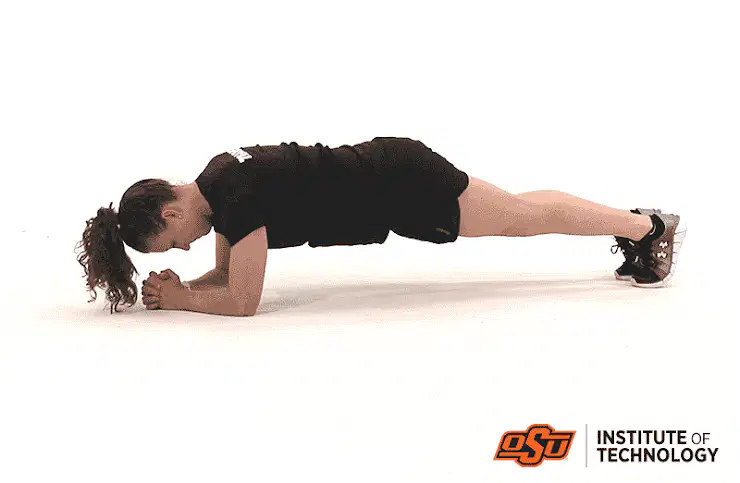
This non machine exercise primarily work your _________muscles(s).
Obliques
Abdominals
Gastrocnemious
Pectorals

This non machine exercise primarily works your _________muscles(s).
Pectoral
Trapezius
Deltoid
Rhomboid
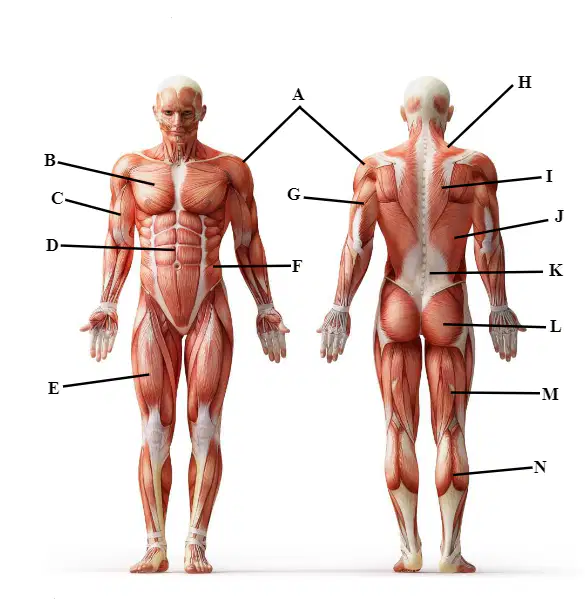
Whats letter A
Bicep
Quadriceps
Deltoid
Bicep
Rhomboids
Whats letter B
Rhomboids
Abdominals
Gastrocnemius
Obliques
Pectorals
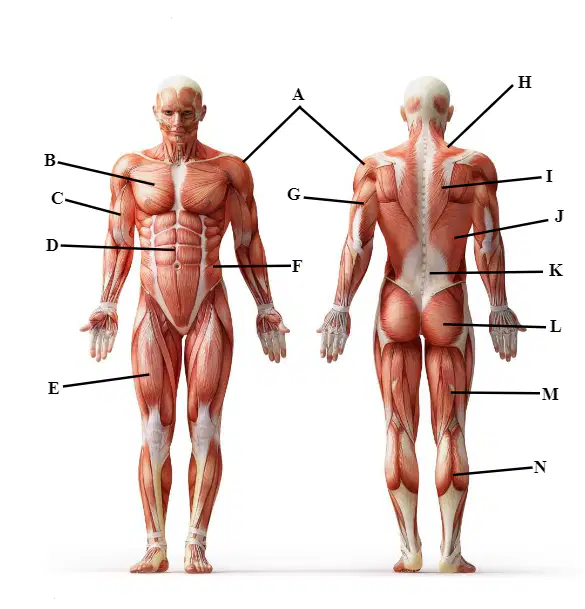
Whats letter C
Deltoid
Bicep
Triceps
Obliques
Trapezius
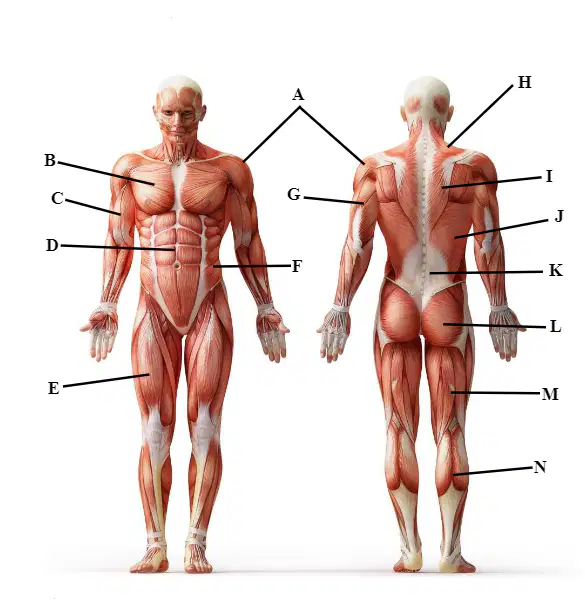
Whats letter D
Pectorals
Quadriceps
Abdominals
Deltoid
Obliques
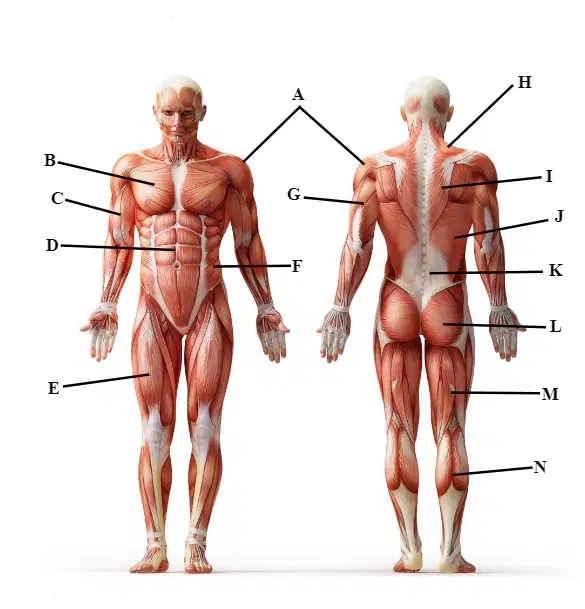
Whats letter E
Gluteals
Latissimus Dorsi
Obliques
Quadriceps
Hamstring
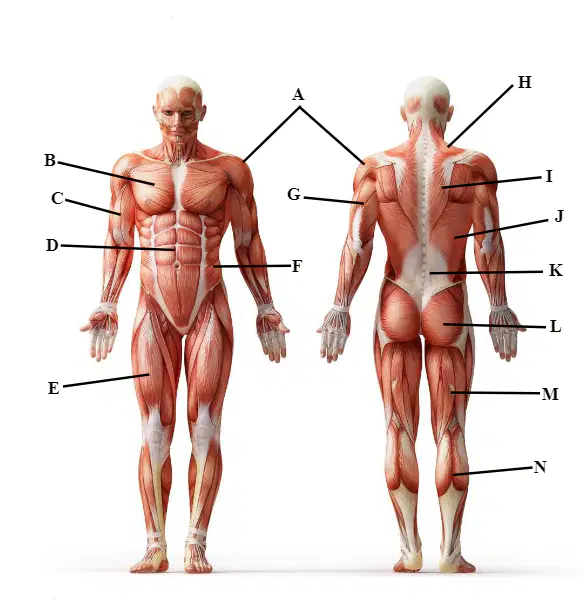
Whats letter F
Obliques
Abdominals
Pectorals
Trapezius
Quadriceps
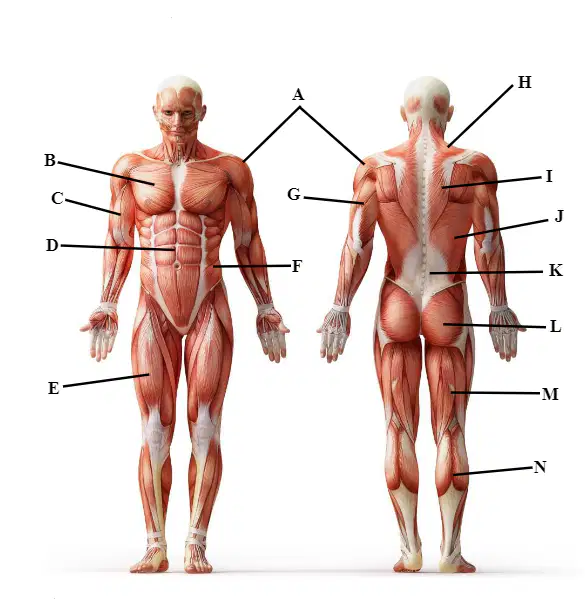
Whats letter G
Obliques
Triceps
Bicep
Pectorals
Deltoid
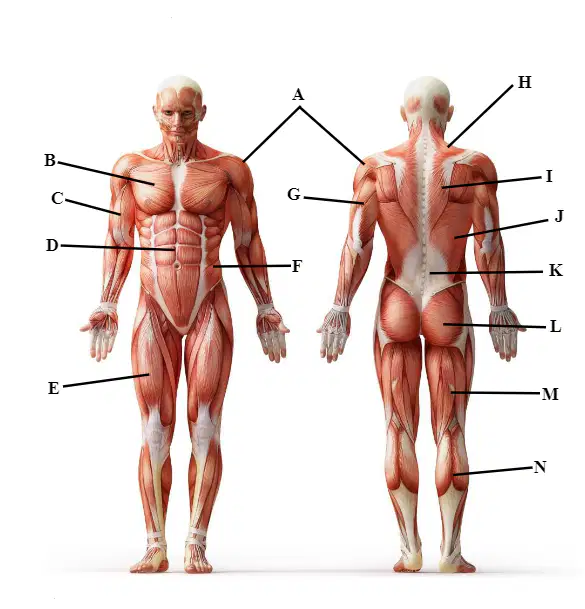
Whats letter H
Latissimus Dorsi
Pectorals
Erector Spinae
Trapezius
Rhomboids
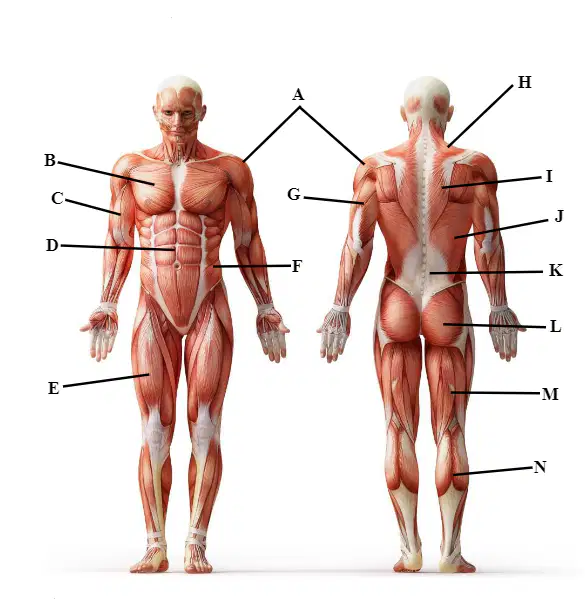
Whats letter I
Erector Spinae
Deltoid
Rhomboids
Trapezius
Obliques
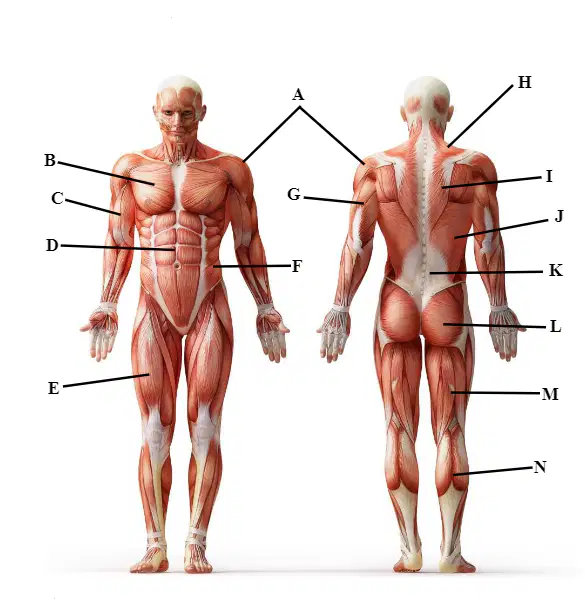
Whats letter J
Quadriceps
Gastrocnemius
Abdominals
Erector Spinae
Latissimus Dorsi
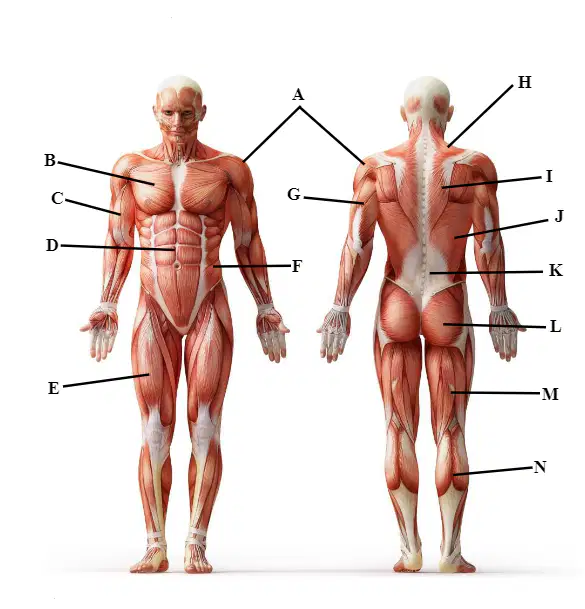
Whats letter K
Erector Spinae
Rhomboids
Hamstring
Gastrocnemius
Latissimus Dorsi
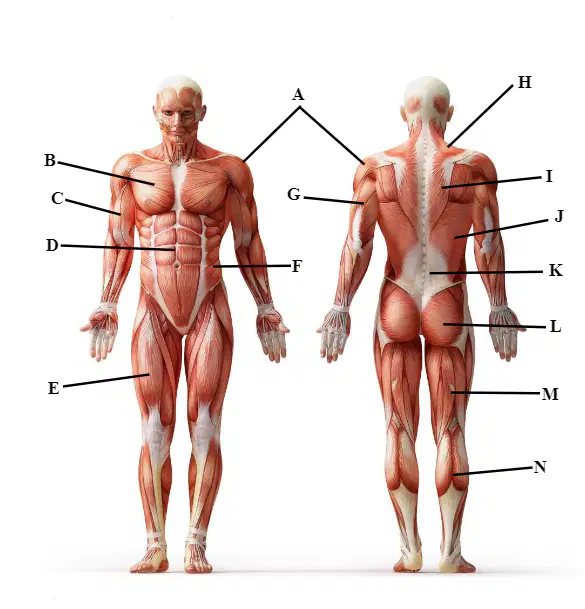
Whats letter L
Hamstring
Gluteals
Gastrocnemius
Deltoid
Obliques
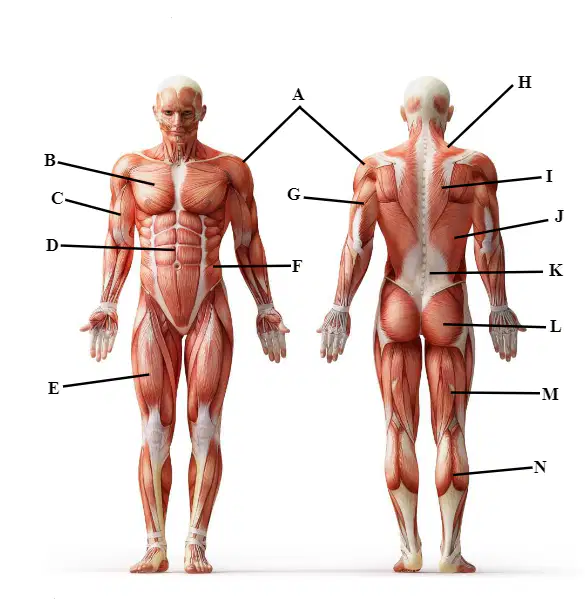
Whats letter M
Latissimus Dorsi
Pectorals
Quadriceps
Hamstring
Gastrocnemius
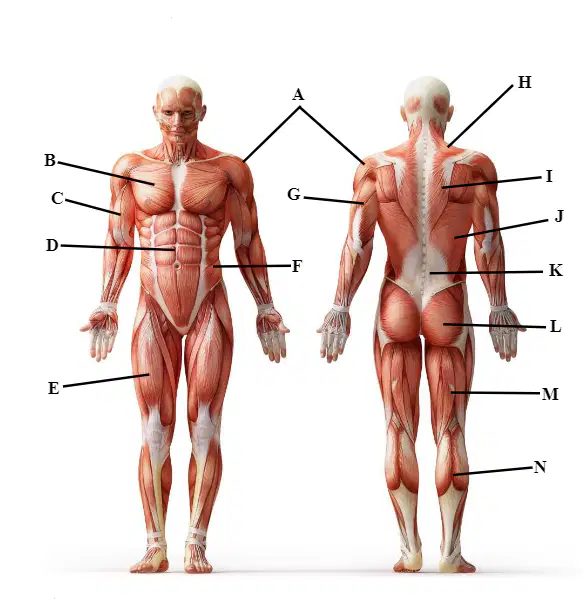
Whats letter N
Triceps
Quadriceps
Gastrocnemius
Hamstring
Gluteals
During a concentric muscle contraction the muscle shortens.
True
false
During an eccentric muscle contraction the muscle lengthens.
false
true
The number of times you perform a lift or exercise is defined as:
Sets
Total
Repetitions
Progressions
Which of the following would be lifting for muscular endurance?
Heavier weight 6-8 reps
Lighter weight - 10-15 reps
Heavier weight - 10-15 reps
Lighter weight 6-8 reps
The ability of the muscles to perform a difficult task over a period of time without causing fatigue is known as __________________.
Body Composition
Flexibility
Cardiorespiratory Endurance
Muscular Endurance
Muscle Strength
The amount of force a muscle can exert is called __________________.
Muscular Strength
Cardiorespiratory Enurance
Muscular Endurance
Body Composition
Flexibility
Which of the following would be lifting for muscular strength?
Lighter weight 6-8 reps
Lighter weight - 10-15 reps
Heavier weight - 10-15 reps
Heavier weight 6-8 reps
While attempting to complete a lift, if the weight becomes too heavy just use a jerking motion to complete your rep.
False
True
If one scores well on this component of fitness their risk of injury will be less, their range of motion will be greater, and they will have more balanced health related components of fitness.
Body Composition
Flexibility
Cardiorespiratory Endurance
Body Composition
There is no benefit to warming up the muscles before performing a static stretch.
true
false
It is important to stretch:
Before Activity
After Activity
During Activity
All the above
Why should you use a dynamic warm-up before your workout?
To mentally prepare and focus
To heat muscle tissues for flexibility
All of the above
To increase blood supply to muscles
When holding a sit-and-reach position for 30 sec or more, you are performing a __________ stretch, which is good stretching technique for improving flexibility after your workout/activity.
Ballistic
Dynamic
Isostatic
Static
A lunge and twist warm-up activity is an example of a(n) _______________ stretch.
Dynamic
Static
Ballistic
Isostatic
Foam rolling is beneficial to relax tight muscles and remove knots.
false
true
Having a partner assist you as you stretch:
Should always be done without a warm-up
Could be good if there is proper communication
Is never a good idea
Is good if you use jerky movements to utilize the body's momentum.
Why should you use static stretching in your cool-down after a workout?
To improve flexibility
All of the above
To allow your heart rate to return to a resting level
To prevent having sore muscles
When stretching, it is good to bounce and use the momentum of the body to increase flexibility.
true
false
Stretch to the point of pain. Pain is what you want to feel when stretching.
False
True
The ability to move a body part through its full/normal range of motion at a joint is known as:
Hypermobility
Rigidity
Agility
Flexibility
To maximize personal health, it is recommended you perform moderate to vigorous intensity activities for at least _________minutes per day. These activities may include transportation, physical education, sport, free play, and planned exercise.
30
60
90
120
Besides the physical benefits of exercise, what are other benefits that can be obtained from exercising?
Increases one’s self-confidence
Helps one deal with stress and tension
All of the above
Increases one’s motivation
For improvement of muscular fitness and body composition, professionals recommend strength training the major muscle groups:
2-3 times a week
Never
Once a week
4-5 times a week
The best way to define physical fitness is:
How good your coordination is
How fast and agile you are
The ability to carry out daily tasks and activities without fatigue
How well you perform in sports or game activities
What are the benefits of being active on a regular basis?
All of the above
Decreases risk of cardiovascular disease
Increases chance of living longer
Decreases the risk of diabetes
Your level of physical fitness affects your:
Physical Health
Mental Health
Social Health
All of the above
Speed at which a person responds to an external stimulus.
Balance
Agility
Reaction Time
Speed
Power
The rate at which someone is able to move
Power
Speed
Reaction Time
Coordination
Agility
Dodging a tackle in football is an example of a skill related component of fitness.
False
True
The ability to execute a sequence or movements smoothly and accurately over and over.
Agility
Balance
Speed
Reaction Time
Coordination
To some degree, your level of skill related fitness is directly associated with your genetic make-up.
True
False
The ability to move quickly and easily.
Agility
Power
Reaction Time
Balance
Speed
Someone who has good skill-related fitness levels will always have good health-related fitness levels.
False
True
Even distribution of weight allowing someone to stay upright and stable.
Power
Balance
Coordination
Speed
Agility
Strength plus speed
Reaction Time
Speed
Balance
Power
Agility
Using a regular scale at home or in the doctors office is a good measure of body fat.
False
True
Improving your body composition will help
All of the above
Improve self confidence
Lower your risk of disease and illness
Improve Energy levels
BMI is a measurement of body fat based on a person's height and weight.
True
False
The ratio of body fat to lean tissue, including muscle, bone, water, and connective tissue is known as __________________.
Flexibility
Muscular Strength
Cardiorespiratory Endurance
Muscular Endurance
Body Composition
Which method, body composition or BMI will more accurately measure fat in the body.
BMI
Body Composition
Can muscle turn into fat, when strength training exercises are not performed?
Yes
No
Increasing your muscle mass can have a _________ impact on your body composition
Negative
Positive

