
Font size
 Worksheets
1st Semester Exam Review 2024
Total questions: 41
Worksheet time: 26mins

What biomolecule is represented by this diagram?
Nucleic Acid
Monosaccharide
Protein
Lipid
Enzyme reaction rate is affected by all of the following EXCEPT:
inhibitors
temoerature
pH
color of light
A _____________ happens when a subtance is broken down into simpler molecule or when a subtance is built up into a complex molecule.
chemical equilibrium
ion formation
chemical reaction
hydrogen bonding
Which of the following is the correct format for a chemical reaction?
reactants ------> products
reactants -------> substrates
products --------> reactants
products -------> subtrates

Which reaction line occured in the presence of an enzyme?
Blue line reaction
Red line reaction
The four main types of biomolecules are carbohydrates, lipids, nucleic acids, and ________________.
Starches
Fatty acids
Nucleotide
Proteins
Many land plants store energy in complex carbohydrates such as starch. When energy is needed, the starch molecules can be broken down quickly. This chemical reaction (photosynthesis) produces (glucose) which is which of the following monomers?
amino acids
lipids
monosaccharides
RNA chains
The monomer of proteins:
glucose
Fatty acids
nucleotide
amino acids
All of the following are functions of proteins except:
Give structure and support to tissues
Long term energy storage
Act as catalystis to speed up chemical reactions
Important part of immune systems
Function of nucleotides:
Storing energy
Catalyzing cellular reactions
Building tissue
Storing genetic information
ALL cells have which of the following organelles:
Cell membrane
Cytoplasm
Ribosomes
Nucleus
DNA
Which type of cells lack a nucleus?
Eukaryotic cells
Prokaryotic Cells
ONLY Eukaryotic Cells have....
DNA
Membrane-bound organelles
Ribosomes
Cytoplasm
An example of a prokaryotic cell?
Bacterium
Muscle Cell
Plant cell
Fungus
Animal Cells have cell walls.
True
False

A cell uses this molecule to produce
ATP moleules
Glucose
Oxygen
Proteins
Which cell organelle is involved in making proteins
Nucleus
Ribosomes
Mitochindria
Cell Membrane
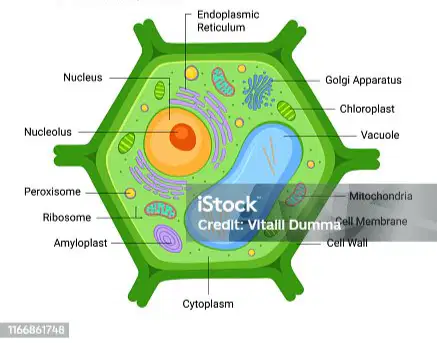
What type of cell is this?
Plant
Animal
Bacteria
Which phrase best describes the smooth ER?
Produces Lipids
Makes ribosomes
Stores genetic information
Produces ATP molecules
Which organelle is the storehouse for most of a cell's genetic information?
Mitochondria
Chloroplast
Centrioles
Nucleus
What 2 organelles are unique to plant cells?
Chloroplasts
Central Vacuoles
Ribosomes
Cytoplasm
Diffusion is the movement of a substance
only through a lipid bilayer membrane
from an area of low concentration to an area of higher concentration
from an area of high concentration to an area of lower concentration
only in liquids
Glucose sugar molecule cross a cell membrane via
active transport
osmosis
simple diffusion
facilitated diffusion
Passive Transort requires energy.
True
False
Forms of active transport are:
Proteins pumps, Endocytosis, Exocytosis
Facilitated Diffusion, Protein pumps
Omosis, Endocytosis, Exocytosis
The diffusion of water into or out of a cell is called
solubility
active transport
osmosis
Chemosynthesis is a process through which some organisms use energy from chemicals in their environment to build sugars. This occurs in ecosystems without access to
ATP
water
glucose
sunlight
What are the products of photosynthesis?
Glucose
Oxygen
Carbon Dioxide
ATP
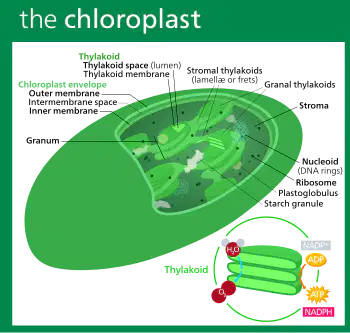
This organelle needs the following reactants to carry out photosynthesis
Glucose
ATP
Carbon Dioxide
Water
In which process is lactic acid formed when there is not enough oxygen present for aerobic cellular respiration to take place?
Photosynthesis
Glycolysis
Fermentation
Chlorophyll is a pigment that is green because it reflects green wavelengths of light.
True
False
Which process is best represented by the following chemical equation?
C6H12O6 + 6O2 → 6CO2 + 6H2O + 36 ATP
(glucose + oxygen → carbon dioxide + water + energy)
Photosynthesis
Fermentation
Aerobic Cellular Respiration
What is the first stage of aerobic cellular respiration?
Krebs Cycle
Electron Transport Chain
Glycolysis

Name this type of active transport
Osmosis
Protein Pump
Exocytosis
Endocytosis
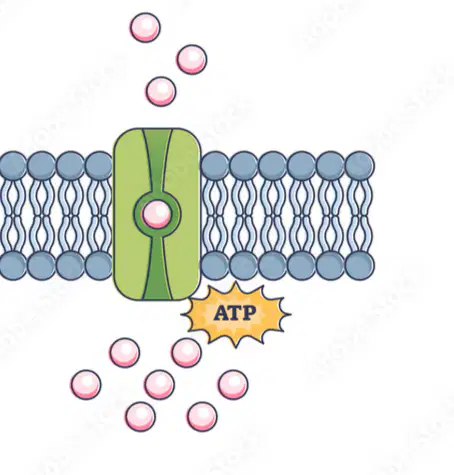
What time of transport is this?
Active Transport (Because it uses ATP and moves molecules AGAINST the concentration gradient)
Passive Transport
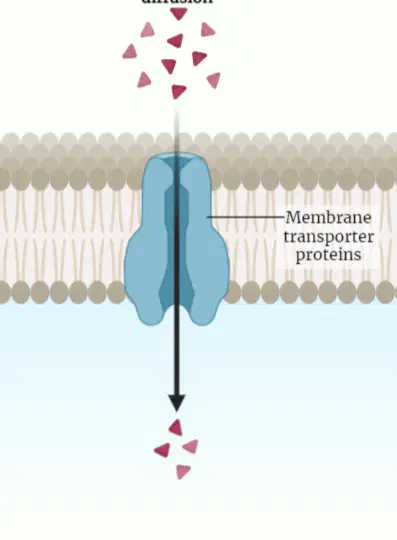
What type of transport is this?
Passive Transport, Facilitated Diffusion
Active Transport, Protein Pump
Click on the temperature that this enzyme is having optimum activity.
Every enzyme has an (a) temperature, which will have the biggest reaction. However, if the temperature gets too high, the enzyme may become (b) and it won't be able to function.

Match the organelle to its description.
Proteins are made on these small structures.
Ribosomes
Controls all activity in the cell (the brain) and stores DNA
Nucleus
The fluid that fills the cell and
keeps the organelles in place
Cytoplasm
Power plant of the cell. They
create energy called ATP.
Mitochondrian
Outer lining the cells.
Controls what goes
in and out.
Cell Membrane
Match the following monomer
amino acids
proteins
fatty acids
lipids
saccharides
carbohydrates
nucleic acids
nucleotides
Carbohydrates
starches & sugars
How much ATP is produced during aerobic cellular respiration?
2 ATP
4 ATP
16 ATP
36 ATP

